Skip to content
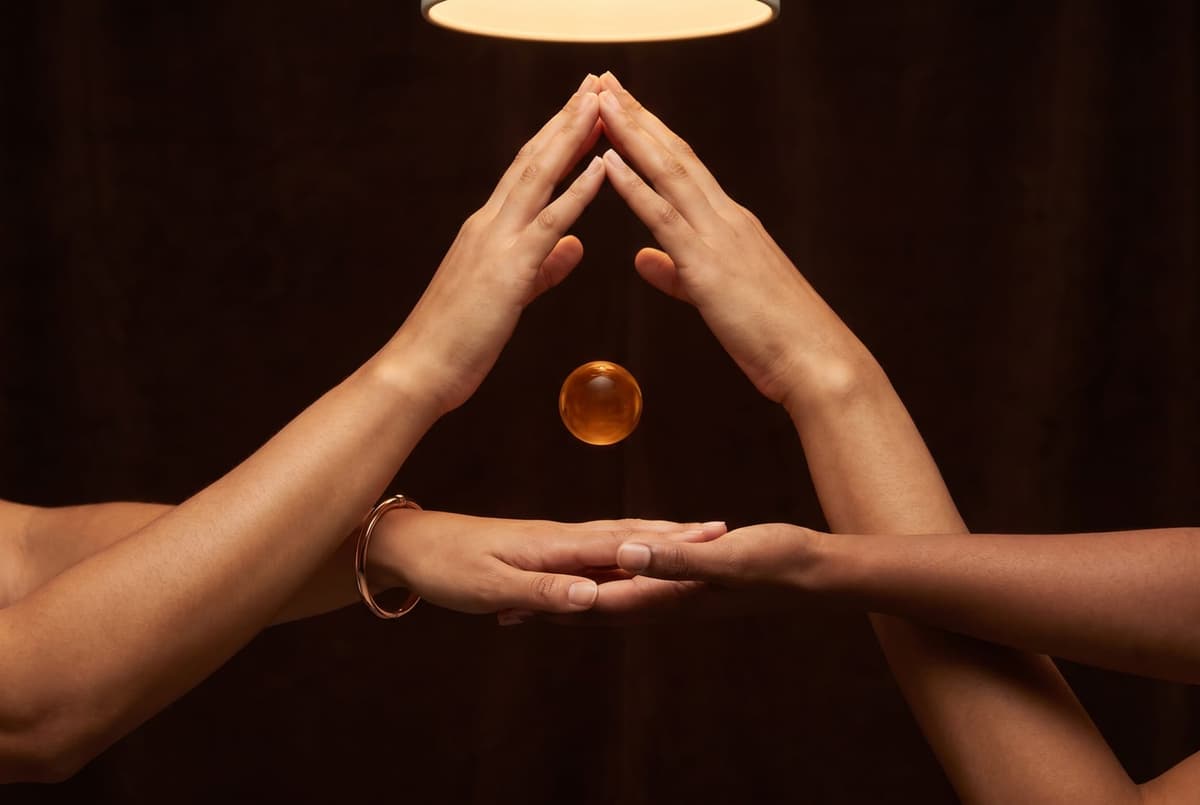
Trine Sun–Moon — symbolic illustration

Trine · 120°

Sun trine Moon

A harmonious aspect: the two planets support each other and tend to pull in the same direction. Read it as a resource to notice, not a guarantee.

120°Orb up to 6°HarmoniousNatal · synastry · transit
120°Sun trine MoonOrb up to 6° · major aspect
Oksana MiatovaWritten by Oksana Miatova·11 min read

For entertainment and self-reflection only. Not medical, legal, financial or psychological advice. Consult a qualified professional for important decisions.

The short answer

Sun trine Moon is a flowing 120° aspect between the conscious self and the emotional nature. Will and feeling point the same way with no inner tug-of-war, and the person tends to live in quiet accord with themselves. The catch is that the gift arrives for free, so it is easy to leave the talent half-used.

What a trine is

The geometry behind the reading

A trine is a separation of 120 degrees between two planets — a third of the circle, and the exact distance between signs of the same element. Fire looks across at fire, earth at earth, water at water, air at air, so the two energies understand each other without translation. That is why the trine is reckoned the easiest of the five major aspects. By strength it sits third, behind the conjunction and the square–opposition pair but ahead of the sextile. The ease comes unearned, and that is the trine's signature trap: what works on its own tends to slip below notice. A flowing aspect between the two lights is especially interesting because it gathers the conscious will and the emotional baseline — the two governing systems of the whole chart — into a single, agreeable current. The textbook orb for a trine is six degrees, though for an aspect between the two luminaries I usually allow it out to eight, because the Sun and Moon are the brightest points in any chart.

Three ways to read it

The same aspect, three different stories

One aspect reads differently depending on where you find it: inside a single birth chart, between two people, or moving across the sky right now. Read each as a way to notice patterns, not as a forecast.

Sun trine Moon in the natal chart

If Sun trine Moon sits in your natal chart, the odds are you have no idea it's there. It is the quietest of all the aspects between the lights, because it makes no inner noise. There's none of that sense of one part of you wanting one thing while another part wants something else. Will and feeling head off in the same direction, and you don't notice the accord any more than you notice the air while it's there to breathe.

I've worked with natal charts for a long time, and a Sun–Moon trine gives itself away in a reading not through anything elaborate a client says but through how plainly they say it. When someone with a square between the lights talks about themselves, they go on at length and contradict themselves: "I want to, but I'm afraid", "I like it, but I can't." Someone with a trine describes themselves in a sentence: "I'm just like that." No caveats. That doesn't mean they understand themselves better — they simply do less fighting on the inside.

The psychological foundation of the aspect is usually laid down in childhood, in the relationship with the parents. The Moon is the emotional climate a child absorbs at home; the Sun is the permission to be oneself that a parent grants. A flowing aspect between the lights often means that climate and permission arrived together, without tipping into smothering on one side or coldness on the other. That's a rare combination, and it lays down the base on which steady self-worth gets built later on.

But this gift has a darker edge, and I bring it up in every reading where I see a trine between the lights. The ease that runs through a life can harden into a plateau. When there's no conflict inside, there's also none of the tension that drives people with hard aspects to search, to grow, to doubt, to remake themselves. A Sun–Moon trine gives no such shove from within — every shove has to arrive from outside. If life stays calm, the trine can quietly turn into a comfortable marsh.

I've seen it many times: a clever, gifted person with a lovely chart, living at perhaps a third of their capacity. Not out of laziness, but because there's no inner dissatisfaction to push them along. Everything is fine, everything suits, so why change anything. And somewhere around forty comes the dawning sense that time has gone by and nothing of real weight has been built. That is the classic story of the trine between the lights in its un-activated form — and it's a tendency to notice early, not a sentence to serve.

So what do you do with it. You set yourself tasks that demand effort, on purpose. Rather than waiting for life to hand you a crisis, you walk towards the hard thing yourself. Learn a difficult craft. Train at sport until you're genuinely tired. Build a relationship with someone made of different stuff, who'll needle you and provoke you a little. A Sun–Moon trine won't make you stronger by itself; it only hands you a sound base to grow from. Whether you use that base is up to you.

There's another quirk of the natal trine worth flagging: a difficulty grasping people whose inner lights are at odds. When everything comes easily to you, you can sincerely fail to see why others suffer so much over what looks, to you, like nothing at all. That can open a gap in your closest relationships, especially if a partner or a child has the lights in a square. They come to you with a problem that strikes you as overblown, and you wave it off — come on, it's all fine. To them it is not fine, and your easy dismissal cuts deeper than you'd guess.

Self-understanding in people with a Sun–Moon trine tends to be shallow — not because there's no depth, but because finding it means digging, and there's little pull to dig where it doesn't hurt. Real inner work needs some part of you to push back, and yours doesn't. That's why such people often come to therapy or to astrology out of curiosity rather than to fix a problem, and are surprised to discover there are layers down there after all. To see your own Sun–Moon trine actually at work — to know where it pulls you and where it's going to waste — a reading of the full natal chart with an astrologer will draw the precise picture.

When it flows

  • Will and feeling don't go to war — what you want rarely contradicts what feels right
  • A settled sense of self, free of the inner split that troubles people with the lights in hard aspect
  • Easy adaptation to new surroundings — your emotional nature backs your actions rather than braking them
  • Often a warm early relationship with both parental figures, which laid down a steady base for self-worth

When it grates

  • A habit of taking the path of least resistance, with little of the toughening that inner conflict provides
  • The talent for self-understanding stays in the background, because it costs nothing and so reads as nothing special
  • Difficulty grasping people whose lights are at odds — they can look as if they're making a drama out of nothing
  • Emotional steadiness can quietly mask a lack of depth, the depth that only shadow-work tends to build

The shadow side, and what to do with it

The shadow side of Sun trine Moon is not pain but comfort. The aspect doesn't make you stronger by itself; it makes you easier to be. If life serves up no real crises, that harmony can flatten into a plateau where nothing grows. The integration is therefore an unusual one: you have to set yourself tasks that demand effort, because the demand won't arise from inside. Sport pushed to genuine tiredness, a hard craft learned from scratch, a relationship with someone built differently from you — anything that makes the lights work at full stretch instead of dozing in the easy chair.

Trine — symbolic still life

How close is close

The orb decides the volume

A trine is rarely exact. The smaller the gap between the two planets — the orb — the louder the aspect plays. Here is roughly how the three bands read.

Tight

0–2°

Reads as a defining feature

At 0–2° the trine is exact and its effect is at its strongest and most stable. In the natal chart it gives that unconditional inner accord a stranger can spot: the person rarely wavers, rarely second-guesses, and their mood and decisions tend to agree. In synastry a tight trine between the lights is one of the better indicators of long-run compatibility. In transit a tight trine works for two or three days and, inside that window, can shift the mood of a whole week.

Medium

2–5°

A steady background pattern

At 2–5° the trine is meaningful and noticeable, but without the full automatism. In the natal chart you feel an inner harmony that shows up not in every situation but more as a background trait of character. In synastry a medium trine gives a good compatibility that partners tend to notice three to six months into living together. In transit the effect is spread across four or five days with the peak in the middle, free of sharp highs and lows.

Loose

5–8°

A faint colouring, felt in crises

At 5–8° the trine is a wide one, present but as a soft background. In the natal chart it is barely legible through behaviour — a person may not even realise their lights are harmonious until they compare themselves with others. In synastry a wide trine gives a general liking without strong attachment. In transit the effect is almost imperceptible and can pass unnoticed unless you track it on purpose.

Trine with a partner — what does it mean for the two of you?

A full synastry reading — every aspect between your two charts

Sun trine Moon inside one chart is an inner mechanism. Between two charts it becomes the dynamic of a relationship. Enter both birth details and get a synastry reading — where the conjunctions sit, where the squares pull, where the oppositions draw you together — all calculated with the Swiss Ephemeris. Read it as a way to notice patterns, not a forecast.

Check your compatibilityfrom £1 · for entertainment

Compare with a neighbouring aspect

Same planets, a different distance

Sun square Moon tells a different story. If you're reading this to make sense of a specific chart, it's worth glancing at the neighbouring aspect too.

Sun square Moon
  • A trine gives ease without effort; a square gives growth through effort — two opposite routes to the same place
  • In the trine the lights pull the same way; in the square they pull apart. The trine relaxes, the square tempers
  • A natal trine risks shallowness; a natal square risks an inner war. Both need conscious work, in opposite directions
  • In synastry the trine holds a couple together; the square forces them to grow or to break. The trine is about stability, the square about momentum
  • A transiting trine opens an easy window; a transiting square opens a window of tension. The trine rests you, the square moves you

Lived examples

A few charts where you can see it

Public figures with a verified Rodden birth-data rating (AA/A/B). No invented data.

Frequently asked questions

What does Sun trine Moon mean in the natal chart?
It is a flowing aspect between the conscious will (the Sun) and the emotional nature (the Moon). The person feels an inner accord: their wants don't fight their moods. It tends to register as an ordinary, unremarkable sense of self — one the owner often doesn't notice until they compare themselves with people whose lights sit in a hard aspect. Read it as a pattern to recognise, not a verdict on who you are.
Is Sun trine Moon good or bad in synastry?
It is one of the steadiest links between two charts. At a basic level the partners feel like 'their kind of person' to each other, and their emotional rhythms line up. The downside is that the relationship can grow too comfortable and lose its momentum. A trine between the lights turns up often in couples who have spent many years together — and sometimes in couples who parted on good terms, because with no tension there was never much spark. It's a way to understand a relationship's patterns, not a prediction about it.
What orb should I use for Sun trine Moon?
The standard orb for trines is six degrees. For aspects between the two lights it's common to extend that to eight, because the Sun and Moon are the strongest points in the chart. A tight trine (0–2°) works most vividly, while a wide one (5–8°) feels more like a soft background. Past about ten degrees the trine is considered to have dissolved.
How is Sun trine Moon different from Sun sextile Moon?
The trine is stronger and steadier; the sextile is gentler and needs activating. The trine gives an in-built accord that works on its own. The sextile gives an opportunity you have to take up consciously, or it slips past. On the scale of strength the trine sits third and the sextile fourth among the five major aspects.
Which celebrities have Sun trine Moon?
Among reliably verified charts (Rodden AA): Barack Obama (Sun in Leo, Moon in Gemini), Steven Spielberg (Sun in Sagittarius, Moon in Leo) and Céline Dion (Sun in Aries, Moon in Sagittarius). The shared thread is steadiness in a public role and a long career without sharp breakdowns. As always, it's worth checking any name on astro.com's AstroDatabank rather than taking a casual citation on trust.
Is Sun trine Moon different for men and women?
The principle is the same; the look of it shifts with cultural expectations. In a man's chart the trine often reads as confidence without aggression; in a woman's, as a soft decisiveness. In both cases the aspect tends to bring a comfortable relationship with the figure of the opposite sex, because the masculine and feminine principles inside the chart are at peace. None of this is destiny — it's a lens for noticing.
Can Sun trine Moon ever be a bad thing?
Not bad, but under-developed. If someone meets no real difficulty, the trine can flatten into a plateau: everything is fine, but nothing grows. The aspect doesn't toughen the character on its own — it only removes the inner conflict. Development has to come from outside tasks the person sets for themselves. Treat it as potential to use, not a guarantee that life will be effortless.
How do I use a transiting Sun trine Moon?
The window runs for two or three days. It suits anything that needs inner wholeness: important conversations, presentations, the launch of a big project, interviews. It's less suited to decisions that ought to be made with a cool head, because the soft emotional tide can distort the long-term view. For entertainment and self-reflection, it's a useful prompt to schedule the right kind of task on the right day.
Does Sun trine Moon affect the relationship with one's mother?
Often, and usually for the better. The Moon stands for the figure of the mother and the emotional base; the Sun for the sense of self. A flowing aspect between them most often points to a childhood in which a parent gave support without smothering it. In adult life it tends to show as the absence of a neurotic attachment and the ability to separate without guilt. Read it as a tendency, not a rule.
When is the next exact Sun trine Moon?
A trine between the transiting Sun and Moon forms twice a month — roughly four days before the full moon and four days after the new moon. These are short but regular windows. If you mean a transit to your natal lights specifically, that depends on your own chart and is best calculated against your birth positions; an ephemeris or astrological calendar will give the exact dates.

Related pages

The other aspects between Sun and Moon

The same two planets at a different angle — each reads differently.

Oksana Miatova
Oksana Miatova

Astrologer, co-founder of WowAstro

Oksana Miatova is a practising astrologer and co-founder of WowAstro. Natal charts, synastry and forecasts grounded in the Western classical tradition — explained through real-life examples and plain language.

More about the author →

For entertainment and self-reflection only. Not medical, legal, financial or psychological advice. Consult a qualified professional for important decisions.