Skip to content
Square Sun–Moon — symbolic illustration

Square · 90°

Sun square Moon

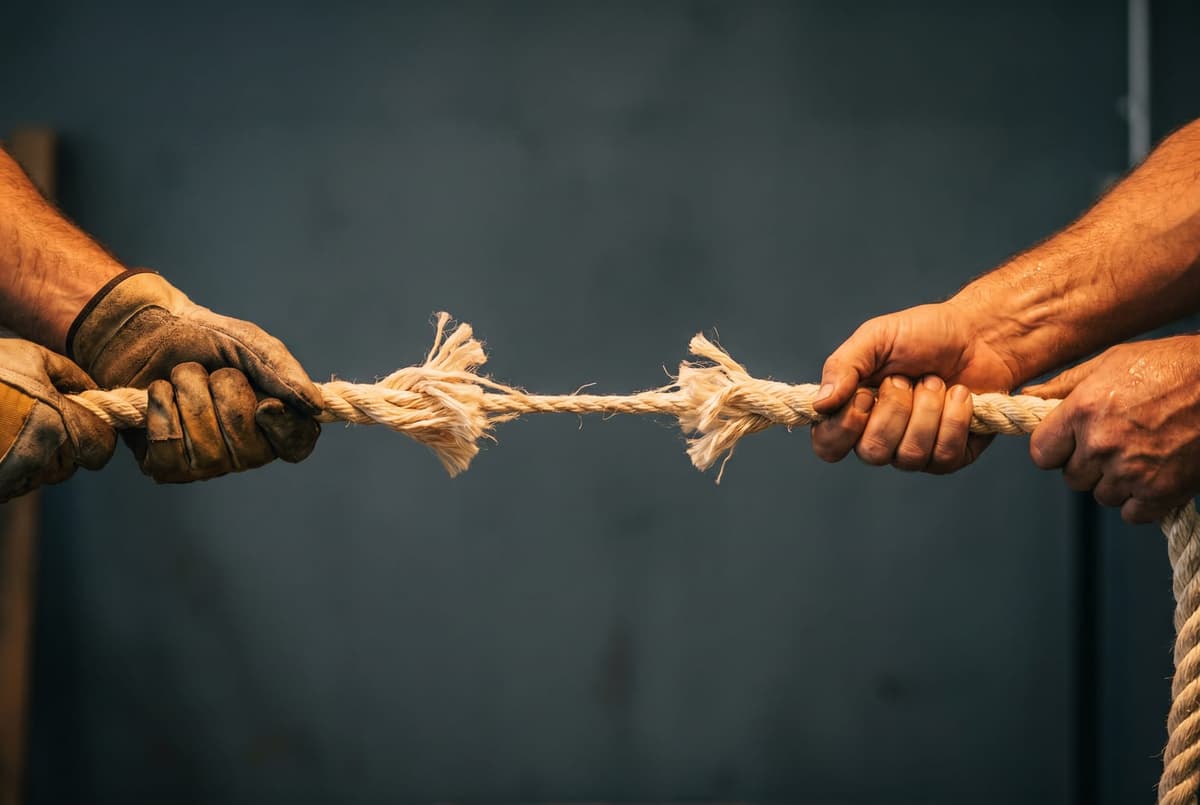
A challenging aspect: the two planets rub against each other and ask for conscious handling. Tension here is a source of movement, not a verdict.

90°Orb up to 6°ChallengingNatal · synastry · transit
90°Sun square MoonOrb up to 6° · major aspect
Oksana MiatovaWritten by Oksana Miatova·10 min read

For entertainment and self-reflection only. Not medical, legal, financial or psychological advice. Consult a qualified professional for important decisions.

The short answer

Sun square Moon is a tense 90° aspect between the two lights, where will and feeling pull in different directions — the daytime self argues with the nighttime self, the conscious 'I ought' collides with the instinctive 'I want'. It isn't a fault in the machine; it's the engine of growth through inner friction.

What a square is

The geometry behind the reading

A square is a separation of ninety degrees between two planets, and it is one of the two classic tense aspects of traditional astrology. In raw strength it sits just behind the conjunction and runs level with the opposition. Where a conjunction glues two energies into a single point and an opposition stretches them along an axis, the square sets them against each other at a right angle. That collision always produces friction, and out of the friction comes action. Psychological astrology reads the square as a point of growth: where two functions of the psyche cannot settle their differences amicably, a person is forced to invent a solution, build a skill, make a choice. The working orb for a square is up to six degrees, and with the two lights it is reasonable to widen that a little, to around eight, because the Sun and Moon are the largest and most weighted points in any chart. The tighter the aspect, the louder the inner argument — and the more visible the result once a person learns to listen to it rather than fight it.

Three ways to read it

The same aspect, three different stories

One aspect reads differently depending on where you find it: inside a single birth chart, between two people, or moving across the sky right now. Read each as a way to notice patterns, not as a forecast.

Sun square Moon in the natal chart

If Sun square Moon sits in your natal chart, you've known the feeling since childhood, even if you never had a name for it. Something inside is permanently in disagreement. Will says get up and do it; feeling answers just five more minutes. The head draws up a plan; the body declines to follow it. The conscious 'I want a career' and the instinctive 'I want simply to be loved' live together like flatmates in a cramped shared flat — they tolerate one another, but without much tenderness. It isn't a flaw and it isn't a diagnosis; it's a particular wiring, and once you see it clearly it can be worked with.

This aspect rarely shows up in people with an uncomplicated story behind them. Usually there's some early experience of splitting. Most often it's a mismatch in the parents' scripts. One parent lived by the rules of duty, the other by the rules of feeling, and you grew up not knowing which of them to trust more. Sometimes both parents were similar on the surface, but one demanded and the other consoled, and you learned to tack between those two winds. And where there was no visible split in the family at all, it lived inside one of the parents, and you absorbed it as your own normal — which is why, for years, you may not even realise the conflict was learned rather than inborn.

In adult life the square between the lights produces a character that's hard to break. These people aren't built for long stretches of equilibrium. Calm feels suspect to them. They need a challenge, they need an inner opponent, they need a reason to act. When no such reason presents itself, they tend to manufacture one: changing jobs, launching a new project, falling unsuitably in love, moving house. From the outside that can look like impulsiveness or instability. From the inside it's simply a way of keeping the energy in motion so that it doesn't collapse inward into a flat, grey low.

Creativity and the square between the lights are close relatives. A great many writers, painters, musicians and psychologists carry this aspect. For them, making things isn't a hobby — it's a way of negotiating with their own split. On the page, on the canvas, in the music, the two sides finally meet and can talk without tearing each other apart. Where there's no such channel, the tension tends to migrate into the body: into broken sleep, into a restless gut, into spells of apathy and the abrupt exits from them. The energy will out one way or another; the only real choice is the form it takes.

The relationship with this aspect shifts with age. Before thirty it's more often experienced as an affliction — *why does everything come to me through resistance, why can't I just live*. After thirty comes the realisation that the resistance was never an obstacle so much as a form of development. By forty many people find the inner opponent has quietly turned into an inner ally. It still argues, but out of the argument now come weighed decisions rather than ruptures. The voice that used to sabotage starts, instead, to stress-test.

The central task of the square between the lights in a natal chart is to learn to hear both sides without choosing either. That runs flat against the familiar advice to *just make up your mind*. But making up your mind isn't the move here. The move is to accept that two truths live in you at once, and both have a right to speak. When you stop demanding a choice of yourself and start building a dialogue instead, the aspect stops being a problem and becomes a resource. People reach this through personal therapy, through a steady meditative practice, through working with the body — there are many roads, and the only thing that matters is starting down one of them.

The sign each light sits in colours the whole picture, and so does the house. To see how it really plays out for you — which signs hold your Sun and Moon, which houses are involved, whether other planets have joined the square — the chart has to be read as a whole. The full picture gives a wholly different level of understanding from the bare abstraction of 'I've got Sun square Moon'.

When it flows

  • A strong inner drive to keep moving — standing still feels almost physically uncomfortable
  • A real capacity for self-examination and an honest look at your own contradictions
  • Early maturity, with practice at making the awkward decisions other people put off
  • Creative energy drawn straight from the tension — many write, paint or take up a practice simply to discharge it

When it grates

  • A grinding conflict between 'I want' and 'I ought' that quietly wears you down
  • A complicated relationship with one parent, or with both at once in different ways
  • Swinging between plans and feelings, between career and family, between head and heart
  • Self-criticism, a low-level dissatisfaction, the sense that it's never quite enough

The shadow side, and what to do with it

The shadow side of Sun square Moon is the habit of living in a state of low-grade civil war. One voice demands you achieve, the other begs you to rest; one says 'pull yourself together', the other cries into the pillow. Left unexamined, the energy goes entirely into the argument, and from the outside you look tired for no reason anyone can name. Integration starts the moment you stop picking a side and begin listening to both. Will needs a body; feeling needs a structure. When those two strike a truce for even an hour a day, the square stops draining you and starts shaping a character instead.

Square — symbolic still life

How close is close

The orb decides the volume

A square is rarely exact. The smaller the gap between the two planets — the orb — the louder the aspect plays. Here is roughly how the three bands read.

Tight

0–2°

Reads as a defining feature

At 0–2° the square is exact and the two lights argue at full volume. In the natal chart this means the theme of an inner split becomes one of the central themes of a life: you return to it again and again, across different relationships and different jobs. That isn't a sentence, it's a route. By around forty this kind of square is usually well known to its owner and has started working for them rather than against them, because the friction has been turned into something useful so many times that it has become a skill.

Medium

2–5°

A steady background pattern

At 2–5° the square is noticeable in stress but recedes in calmer stretches. The conflict surfaces at moments of choice — when you have to decide between duty and desire, between work and family, between head and heart. In ordinary life a person can go years without suspecting the tension is there, but a crisis period will pull it straight to the surface, often along the very fault line the square marks.

Loose

5–8°

A faint colouring, felt in crises

At 5–8° the square is mild, a background tension that tones you up more than it torments you. It rarely produces loud conflicts, but it does leave a faint sense of dissatisfaction: everything looks fine, yet something aches underneath. Read it as a signal that there's room to grow, without any urgent need to do something about it today. The sign and house the lights sit in matter more here than the bare fact of the aspect.

Square with a partner — what does it mean for the two of you?

A full synastry reading — every aspect between your two charts

Sun square Moon inside one chart is an inner mechanism. Between two charts it becomes the dynamic of a relationship. Enter both birth details and get a synastry reading — where the conjunctions sit, where the squares pull, where the oppositions draw you together — all calculated with the Swiss Ephemeris. Read it as a way to notice patterns, not a forecast.

Check your compatibilityfrom £1 · for entertainment

Compare with a neighbouring aspect

Same planets, a different distance

Sun trine Moon tells a different story. If you're reading this to make sense of a specific chart, it's worth glancing at the neighbouring aspect too.

Sun trine Moon
  • A trine gives an inborn agreement between will and feeling — the square makes you rebuild that agreement from scratch every single day
  • A trine is easy and comfortable, but its risk is stagnation and a wasted gift; the square is heavier, yet it's the square that actually moulds a character
  • A trine produces few headline events around the theme of the lights; with a square those events recur on a schedule
  • A trine is a talent you can sleep through; a square is a task you can't possibly sleep through
  • In synastry a trine smooths a couple together; the square binds them through friction and forces the conversation

Lived examples

A few charts where you can see it

Public figures with a verified Rodden birth-data rating (AA/A/B). No invented data.

Frequently asked questions

What does Sun square Moon mean in the natal chart?
It is a tense aspect between the two most important points in the chart, the lights. Will and emotion, the conscious 'I' and the instinctive nature, sit in a constant inner dialogue that is sometimes heavy going. The aspect isn't considered 'bad' — it hands you an engine that won't let you settle, and that keeps pushing you to grow, to act, to look for yourself. Read it as a pattern to notice rather than a verdict on who you are.
Is Sun square Moon a bad aspect?
No. Traditional astrology files the square under the tense aspects, but the modern psychological school has long treated it as an aspect of development. People with a square between the lights often achieve more, precisely because the inner friction won't let them stop. The catch is the price: that growth costs a steady, ongoing effort with yourself. None of this is destiny — it's a lens for understanding tendencies.
What orb should I use for Sun square Moon?
Classically up to 6°. For the lights it's reasonable to widen the orb to around 8°, because the Sun and Moon are the largest and most significant points in the chart. The tighter the aspect, the louder it sounds in the character. Inside 2° the square sets one of the central themes of a life; from 5–8° it reads more as a background note that surfaces mainly in crises.
Is Sun square Moon destructive in synastry?
Not necessarily. The aspect gives a powerful mutual pull and, alongside it, all but guaranteed conflict. If both partners are psychologically mature and willing to talk about feelings, the relationship becomes a school for life. If they aren't, it tends to turn into a see-saw where two people are bound by pain rather than love. As always, this is a way to understand a relationship's patterns, not a prediction about it.
What does a transiting Sun square to the natal Moon mean?
A short but intense window in which outside events, or your own actions, knock against your emotional nature. Irritability, friction with the women close to you and broken sleep are all common. It suits an honest conversation with yourself and creative work, and it suits impulsive decisions very badly. For entertainment and self-reflection, treat it as a prompt to pause rather than a cue to leap.
Does Sun square Moon affect the relationship with parents?
Quite noticeably, yes. More often than not, the parents of someone with this aspect played markedly different roles, or their scripts clashed inside the family. In adulthood that tends to echo in the choice of partner and in one's own parenting — until the original conflict has been reflected on and understood. It's a lens for noticing patterns, not a claim about any particular family.
Can Sun square Moon be 'cured'?
The aspect can't be cured — it's built into the chart for good. But it can be lived consciously. Personal therapy, regular reflection, physical practice and creative work all help to draw the warring parts apart so they work as a team rather than against each other. The aim isn't to silence one side but to get the two of them talking.
Which public figures have Sun square Moon?
Among well-documented charts checked at a Rodden rating of AA, Marilyn Monroe, Vincent van Gogh and Kurt Cobain all carry this square — three public figures known for a vivid and contradictory inner life. The aspect turns up often in people who feel their own dividedness sharply, and who frequently write or speak about it. Always verify any example yourself against a reliable database before relying on it.
How is Sun square Moon different from the opposition of the same planets?
An opposition is a polarity — a conscious face-off between two principles that you can see and discuss across the table. A square is a collision on the diagonal, more often unconscious and reactive. The opposition is easier to grasp with the mind; the square is easier to feel in the body and the nerves. Both ask for integration, but the square tends to demand it through events rather than insight.
How can an astrologer help with Sun square Moon?
A good reading of the natal chart shows exactly where the square sits, which houses and signs it runs through, and which areas of life it touches. Understanding the script is half the work. From there you can start to see your reactions not as 'I've just got a difficult character' but as a specific mechanism you can actually work with. It's offered for reflection and self-understanding, not as a forecast.
Should we start a relationship if we have Sun square Moon between us?
Yes — if both of you understand what you're stepping into. This aspect doesn't hand out easy relationships, but it does hand out deep ones. The real question isn't 'can we' but 'are we ready to grow together rather than suffer together'. No astrologer can answer that for you; the first six months side by side will. Take the chart as a description of patterns, not a prophecy about your future.

Related pages

The other aspects between Sun and Moon

The same two planets at a different angle — each reads differently.

Oksana Miatova
Oksana Miatova

Astrologer, co-founder of WowAstro

Oksana Miatova is a practising astrologer and co-founder of WowAstro. Natal charts, synastry and forecasts grounded in the Western classical tradition — explained through real-life examples and plain language.

More about the author →

For entertainment and self-reflection only. Not medical, legal, financial or psychological advice. Consult a qualified professional for important decisions.