Skip to content
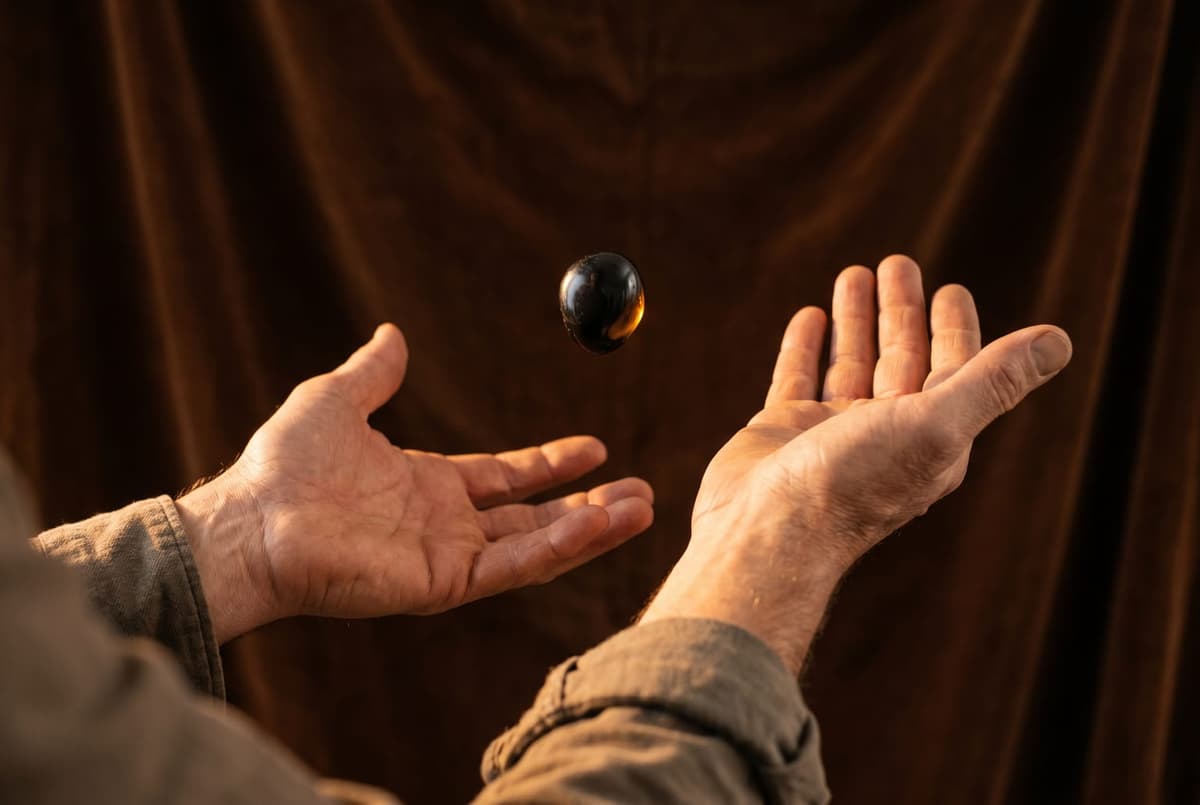
Sextile Sun–Moon — symbolic illustration

Sextile · 60°

Sun sextile Moon

A harmonious aspect: the two planets support each other and tend to pull in the same direction. Read it as a resource to notice, not a guarantee.

60°Orb up to 4°HarmoniousNatal · synastry · transit
60°Sun sextile MoonOrb up to 4° · major aspect
Oksana MiatovaWritten by Oksana Miatova·10 min read

For entertainment and self-reflection only. Not medical, legal, financial or psychological advice. Consult a qualified professional for important decisions.

The short answer

Sun sextile Moon is a gentle 60° harmony between will and feeling. The compatibility is real but soft and quiet, and on its own it does very little — to draw any resource from it you have to make a conscious effort and set yourself a concrete task.

What a sextile is

The geometry behind the reading

A sextile is a separation of sixty degrees between two planets, one sixth of the circle, and of the five major aspects it is reckoned the mildest and at the same time the most demanding of the person who carries it. A trine of 120° hands you a talent that begs to be expressed all by itself; a square of 90° presses on you and forces action through resistance; an opposition of 180° pulls two forces to opposite poles. The sextile neither presses nor pulls. It simply lays two planets side by side, with cooperation possible between them, but nobody is responsible for that cooperation except the owner of the chart. The orb for a sextile is narrow — usually around three to four degrees, because a wider spread already thins the influence down to background noise. In the hierarchy of horary and natal technique the sextile ranks fourth by strength but very nearly first by how often it gets ignored. For the Sun and Moon it means the two basic archetypes of the chart — the conscious will and the emotional nature — are well tuned to one another and ready to work together, the moment you ask them to.

Three ways to read it

The same aspect, three different stories

One aspect reads differently depending on where you find it: inside a single birth chart, between two people, or moving across the sky right now. Read each as a way to notice patterns, not as a forecast.

Sun sextile Moon in the natal chart

If this aspect sits in your natal chart, the odds are you've never thought of yourself as a 'difficult person'. From the inside it looks like this: will and feeling don't argue. When you decide to do something, your emotions are broadly on board. When you want quiet or rest, your reason doesn't read it as weakness. You rarely catch yourself in the sharp split between 'I must' and 'I want' that people with squares or oppositions between the lights live with. To many this doesn't even seem remarkable — it seems like the way everyone is built. It isn't.

Sun sextile Moon is a neatly assembled inner arrangement in which the conscious personality and the emotional nature are on friendly terms. You can explain to yourself why you want exactly this job, exactly this person, exactly this kind of life. Feeling doesn't pull against your decisions, and your decisions don't ignore your feelings. In your relationship with yourself that yields a calm the people around you often read as maturity or an inner backbone.

Now comes the central subtlety, the one that makes the sextile worth reading about on its own. This aspect works only on request. It doesn't push you in the back, it sends no pain signal, it engineers no situations where you urgently have to grow. It simply lays two well-tuned instruments side by side and walks off. If you don't pick them up, nothing happens. That is the shadow side of the soft aspects: you can live a whole life without once putting them to work. Outwardly everything is fine, but the real measure of who you might have been stays off-screen.

In my consulting room this turns up again and again. Someone arrives with a sextile of the lights in their chart and says, 'Everything's all right with me, I just want to understand which way to move.' There genuinely is no inner conflict. But there's no movement either, and no request as such — because nothing hurts. And it's pain, more than anything, that shifts people off the spot. When there's no built-in tension, the impulse to develop has to be manufactured by you, and that is a separate skill.

What helps? Setting tasks on purpose. Any concrete goal — from finishing a degree to learning a language inside a year — makes the Sun and Moon work in tandem. The will sets the direction, the emotions supply a steady fuel, with no burnout and no sabotage. Without a task they simply lie next to each other and the aspect seems 'unexpressed'. In fact it is expressed in an ordinary day, as softness, flexibility and quick recovery. But the potential of this pair runs well past everyday comfort.

There's one more thing worth naming: your relationship with your parents and your past. Sun sextile Moon often means you aren't at war with your own childhood self. The image of the mother and the image of the father aren't torn apart inside. That's no guarantee the family was ideal, but in the child's perception the roles didn't badly contradict each other, and the grown person doesn't burn energy endlessly reprocessing childhood stories. The energy that for others drains into trauma work stays free in you for other things. What you do with it is a separate question.

In short, this aspect is a free resource that nobody activates on your behalf. The inner compatibility is there, it's real, it looks after you. But turning it into a fully lived life is your own work. The sign the lights occupy, the houses they fall in, and their links to other planets all shade how it plays out — to see exactly how the pair is wired in your chart, and which concrete tasks would draw it out most, you'd want a full natal reading.

When it flows

  • Will and feeling don't fight — it's quieter inside than for people with hard aspects between the lights
  • An ability to explain to yourself why you want exactly this thing, because reason and emotion speak the same language
  • Good adaptability: you switch between work and rest without losing your sense of self
  • Easy relations with parents and with your own past — no rigid inner conflict between the role of son or daughter and the person you are

When it grates

  • A reluctance to switch the resource on — since it's fine inside anyway, many people live with this aspect and never use it
  • Vague goals: with no built-in tension there is no automatic push to move
  • You can sleep through the moment — the sextile doesn't shout, so it's easy to miss and to spend a life at half power
  • A tendency to settle for comfort even when the scale of the personality could carry far more

The shadow side, and what to do with it

The shadow side of Sun sextile Moon is a quiet sabotage of self-realisation through the comfort of the familiar. You feel in the right place, you don't suffer, but you don't grow either. Integration begins with an honest question: is what I'm doing now my ceiling, or just my comfort zone? The aspect answers to a request — set any concrete task and the Sun and Moon start working in step. With no request, they simply lie side by side, a perfectly tuned pair of instruments nobody picks up.

Sextile — symbolic still life

How close is close

The orb decides the volume

A sextile is rarely exact. The smaller the gap between the two planets — the orb — the louder the aspect plays. Here is roughly how the three bands read.

Tight

0–2°

Reads as a defining feature

At 0–2° this is an exact sextile of the lights. The aspect works at full strength, which for a sextile means a clear, stable inner agreement between what you want and what you feel you need. You rarely lurch between reason and emotion, and it's easier to talk yourself through any decision. In transit this band gives a day or two of a distinct window, when the inner compatibility is especially plain and convenient for making decisions about yourself.

Medium

2–5°

A steady background pattern

At 2–5° you have the working orb. The sextile is felt but doesn't dominate the chart. It's calm inside, the sensitivity to a loved one's moods is there, and reason and emotion come to terms without strain. In synastry this band already gives a steady background of compatibility, though couples rarely realise it's an aspect of the lights at all — they put it down to 'just matching characters'. In transit it's a soft window lasting up to three or four days.

Loose

5–8°

A faint colouring, felt in crises

At 5–8° the influence is in the background. The sextile is present but reads more as a natural mildness of character than as a separate factor. In the natal chart it gives a slight margin of resilience but doesn't define the personality. In synastry it's barely visible on the surface — both partners feel the warmth but can't say why. In transit it passes almost unnoticed, recorded only in the diaries of the observant.

Sextile with a partner — what does it mean for the two of you?

A full synastry reading — every aspect between your two charts

Sun sextile Moon inside one chart is an inner mechanism. Between two charts it becomes the dynamic of a relationship. Enter both birth details and get a synastry reading — where the conjunctions sit, where the squares pull, where the oppositions draw you together — all calculated with the Swiss Ephemeris. Read it as a way to notice patterns, not a forecast.

Check your compatibilityfrom £1 · for entertainment

Compare with a neighbouring aspect

Same planets, a different distance

Sun square Moon tells a different story. If you're reading this to make sense of a specific chart, it's worth glancing at the neighbouring aspect too.

Sun square Moon
  • A square of the lights presses with tension and won't let you stop — the sextile doesn't press at all, and so it stands idle just as easily
  • The square builds a personality through a constant inner conflict of will and feeling — the sextile builds nothing; it hands you a ready resource you're free not to use
  • The square shows from childhood as a 'difficult character' — the sextile can go unnoticed for a lifetime, the person simply thinking themselves 'ordinary and calm'
  • In synastry a square of the lights creates the tension that keeps interest alive — the sextile creates a comfort that can lull you to sleep
  • The square's chief risk is exhaustion; the sextile's chief risk is under-use. They are two sides of one coin on the scale of aspects

Lived examples

A few charts where you can see it

Public figures with a verified Rodden birth-data rating (AA/A/B). No invented data.

Frequently asked questions

What does Sun sextile Moon mean in the natal chart?
It is a harmonious aspect between the conscious will and the emotional nature, a separation of 60°. It's calmer inside than for people with hard aspects between the lights: reason and feeling come to terms. But the sextile doesn't push you to act — its resource has to be used consciously, or it simply lies there in the background and you live at half power. Read it as a pattern to notice, not a verdict on who you are.
Is Sun sextile Moon good for a relationship in synastry?
It's a good base for a long partnership. Partners easily sense each other's rhythms and moods, and everyday conflicts come up less often. But precisely because it's so soft, this sextile doesn't stand in for passion and won't pull a couple out of a crisis by itself. It works as a background: you can build on it, but you'll still have to do the building on purpose. As always here, this is a way to understand a relationship's patterns, not a prediction about it.
What orb should I use for Sun sextile Moon?
The classic working orb for a sextile is 3–4°. For the lights some astrologers stretch it a little, up to 5°. The strongest expression is within 2°, where the inner agreement feels clear and steady. From 5–8° the aspect becomes a background note and is barely registered without careful observation.
Which celebrities have Sun sextile Moon?
Among people with a birth time verified in AstroDatabank are Angelina Jolie (Sun in Gemini, Moon in Aries) and David Bowie (Sun in Capricorn, Moon in Leo). In both, the inner compatibility of will and feeling shows in an ability to combine very different roles for years without an inner split. You can check anyone in a minute on astro.com's AstroDatabank at a Rodden rating of AA or A — look for the Sun and Moon sixty degrees apart, within 3–4°.
How is Sun sextile Moon different from a trine of the same planets?
A trine of 120° is a ready-made talent that begs to be expressed and slides easily into a comfort zone. A sextile of 60° is a possibility you have to switch on by choice. The trine works by default; the sextile works on request. That's why a trine tends to show up brightly while a sextile shows up steadily but quietly.
What if I have Sun sextile Moon but don't feel any special harmony inside?
That's normal. The sextile doesn't hand you an automatic sense of wellbeing; it gives compatibility at the level of how the psyche is built. To feel it you need concrete situations where will and emotion work together — a choice, a conversation about something that matters, a project. In a routine with no tasks the aspect stays silent. Set yourself a task and it answers.
Sun sextile Moon in a man's chart and a woman's — is there a difference?
The basic principle is the same: an agreement between will and feeling. The difference is that in a woman's chart the Sun more often describes the image of a significant man and her own outward activity, while the Moon describes her inner feminine part; in a man's chart it's mirrored — the Moon often speaks to the type of woman he's drawn to, the Sun to his own will. So in a woman the sextile often reads as 'I don't contradict myself in relationships', and in a man as 'I'm not at war with my own sensitivity'. None of this is destiny; it's a lens for noticing.
How often does a transiting Sun sextile Moon happen, and what does it mean?
A transiting Sun sextile Moon comes round every lunar month, usually twice — on the waxing and the waning Moon — and lasts roughly a day or two. It's a short window when it's especially quiet and clear inside. Good for self-examination, for conversations with the people closest to you, and for calm decisions about yourself. Most people walk straight past it without noticing.
Can Sun sextile Moon tell me anything about my relationship with my parents?
Partly. The Sun is often linked with the image of the father, the Moon with the image of the mother. A harmonious aspect between them frequently means the parental roles didn't badly conflict in the child's perception. But it's no guarantee of a good family — a whole group of factors works on the parent theme, not a single aspect of the lights.
Sun sextile Moon on a critical degree — is it still a harmonious aspect?
Yes, the tone of the aspect doesn't change. But critical degrees add a general charge to the energy of the lights, so the sextile may feel less even than it would on 'quiet' degrees. It stays a resource — it just switches on more sharply, with a more noticeable swing.
Should I make serious plans for the days of a transiting Sun sextile Moon?
It's a good time for calm decisions and long conversations, but a poor one for sudden pushes. The aspect gives an even background, not peak energy. Launching a slow, long-running project — perfect. Going into decisive negotiations that need drive and aggression — better to wait for a more active transit.

Related pages

The other aspects between Sun and Moon

The same two planets at a different angle — each reads differently.

Oksana Miatova
Oksana Miatova

Astrologer, co-founder of WowAstro

Oksana Miatova is a practising astrologer and co-founder of WowAstro. Natal charts, synastry and forecasts grounded in the Western classical tradition — explained through real-life examples and plain language.

More about the author →

For entertainment and self-reflection only. Not medical, legal, financial or psychological advice. Consult a qualified professional for important decisions.