Skip to content
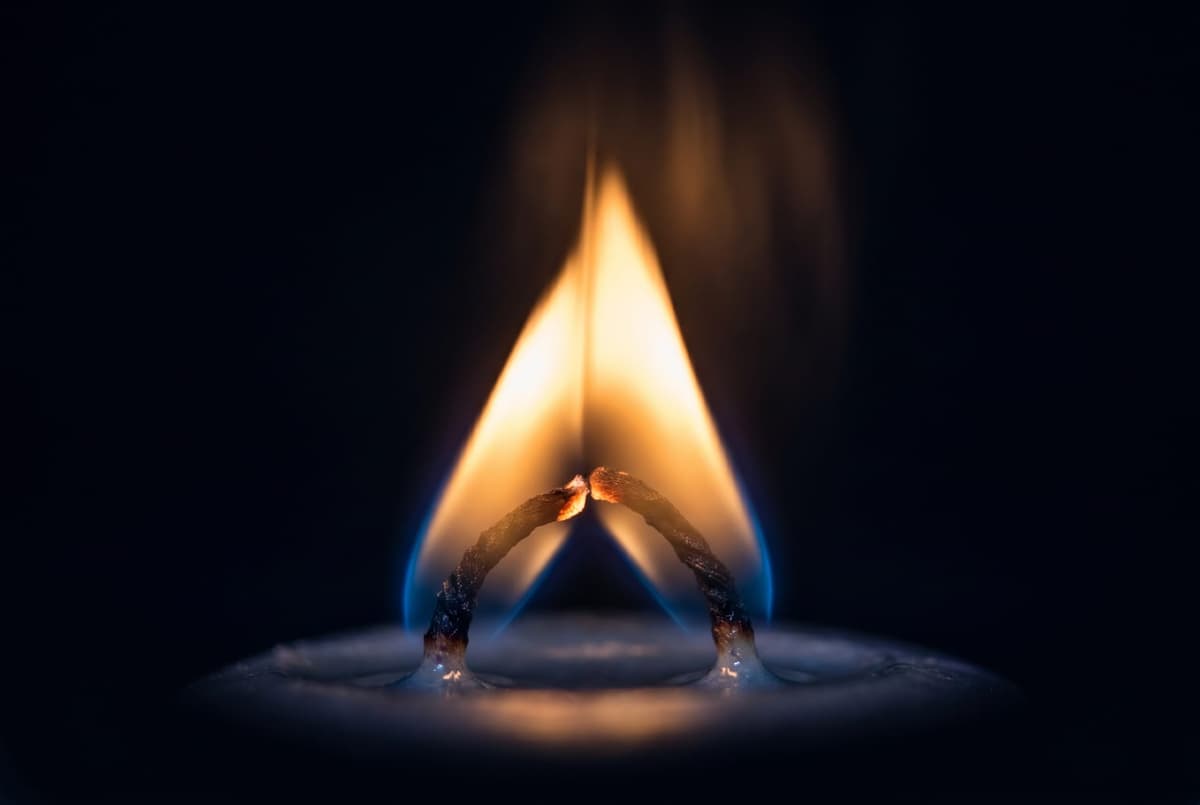
Conjunction Sun–Moon — symbolic illustration

Conjunction · 0°

Sun conjunction Moon

A neutral aspect: it amplifies both planets, and how it plays out depends on the signs they sit in and the rest of the chart.

Orb up to 8°NeutralNatal · synastry · transit
0°Sun conjunction MoonOrb up to 8° · major aspect
Oksana MiatovaWritten by Oksana Miatova·10 min read

For entertainment and self-reflection only. Not medical, legal, financial or psychological advice. Consult a qualified professional for important decisions.

The short answer

Sun conjunct Moon is will and feeling fused at a single point of the chart. In the natal chart it gives a striking wholeness of character and a blind spot when it comes to seeing yourself; in synastry it creates closeness at the level of instinct; in transit it coincides with the new moon and opens a short window for a fresh cycle.

What a conjunction is

The geometry behind the reading

A conjunction is a separation of zero degrees between two planets, and classically it is treated as the strongest of the major aspects. The textbook orb for a Sun–Moon conjunction is allowed up to eight degrees, though when I read a natal chart I usually tighten that to about six, and for transits and synastry to five. Geometrically the conjunction is neither harmonious nor challenging — it is neutral by nature, and how it plays out depends entirely on which planets have merged and in which sign. For the Sun and Moon, the merge means that the two most basic archetypes in the chart — the bright and the dark, the active and the receptive, the daytime self and the nighttime self — are working as a single organism. That gives you a real strength and a real blind spot at the same time, and both come from the very same fusion.

Three ways to read it

The same aspect, three different stories

One aspect reads differently depending on where you find it: inside a single birth chart, between two people, or moving across the sky right now. Read each as a way to notice patterns, not as a forecast.

Sun conjunct Moon in the natal chart

If Sun conjunct Moon sits in your natal chart, you were born at the new moon. That isn't a metaphor, it's an astronomical fact: on the night you arrived, anyone looking up would have seen the thinnest sliver of a crescent, or no Moon at all. Inside the chart it means that the two most basic archetypes — the solar one, which carries will, identity and the conscious 'I', and the lunar one, which carries feeling, habit and the need for basic safety — have merged into a single point. They cannot be pulled apart. And that is, at once, your strength and your main limitation.

The strength shows from childhood. A child with this aspect knows very early who they are. By three they already have firm opinions about what they love, what frightens them, who they want as a friend, which food will never pass their lips. That early definiteness can unsettle the adults around them, because there is no inner split to appeal to: when this child doesn't want something, they don't want it with their whole being at once. When they do, it's the same. There is no internal arbiter who might reconsider under the weight of an argument.

In adulthood that wholeness gives steadiness. I have watched people with this aspect in my practice for over a decade, and almost all of them share one trait: they take heavy blows without the psyche fracturing. Where another person comes apart, this person pulls themselves into a fist and keeps functioning. Low spells happen, but usually as a long background rather than a sudden collapse. They tend to go through crises quietly, sometimes for years, and come out the same person who went in, only with different experience.

But the price of that wholeness is a blind spot towards yourself. When will and feeling have grown together, the inner dialogue disappears. There is no 'I want one thing but feel another'. There is only one state, and it reads as the only possible one. A few typical difficulties grow from that. The first is the trouble of seeing yourself through someone else's eyes; people with this aspect often genuinely don't understand why others react to them the way they do, because their inner self-image and their outer impression are, to them, the same thing. The second is emotional reserve — your needs feel so obvious that you don't think to say them aloud, and a partner can live alongside you for years without knowing what was missing.

A third feature is the tie to one parent, more often the one of the same sex. That parent works as an external mirror standing in for the missing inner voice. As long as the relationship is good, you feel steady. If the parent dies, drifts away or fails your expectations, the support is knocked out. I regularly see clients with this aspect who, somewhere in their late thirties, meet for the first time the fact that they have no inner observer of their own, because for a whole life that role was played by a mother or a father.

The sign the conjunction sits in colours all of it. In fire signs the wholeness sounds like will and initiative — a natural leader from childhood. In earth signs it reads as practicality and groundedness; these people stand on their own feet early. In air signs it shows as a clear position and a leaning towards the role of teacher or carrier of ideas. In water signs it deepens into intuition and perceptiveness, often with a thread of healing, psychology or art.

Integrating this aspect is slow, fine work. External techniques help little, because you are used to trusting your own sense of things. What helps is anything that grows a second voice inside: long, depth-oriented therapy; a journal where you write about yourself in the third person; a mentor or teacher who asks the questions you can't answer on the spot. In time a gap appears between 'I' and 'how I see myself', and the aspect turns from a trap into a foundation. To see exactly how it plays out for you, the sign, the house and the aspects to other planets — especially Saturn, Pluto and Jupiter — all have to be read together.
When it flows

  • A whole, undivided sense of motivation — what you want and what you do tend to point the same way
  • A clear, early sense of self: you knew what you needed long before most people did
  • Quick recovery after a knock, because the inner structure doesn't split down the middle
  • A recognisable, all-of-a-piece quality that other people read as 'knowing your own mind'

When it grates

  • Genuine difficulty seeing yourself from the outside, with little inner dialogue between 'I' and 'I feel'
  • A long, sometimes lifelong, reliance on one parent's view as your only mirror
  • Emotional reserve — your needs feel so obvious to you that you don't think to say them aloud
  • Born at the new moon, a quiet sense of having to live out a cycle that began before you

The shadow side, and what to do with it

The shadow side of Sun conjunct Moon is a blind spot towards yourself. When will and feeling have grown together there is nothing to compare one against, so reflection gets hard: if something goes wrong, the reflex is to blame the world or to go quiet, because inner work needs two viewpoints and here there is only one. The way through is to grow a second voice on purpose — a journal, long therapy, a mentor who asks the uncomfortable questions. Over time you learn to talk about yourself almost in the third person, and the aspect turns from a trap into a foundation.

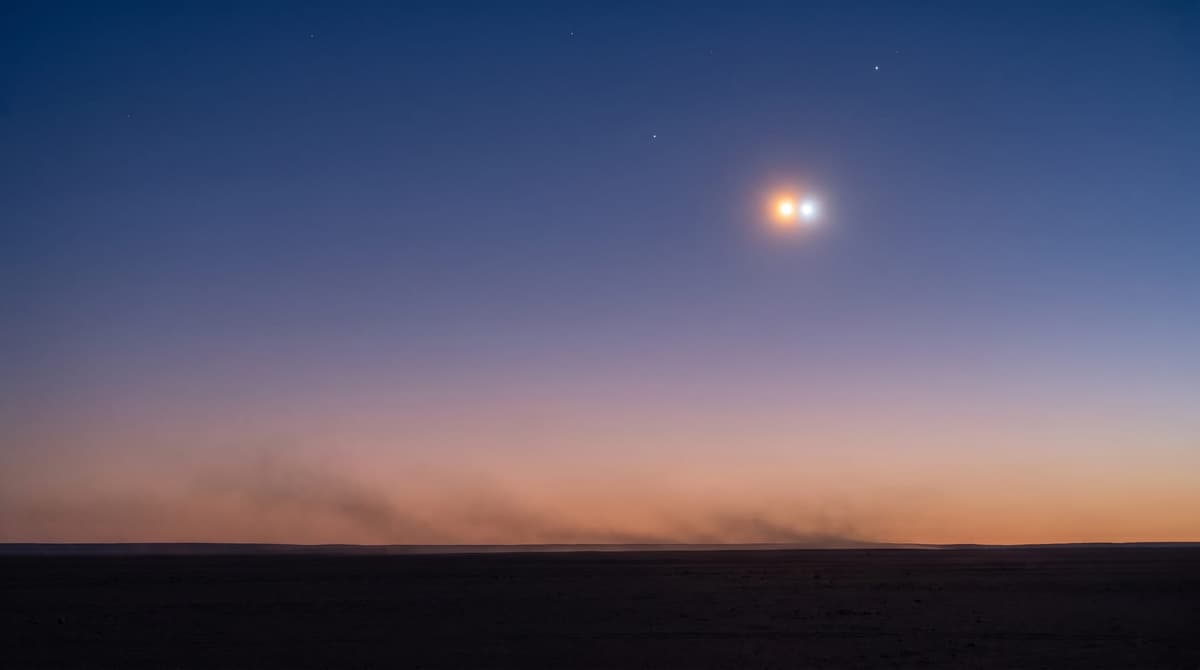
Conjunction — symbolic still life

How close is close

The orb decides the volume

A conjunction is rarely exact. The smaller the gap between the two planets — the orb — the louder the aspect plays. Here is roughly how the three bands read.

Tight

0–2°

Reads as a defining feature

At 0–2° the fusion reads as the dominant note of the whole chart. Will and feeling are practically indistinguishable, and other people experience you as very of-a-piece and often as a closed book. In this band the aspect sets the keynote of a life: the central task is learning to see yourself through other people's eyes, because your own mirror is fogged by the merging of two basic archetypes. Those born in the very first hours after the exact new moon often live lives where the personal and the public are so interwoven that one cannot be teased apart from the other.

Medium

2–5°

A steady background pattern

At 2–5° the aspect works steadily as a background feature of character, but it now allows some inner dialogue. A gap appears between 'I want' and 'I ought' that you can actually use for self-understanding. People in this band usually know they tend towards the categorical and learn to soften it by mid-life. Lunar and solar impulses rarely clash, but when they do the reaction is fast and strong. A strong attachment to one parent as the main reference point is typical here, with room to grow out of it.

Loose

5–8°

A faint colouring, felt in crises

At 5–8° the merge acts as a context light rather than as the structure of the personality. You feel the link between your wants and your feelings but you don't suffer from their fusion. In this band the aspect tends to surface in crisis moments — a Saturn return, a heavy transit, the early years of parenthood. The sign the conjunction sits in matters more here than the fact of the aspect itself: the pair of lights brightens the qualities of that sign and the themes of the house it falls in.

Conjunction with a partner — what does it mean for the two of you?

A full synastry reading — every aspect between your two charts

Sun conjunction Moon inside one chart is an inner mechanism. Between two charts it becomes the dynamic of a relationship. Enter both birth details and get a synastry reading — where the conjunctions sit, where the squares pull, where the oppositions draw you together — all calculated with the Swiss Ephemeris. Read it as a way to notice patterns, not a forecast.

Check your compatibilityfrom £1 · for entertainment

Compare with a neighbouring aspect

Same planets, a different distance

Sun opposite Moon tells a different story. If you're reading this to make sense of a specific chart, it's worth glancing at the neighbouring aspect too.

Sun opposite Moon
  • An opposition sets the lights 180° apart — born at the full moon, living since childhood in the tension between 'I' and 'what's needed'
  • The conjunction fuses them at one point; the opposition stretches them along an axis and asks you to keep choosing
  • The conjunction's main risk is not seeing yourself; the opposition's is not reconciling two sides of yourself
  • The conjunction buys wholeness at the cost of a blind spot; the opposition buys sight at the cost of constant choice
  • In synastry the conjunction glues partners together; the opposition draws them through complementary contrast

Lived examples

A few charts where you can see it

Public figures with a verified Rodden birth-data rating (AA/A/B). No invented data.

Frequently asked questions

What does Sun conjunct Moon mean in the natal chart?
It is will and emotional nature merged at one point of the chart, which means you were born at or close to the new moon. The great strength is an inner sense of being all of a piece — undivided and consistent. The great weakness is that there is little inner dialogue, so it's hard to see yourself from the outside and hard to change. People with this aspect often live for years under the strong influence of one parent, whose view stands in for the inner voice they haven't yet grown. Read it as a pattern to notice, not a verdict on who you are.
Is Sun conjunct Moon good or bad in synastry?
It is a very close contact, but not straightforwardly lucky. Partners fuse quickly, sense each other intuitively and make decisions almost as one. The downside is a strong pull towards symbiosis, blurred boundaries and emotional dependence. Over the long run the aspect works when both people deliberately protect their autonomy — separate interests, separate friends, time alone. As with everything here, this is a way to understand a relationship's patterns, not a prediction about it.
What orb should I use for Sun conjunct Moon?
Classically up to 8°, but for practical work I tighten it to about 6° in the natal chart and 5° in synastry and transits. Inside 2° the aspect sets the keynote of the whole chart. From 5–8° it works more as a background note and surfaces mainly in crises or under heavy transits. Beyond about 10° the conjunction is considered to have dissolved.
Which celebrities have Sun conjunct Moon?
Accurate examples need checking against AstroDatabank at a Rodden rating of AA or A. Names that get quoted casually — Obama and van Gogh among them — turn out on inspection to have a trine, or no aspect at all. I deliberately avoid listing figures without verifying them, so as not to pass an error along. You can check anyone in a minute on astro.com's AstroDatabank: look for the Sun and Moon in the same sign within 8° of each other.
When is the next Sun conjunct Moon?
A transiting Sun–Moon conjunction is simply the astronomical new moon — it happens roughly every 29.5 days. If you mean a transit to your natal points, the transiting Sun crosses your natal Moon once a year over 3–5 days, and the transiting Moon crosses your natal Sun once a month for a few hours. A progressed conjunction happens on average once every 28–30 years and tends to line up with a major life transition.
Is Sun conjunct Moon different for men and women?
Archetypally, yes. In a man's chart the inner feminine image tends to be fused with the ego, so it can be hard to tell where he ends and an idealised figure of mother or partner begins. In a woman's chart the inner masculine image tends to be fused with her emotional life, so will and feeling act as one — a source of strength, but one that makes it harder to own those assertive traits as separate. In practice both sexes can find it hard to integrate the contrasexual side of themselves. None of this is destiny; it's a lens for noticing.
Sun conjunct Moon in a child's chart — what should I look out for?
A child with this aspect usually shows a very early, very definite character: by three to five you can already see who they are, what they want, and what they will not stand for. The strength is steadiness; the risk is emotional reserve and a heavy attachment to one parent. It helps to widen the circle of trusted adults from early on so the child doesn't fix on a single figure, and to teach them to put their needs into words — because to them those needs feel so obvious they don't see why they'd need saying.
What if both partners have Sun conjunct Moon?
When both people carry a natal Sun–Moon conjunction, synastry doubles the theme of wholeness and reserve. The couple really can become 'a world unto themselves', hard for the outside to reach. That works in settled conditions but turns brittle in a crisis, because both partners lose access to outside points of support. It helps if at least one of them has a strong Mercury or a well-tenanted air element, which gives the gap needed for conversation and self-observation.
What do I do with a progressed Sun conjunct Moon?
A progressed conjunction comes round once every 28–30 years and almost always coincides with a serious life transition: a change of career, a new marriage, a move, a return to yourself after a long outward stretch. Inside the window — roughly two years — give yourself permission to change chapter. Don't force decisions in the first months, but don't ignore the signals that the old structure no longer fits. It's a good time for long therapy, for changing your rhythm, for revisiting your values.
Can I check Sun conjunct Moon myself?
Yes. Open your natal chart and find the positions of the Sun and Moon. If they're in the same sign and less than 8° apart, you have a conjunction. If they're in neighbouring signs but still under 8° (say, Sun at 28° Aries and Moon at 2° Taurus) it counts as a conjunction 'across the sign cusp', working a little more weakly. Past about 10° the aspect has formally dissolved. For entertainment and self-reflection, that quick check is all you need.

Related pages

The other aspects between Sun and Moon

The same two planets at a different angle — each reads differently.

Oksana Miatova
Oksana Miatova

Astrologer, co-founder of WowAstro

Oksana Miatova is a practising astrologer and co-founder of WowAstro. Natal charts, synastry and forecasts grounded in the Western classical tradition — explained through real-life examples and plain language.

More about the author →

For entertainment and self-reflection only. Not medical, legal, financial or psychological advice. Consult a qualified professional for important decisions.