Skip to content
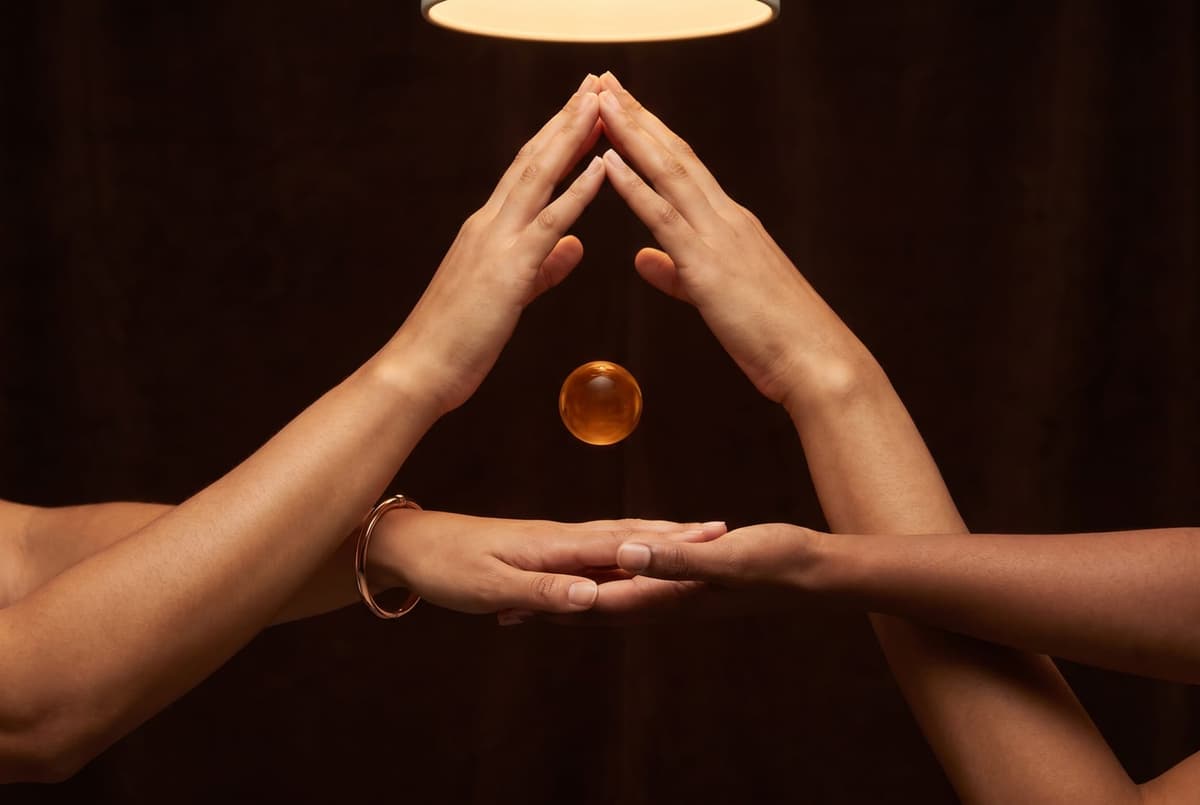
Trine Moon–Neptune — symbolic illustration

Trine · 120°

Moon trine Neptune

A harmonious aspect: the two planets support each other and tend to pull in the same direction. Read it as a resource to notice, not a guarantee.

120°Orb up to 6°HarmoniousNatal · synastry · transit
120°Moon trine NeptuneOrb up to 6° · major aspect
Oksana MiatovaWritten by Oksana Miatova·13 min read

For entertainment and self-reflection only. Not medical, legal, financial or psychological advice. Consult a qualified professional for important decisions.

The short answer

Moon trine Neptune is a harmonious aspect where the emotional nature and the imagination work as a single instrument. It tends to read as a built-in talent for empathy, music and image-rich perception, present since childhood as something taken for granted. Its main risk is being left unused — what comes easily rarely feels valuable.

What a trine is

The geometry behind the reading

A trine is a separation of a hundred and twenty degrees between two planets — a third of the zodiac circle. Among the classical aspects it is reckoned the most softly generous: the planets land in the same elemental triangle and support each other by nature. A conjunction fuses them into one body, a sextile half-opens a door and waits, opposition and square jangle the nerves and push you to act. A trine behaves differently — it flows of its own accord, without effort on your part. The textbook orb for a trine runs to about six degrees, and for the Moon some readers stretch it to seven or eight, since a luminary takes a wider margin. The tighter the degree, the louder the natural channel sounds; the wider the orb, the more the aspect fades into a background colouring of character that you rarely register as a separate resource.

Three ways to read it

The same aspect, three different stories

One aspect reads differently depending on where you find it: inside a single birth chart, between two people, or moving across the sky right now. Read each as a way to notice patterns, not as a forecast.

Moon trine Neptune in the natal chart

If Moon trine Neptune sits in your natal chart, the odds are you've long lived with a sense that you feel and perceive things a little differently from most people. Not louder, not more painfully — more finely. Someone else's mood registers at once, music and film land right in the centre of you, dreams sometimes settle into meaningful stories you want to return to in daylight. You may not remember when it began, because it has been with you since childhood. The trine is a natural aspect. It doesn't arrive as a revelation in your thirties; it shapes the psyche from the first years of life.

In childhood that Moon usually shows up as a rich inner world. Long games with imaginary plots, a love of fairy tales and films full of the magical, an attachment to water, to quiet places, to soft animals. Often such children reach for music or drawing early — not because a parent pushes them, but because there is already a melody inside that wants writing down. Where a family supports the trait, the aspect unfolds early and steadily. Where it gets dismissed — 'stop making things up', 'go and do something useful' — it doesn't vanish but goes underground, and the child grows up sensing there is something inside they can't quite name.

In adult life Moon trine Neptune gives a steady empathy that works almost on its own. People come to you for support and counsel, they ask you about their dreams and their states, it's easier to cry near you than near most. That quality is a resource and a load at the same time. There's no infinite ration of feeling, and the natural channel burns out especially fast if it isn't protected. Many people with this aspect arrive, in the second half of life, at having learned to say 'no' and to close the door before they're completely spent.

The sign and house the aspect falls in change the flavour without changing the mechanism. A watery Moon deepens the whole thing into outright intuition and a pull towards healing or the caring trades. An airy one routes the same sensitivity through words and ideas, so it surfaces as a knack for catching the mood of a room or a reader. An earthy placement grounds it, and the gift comes out in craft, cooking, gardening or anything where atmosphere is made with the hands. The house tells you where in life the channel runs loudest — near home and family in the lower half of the chart, out in public roles and causes in the upper. None of this is fixed in advance, but it does explain why two people with the 'same' aspect can look so unalike from the outside.

The difficulties of the aspect are gentle too, and that is exactly where their cunning lies. The first is the blurring of boundaries. You get so used to feeling what others feel that you stop telling it apart from your own. Someone else's anxiety becomes your anxiety, someone else's joy your joy, and at some point it's unclear what you yourself actually want. The second is idealisation — especially towards a mother, towards old relationships, towards the places of childhood, towards people you saw rarely and so had time to build up into an image. Reality usually falls short of the bar that imagination set, and then comes the familiar 'none of this is quite it'. The third is the temptation to hide. When the outer world bears down, the trine generously slips you fantasy, spiritual practice, media, daydreams. Sometimes that's needed rest; sometimes it's a way of putting off important conversations and decisions for years.

The great paradox of the aspect is that it is easy to live out for nothing. A square won't let you do that — it wakes you with breakdowns, anxieties, emotional see-sawing. An opposition forces the work through crises in relationships. A conjunction welds the theme on for good. The trine does none of these things. It quietly holds the channel open, and if across thirty or forty years you never once use it as an instrument, it won't take offence. A part of your inner life simply stays in potential. Many owners of this aspect look back in later years and say: 'I always sensed I could do more.'

Developing the trine is the discipline of form. The natural channel doesn't need activating the way a sextile does. It needs a regular structure that keeps the gift in use. A few pages of writing a day. Twenty minutes of music with no aim of showing anyone the result. Training in psychology and work with other people. A helping profession. A creative project you carry through to the end, however small. These plain forms turn generous inner material into a concrete piece of work. Without a form the aspect leaks away as a background tone; with one it becomes a lifelong instrument. If you'd like to see how your Moon trine Neptune gathers with the rest of your aspects into a full picture, a natal chart from WowAstro can show where this channel runs strongest in your life.

When it flows

  • Natural empathy — you read the emotional shading of other people before they've named it for themselves
  • A rich inner imagery from childhood: vivid dreams, long inner storylines, music and film landing deeper than for most
  • The ability to restore yourself through subtle means — water, quiet, nature, art, touch, scent
  • Easy access to creative and psychological work where others need years of training and personal therapy

When it grates

  • A chronic under-use of the gift: what comes easily seems unimportant and sits in the background for a lifetime
  • Personal boundaries blur almost unnoticed — you grow used to feeling others' states as your own and stop telling them apart
  • Idealising mother, home, the past, romantic partners, with regular let-downs as each illusion thins out
  • The pull to hide in fantasy, media, daydreams or spiritual practice rather than tackle the dull, concrete tasks of reality

The shadow side, and what to do with it

The shadow side of Moon trine Neptune isn't ruin — it's the thing that never quite happened. A person can live a whole life in which their main instrument hummed away quietly in the background but was never shaped into work, a relationship or a finished form. Sometimes it curdles into a vague middle-aged regret: 'I always sensed I could do more.' Integration begins with admitting that the easy thing has value too. Unlike a sextile, this channel doesn't need activating — it needs the discipline of form: regular writing, voice notes, a music practice, psychological work with other people. The aspect hands you raw material generously. The job is to build a concrete house out of it, not leave it lying in the corner of the workshop.

Trine — symbolic still life

How close is close

The orb decides the volume

A trine is rarely exact. The smaller the gap between the two planets — the orb — the louder the aspect plays. Here is roughly how the three bands read.

Tight

0–2°

Reads as a defining feature

At 0–2° the trine sits at full volume. The channel between the emotional nature and the imagination runs wide open. In the natal chart it reads as a clear, built-in talent for empathy, image-led thinking and fine perception, visible from childhood and recognisable to the people around you. In synastry it gives a deep emotional understanding that the special quality of the bond rests on — that sense of a kindred soul from the first meetings. In transit it lasts a few hours that are plainly different in inner texture, and that take to creative and inward work easily.

Medium

2–5°

A steady background pattern

At 2–4° the aspect matters and asks for a form. The channel works at full strength, but without conscious discipline it leaks away as a background tone. In the natal chart this is marked sensitivity and imagery that unfold through one or two specific pursuits — music, psychology, art, the helping professions — and otherwise stay a resource for those close to you. In synastry it is a steady understanding that needs regular shared rituals so it doesn't sink into background. In transit it is a gentle window, noticeable when you pay deliberate attention to your own state.

Loose

5–8°

A faint colouring, felt in crises

At 4–6° the aspect is present and colours rather than forms. It sets a background temperature for the character or the contact more than it shapes their core. In the natal chart this is a mild leaning towards daydreaming, empathy and a love of water and music, without a fully developed creative channel. In synastry it is a general softness and a warm atmosphere to the relationship without a strong resonant effect — cosy more than deep. In transit it is a barely perceptible shift of background, more often noticed after the fact: 'that evening, for some reason, I thought well.'

Trine with a partner — what does it mean for the two of you?

A full synastry reading — every aspect between your two charts

Moon trine Neptune inside one chart is an inner mechanism. Between two charts it becomes the dynamic of a relationship. Enter both birth details and get a synastry reading — where the conjunctions sit, where the squares pull, where the oppositions draw you together — all calculated with the Swiss Ephemeris. Read it as a way to notice patterns, not a forecast.

Check your compatibilityfrom £1 · for entertainment

Compare with a neighbouring aspect

Same planets, a different distance

Moon square Neptune tells a different story. If you're reading this to make sense of a specific chart, it's worth glancing at the neighbouring aspect too.

Moon square Neptune
  • The trine gives a natural channel between feeling and imagination; the square presents an inner conflict between them
  • In the trine the emotional nature and fine perception reinforce each other; in the square they argue — moods swing, reality blurs into the dream
  • The trine is easy to miss because it doesn't insist; the square cannot be missed — it announces itself through anxiety, emotional see-sawing and the urge to escape
  • Integrating the trine means the discipline of form for a built-in gift; integrating the square means a peace deal between the need for solid ground and the need to dissolve
  • The trine risks living a life in potential; the square forces you to live it consciously through regular work with the theme

Lived examples

A few charts where you can see it

Public figures with a verified Rodden birth-data rating (AA/A/B). No invented data.

Frequently asked questions

What does Moon trine Neptune mean in the natal chart?
It's a harmonious aspect in which the emotional nature and the imagination work as a single instrument. It tends to give natural empathy, fine perception, easy access to creative and psychological practice, and the ability to restore yourself through quiet, water and art. The catch is that the channel runs on its own, so people with it rarely rate it as valuable — what comes easily tends to feel unimportant. Read it as a pattern to notice, not a verdict on who you are.
Is Moon trine Neptune good in synastry?
It's one of the softest and most nourishing emotional aspects in synastry. Partners feel from the start that they've known each other a long time, understand each other without words, and find shared interests appearing of their own accord. The one real risk is comfortable stagnation: the aspect generously supplies closeness but builds neither agreements nor projects nor a plan on its own. It works over the long run when both people take deliberate, regular steps towards each other. As always, this is a way to understand a relationship's patterns, not a prediction about it.
What orb should I use for Moon trine Neptune?
The standard orb for a trine is about six degrees, and for the Moon some readers widen it to seven or eight, since a luminary takes more room. The tighter the degree, the louder the natural channel sounds. At an orb of five to six degrees the aspect works more as a background colouring of character than as a pronounced theme of a life.
How is Moon trine Neptune different from a sextile?
A trine gives a natural talent that works on its own from childhood, with no conscious switching-on required. A sextile offers a fine possibility that only opens up with regular practice. The trine's risk is comfort and under-use; the sextile's is walking past the resource without ever noticing it. The trine is the more generous of the two, the sextile the more demanding of your attention.
How is Moon trine Neptune different from a square?
A trine gives a channel; a square gives an inner conflict. In the trine, feeling and imagination reinforce each other; in the square they argue, and you live between moods and illusions. The trine doesn't insist on being expressed, while the square announces itself through emotional see-sawing, anxiety and the urge to flee into fantasy. The paradox: a square more often pushes you into conscious work with the theme, while a trine risks staying in potential.
How do I develop Moon trine Neptune?
Through the discipline of form. The natural channel doesn't need activating — it needs a regular structure that keeps the gift in use: daily writing, a music practice, training in psychology, a helping profession, steady work with other people as a therapist, teacher, artist or director. Without a form the aspect leaks into the background; with one it becomes a lifelong instrument. This is offered for reflection and self-understanding, not as a recipe for any particular outcome.
Moon trine Neptune in transit — what should I do with it?
Use the window for quiet, for creative work, for talking about feelings, and for the letters and calls that have been put off. It's not the best time to sign contracts or make financial decisions, since the focus is tilted towards image-led perception. If the day is packed with errands and noise, the aspect will pass unnoticed, so it's worth checking an ephemeris in advance and setting aside two or three hours for yourself. Treat it as a gentle prompt, not a forecast.
Which famous people have Moon trine Neptune?
Among well-known figures cited with this aspect are Steven Spielberg (director, Rodden A), Ingrid Bergman (actress, Rodden AA) and Pierre-Auguste Renoir (Impressionist painter, Rodden A). In each case the natural lunar–Neptunian sensitivity became a working tool of the craft — a cinematic language for Spielberg, emotional precision for Bergman, the soft light of the canvas for Renoir. Charts are worth checking against AstroDatabank rather than taken on trust.
Can Moon trine Neptune become a problem?
Directly, rarely. The aspect neither ruins nor presses. Indirectly, yes — through blurred boundaries, idealising the people close to you, and a tendency to hide in fantasy instead of facing the dull tasks of reality. These show up more strongly when the chart also carries tense aspects of the Moon or Neptune to other planets. On its own the trine tends to soften and to supply a resource rather than create strain.
Is Moon trine Neptune different for men and women?
The underlying nature of the aspect is the same for both: natural empathy, a rich imagination, the capacity to feel alongside others on a fine level. Social roles change the way it tends to show, more than the thing itself. Women may find it culturally easier to express through relationships, care and aesthetics; men often find it easier to channel through a profession — film, psychology, music, medicine, art. That difference is set by culture, though, not by astrology, and none of it is destiny.

Related pages

The other aspects between Moon and Neptune

The same two planets at a different angle — each reads differently.

Oksana Miatova
Oksana Miatova

Astrologer, co-founder of WowAstro

Oksana Miatova is a practising astrologer and co-founder of WowAstro. Natal charts, synastry and forecasts grounded in the Western classical tradition — explained through real-life examples and plain language.

More about the author →

For entertainment and self-reflection only. Not medical, legal, financial or psychological advice. Consult a qualified professional for important decisions.