Skip to content
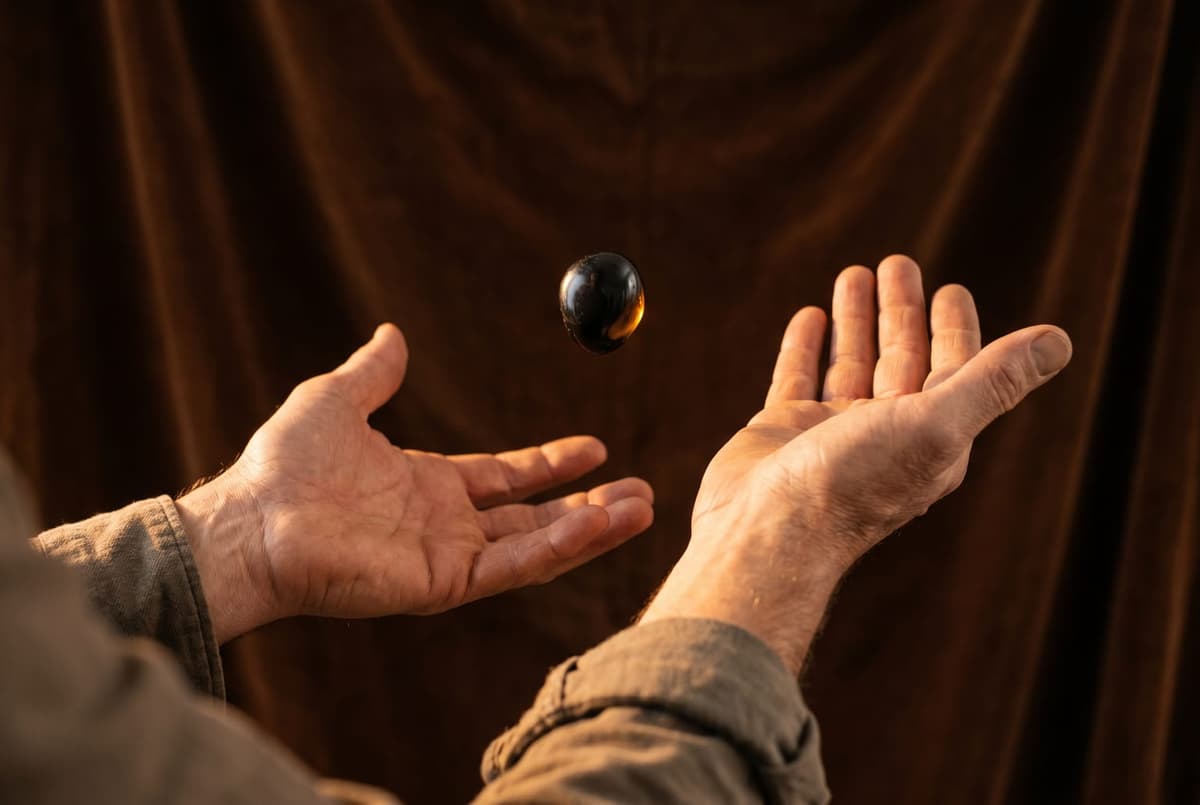
Sextile Moon–Neptune — symbolic illustration

Sextile · 60°

Moon sextile Neptune

A harmonious aspect: the two planets support each other and tend to pull in the same direction. Read it as a resource to notice, not a guarantee.

60°Orb up to 4°HarmoniousNatal · synastry · transit
60°Moon sextile NeptuneOrb up to 4° · major aspect
Oksana MiatovaWritten by Oksana Miatova·11 min read

For entertainment and self-reflection only. Not medical, legal, financial or psychological advice. Consult a qualified professional for important decisions.

The short answer

Moon sextile Neptune is a gentle link between your emotional nature and your imagination, compassion and fine perception. It is not a loud gift but a quiet opening: the channel only does its work when you deliberately make room for it in everyday life.

What a sextile is

The geometry behind the reading

A sextile is a separation of sixty degrees between two planets — a sixth of the zodiac circle. Of the classical aspects it is reckoned the mildest, and for that reason the most easily missed. A conjunction welds the planets into one; a trine pours out of its own accord, with no effort asked; an opposition and a square jangle the nerves and force you into action. The sextile behaves differently — it leaves a door ajar and waits. The textbook orb runs to about four degrees, and because the Moon is a luminary I sometimes stretch it to five. The tighter the degree, the more clearly the possibility sounds, and the easier it is to hear; the wider the orb, the greater the chance a person lives a whole life never realising what instrument was sitting in their hands. For the Moon and Neptune the pair links the most personal archetype in the chart — feeling, habit, the need for safety — with the most diffuse one — dream, longing, the dissolving of edges. At a sextile they don't merge and they don't fight. They simply offer to work together, if you'll let them.

Three ways to read it

The same aspect, three different stories

One aspect reads differently depending on where you find it: inside a single birth chart, between two people, or moving across the sky right now. Read each as a way to notice patterns, not as a forecast.

Moon sextile Neptune in the natal chart

If the Moon and Neptune stand in a harmonious sextile in your birth chart, the odds are you've long lived with a quiet sense that you take the world in a touch more finely than the people around you. Not loudly, not like a revelation — just as a background tone. Someone's mood is plain to you before they say a word. A piece of music moves you where, for the person beside you, it's simply sound filling the room. Dreams sometimes settle into stories that mean something. Water and silence put you back together better than the most carefully chosen relaxation technique. This aspect rarely shows up in a way that sends a person off to enrol in art school. More often it works as a soft light cast over the ordinary decisions of a day.

In childhood that kind of Moon usually surfaces as a love of stories, a pull towards water, a fondness for solitary games with imagined plots. Many children with this aspect stay inside their own make-believe for a long while, and the adults read it as aloofness, or as a character that's simply 'too sensitive'. What's actually forming is an inner instrument that will become a support later on. But if the people around the child wave the sensitivity away, tell them to 'stop making things up' and steer them towards more 'useful' pursuits, the aspect slips into the background. The child grows up convinced they have no particular talents, when in truth the channel was only ever left switched off.

In adult life the sextile gives a soft but durable empathy. It costs you little to stand in someone else's shoes, to grasp their hurt, to find the exact word in a hard moment. People are drawn to that without quite knowing why — friends ring to unburden themselves, colleagues tell you what they'd tell no one else, children settle near you because near you it feels safe. The catch is that empathy has a budget, and a fine, porous nature is especially easy to overdraw. If you never learn to guard the gift, it burns through quickly, and the warmth that drew people in starts to feel like a tax.

The difficulties of this aspect are gentle too, and that's exactly where their cunning lies. Blurred personal boundaries come first. You can go a long time unsure whether a feeling is yours or borrowed, whether a wish is your own or simply what the room expects of you. Idealising comes second — of your mother above all, of an old relationship, of the house you grew up in, of any place where things once felt good. Reality seldom clears the bar your imagination sets, and so the familiar verdict arrives: 'none of this is quite right'. The third trap is the retreat into fantasy in place of action. When real life presses, the Moon–Neptune sextile murmurs, 'picture it all going well', and now and then that murmur is far more comfortable than looking at the bills, or the calls you'd rather not make.

The paradox of the aspect is how easily a whole life can pass without ever spending it. A trine declares itself. An opposition forces you to work the theme through its crises. A square wakes you with the slammed door of a breakdown. The sextile does none of that. It holds the door open in silence, and if thirty or forty years go by and you never once step through, it takes no offence — a part of your inner life simply stays unopened. Many people come to this aspect in the second half of life, once the outward scripts are spent and there is room at last for the inward ones. That's when they discover the instrument was ready the whole time, and all that was needed was to pick it up.

Switching it on is simple, but it asks for consistency rather than grand gestures. A regular practice that lets feeling and image out into the open: a journal in the evening, a walk without headphones at least once a week, a morning that begins without the phone, an hour given to music, to drawing, to any quiet pursuit with no obligation to produce a result. No masterclasses, no art school required. What's required is to stop drowning your own background in someone else's noise. Then the aspect begins to work at full strength, and a steady inner sense settles in — that you know who you are and what you actually need. Read this as a gentle map of your own tendencies, something to explore rather than obey, and remember the full picture only emerges when this aspect is read alongside everything else in your chart.

When it flows

  • A fine emotional sensitivity — you catch shades of mood in yourself and in others where most people see a flat, even surface
  • A rich inner life: dreams, images, snatches of melody and questions of meaning arrive on their own, without you reaching for them
  • Natural compassion without martyrdom — you don't have to talk yourself into believing someone's pain is real, you simply feel it
  • The ability to recover through quiet, water, art and nature — the ordinary ways of resting work better for you than for most

When it grates

  • Blurred personal boundaries — it's easy to lose the line between where your feelings end and someone else's begin
  • A habit of slipping into fantasy or box-sets rather than facing a difficult emotion head-on
  • A pull to idealise your mother, your partners, your home or your past, then to sulk when reality doesn't quite reach the mark
  • You can spend decades believing you've no creative streak at all, because the aspect never insists you prove otherwise

The shadow side, and what to do with it

The shadow side of Moon sextile Neptune is a quiet one. It isn't ruin, it's a slow under-receiving — a sense that there is more inside you than you ever show the world, with no obvious handle to reach it by. Sometimes it settles into a chronic, vague 'I feel low and I can't say why'. Integration starts small: an evening journal, a walk without headphones, a morning without the phone, any steady practice that gives the inner life a way out. You needn't become a painter or a therapist; it's enough to stop drowning your own background in noise. Done that way, the aspect turns from a sleeping resource into a steady source of support you can lean on.

Sextile — symbolic still life

How close is close

The orb decides the volume

A sextile is rarely exact. The smaller the gap between the two planets — the orb — the louder the aspect plays. Here is roughly how the three bands read.

Tight

0–2°

Reads as a defining feature

At 0–2° the channel between feeling and imagination sounds clearly, and a person senses it even with no knowledge of astrology. In the natal chart it gives a steady link between the emotional nature and the subtle world, showing up regularly in dreams, intuitive choices and responses to art. In synastry it reads as a noticeable emotional understanding — both partners remark on the softness and calm they feel beside each other. In transit it produces a day that is plainly different from the ordinary in the quality of its inner weather, and that takes well to creative or meditative work.

Medium

2–5°

A steady background pattern

At 2–3° the aspect is meaningful but wants conscious attention. The channel works, yet a person may not notice it without a nudge, especially if life is loud with outside noise. In the natal chart it gives a talent for feeling and image-led thinking that opens through one or two specific pursuits — music, keeping a journal, psychological work — and otherwise stays in the background. In synastry it is a pleasant understanding that needs regular feeding by shared rituals. In transit it is a few hours of a gentle window, noticeable only if the day isn't overloaded.

Loose

5–8°

A faint colouring, felt in crises

At 3–4° the aspect is present but stays in the background, colouring a character or a contact rather than shaping it. In the natal chart it shows as a mild leaning towards daydreaming, a sensitivity to the moods of those around you, a love of water and music, with no pronounced creative channel. In synastry it gives a general softness to the relationship without strong resonance — more cosy than deep. In transit it is a barely perceptible shift in the background, more often noticed in hindsight: 'odd, that evening my thinking just seemed to flow.'

Sextile with a partner — what does it mean for the two of you?

A full synastry reading — every aspect between your two charts

Moon sextile Neptune inside one chart is an inner mechanism. Between two charts it becomes the dynamic of a relationship. Enter both birth details and get a synastry reading — where the conjunctions sit, where the squares pull, where the oppositions draw you together — all calculated with the Swiss Ephemeris. Read it as a way to notice patterns, not a forecast.

Check your compatibilityfrom £1 · for entertainment

Compare with a neighbouring aspect

Same planets, a different distance

Moon square Neptune tells a different story. If you're reading this to make sense of a specific chart, it's worth glancing at the neighbouring aspect too.

Moon square Neptune
  • The sextile offers a quiet chance to feel more finely; the square stages a conflict between 'I want to lean on my feelings' and 'my feelings dissolve the very ground I'm standing on'
  • In the sextile, emotional nature and imagination run in parallel; in the square they get in each other's way — moods swing, reality blurs into fantasy
  • The sextile is easy to overlook and never switch on; the square cannot be overlooked — it announces itself through emotional see-saws, anxiety and the urge to bolt
  • Integrating the sextile means waking a sleeping resource through steady practice; integrating the square means brokering a peace between the need for solid ground and the need to dissolve

Lived examples

A few charts where you can see it

Public figures with a verified Rodden birth-data rating (AA/A/B). No invented data.

Frequently asked questions

What does Moon sextile Neptune mean in the natal chart?
It is a harmonious link between your emotional nature and your imagination. The aspect gives a fine reading of other people's states, a rich inner life, and a knack for leaning on dreams and images. Its defining trait is that the channel never insists on showing itself. Without regular practice it can stay a sleeping resource you only stumble on by chance, often well into adulthood. Treat it as a pattern to notice and play with, not a verdict on who you are.
Is Moon sextile Neptune good in synastry?
It is one of the softest emotional aspects in synastry. Partners understand each other easily without words, and the bond has a restorative effect. There is one catch: the fine understanding is easy to take for granted and never shape into shared rituals or projects. The aspect supplies the material but doesn't build the relationship on its own — that needs small, regular steps towards each other. Read it as a way to understand a relationship's patterns, not a forecast about it.
What orb should I use for Moon sextile Neptune?
The standard sextile orb is about four degrees. Because the Moon is a luminary, that orb is sometimes stretched to five. The tighter the degree, the more loudly the possibility sounds. At an orb of three to four degrees the aspect works more as a background note of character than a pronounced theme. Past five degrees or so it's generally considered to have faded out.
How do I activate Moon sextile Neptune?
Through simple, regular practices that give the inner life a way out. An evening journal, a walk without headphones, a morning without the phone, steady time with music, drawing or meditation all work well. You don't need to become an artist — it's enough to stop drowning your own emotional background in noise. The channel responds to consistency rather than intensity. As ever, this is for self-reflection and enjoyment, not a promise of results.
How is Moon sextile Neptune different from the trine?
A Moon–Neptune trine works of its own accord, with no conscious input — the gifts for empathy, music and image-led perception show up from childhood as something taken for granted. The sextile is more reserved: it leaves a door ajar and waits for you to walk through. The trine's risk is comfort and an under-used talent; the sextile's risk is walking straight past the resource without ever noticing it was there.
Which famous people have Moon sextile Neptune?
Among well-known figures associated with this aspect are Carl Gustav Jung (psychiatrist, founder of analytical psychology, Rodden A), Salvador Dalí (surrealist painter, Rodden AA) and Frédéric Chopin (composer, Rodden A). In each case the aspect became the source of an unmistakable inner language — the psychology of archetypes for Jung, the visual dreams of Dalí, the emotional polyphony of Chopin. It's always worth checking any chart yourself on a reliable database before quoting it.
Can Moon sextile Neptune ever be a problem?
Rarely as a direct problem — the aspect neither ruins nor presses. Indirectly, yes: through blurred boundaries, the idealising of loved ones, and a tendency to retreat into fantasy rather than face a hard emotion. These show up more strongly if the chart also holds tense aspects from the Moon or Neptune to other planets. On its own the sextile tends to soften things rather than complicate them. None of this is destiny; it's a lens for noticing.
Is Moon sextile Neptune different for men and women?
The underlying nature of the aspect is the same for both: a fine emotional sensitivity, a rich imagination, a capacity for fellow-feeling. Social roles change the way it tends to come out rather than the substance. A woman may find it easier to express through relationships, care and aesthetics; a man often finds it simpler through a professional channel — psychology, art, medicine, music. But that difference is shaped by culture, not by astrology, and it's only a lens for self-reflection.

Related pages

The other aspects between Moon and Neptune

The same two planets at a different angle — each reads differently.

Oksana Miatova
Oksana Miatova

Astrologer, co-founder of WowAstro

Oksana Miatova is a practising astrologer and co-founder of WowAstro. Natal charts, synastry and forecasts grounded in the Western classical tradition — explained through real-life examples and plain language.

More about the author →

For entertainment and self-reflection only. Not medical, legal, financial or psychological advice. Consult a qualified professional for important decisions.