Skip to content
Square Moon–Neptune — symbolic illustration

Square · 90°

Moon square Neptune

A challenging aspect: the two planets rub against each other and ask for conscious handling. Tension here is a source of movement, not a verdict.

90°Orb up to 6°ChallengingNatal · synastry · transit
90°Moon square NeptuneOrb up to 6° · major aspect
Oksana MiatovaWritten by Oksana Miatova·11 min read

For entertainment and self-reflection only. Not medical, legal, financial or psychological advice. Consult a qualified professional for important decisions.

The short answer

Moon square Neptune is a tense 90° angle between your emotional nature and the realm of dream, illusion and fine-grained perception. Feeling floods easily into fog and the line between what's yours and what's borrowed dissolves; in the natal chart it gives rare sensitivity at the cost of weak boundaries, in synastry it breeds idealised love, and in transit it softens reality just enough to make a poor decision feel inspired.

What a square is

The geometry behind the reading

A square is a separation of ninety degrees between two planets, and in classical astrology it counts as one of the two major tense aspects, sitting just below the conjunction in raw force and working in the same league as the opposition. Where a conjunction welds two energies into a single point and an opposition stretches them along an axis, a square sets them at right angles and makes them grind, and that grinding always produces friction. The psychological school stopped calling the square a 'bad' aspect a long time ago: it doesn't break you, it makes you move. Where two functions of the psyche can't agree peacefully, you're forced to find a third way, grow a new skill, learn to see yourself more honestly. The textbook orb for a square is up to six degrees, though when the Moon is involved I allow a little more — up to seven or eight — because the Moon is one of the strongest points in any chart. The tighter the angle, the louder it sounds in the character, and the more visible the result becomes once you learn to work with it rather than wage war on it.

Three ways to read it

The same aspect, three different stories

One aspect reads differently depending on where you find it: inside a single birth chart, between two people, or moving across the sky right now. Read each as a way to notice patterns, not as a forecast.

Moon square Neptune in the natal chart

If Moon square Neptune sits in your natal chart, you've known this state since you were very small, even if you never put a name to it. Other people's feelings come into you as though they were your own. You walk into a room and you can tell, before a word is spoken, who has fallen out with whom. You listen to a piece of music and weep where everyone else just nods along. You look into someone's eyes and you understand more about them than they've told you — and more, sometimes, than they know about themselves.

On one side, that's a richness. On the other, it's a very expensive ability, because it's as if you have no separate skin. The line between "this is my feeling" and "this came from outside" is blurred almost all the time. As a child you may have fallen ill on the back of stress, had anxious dreams, been frightened by things the other children never noticed at all. Often, in families like these, there was a mother who was emotionally complicated. Not necessarily a bad mother — just a very sensitive, anxious, sometimes dependent one, who would sometimes vanish so deeply into her own feelings that the child was left without an emotional anchor and learnt to read her mood simply to predict how the day would go.

In adult life the aspect gives a character that's hard to sum up in a single word. From the surface you might be all sorts of different people, but on the inside there is always a little more of you than you let show. Tight schedules are difficult, because your energy rises and falls for reasons you can't always trace. Saying no is hard, because someone else's pain registers far too clearly. You take on what isn't yours to carry, then burn out, then blame yourself for the burnout — a tidy little loop that can run for years before you spot it.

Creative ability is almost always present with this square; the only real question is whether you've found a channel for it. A great many owners of this aspect write, paint, play, photograph, work in psychology or work with the body. For them, creativity isn't a hobby, it's a way of processing an overflow of feeling. Where there's no channel, that overflow goes inward instead, and that's when the patches arrive — apathy, anxiety, the sense of having "run out of strength for no reason at all".

Then there's the separate theme of illusions. This square is wonderfully good at inventing people and then believing in the invention. You can fall in love with someone you barely know and quietly build them a whole personality they don't actually possess. You can trust someone who hasn't earned it, because you feel a kindred soul in them, and that feeling can't be checked against logic. You can pity someone who is coping perfectly well on their own, while failing to notice your own exhaustion. Healthy work with this square begins exactly here: you stop automatically believing every emotion the moment it arrives, and you learn to test it instead.

The relationship with this aspect shifts as you age. Before thirty it tends to deliver vivid romantic episodes, stretches of immersion in art or spiritual practice, sometimes a brush with dependence. After thirty a more grown-up attitude to your own sensitivity usually arrives: you stop being embarrassed by it, but you also stop over-using it. By forty, many people find a form in which that fineness becomes a profession or a steady source of meaning. Some go into therapy as a client first and a practitioner later. Some begin to write, or to teach. Some find a partner who respects the rhythm and doesn't rush them.

The central task of Moon square Neptune in the natal chart is to learn to tell yourself apart from the space around you without losing your ability to feel that space at all. This runs against the usual either-or logic — "either you feel, or you defend yourself". In truth, both are possible at once. When you build your boundaries not out of armour but out of a clear "I know what's mine and what isn't", the aspect stops being a problem and turns into a rare resource that very few people carry. To see exactly how it plays out for you — the signs your Moon and Neptune sit in, the houses involved, the other planets wired into the square — the whole chart has to be read together; "I've got Moon square Neptune" on its own only takes you so far.

When it flows

  • Fine emotional sensitivity — you read the mood of a room and the people in it almost on entry
  • Real creative potential, especially in music, film, poetry, psychology and any work with feeling
  • A capacity for deep compassion that reaches people others walk straight past
  • A rich inner life, well-developed intuition and vivid, sometimes startling, dreams

When it grates

  • Trouble with boundaries — you mistake other people's feelings for your own without noticing
  • A habit of idealising people first and being disappointed in them later
  • Drifting into daydream and 'I just need to think about it' instead of acting
  • Emotional swings, anxiety with no clear cause, and patches of fog or flat apathy

The shadow side, and what to do with it

The shadow side of this square is the habit of softening reality so it's easier to bear. You start believing your own stories about people and situations, taking offence at something you invented, loving an image rather than the living person in front of you. Sometimes it tips into escape — into substances, or into rescuing someone who never asked to be rescued. Integration begins with a very plain question to yourself: am I actually feeling this, or did I imagine it? Once you stop merging with every emotional current and learn to pause, the sensitivity stops being a curse and becomes an instrument. Regular therapy, body-based practices and keeping a journal tend to help most with that work.

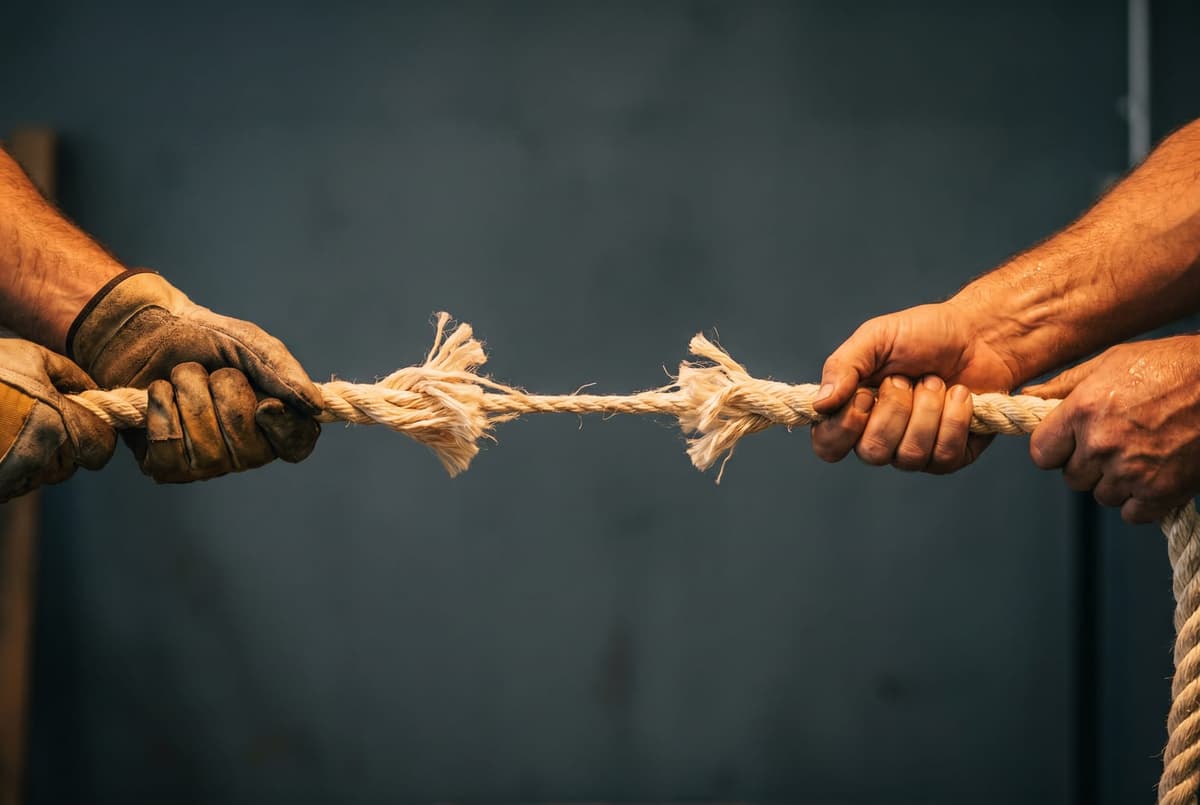
Square — symbolic still life

How close is close

The orb decides the volume

A square is rarely exact. The smaller the gap between the two planets — the orb — the louder the aspect plays. Here is roughly how the three bands read.

Tight

0–2°

Reads as a defining feature

At 0–2° this is an exact square, and the theme of boundaries between self and other becomes one of the central facts of a life. A person in this band lives from childhood with very thin skin: other people's emotions enter as if they were their own, while their own feelings are often a mystery even to them. It gifts a talent for psychology, music and acting, but it's expensive in everyday life. By around forty the owner of such an aspect usually knows their traps by heart and has learnt to walk around them.

Medium

2–5°

A steady background pattern

At 2–5° the square is noticeable, switching on under stress, in the throes of falling in love, or during illness. In calm stretches it works as a soft sensitivity that helps in creative work and in relationships. In a crisis it turns into a source of anxiety, illusion and needless hope. Typically a person skirts the sharp corners by instinct for years, never suspecting the tension is there, until some large situation drags it to the surface.

Loose

5–8°

A faint colouring, felt in crises

At 5–8° this is a background square — a light emotional blur that colours the character rather than getting in the way of living. It lends daydreaming, a love of beauty and a fine ear for what others are feeling, without serious plunges into illusion. It's worth knowing about, so that in important moments you pause and check reality, but it doesn't demand the same hard work as the tighter bands.

Square with a partner — what does it mean for the two of you?

A full synastry reading — every aspect between your two charts

Moon square Neptune inside one chart is an inner mechanism. Between two charts it becomes the dynamic of a relationship. Enter both birth details and get a synastry reading — where the conjunctions sit, where the squares pull, where the oppositions draw you together — all calculated with the Swiss Ephemeris. Read it as a way to notice patterns, not a forecast.

Check your compatibilityfrom £1 · for entertainment

Compare with a neighbouring aspect

Same planets, a different distance

Moon trine Neptune tells a different story. If you're reading this to make sense of a specific chart, it's worth glancing at the neighbouring aspect too.

Moon trine Neptune
  • A trine gives an inborn harmony between feeling and intuition; the square makes you rebuild that harmony from scratch every single time
  • With a trine the fineness of perception runs quietly in the background and is often left unused; with a square it intrudes into your life and insists you deal with it
  • A trine rarely produces loud stories about boundaries; the square produces them regularly, through situations that leave you wanting to rethink your whole life
  • A trine is a talent you can sleep through in comfort; a square is a task you cannot sleep through, because it wakes you at night

Lived examples

A few charts where you can see it

Public figures with a verified Rodden birth-data rating (AA/A/B). No invented data.

Frequently asked questions

What does Moon square Neptune mean in the natal chart?
It's a tense aspect between a person's emotional nature and their inner world of dream, intuition and fine perception. Feeling and fantasy separate poorly and tend to flood one another. The modern school doesn't read it as 'bad': it lends deep sensitivity and creative potential, but it asks you to keep learning the difference between what's real and what you've imagined. Read it as a pattern to notice in yourself, not a verdict on who you are.
Is Moon square Neptune bad?
No. Classical astrology files it among the tense aspects, but the psychological school long ago recognised it as an aspect of growth. People with this square often become gifted artists, musicians and psychologists. The catch is that the price of the gift is ongoing work with boundaries and with self-deception. It describes a tendency, not a fate, and it responds well to awareness.
What orb should I use for Moon square Neptune?
Classically up to 6°. For an aspect involving the Moon it's reasonable to widen that to 7–8°, since the Moon is one of the most significant points in the chart. The tighter the angle, the louder it sounds in the character, and the more clearly the themes of boundaries, sensitivity and emotional blur come through. Past roughly 8–10° the square is considered to have dissolved.
Is Moon square Neptune bad for a relationship in synastry?
Not necessarily. The aspect brings a strong sense of soul-kinship and empathy, but it carries a risk of illusion and co-dependence. If both partners are reasonably mature and willing to see each other as they really are rather than through idealisation, the relationship can be soft and deep. If not, it tends to slide into a rescuer-and-victim drama. Treat any synastry reading as a way to understand the patterns between you, not a prediction about the relationship.
What does a transiting Neptune square to the natal Moon mean?
It's a long stretch — up to a year and a half or two — when the emotional nature passes through a softening of its usual supports. Tiredness, heightened sensitivity, a pull to escape reality, strange dreams and intuitive flashes are all common. It suits creative and psychological work and is a poor moment for major decisions about money or relationships. Knowing it's a passing weather system, rather than a new permanent self, makes it far easier to move through.
Does Moon square Neptune affect the relationship with one's mother?
Often, and quite noticeably. Frequently there's a mother who was herself emotionally unsteady, unwell, dependent, deeply sensitive or prone to living in her own world. The child grows up with a blurred sense of what's wanted from them and spends a long time learning to tell their own feelings apart from their mother's. Therapy around this theme is almost always useful. As ever, this is a lens for noticing, not a diagnosis of anyone involved.
Can you 'remove' Moon square Neptune?
No — the aspect is built into the chart for good. But you can live it consciously. Regular personal therapy, body-based practices, a journal, and a steady rhythm of sleep and food all help firm up the boundaries. With age, most owners of this square find their own way of handling fine emotionality so it works for them rather than against them. The aim is a working relationship with the sensitivity, not its abolition.
Which public figures have Moon square Neptune?
Among verified charts you'll find Kurt Cobain and Sylvia Plath, with Joan of Arc as an older example carrying the usual caveats about early records. The aspect turns up often among people who work with subtle material — musicians, poets, mystics and psychotherapists. Names quoted casually are worth checking against AstroDatabank at a Rodden rating of AA or A before you rely on them; I avoid passing on unverified examples.
How is Moon square Neptune different from the opposition?
An opposition is a polarity — a conscious facing-off of two principles that you can spot and talk about. A square is a collision on the diagonal, more often unconscious and reactive. The opposition is easier to grasp with the mind and to discuss in a therapy room; the square is easier to feel through the body and the nerves, surfacing in dreams and spontaneous episodes. Different mechanisms, even when the two planets are the same.
Should I start a relationship if we have Moon square Neptune?
You can, if you both understand what you're walking into. This aspect gives soft, poetic, sometimes almost magical relationships, but it switches on the risk of illusion. The real question isn't 'is it allowed' but 'are we ready to be honest with ourselves and each other once reality starts breaking through the rose-tinted filter'. The first few months together tend to give the answer. Use the chart as a way to understand the patterns, not to decide anyone's future for them.

Related pages

The other aspects between Moon and Neptune

The same two planets at a different angle — each reads differently.

Oksana Miatova
Oksana Miatova

Astrologer, co-founder of WowAstro

Oksana Miatova is a practising astrologer and co-founder of WowAstro. Natal charts, synastry and forecasts grounded in the Western classical tradition — explained through real-life examples and plain language.

More about the author →

For entertainment and self-reflection only. Not medical, legal, financial or psychological advice. Consult a qualified professional for important decisions.