Skip to content
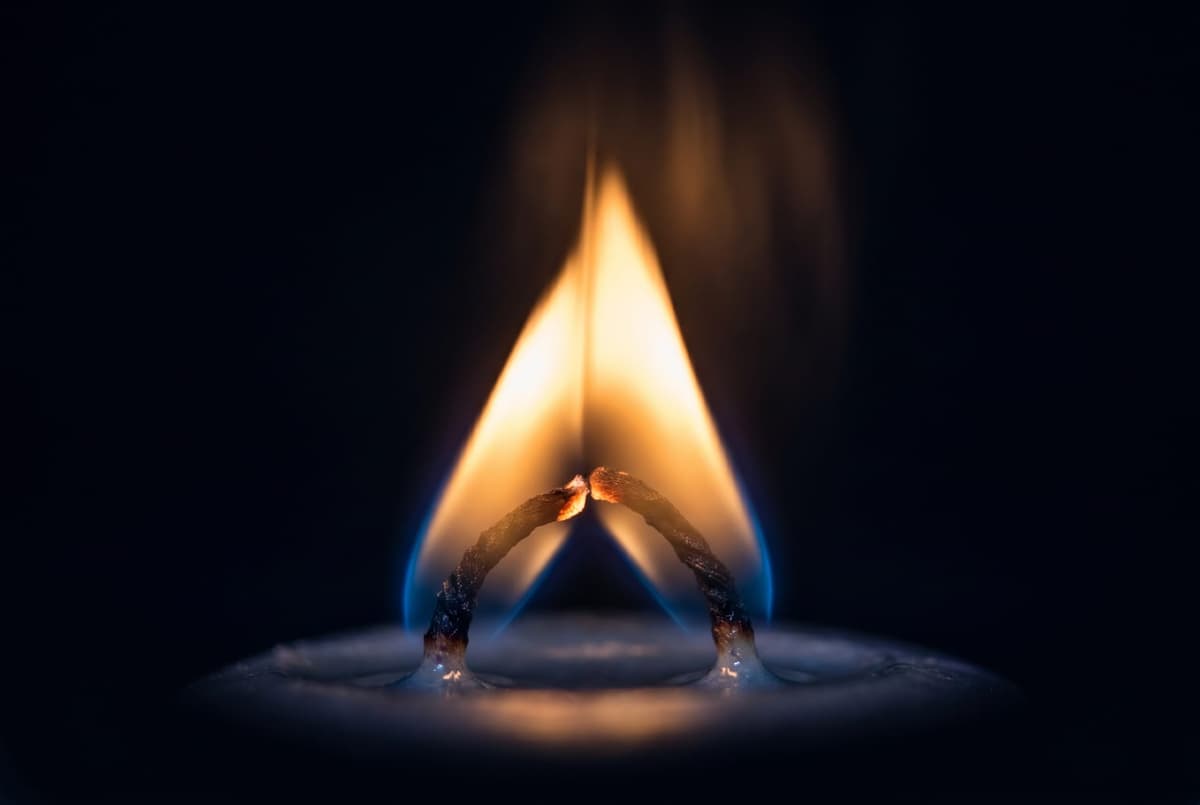
Conjunction Moon–Venus — symbolic illustration

Conjunction · 0°

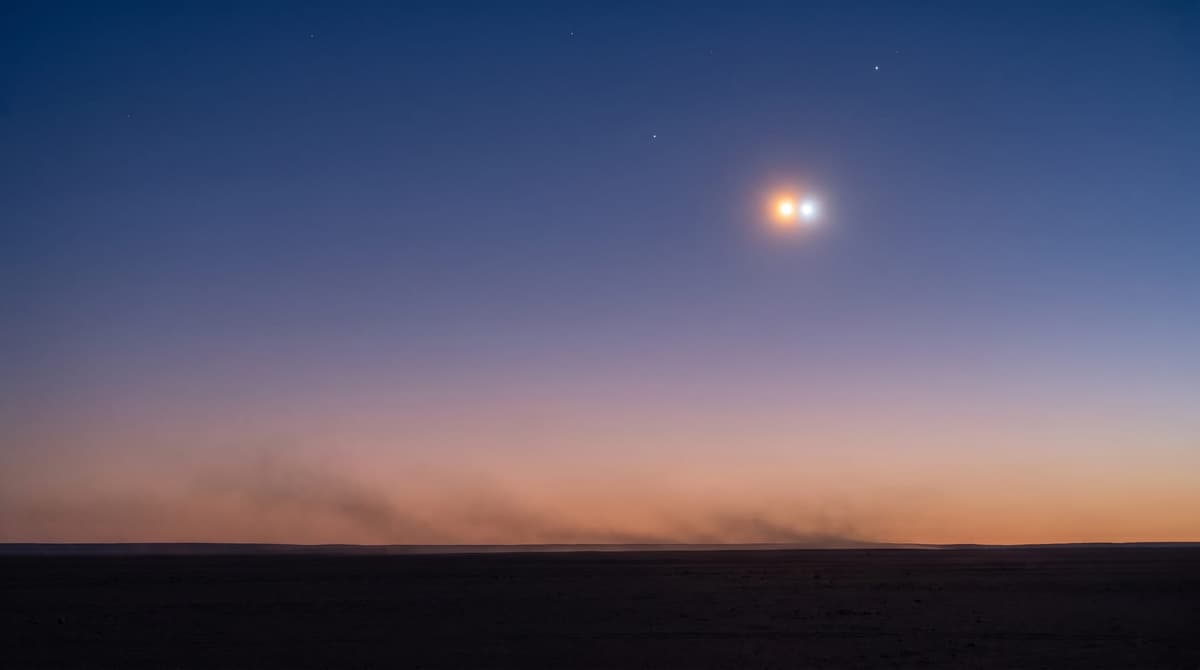
Moon conjunction Venus

A neutral aspect: it amplifies both planets, and how it plays out depends on the signs they sit in and the rest of the chart.

Orb up to 8°NeutralNatal · synastry · transit
0°Moon conjunction VenusOrb up to 8° · major aspect
Oksana MiatovaWritten by Oksana Miatova·11 min read

For entertainment and self-reflection only. Not medical, legal, financial or psychological advice. Consult a qualified professional for important decisions.

The short answer

Moon conjunct Venus fuses your inner world and your language of love into a single stream. Feeling, attachment and a sense of beauty travel together: you recognise yourself through what charms you and what moves you. In synastry it brings an instant warmth, almost a sense of home; in transit it opens a short, soft window once a month. The exact tone depends on the sign and the houses involved.

What a conjunction is

The geometry behind the reading

A conjunction is a separation of zero degrees between two planets, the most basic figure in the hierarchy of aspects. The textbook orb runs up to eight degrees, but for the lights and the personal planets I find five to six degrees more honest in practice. A conjunction carries no tone of its own — it simply fuses the principles of the two planets into one beam of energy, and everything after that is decided by the planets themselves, the sign, the house and the aspects coming in from other points. With Moon conjunct Venus, two personal planets melt into a single function: emotional nature and the principle of love begin to speak in one voice. You feel what you like and you like what you feel, and pulling those two currents apart is very nearly impossible.

Three ways to read it

The same aspect, three different stories

One aspect reads differently depending on where you find it: inside a single birth chart, between two people, or moving across the sky right now. Read each as a way to notice patterns, not as a forecast.

Moon conjunct Venus in the natal chart

If the Moon sits beside Venus in your natal chart, your inner world and your language of love learned to speak at the same moment. The two planets fused into a single function long before you could work out where 'I need' stops and 'I like' begins. Feeling and affection are one current for you, which means you make your decisions not through analysis but through a sense of warm recognition: this person feels good to be near, this room is easy to settle into, this fabric is somehow right. When the recognition is there, you stay. When it isn't, you go — even if, on paper, everything looks like a win.

From the outside, people with this aspect come across as soft, charming, aesthetically tuned. Not necessarily beautiful in the conventional sense — that isn't the point. It is simply pleasant to be in your company. You know which word to reach for, how to lay a table, what to put on, how to arrange a space so that it breathes. The knack runs on automatic, like breathing, and you rarely register it as a talent. Yet it often becomes your social currency: people are drawn to you for the warmth, they ask your view on what to wear and whom to invite, they trust you with their feelings.

Inside, the picture is more complicated. Moon conjunct Venus leaves you with almost no critical distance from your own emotions. Whatever you feel reads to you as objective reality. If your childhood was warm, you'll go looking for warmth as a universal yardstick. If it was cold, you'll compensate with aesthetics, with food, with lovely things, with romances that demand a great deal of feeling. That works up to a point, and then the shadow arrives: you stop being able to tell love apart from the habit of comfort. Do you actually like this person, or do you like that they give you the sensation of home?

The bond with the mother deserves its own paragraph. Moon conjunct Venus almost always brings a particular closeness to the maternal figure — not necessarily a fraught one, not necessarily an over-warm one, just charged. Your mother was often your aesthetic source: she taught you taste, the keeping of a home, a sense of the feminine — or, by the absence of all that, sent you off to find it for yourself. In adulthood you reproduce her way of tending a home and a self, sometimes to the letter, sometimes in opposition to it. If she was idealised, you may struggle to build relationships with anyone who doesn't carry her traits: either you hunt for the copy, or you push away anything that reminds you of her.

Money runs through this aspect softly, and not always consciously. Venus governs what you value, the Moon what you need for emotional safety; when they're fused, you spend on whatever gives the feeling of being protected — good food, comfortable clothes, a beautiful home, gifts for the people close to you. It isn't extravagance in the pure sense — it's buying emotional steadiness through material objects. As long as the budget allows, all is well. The moment the constraints arrive, the anxiety surfaces: without the favourite dish, the right cup, the familiar blanket, you feel physically out of sorts.

At work, Moon conjunct Venus tends to show through any line that involves making a space for other people: design, hospitality, psychology, mothering, the arts, fashion, cooking, anything to do with caring for the body. You won't necessarily build a career there, but the theme keeps catching up with you — through a hobby, a side project, the fact that people keep asking you for that one service. It's worth listening: if you're forever fielding questions about taste and cosiness, that may well be your real task rather than a footnote to it.

For the aspect to work for you rather than curdle into a dependence on warmth, you have to train the pause. Between 'this pleases me' and 'so it must be mine' there needs to be a three-second gap of observation. Ask yourself: am I choosing, or is the habit of comfort choosing for me? Does this person genuinely suit me, or are they simply behaving gently? When the habit of comfort starts deciding on your behalf, the aspect becomes a trap. When you take back the authorship of your choices, Moon conjunct Venus turns into one of the loveliest things in the chart — the foundation of a warm, aesthetic, empathetic life. To see how the pairing actually sits in your chart, in which sign and house, look at your own natal reading with Oksana.
When it flows

  • Emotion and affection line up: what you like is the very thing that warms you inside
  • A fine, instinctive sense of beauty — in clothes, in a home, in the people you keep near
  • A gift for making a room someone else wants to linger in
  • Empathy with an aesthetic edge — care expressed through small, lovely gestures

When it grates

  • Hard to separate 'I like it' from 'I need it', so choices get muddled
  • A reliance on being shown affection — without the signals, the world goes cold
  • A pull to over-feed yourself with sweetness, to spend on the pretty thing, to soothe worry with comfort
  • Idealising a partner and quietly refusing to see reality, to keep the warm picture intact

The shadow side, and what to do with it

The shadow of Moon conjunct Venus is dissolving into comfort and prettiness until the critical distance disappears. You live by the rule 'it feels good here, so it must be right', and you miss the moment when 'good' has slid into 'too passive'. Integration starts with an honest split: where am I genuinely choosing, and where has the habit of comfort chosen for me? It helps to step outside the cocoon on purpose now and then — fold away the favourite blanket, eat a plain meal without the sweet finish, say a clear no to pleasant people if they aren't moving you forward. The more often you stress-test the comfort, the more this pairing becomes a foundation rather than a dependence.

Conjunction — symbolic still life

How close is close

The orb decides the volume

A conjunction is rarely exact. The smaller the gap between the two planets — the orb — the louder the aspect plays. Here is roughly how the three bands read.

Tight

0–2°

Reads as a defining feature

At 0–2° this is an exact conjunction at maximum intensity. Moon and Venus merge almost inseparably, and you live your emotions and your aesthetics as one function. In this band the aspect works every single day — a background softness, a pull towards the lovely, a sharpened reaction to harmony and discord around you. Partners and friends get chosen on the principle 'I like it, so it must be mine', even when that choice is, rationally, a doubtful one. Beauty is not a preference here, it is a sense organ.

Medium

2–5°

A steady background pattern

At 2–5° the conjunction is a steady, significant feature of character, but a small gap has opened up. Feeling and affection are linked, yet you can tell 'this pleases me' apart from 'this is what I need'. Aesthetics, gentleness and a need for comfort are noticeable traits without ruling every hour of the day. Moon and Venus work as a team while each keeps its own job — the Moon minds the home and the emotional weather, Venus minds taste and relationships.

Loose

5–8°

A faint colouring, felt in crises

At 5–8° the merge is more an inflection than a dominant note. You feel the Moon–Venus link in your sensitivity and your draw towards the beautiful, but without the overload. You can be pragmatic or even hard on the outside, and only in close relationships does the soft, aesthetic side show. In this band the aspect often comes into its own nearer thirty, when Venus and the Moon reach a more mature phase and the gentleness stops being something you hide.

Conjunction with a partner — what does it mean for the two of you?

A full synastry reading — every aspect between your two charts

Moon conjunction Venus inside one chart is an inner mechanism. Between two charts it becomes the dynamic of a relationship. Enter both birth details and get a synastry reading — where the conjunctions sit, where the squares pull, where the oppositions draw you together — all calculated with the Swiss Ephemeris. Read it as a way to notice patterns, not a forecast.

Check your compatibilityfrom £1 · for entertainment

Compare with a neighbouring aspect

Same planets, a different distance

Moon opposite Venus tells a different story. If you're reading this to make sense of a specific chart, it's worth glancing at the neighbouring aspect too.

Moon opposite Venus
  • The conjunction fuses Moon and Venus into one stream — feeling and affection are inseparable
  • The opposition pulls them to opposite poles: 'I feel one thing, but I'm drawn to another'
  • In the conjunction you see no gap between need and desire; in the opposition you're forced to choose
  • The conjunction more often shows as charm and a sense of cosiness; the opposition as a see-saw in relationships
  • The conjunction asks you to grow a conscious distance from yourself; the opposition asks for the skill of holding opposites together

Lived examples

A few charts where you can see it

Public figures with a verified Rodden birth-data rating (AA/A/B). No invented data.

Frequently asked questions

What does Moon conjunct Venus mean in the natal chart?
It is the fusion of your emotional nature with the principle of love. You feel through what you're fond of, and you grow fond of things through how they make you feel. It often gives charm, a fine sense of taste and a real need for beautiful surroundings. The tone depends on the sign, the house and the other aspects: in a supportive setting it shows as gentleness and aesthetics, in a strained one as a reliance on comfort and a habit of idealising partners. Read it as a pattern to notice, not a verdict on who you are.
Is Moon conjunct Venus a good aspect?
The conjunction is neutral by nature. The Moon and Venus are both soft planets, so their merge usually feels warm rather than aggressive. Whether it plays out as 'easy' or 'difficult' is decided by other factors — the sign, the house, the aspects to Saturn, Mars and Pluto. For some it gives a steady charm and a maternal warmth; for others, an emotional dependence and a fear of being left without support. None of it is destiny; it's a lens for self-reflection.
What orb should I use for Moon conjunct Venus?
The classical school allows up to 8°. In practice, for two personal planets I find an orb of about 5–6° most useful — inside that band the aspect is still felt day to day. Beyond about 6° it starts to read as background rather than a dominant note. For synastry and transits I usually tighten to 3–5° to weed out false matches. Past roughly 10° the conjunction has formally dissolved.
Is Moon conjunct Venus in synastry love?
It's attraction and tenderness, but not necessarily love. Moon conjunct Venus in synastry creates a sense of 'my person' from the first meeting — softness, a matching taste, a wish to take care of each other. For a romantic relationship that alone isn't enough; you also need Sun and Mars links and overlays onto the angular houses. Without them the couple tends to settle into friendship, or into a very warm but not quite partner-like bond. As ever, this is a way to understand a relationship's patterns, not a prediction about it.
Moon conjunct Venus in transit — what should and shouldn't I do?
Good things: talking about feelings, making up, going on a date, buying clothes, refreshing the home, treating yourself to something pleasant. Less wise: signing important financial papers, making hard relationship choices, or deciding to break up or get back together. Your feelings will run noticeably softer than the facts on the ground, and a day later the same situation can look quite different. Keep the big decisions for a more neutral window.
Is Moon conjunct Venus different for men and women?
The underlying nature is the same — a fusion of feeling and aesthetics. The social presentation tends to differ. In a woman's chart the aspect often shows as gentleness, charm and a quiet domestic strength. In a man's chart it tends to read as a developed aesthetic taste, a capacity for care, and an attraction to beautiful, emotional women. In both cases the figure of the mother is sketched as a warm, aesthetically minded presence — sometimes an idealised one. None of this is fixed; it's simply a lens for noticing.
What's special about Moon conjunct Venus in Taurus?
This is a conjunction at home: both the Moon and Venus are comfortable in Taurus, so the merge runs at full strength. Sensuality, a love of comfort and a deep fondness for the body, food, nature and material beauty all stand out clearly. People with this placement often create a powerful atmosphere in a home and become the keepers of its warmth. The risk is getting stuck in that comfort and struggling with change. For entertainment and self-reflection, that's the keynote to watch.
How difficult is Moon conjunct Venus in Scorpio or Aries?
In Scorpio both planets are in fall: feelings and affections turn deep, jealous, sometimes painful. In Aries the Moon is uneasy and Venus is in detriment, so emotions and desires flare sharply, with few half-tones. The aspect still works, but it asks for conscious effort around impulsiveness and possessive reactions. Treat the placement as a tendency to manage rather than a flaw to fix.
If I have Moon conjunct Venus, does that mean I'll be beautiful?
No — the aspect isn't responsible for looks, but for a sense of beauty and the ability to transmit it. Plenty of people with this conjunction look quite ordinary yet come across as charming and easy to be around. That effect of 'warm presence' works on people far more powerfully than any geometry of the face, and it's exactly what the Moon–Venus pairing tends to give.
What does Moon conjunct Venus in the 7th house mean?
Partnership becomes the main channel through which you feel alive. Family and love often grow together: a husband or wife is felt as kin, almost as a parental figure. The big risk is dissolving into the relationship and finding solitude hard. The strength is a real capacity to build a stable, warm union — provided the rest of the chart supports it. As always, this describes a pattern, not a fate.
When is the next Moon conjunct Venus transit?
The transiting Moon catches up with Venus roughly once a month — a short window of just a few hours. Because both bodies move quickly, the exact dates are particular to a given year. It's best to check them in an annual transit calendar or in a personal forecast cast against your own chart, since general timing isn't precise enough to plan by.

Related pages

The other aspects between Moon and Venus

The same two planets at a different angle — each reads differently.

Oksana Miatova
Oksana Miatova

Astrologer, co-founder of WowAstro

Oksana Miatova is a practising astrologer and co-founder of WowAstro. Natal charts, synastry and forecasts grounded in the Western classical tradition — explained through real-life examples and plain language.

More about the author →

For entertainment and self-reflection only. Not medical, legal, financial or psychological advice. Consult a qualified professional for important decisions.