Skip to content
Square Moon–Venus — symbolic illustration

Square · 90°

Moon square Venus

A challenging aspect: the two planets rub against each other and ask for conscious handling. Tension here is a source of movement, not a verdict.

90°Orb up to 6°ChallengingNatal · synastry · transit
90°Moon square VenusOrb up to 6° · major aspect
Oksana MiatovaWritten by Oksana Miatova·11 min read

For entertainment and self-reflection only. Not medical, legal, financial or psychological advice. Consult a qualified professional for important decisions.

The short answer

Moon square Venus is a tense aspect between the need for emotional safety and the longing for pleasure, beauty and being adored. It tends to produce a quiet inner split: the thing that soothes you doesn't thrill you, and the thing that thrills you leaves you unsettled.

What a square is

The geometry behind the reading

A square is a separation of ninety degrees between two planets, and in the classical hierarchy it ranks among the strongest of the major aspects and firmly among the tense ones. It creates a steady friction that asks for a conscious choice and won't let the energy simply flow. Unlike a conjunction, where the planets merge, or an opposition, where they sit at opposite ends of a single axis, a square pushes the planets together at a right angle — from different elements and different modalities, with no common ground to fall back on. The textbook orb I work with for a Moon–Venus square is six degrees, and the nearer it sits to exact, from zero to two degrees, the sharper and more obvious it plays. A square is not the same as a 'bad aspect': it is an engine of growth, the kind that makes a person actually do something with themselves rather than drift along the surface. For the Moon and Venus, the right angle sets the part of you that wants quiet and belonging against the part that wants delight and admiration — two needs that rarely peak at the same hour.

Three ways to read it

The same aspect, three different stories

One aspect reads differently depending on where you find it: inside a single birth chart, between two people, or moving across the sky right now. Read each as a way to notice patterns, not as a forecast.

Moon square Venus in the natal chart

If Moon square Venus sits in your natal chart, there are two different women living inside you. One of them wants warmth, quiet, the familiar mug, a reliable person nearby, plain food she understands. The other wants beauty, pleasure, admiration, new dresses and new impressions — she wants someone to look at her and be unable to look away. These two almost never want the same thing at the same time. When the first one gets her way, the second grows bored. When the second one is celebrating, the first feels betrayed.

Most people with this aspect spend a long while not realising these are two parts of one self rather than 'just my temperament'. It feels, instead, as though something is always missing. Cosy relationships are dull. Vivid ones are frightening. Calm food is bland; delicious food brings shame afterwards. A good person is right there beside you, and inside there's an emptiness; a bad one is no good at all, and somehow you're drawn to him. This isn't fickleness, and it isn't 'she doesn't know what she wants'. It's two planets working at a right angle, with no common denominator.

The roots of the pattern almost always run back into the mother-story. The Moon is the mother, the early contact, the basic sense of 'I am loved as I am'. Venus is pleasure, femininity, the right to be pleasing. When a square stands between them, childhood often carried one of two messages. Either 'be convenient and don't show off', and the mother pressed down the Venus half; or 'be beautiful or you won't be loved', and the mother pressed down the lunar one. In the first case a woman grows up feeling her real beauty is something surplus and shameful. In the second she carries the sense that it isn't really her who is loved but her surface, and so she has no right to rest, to be unremarkable, to be 'nothing in particular' for a while.

From there the pattern unfolds into the relationship with the body, with food, with money, with clothes, with men or with women partners. One of the most common scripts is comfort-eating. When the lunar half is anxious, it reaches for soothing through the Venus channel — something sweet, something tasty, something pretty. The result is a short relief and a long shame. Another frequent script is shopping as anaesthetic: buy something to become a slightly better version of yourself, to feel a little warmer inside. It doesn't help, but in the moment of buying it feels as though it's about to.

In relationships the square shows up as swinging. You want someone reliable and you choose someone vivid. You get the reliable one, it grows cramped, and you start looking for the vivid one. You find the vivid one and you go hollow from the lack of an anchor. This isn't a whim. It's two planets taking the wheel in turn. Until you can see both as parts of yourself, the choice of partner runs on whichever half is shouting loudest at the time.

For men this square turns over: their Moon and Venus describe which women draw them. Under a square those two feminine images part ways. The wife and the lover, the mother of his children and the woman he desires, end up in different bodies. From that comes the classic, repeating plot — family in one place, passion in another, and almost no way to gather it all into one partner, because inside the man himself those two halves aren't gathered either.

Integrating this aspect isn't about choosing one half and defeating the other. It's a road that often runs through grown-up relationships, through parenthood, through therapy or serious creative work. First you have to admit that both parts live inside you and both have a right to speak. Then you learn to hear which one is speaking in a given moment, and to choose, consciously, which to listen to. Not to suppress, but to choose. The split doesn't vanish, but it stops being a problem: it becomes two instruments you switch between as the situation asks. To see how your own Moon square Venus is built — which signs the planets stand in, which houses are involved, what configuration it forms — you need your particular natal chart, because general guidance can only take this so far.

When it flows

  • A fine sensitivity to beauty and atmosphere — you read the mood of a room the moment you walk in
  • Creative work that runs on feeling: psychology, art, music, styling a space, cooking, anything that turns emotion into form
  • A deep, clear-eyed understanding of the feminine in all its contradictions, without illusion and without belittling it
  • A real gift for empathy in close relationships, once you've made peace with your own internal split

When it grates

  • A split where what you need for calm and what you want for joy keep landing in different corners of the room
  • A complicated bond with your mother or an older woman in the family, a lingering sense of 'I wasn't loved the right way'
  • Swinging between the 'good girl' role and the wish to be wanted — an inner clash of parts
  • Comfort-eating under stress, shopping as anaesthetic, the same pattern showing up in sweet things and in unhealthy attachments

The shadow side, and what to do with it

The shadow of this aspect is a feminine nature split into two parts that refuse to share a body: the homemaker against the lover, the mother against the woman, cosiness against pleasure. You can spend years living as though these two halves can never coexist, forever sacrificing one to feed the other. Integration doesn't begin with trying to 'have it all at once' — that rarely works — but with the honest admission that both needs live inside you and both have a right to a voice. Once that lands, the swinging stops being a drama and turns into a choice you make consciously, situation by situation. This is a lens for self-reflection, not a verdict on your character.

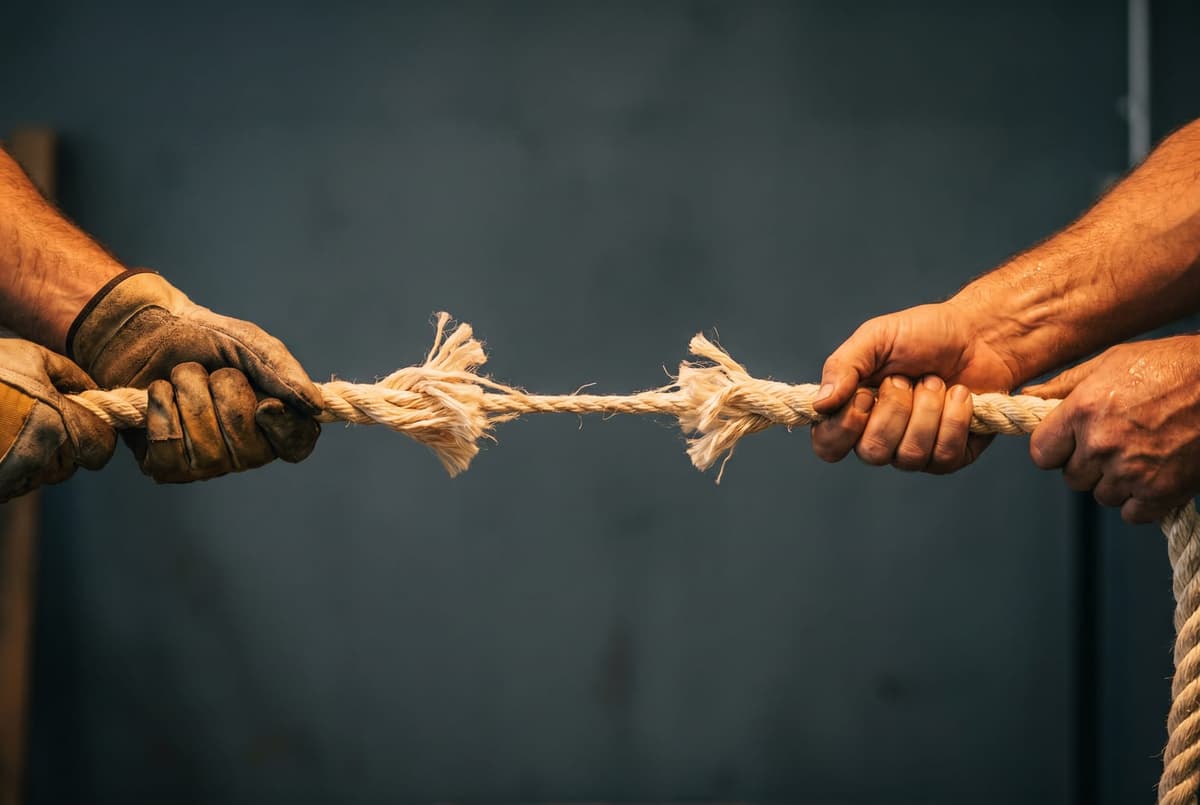
Square — symbolic still life

How close is close

The orb decides the volume

A square is rarely exact. The smaller the gap between the two planets — the orb — the louder the aspect plays. Here is roughly how the three bands read.

Tight

0–2°

Reads as a defining feature

At 0–2° this is the exact square at full intensity. The split between the need for safety and the craving for pleasure is felt almost physically and shows up in most of life's decisions — what to eat, who to befriend, how to look, who to fall for. It's hard to ignore an aspect this tight; it reminds you of itself through slips, conflicts and periodic 'resets' of taste and attachment. The upside is that, with conscious work, it's precisely the close square that grants the deepest understanding of the feminine — your own and other people's.

Medium

2–5°

A steady background pattern

At 2–5° this is a significant aspect that runs in the background and flares up in stressful stretches. In ordinary life you live with a faint sense of inner discord that gets written off as 'just my temperament' or simple tiredness. The square really switches on during heavy transits, relationship crises, after the birth of a child, during house moves or the loss of someone close. That's when the old pattern shows its face: 'I want one thing and do another.' This is the working orb for most real charts.

Loose

5–8°

A faint colouring, felt in crises

At 5–8° the aspect is present but only as a background tint. The split exists, yet it doesn't govern your choices; it lends a nuance instead — a faint dissatisfaction in moments that ought to be wholly happy. A person can live a long time with this aspect without noticing it, until they meet the theme on purpose: in therapy, in a creative process, in a long relationship. At a wide orb the square is more a fine string in the character than a clanging problem.

Square with a partner — what does it mean for the two of you?

A full synastry reading — every aspect between your two charts

Moon square Venus inside one chart is an inner mechanism. Between two charts it becomes the dynamic of a relationship. Enter both birth details and get a synastry reading — where the conjunctions sit, where the squares pull, where the oppositions draw you together — all calculated with the Swiss Ephemeris. Read it as a way to notice patterns, not a forecast.

Check your compatibilityfrom £1 · for entertainment

Compare with a neighbouring aspect

Same planets, a different distance

Moon trine Venus tells a different story. If you're reading this to make sense of a specific chart, it's worth glancing at the neighbouring aspect too.

Moon trine Venus
  • A trine gives an inborn agreement between feeling and desire — what soothes you also delights you; the square sends the two to opposite corners
  • In a trine the feminine flows of its own accord and without effort; in a square it has to be gathered piece by piece and integrated on purpose
  • A Moon–Venus trine grants charm and ease in relationships but risks passivity and an addiction to comfort; the square never lets you relax, but it forces you to grow
  • With a trine a person rarely reflects on their feminine side, because there's nothing to wrestle with; with a square the reflection starts early and goes deep

Lived examples

A few charts where you can see it

Public figures with a verified Rodden birth-data rating (AA/A/B). No invented data.

Frequently asked questions

What does Moon square Venus mean in the natal chart?
It's a tense aspect between the planet of emotional safety (the Moon) and the planet of pleasure (Venus). You feel a split: the thing that soothes you doesn't thrill you, and the thing that thrills you leaves you unsettled. It often shows up as a complicated bond with the mother, as swinging between the 'good girl' and the 'desirable woman' roles, and as a tendency to comfort-eat or disappear into shopping. It isn't a sentence on who you are — worked with consciously, the aspect grants a deep feel for the feminine and a strong creative sensitivity. Read it as a pattern to notice.
Is Moon square Venus bad for a relationship in synastry?
Not bad, but it asks for work. Partners with this contact often feel a powerful pull and, at the same time, a constant friction over everyday and emotional small things — taste, tenderness, holidays, money spent on looking good. If both are willing to see their own old mother-story and not replay it in the couple, the aspect becomes an engine of growing up. If not, the pair circles the same arguments, baffled that the attraction is there but the peace isn't. As ever, this is a way to understand a relationship's patterns rather than a prediction about it.
What orb should I use for Moon square Venus?
The classical orb for a square is six degrees. At a tight orb (0–2°) the aspect works sharply and shapes a lot of life's choices. At a medium orb (2–5°) it runs in the background and flares under stress. At a wide orb (5–8°) it's already a subtle nuance of character that a person can overlook for years. Because the Moon is one of the lights, many astrologers allow a slightly wider orb, though the intensity drops as it widens.
Which celebrities have Moon square Venus?
Among public figures with tense Venus-to-lights aspects that played out clearly in their biographies are Jennifer Lopez (a Sun–Venus square, with the love life lived as public drama) and Marilyn Monroe (tension in the feminine half of the chart, split between the sex-symbol image and the need for warmth). Both are adjacent rather than literal Moon-square-Venus charts — I name them as teaching cases of how the pattern works in plain sight. In ordinary life the plot is the same, just without the cameras. Always verify any chart against AstroDatabank at a Rodden rating of AA or A before quoting it.
How is Moon square Venus different from the trine?
A trine gives an inborn agreement between the need for calm and the desire for pleasure; the person rarely reflects on their feminine side because it simply works by itself. A square sets those needs at a right angle: they want different things and pull in different directions, and they can only be reconciled deliberately. The trine offers ease and the risk of passivity; the square offers tension and a kind of enforced growth. Neither is better — they're different mechanisms entirely.
Moon square Venus in a man's chart — is it different?
Yes. In a man's chart the Moon and Venus describe the kind of woman he's drawn to and the kind he finds pleasing. Under a square these two images diverge: the woman beside whom he feels cosy and safe isn't the same as the woman he desires. From that comes the classic 'wife and lover' storyline — a split in his relationships, attempts to fit the irreconcilable into one partner, or the habit of seeking one quality in one woman and the other elsewhere. The hardest task is to gather both images into one woman, and both halves within himself, at the same time. None of this is destiny; it's a pattern to be aware of.
What do I do when Moon square Venus really hurts?
First, stop trying to 'pick a side'. The aspect doesn't resolve through choosing one half — it resolves through integration: both needs live inside you and both want room. Second, separate your mother-story from the present relationship; the thing that presses the 'old button' in a partner is usually about your mother more than about them. Third, find a place to channel the tension constructively — creative work, work with the body, psychotherapy. Transiting squares to this natal aspect are especially painful and, at the same time, especially good for self-awareness.
How does Moon square Venus show up in transit?
The exact aspect lasts one to three days but colours a week or a fortnight in the background. The signs: emotional see-sawing around food, money and appearance; slips into sweets or impulse purchases; friction with the women close to you; a sudden, unfounded sense of being unloved. The best strategy in transit is to recognise 'this is old pain surfacing', to make no drastic moves, and to wait it out. Within a week things settle back into place.
Can you 'cure' Moon square Venus in the natal chart?
Natal aspects aren't cured — they're integrated. The goal isn't for the aspect to 'vanish' but for you to stop being its hostage. Mature work with a Moon–Venus square looks like this: you know your triggers, you catch the moment the old story steps in, and you choose to act differently. The split doesn't disappear, but it stops running your decisions. Many people with this aspect reach that point through becoming a parent, through therapy and through grown-up relationships. Treat it as self-reflection, not a fixed fate.
Moon square Venus in a child's chart — what should I look out for?
A child with this aspect often pulls in two directions at once: they crave cuddles and reassurance and, in the same breath, want to be admired and made a fuss of, and the two needs rarely line up. You may see comfort-seeking through sweets or pretty things, and a sensitivity to how love is shown that seems out of scale to the moment. The kindest thing is to let both needs be real — to give warmth without strings and to let them feel attractive without performing for it — so they don't grow up believing the homely self and the lovely self can't share one body. As ever, read this as a way to understand the child, not a forecast of who they'll become.
What if both partners have a natal Moon square Venus?
When both people carry their own Moon–Venus square, the synastry tends to amplify the theme: two sets of old mother-stories meet, and each is fluent in tripping the other's. The friction can be electric, and so can the misunderstandings, because both are swinging between warmth and sparkle on their own private timetables. It works when each has already done some of their own inner sorting and can name 'that's my old button, not your fault' out loud. Without that, the couple can circle the same ache twice over. A side-by-side reading of the two charts is the only way to see how the doubled pattern actually lands for you.

Related pages

The other aspects between Moon and Venus

The same two planets at a different angle — each reads differently.

Oksana Miatova
Oksana Miatova

Astrologer, co-founder of WowAstro

Oksana Miatova is a practising astrologer and co-founder of WowAstro. Natal charts, synastry and forecasts grounded in the Western classical tradition — explained through real-life examples and plain language.

More about the author →

For entertainment and self-reflection only. Not medical, legal, financial or psychological advice. Consult a qualified professional for important decisions.