You've probably been handed two flatly opposite answers. One friend insists you can't read a chart at all without an exact time, and treats a missing minute like a missing limb. Another waves it away: signs are signs, the rest is fuss, just enjoy your Scorpio season. Both of them are half right, which is exactly why the question keeps nagging.
The honest answer is that your birth time matters enormously for some of your chart and hardly at all for the rest. It barely touches your Sun sign or your planets by sign, because those come from the date. It decides your rising sign, your houses, and any real attempt to forecast, because those shift with the minute. So whether it counts comes down to which of them you actually want. This guide shows how much a few minutes really change, which parts of your chart stand or fall on the time, and what to do if the time you have feels shaky.
In short. The date sets your planetary line-up; the time sets your rising sign, houses and forecasting. If you only want your Sun and Moon signs, a rough time is fine. If you want the rising sign, the houses or accurate timing, the minutes count.
The honest answer: it depends what you want from your chart
Picture your chart as two layers laid over each other. One is the planets in their signs, fixed by the day you were born and barely nudged by the hour. The other is the framework those planets sit in, the rising sign, the twelve houses, the angles — built entirely from the exact moment and place.
Ask your chart "what am I like, broadly?" and you're mostly reading that first layer, which a missing time leaves almost untouched. Ask it "where does this play out in my life, and when?" and you're leaning on the second, which a wrong time quietly wrecks. The whole birth-time question really comes down to this: which of those two are you asking?
How much can a few minutes actually change?
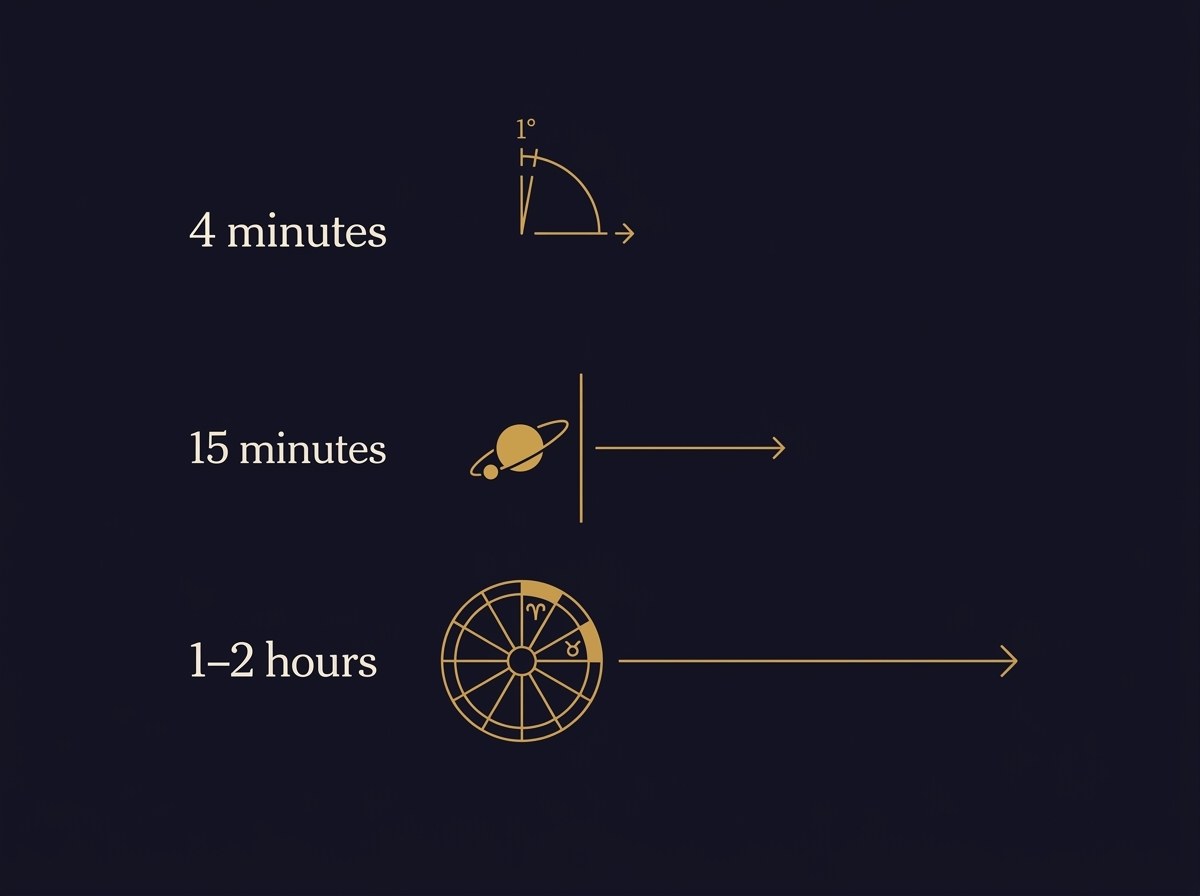
The reason a small error travels so far is that the whole sky is turning while you watch. The Earth spins a full circle in a day, which works out at about one degree every four minutes. So four minutes of slack in your birth time nudges the chart's sensitive points by roughly a degree, and the errors build from there.
A quarter of an hour is enough to count. A planet sitting close to the line between two houses can slip from one into the next with only fifteen minutes' difference, and that rewrites the story you'd tell about it, carrying it, say, from your career into your home life. Give the time an hour or two of slack and the biggest piece moves: your rising sign can change altogether, and because the rising sign anchors everything, all twelve houses and the planets that rule them are rearranged around it.
This is why twins can catch you out. Two babies born fifteen minutes apart share almost every planet by sign, yet if a house cusp or a sign boundary happens to fall in that quarter-hour between them, their charts read differently in exactly the places astrologers lean on most.
When a rough time is plenty
For a good deal of astrology, none of that need trouble you. Your Sun sign is fixed by your date. So are your planets by sign, your Venus, your Mars, your Mercury, all the way out to Pluto — and the aspects they make to one another. That is a real reading: your drives, how you love, how you think, where you clash and where you flow. If that's the astrology you came for, a rough time, or none at all, will serve you honestly. There's a fuller map of what stays readable in a chart without a birth time.
When precision earns its keep
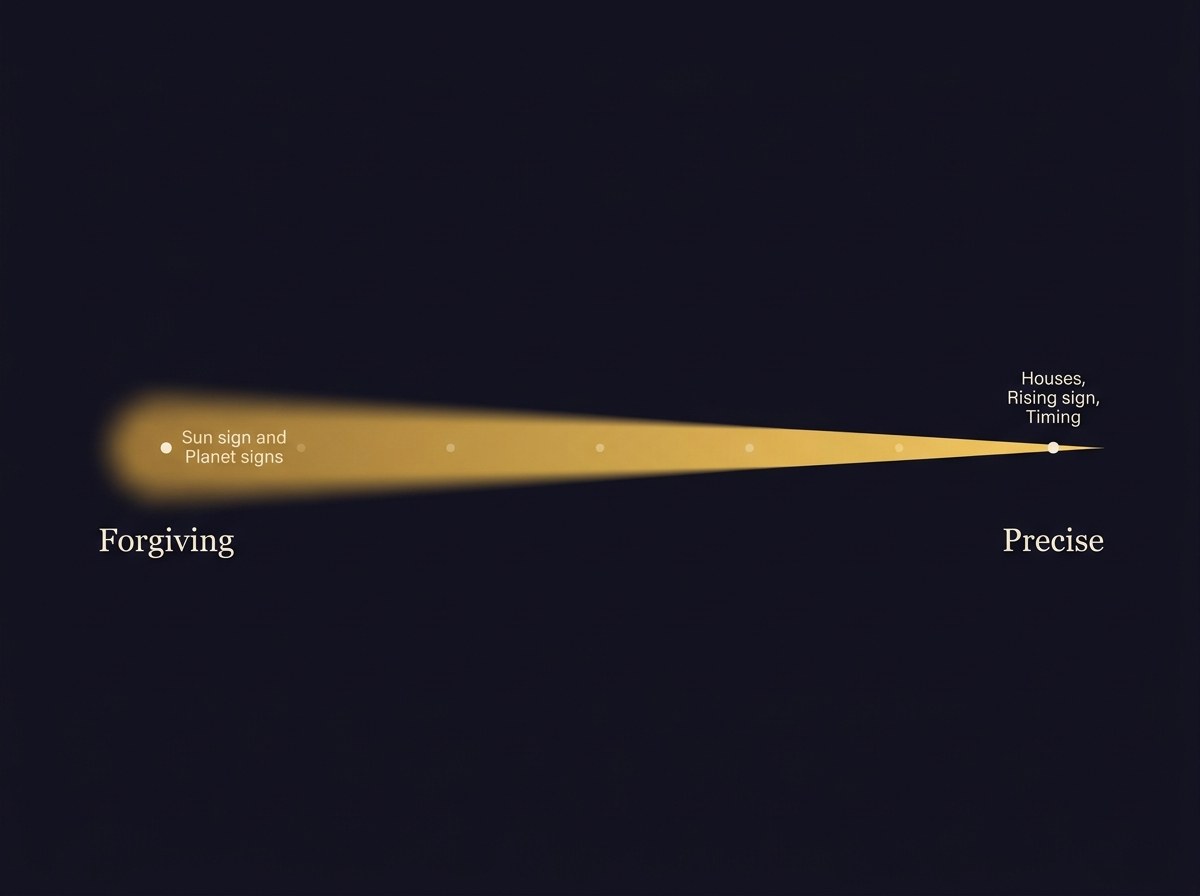
The other half of the chart is a different story. Your rising sign, the face you meet the world with and the whole shape of your houses, needs the minute; an hour's error can hand you the wrong one, and there's a separate guide to pinning down your rising sign for when the time is vague. The houses ride on it, so which area of life a planet colours depends on getting there. Your Moon's finer detail needs it too. And any genuine forecasting runs off the exact chart. These are the techniques that point to when something is likely rather than merely what, so a careful astrologer won't put a date on anything worked from a loose time. If those are the parts you're after, precision is worth the trouble, and worth recovering if it has gone missing.
How good is the time you already have?
There's a quieter question underneath all this: how far can you trust the time you think you know?
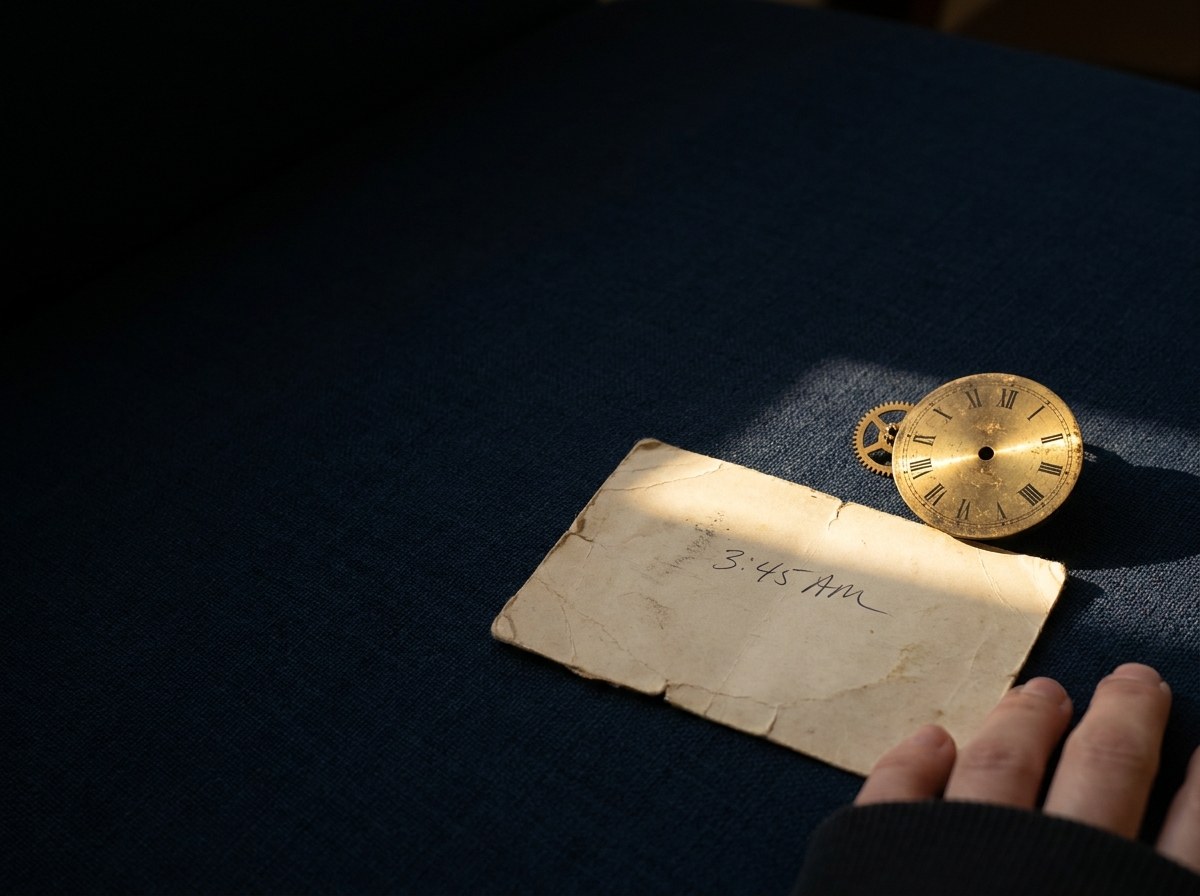 The one figure the rest is built on.
A time from a birth certificate or hospital record is the strong case, and usually good enough to build on. Even then it can sit a few minutes off the true moment, because someone glanced at a clock in a busy room and wrote a round number, and the figure on the paperwork isn't always the first breath. A remembered time is softer again. Decades blur, and a confidently recalled "half past ten" is worth holding loosely rather than carving in stone. A time you've simply guessed isn't data at all; it produces a convincing rising sign and set of houses that happen to be wrong, which misleads you more than an honest blank.
Astrologers actually grade how reliable the source of a birth time is, from an official record down to an unverified guess; the rectification guide explains that system and how much weight each grade deserves. The short version: treat a certificate as solid, a memory as a lead, and a guess as a placeholder.
So, is it worth chasing yours?
Put the pieces together and the answer sorts itself out. Decide what you genuinely want from your chart. If your interest stops at your Sun and Moon signs and the broad picture, you already have what you need, and the clock can stay unwatched.
If you want the rising sign, the houses or honest timing, and the time you hold is shaky or gone, you have three moves in rough order of effort. Check it isn't simply mislaid, with how to find your birth time. Narrow it enough to shortlist your rising sign, with the free rising-sign check. Or recover it properly from the events of your life, which is what birth-time rectification and our rectification service are for.
Your birth time is worth exactly as much as the parts of your chart you care about. Work out which those are, and the fuss answers itself.
Frequently Asked Questions
Does your birth time really matter in astrology? For part of your chart, enormously; for the rest, barely. Your Sun sign and planets by sign come from your date and need no time at all. Your rising sign, your houses and any real forecasting are set by the exact minute. So it counts as much as those particular things count to you.
How much does an hour of birth time change a chart? Quite a lot. The sky moves about one degree every four minutes, so an hour shifts the chart's angles by roughly fifteen degrees. That's enough to carry planets between houses and, often, to change your rising sign, which rearranges the houses and their rulers around it. Your planets' signs, though, stay put.
Do I need my exact birth time for my Sun sign? No. Your Sun sign is set by the date, since the Sun takes about a month to cross a sign. The only edge case is being born on the day the Sun changed signs, when the time decides which of two you are. For everything else about your Sun sign, the hour is irrelevant.
Can twins born minutes apart have different charts? They can, in the ways that count. Twins share nearly every planet by sign, but if a house cusp or a sign boundary falls in the minutes between their births, their rising signs or house placements can differ. That's often where an astrologer looks to tell two very close charts apart.
Is my birth-certificate time accurate enough? Usually, yes. A recorded time is the most reliable kind and is generally fine to work from. Bear in mind it can still be a few minutes out, since it's written by hand in a busy moment, so near a sign boundary it's worth checking against your life if precise timing matters to you.
Oksana Miatova is an astrologer and co-founder of WowAstro, working in the Western classical tradition with Swiss Ephemeris calculations. WowAstro builds birth charts and helps people recover an uncertain birth time from the events of their life. wowastro.com
For entertainment and self-reflection. Astrology isn't a substitute for professional medical, legal or financial advice.
Read your own natal chart
A personal AI reading, from £1
⭐ +50 Wow Stars cashback · sign up and get 100 ⭐
Build my chart →Comments
New here? Get −30% off your natal chart
Leave your email and we will send you the promo code WELCOME30. Straight after that you can comment — no passwords, all automatic.
Quick sign-in
Sign in with Telegram — one click.
Or by email (with a gift)
Already have an account? Enter the same email — we'll email you a sign-in link.