You've hunted for your birth time and come up empty. The certificate has a date and no hour, the hospital's records have thinned with the decades, and your family offers a shrug and a vague "sometime in the morning." Then an astrologer says something that sounds equal parts hopeful and suspicious: "That's fine, we can rectify it from your life."
Rectification is astrology's way of working backwards. Instead of reading a chart forward from a known birth time, it reconstructs the unknown time by matching the chart's own timing to the dated events you can actually remember. Done with care, it gives you a probable window and a most-likely time carrying a confidence level. It won't give you an exact second, and anyone who promises one is selling certainty they don't have. This guide opens the bonnet: the method that genuinely works, the old techniques you'll see named around the web, what the software is really doing, and the honest question of how far you can trust the answer.
In short. Rectification narrows an unknown birth time by testing candidate times against the dated turning points of your life, and accepting one only when several independent techniques agree. Expect a well-reasoned window, not a stopwatch reading.
So what is rectification, really?
Start with the ordinary version of astrology. You feed in a birth time, the software builds a chart, and an astrologer reads what it says about your life. Rectification runs that arrow in reverse. The life is the known part now, and the birth time is the blank you're solving for.
The logic is simple even where the craft is not. Your chart carries a moving clock: as the years pass, its points advance and touch off the milestones you've lived through. If you have the milestones and their dates, you can ask which starting time would keep that clock running true. Test enough moments against enough events, and the candidates that don't fit quietly fall away.
How it actually works: matching a life to the clock
The first move is a coarse one. An astrologer settles the rising sign before worrying about the exact degree, because there are only twelve signs to weigh and because shifting the ascendant a whole sign moves every house in the chart at once. Get the sign right and the rough shape clicks into place. The minutes come later.
Then comes the timing. Astrologers use symbolic techniques that advance the chart at a steady rate, close to one degree for every year of life, and they watch for the moments those moving points strike a sensitive spot. A candidate birth time predicts when those strikes should land. Line the predictions up against your real dates, and a good time makes them rhyme while a wrong time makes them scatter.
Here's what separates careful work from wishful thinking. One match proves nothing. Reach far enough into a busy life and you can find a planetary reason for almost any date you like, which is exactly why a lone hit means so little. A rectified time earns its keep only when two or three independent techniques point at the same moment for different reasons. Some astrologers call this the rule of multiple testimonies. Think of it as the difference between one witness and a room of them who've never met.
This is why the events you bring matter as much as the astrology. Sharp, well-dated turning points give the strongest signal: a marriage, the birth of a first child, a death in the family, an emigration, a serious accident or operation. Fuzzy memories give fuzzy results. Tell an astrologer "I moved house around 2004, I think," and you've handed them noise. Tell them "we married on the 14th of June and my son arrived on the 2nd of March," and you've handed them something to lock onto. Rough dates in, rough time out.
The classical methods you'll see named online
Search around and you'll trip over older techniques with grand names. They're worth understanding, partly because they turn up in astrologers' bios and partly because knowing them tells you what to expect. Most are historical tools that survive today as a first guess rather than a final verdict.
The oldest is animodar, described in Ptolemy's Tetrabiblos. It takes the new or full moon just before your birth and uses its ruling planet to sharpen the degree of the ascendant once the rising sign is already roughly known. It tidies a chart you nearly have; it won't build one from a blank page.
Then there's the trutine of Hermes, also called the prenatal epoch. Its charm is a mirror image: the ascendant at birth is said to echo the Moon's position at the moment of conception. The medieval scholar Abraham Ibn Ezra gave the method its name and tied it to the length of the pregnancy, and the English astrologer E. H. Bailey tried to systematise it in 1916. Elegant on paper, slippery in life, since almost nobody knows their conception moment to the day.
A third approach reads the body. Older texts, Ptolemy again among them, matched a person's build and temperament to planetary portraits to hint at the rising sign. It's a bracket at best. Appearance is shaped by the whole chart and by plain genetics, so it might whisper "possibly a fire sign rising" and rarely more.
The doubts here aren't modern either. Four centuries ago William Lilly, no skeptic about astrology, wrote that neither animodar nor the trutine of Hermes rested on as sure a footing as rectifying from the real events of a life. The old masters put the life-event method first too.
What the software actually does
Type "birth time rectification calculator" into a search bar and you'll find tools that promise to do this for you. It helps to know what they're really up to. Programs like Polaris and Janus, along with the online calculators, take your events and grind through a range of candidate times, scoring each for fit. That genuinely helps narrow the field.
What they can't do is close the case alone. A score is a shortlist that a person still has to judge, and a blunt automatic button that spits out one time from a birthday alone isn't rectification at all. Every serious tool ends where a human begins: reading the shortlisted charts against the life and deciding which one actually holds together.
How honest can it be? The part sales pages skip
 Good rectification is mostly patient bookkeeping.
Here's what a page trying to sell you a rectification tends to leave out.
First, the honest output. A careful rectification gives you a probable window and a best-estimate time with a stated confidence, not a number good to the second. That isn't a flaw in the method. It's an accurate description of what the evidence can carry.
Second, even "official" times wobble. Astrologers who take data seriously use the Rodden rating system, which grades how trustworthy the source of a birth time is and says nothing about whether it's right to the minute. A time from a birth certificate earns the top grade, AA. A time from memory sits lower, at A. Further down the scale you reach unverified, then contradictory, then simply unknown. The grade rates the paperwork, not the clock. Even a certificate can sit a few minutes off the true first breath, because someone glanced up and wrote a round number in a busy delivery room.
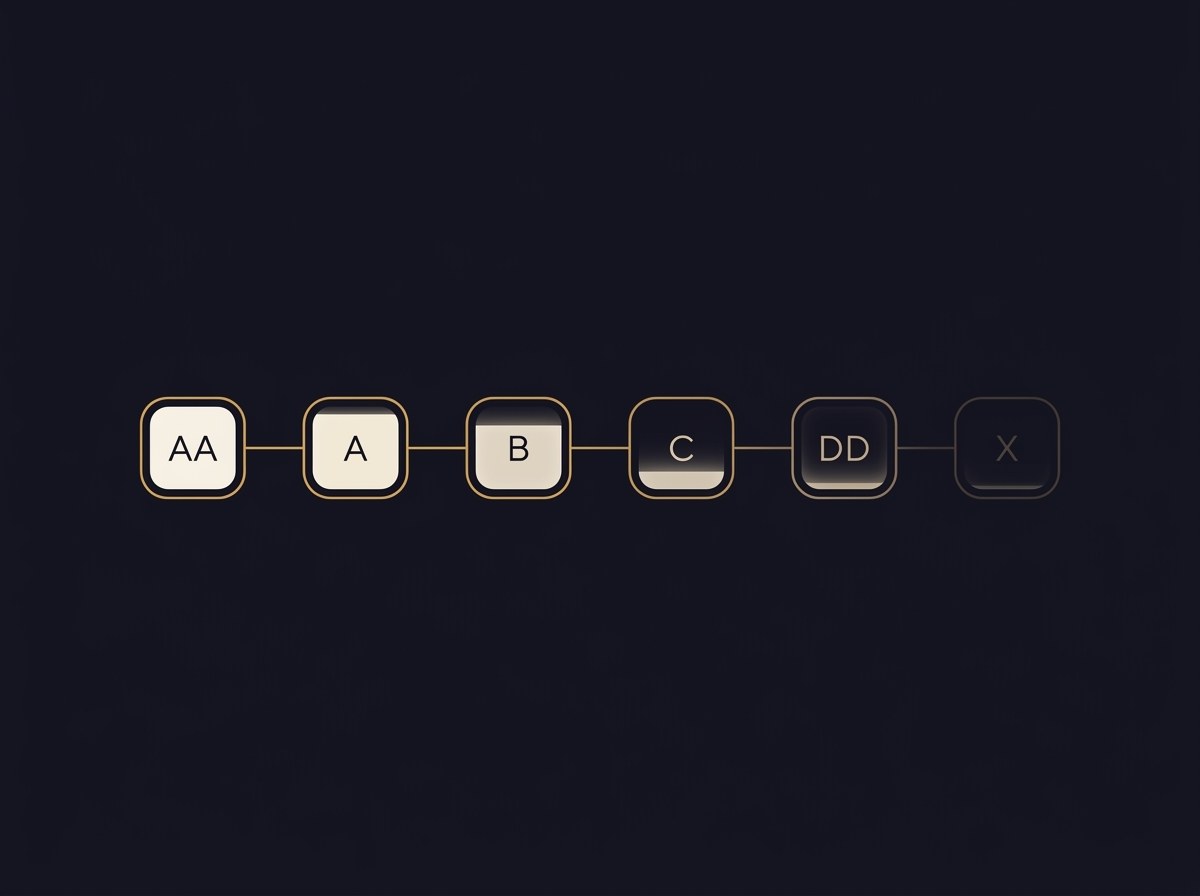
Third, the science does not back astrology, and a trustworthy astrologer will say so plainly. The astrologer-turned-researcher Geoffrey Dean has argued that astrology doesn't need to be true to feel true to a client, which cuts straight at the premise that the exact chart matters. Dean and Kelly's 2003 review in the Journal of Consciousness Studies looked at "time twins," people born minutes apart, and found none of the resemblances astrology predicts; a 1985 double-blind study in Nature by Shawn Carlson found astrologers matching charts to personalities no better than chance. None of that stops a chart from being a rich mirror to think with. It does mean the honest frame for rectification is a symbolic tool for reflection and self-knowledge, offered in that spirit and for interest.
That candour belongs up front, and it's the whole point. An astrologer willing to name the limits of the method is the one worth handing your dates to.
Is it worth it, and can you do it yourself?
Whether it's worth paying comes down to what you want from your chart. If you only care about your Sun and Moon signs, you barely need the time at all. The case gets strong when you want the parts that hinge on the exact moment: your rising sign, your houses, and the timing of your own forecasts. For why those few minutes swing so much, see does your birth time really matter.
Doing it yourself is possible and genuinely hard. It asks for real fluency in directions and progressions, a stack of well-dated events, and the discipline to disqualify a time you've grown fond of. Most people who try talk themselves into the first time that flatters them, which is the opposite of the job.
Before you rectify anything, make sure the time is truly gone. Plenty of people have a time they never checked, sitting in a hospital record or an old cot card; our guide on how to find your birth time walks through every place it hides. And if you just want a reading in the meantime, you needn't wait: there's a great deal to learn from a chart without a time, as reading a natal chart without a birth time explains.
None of this needs to feel like a race. That "sometime in the morning" has sat quietly for decades already; it will keep for the few weeks it takes to gather your dates and do the work properly.
When you're ready to narrow things down, start free. Our rising-sign check shows which signs could have been rising on your birth date, so you can see how wide your uncertainty really is before committing to anything. If the time is properly lost, our birth-time rectification service takes your dated events and works back to a probable window, with the reasoning shown rather than hidden.
Frequently Asked Questions
Does birth time rectification actually work? It works as a disciplined estimate. Calling it a measurement would overstate it. A skilled astrologer can often narrow an unknown time to a workable window by testing candidate times against your dated life events. What it can't do is prove a time is correct, since the only real confirmation would be finding the original record. Treat a good rectification as a strong, reasoned best guess rather than a fact.
How accurate is a rectified birth time? Honestly done, it yields a probable window and a most-likely time with a confidence level, often tight enough to settle your ascendant and houses. It won't be accurate to the second, and you should be wary of anyone who claims otherwise. Accuracy also depends on you: the sharper and better-dated your life events, the tighter the result.
How much does birth time rectification cost? It varies with the astrologer and the depth of the work, since a careful rectification can take hours of analysis. You'll find everything from quick automated reports to detailed human consultations, priced accordingly. Our own pricing is set out on the rectification service page.
How many life events do you need for rectification? More than one, and the better dated the better. A common working standard is at least three or four sharp, independently datable events, so the astrologer can look for several techniques agreeing on the same time. Big, unambiguous turning points such as marriages, births, moves and losses help far more than a long list of vague ones.
Can I rectify my own birth time? In principle yes, if you're comfortable with directions and progressions and you can be ruthless about ruling times out. In practice it's demanding, and the usual mistake is settling on whichever time feels most flattering. If you'd rather not, the free rising-sign check is a gentle first step.
Oksana Miatova is an astrologer and co-founder of WowAstro, working in the Western classical tradition with Swiss Ephemeris calculations. WowAstro builds birth charts and helps people recover an uncertain birth time from the events of their life. wowastro.com
For entertainment and self-reflection. Astrology isn't a substitute for professional medical, legal or financial advice.
Read your own natal chart
A personal AI reading, from £1
⭐ +50 Wow Stars cashback · sign up and get 100 ⭐
Build my chart →Comments
New here? Get −30% off your natal chart
Leave your email and we will send you the promo code WELCOME30. Straight after that you can comment — no passwords, all automatic.
Quick sign-in
Sign in with Telegram — one click.
Or by email (with a gift)
Already have an account? Enter the same email — we'll email you a sign-in link.