
Every Capricorn horoscope you've ever read sounds, on a quiet level, like the one before it. Discipline. Slow build. Take your work seriously. Maybe a nod to family duty. You start to wonder whether anyone actually checks the sky, or whether someone wrote one Cap horoscope in 1962 and they've all been paraphrasing it since.
Short answer: they are paraphrasing, but not from a 1962 column. From an archetype. A Capricorn horoscope describes today's sky filtered through a specific tone (Saturn, cardinal earth, the long-game temperament) and applied to your Sun sign. That filter is the whole reason the column sounds vaguely familiar each morning. Once you can see the filter, you can read past it.
In short. A Capricorn horoscope describes today's transit chart read through the Capricorn archetype: Saturn-ruled, cardinal earth, slow and structural in temperament. Every column sounds similar because the input filter is the same one. Your actual experience varies because the column only reads one of your ten chart placements (your Capricorn Sun), and "hard work, slow build" can live differently depending on whether Capricorn shows up as your Sun, your Moon, your Rising, your Midheaven, or your Saturn.
 Most Capricorns read their horoscope before the first email of the day.
What every Capricorn horoscope is actually describing
Every Capricorn horoscope is, mechanically, today's sky filtered through one archetype-shaped lens: Saturn-ruled, cardinal earth, the long-game temperament. Astrologers begin with the same transit chart all twelve signs share (where the Moon and the planets sit today) and then write twelve different reads by applying twelve archetypal filters. The Capricorn filter is structure, discipline, time horizon. Open Astrostyle, Cafe Astrology and Elle on the same morning and you will see different verdicts but a shared register: work, patience, the slow build. That shared register isn't editorial laziness. It's the archetype acting as input, and it explains why your daily horoscope for Capricorn often feels familiar before you've read the verdict.
A few words in plain English before we keep going. An archetype, in modern astrology, is a recurring pattern astrologers use as interpretive shorthand; for Capricorn, it is the cautious builder, the person who plays the long game. A transit means where the planets are now, as opposed to where they were when you were born. A Sun sign is which of the twelve zodiac signs the Sun was in at the moment of your birth (for a Capricorn, that's somewhere in the late-December-to-mid-January window).
Anyone writing today's horoscope for Capricorn starts from the same input as everyone else. The Cap-flavour comes from a filter, not a forecast. Anyone promising you a forecast is selling something.
Why every Capricorn column sounds the same
Capricorn horoscopes sound similar because two structural facts shape every column: Saturn rules the sign, and Capricorn is the cardinal earth sign. Astrologers translate those two facts into roughly the same vocabulary every time. Saturn, in Western astrology, is the planet associated with structure, limits, time and consequence. Cardinal means initiating energy — Capricorn opens the winter quarter, the way Aries opens spring. Earth means practical and embodied, dealing in the tangible. Put together, you get the long-game builder. Those four words (Saturn, cardinal, earth, builder) sit underneath every Capricorn read on the SERP, even when the verdict for the day differs. Astrostyle leans warmer, Cafe Astrology leans more technical, Elle leans glossier, but the underlying vocabulary is identical. The repetition isn't a quality problem. It's the archetype being consistent.
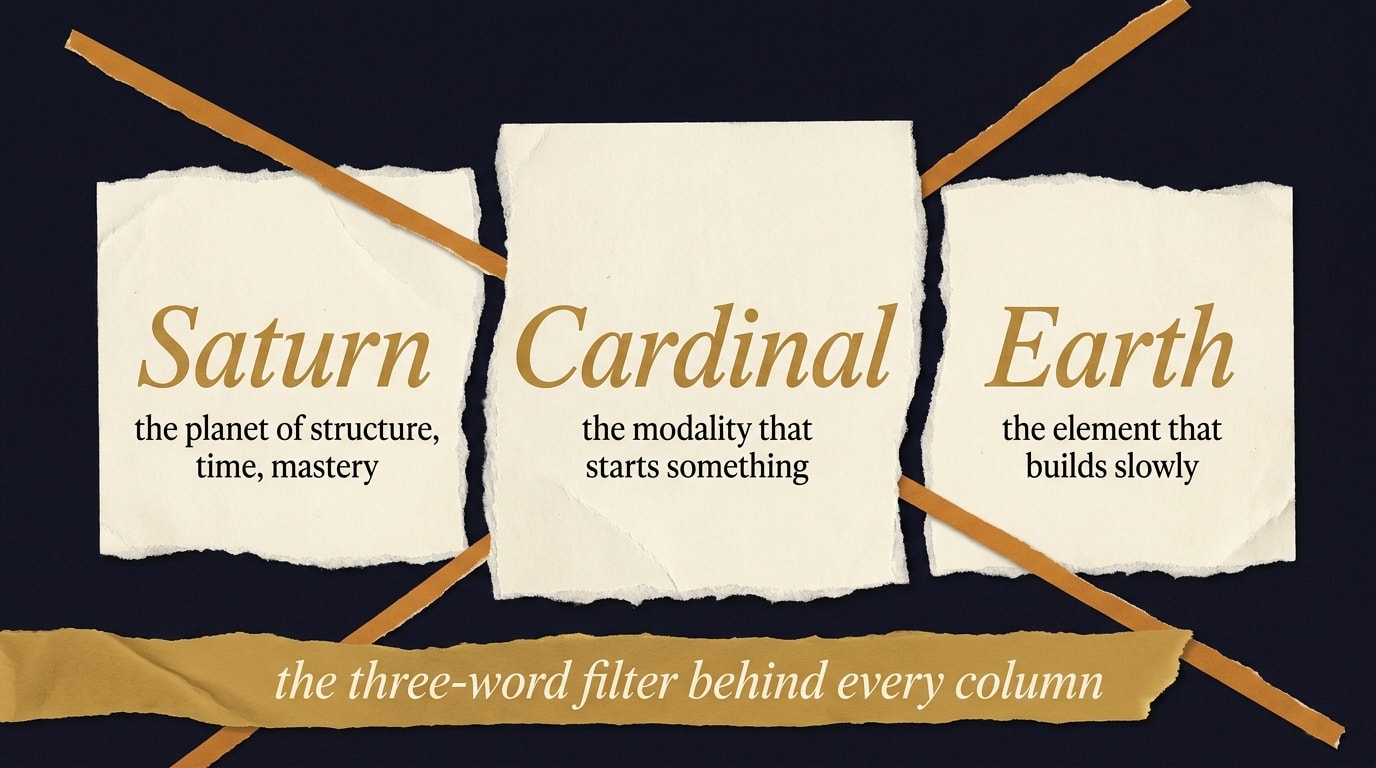
Two things to take from this. The first is that the question isn't whether Cap horoscopes will keep sounding Saturn-shaped; they will. Saturn isn't going to stop ruling Capricorn. The second is that the language is doing useful work, naming a real tone, and the trick is to read the tone as a layer of information about the archetype, not a prediction about your day. If you've ever wondered why your Capricorn horoscope today and your Capricorn horoscope last Tuesday share a faint family resemblance, this is why.
It's also why critics of horoscopes have an easy time with the "they all sound the same" line. They do — within a sign. Across signs they sound notably different, because each sign has a different filter built in. The Cancer column reads water-and-Moon. The Leo column reads fire-and-Sun. Yours reads Saturn-and-earth. The shared structure is the point of the format, not its weakness.
Are Capricorn horoscopes accurate?
A Capricorn horoscope is accurate for the slice of life it actually describes (roughly one tenth of you, your Capricorn Sun) and only when today's transits happen to resonate with the rest of your particular chart. A general daily horoscope for Capricorn reads only one placement: your Capricorn Sun. It doesn't know your Moon sign (your emotional baseline), your Rising sign (the first impression you make), your Midheaven (your public face), or any of the seven other placements on your birth chart. That's the structural reason two Capricorns can read the same column and one nods along while the other rolls their eyes; their other nine placements are different.
 A general column reads one tenth of you. The other nine sit somewhere else.
If you've ever felt like the horoscope landed perfectly one day and described someone else entirely the next, you weren't being inconsistent. The horoscope was. Daily sun-sign horoscopes sit in the entertainment-and-self-reflection bracket, not the prediction bracket. By their own design, they read one twelfth of you. That isn't a bug; it's the format.
The honest version of "accuracy" looks like this. The underlying transit (where the Moon currently sits, which planets are in close angle to each other) is measurable astronomical fact, accurate in the way a tide chart is accurate. The prose interpretation, the verdict-language about what the transit "means for Capricorns today", is a craft skill that varies wildly between writers. The relevance of any given day to your actual life depends entirely on whether the transit touches your particular chart, which a generic sun-sign column has no way of knowing.
Where "hard work, slow build" actually lives in your chart
The Capricorn theme (discipline, structure, the long game) can show up in five different places on your chart, and each place colours a different part of your life. Your chart has ten major placements, and Capricorn can be on any of them. Sun in Capricorn shapes your core sense of self; Moon in Capricorn shapes your emotional defaults; Rising (Ascendant) in Capricorn shapes how you come across at first; Midheaven (MC) in Capricorn shapes your public and career face; Saturn in Capricorn shapes how you meet structural challenges. Someone with Cap Sun and Pisces Moon reads differently in person than someone with Cap Sun and Aries Moon, even though both will get the same daily column for Capricorn. Knowing where Capricorn sits in your birth chart turns the daily column from a generic mood into a specific map.
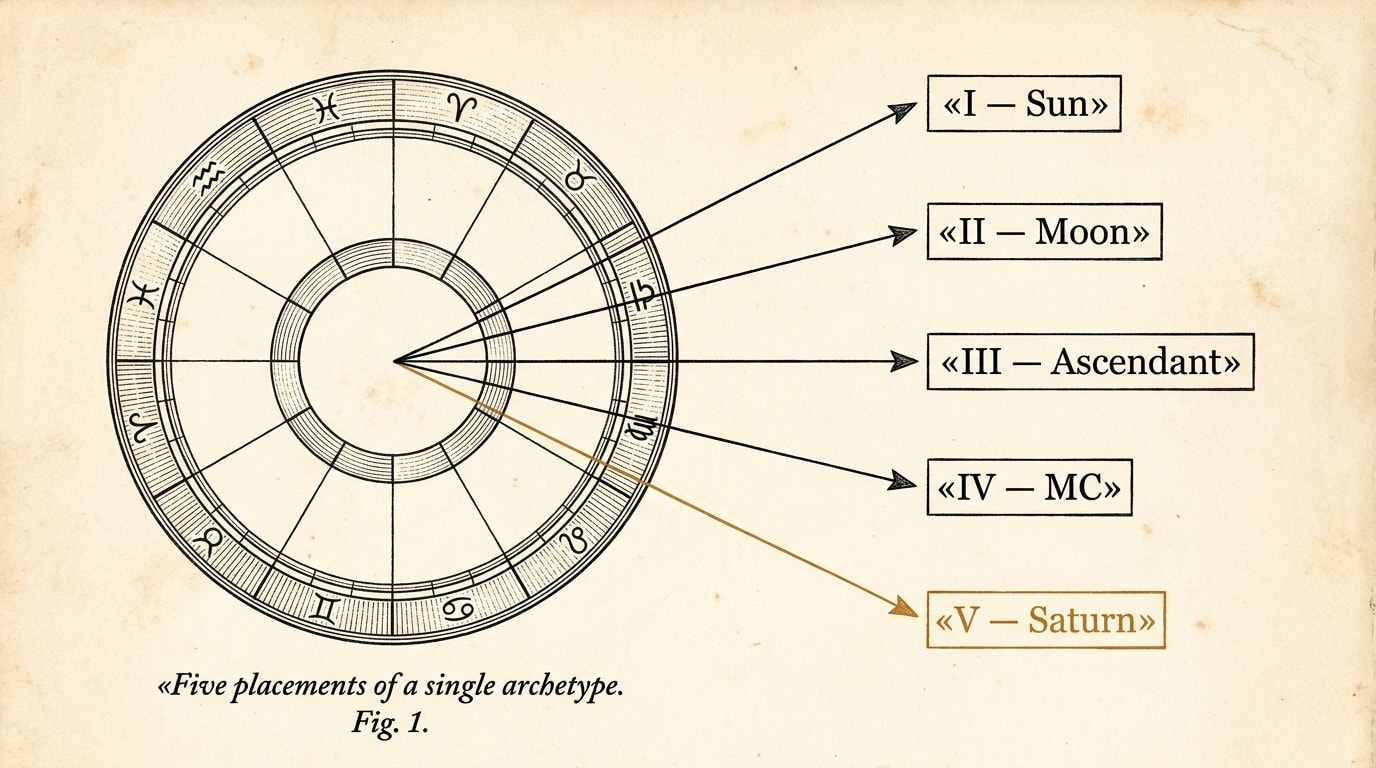
Sun in Capricorn
Your core sense of self leans Saturn-shaped: cautious, structural, slow to commit but reliable once committed. This is what every Capricorn horoscope describes by default, because the Sun is the one placement the column knows about you.
Moon in Capricorn
Your emotional baseline runs cool and self-contained. Many Moon-Caps describe feeling safest when they have a plan, even a modest one. The "I'll feel better when I tidy something" response, common to this placement, isn't avoidance. It's the placement working as intended.
Rising in Capricorn (Capricorn Ascendant)
The first impression you make is composed and slightly reserved, regardless of what's happening internally. Strangers often misread you as older or more senior than you are. This is one of the more visible Capricorn placements, because people around you encounter it first.
Midheaven (MC) in Capricorn
Your public face, especially around work, has a Saturn texture. People often see you in roles involving responsibility, even when you didn't ask for them. The MC describes the version of you visible from the outside in the world. With Cap there, that version reads competent and serious.
Saturn in Capricorn
Saturn in its own sign tends to feel emphatic. The structural challenges of your life (discipline, authority, limits) show up with extra weight, and your responses tend to be more deliberate than light. Saturn here doesn't make you joyless. It makes the joyful bits feel earned.
In one line. One sign, five very different lives, and a daily column for Capricorn only reads the first of them.
Saturn return: the Capricorn-specific bit you've heard about
A Saturn return is a real astronomical event (Saturn returning to the position it occupied in the sky at your birth, which happens roughly every twenty-nine and a half years) and it shows up in your life as a structural life-chapter marker, not a catastrophe. Saturn takes about 29.5 years to circle the Sun, so your first Saturn return arrives between roughly 28 and 31 years old; the second between 58 and 60; the third, if you're around for it, between 87 and 89. Astrologers describe these windows as chapters where the structures of your life (career, relationships, the long-term shape of things) tend to ask for review.
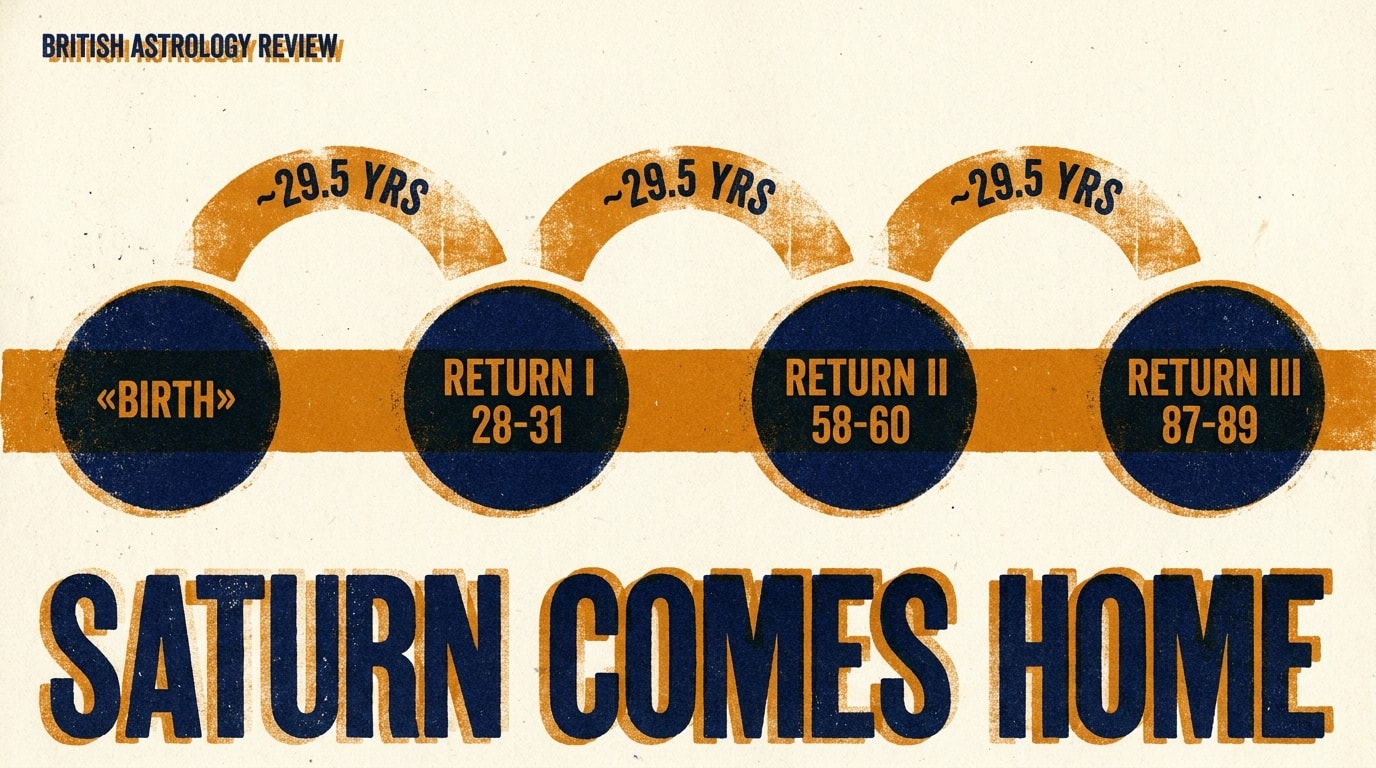
Capricorns often report Saturn-return periods more vividly than other signs, because Saturn is the ruling planet of the Capricorn archetype; the language fits the lived feeling more closely. The catastrophising tone you've seen on TikTok and lifestyle pieces (Saturn return as cosmic punishment, as a year that breaks you) tends to overstate the drama and understate the structural usefulness of the chapter. A Saturn return is significant, not doom. It's the period when the things you put together in a slightly young, slightly hopeful way tend to ask whether they still hold up. Some do. Some don't. The honest reading is that it's a chapter of adjustment, often uncomfortable, often useful. Capricorns tend to do better in it than the headlines suggest, because the archetype was built for this kind of structural work.
How to read your daily Capricorn horoscope without losing your patience
Read your Capricorn horoscope as a description of today's sky filtered through the Saturn archetype, look for the transit mechanic underneath the prose, and treat the verdict-language ("expect productivity", "trust your discipline") as decoration, not instruction. Most daily horoscopes are written quickly for general Sun-sign audiences and lean on verdict-language to feel decisive; the underlying transit is usually accurate, the "what you should do about it" layer is editorial flourish. If you skim a daily horoscope for Capricorn and notice the actual transit mentioned ("the Moon enters Aries today", "Saturn squares Mars", "Venus moves into Cap"), you can verify it on any free transit chart, and decide for yourself what it might mean for your day. Capricorn horoscopes work as gentle observation prompts when you read them this way. They don't work as schedules.
Three practical moves are worth keeping.
Notice the transit. Look past the prose for the actual planetary movement named. "The Moon is in your sign today" is a verifiable mechanic; "you'll feel grounded" is the verdict draped over it. The transit is the part that can be checked.
Discount the verdict. When a column says "trust your instincts today", ask what transit is supposed to cause that, and whether the same transit might mean something else in your particular chart. It usually does, because your full chart is twelve times richer than any one Sun sign.
Cross-check with your own day. A horoscope earns its keep when you notice the mechanic in passing ("huh, the Moon's in Cap today, that's why everything feels a bit heavier") rather than when you build the day around the verdict. Astrology rewards the reader who treats it as quiet observation, not as a verdict to be obeyed.
From generic Capricorn to your Capricorn
A generic Capricorn horoscope reads only your Sun sign; a personalised chart reads all ten of your placements, plus the houses and aspects between them, which is why personalised tends to feel less generic. Your Capricorn Sun is one of ten placements; a chart that knows your Moon, your Rising, your MC, your Saturn and the rest can describe today's sky as it actually meets your particular configuration, not as a one-size-fits-twelve template. The same Saturn transit lands differently for a Capricorn with a Cancer Moon than for a Capricorn with a Leo Moon; the generic column can't distinguish them, a personalised chart can. Once you've read enough generic Cap horoscopes to feel the shape of the archetype, the next sensible step is to see what the sky looks like when it knows the other nine.
If you'd like to see what the Capricorn theme actually looks like in your particular chart rather than in the generic column, WowAstro's free birth chart draws all ten placements from your date, time and place of birth, using the same Swiss Ephemeris data working astrologers use.
 Most Cap horoscopes will go on sounding Saturn-shaped. Yours doesn't have to.
Questions readers ask
What does a Capricorn horoscope actually describe?
A Capricorn horoscope describes today's transit chart — where the Moon, Sun and planets sit in the sky — read through the Capricorn archetype. The archetype itself is Saturn-ruled, cardinal earth, and translates into a steady vocabulary about structure, work, time and the long game. A daily column applies that filter to today's sky and produces a paragraph aimed at all Capricorn Suns at once. It's a real astrological read, but a narrow one — it covers your Sun sign, one of ten placements on your full chart, and reads through one shared lens.
Why do Capricorn horoscopes always say the same things?
Capricorn horoscopes sound similar because the input filter is constant. Saturn rules Capricorn, Capricorn is cardinal earth, and that combination translates into the same vocabulary — discipline, structure, slow build, the long game — every single time. Different astrologers vary the tone (warmer, drier, glossier) and the verdict for the day, but the underlying register stays Saturn-shaped because it's describing the Capricorn archetype, and the archetype isn't going to change. The repetition is the format being consistent, not a quality problem.
When is the Saturn return for Capricorn?
The first Saturn return arrives for everyone, Capricorn or otherwise, between roughly twenty-eight and thirty-one years old. Saturn takes about 29.5 years to orbit the Sun and return to the position it held at your birth; the second Saturn return follows between 58 and 60, the third, if applicable, between 87 and 89. Capricorns often experience the chapter more vividly than other signs because Saturn is the ruling planet of the Capricorn archetype, so the language and the lived feeling match more directly. The window is significant, often uncomfortable, but rarely the catastrophe lifestyle pieces describe.
Are daily Capricorn horoscopes accurate?
A daily Capricorn horoscope is accurate for the part it actually describes — today's transits, read through one of your ten placements — and only when that transit happens to resonate with the rest of your chart. The underlying astronomy is precise: the Moon really is where the column says it is. The prose interpretation, the verdict-language about what the transit "means for Capricorns today", is editorial craft that varies wildly between writers. Read for the mechanic, not the verdict, and a Cap horoscope tends to be more useful than promising.
A note on what this is. Astrology, as we use it at WowAstro, is a tool for self-reflection and self-observation, not a method for predicting events, health, or financial outcomes. Read your daily Capricorn horoscope as a description of the current sky filtered through an archetype — take what's useful, leave the rest.
About this article: WowAstro readings combine traditional astrological methodology (Swiss Ephemeris calculations, Hellenistic and modern psychological frameworks) with AI-assisted writing reviewed by Oksana Miatova before publication. For entertainment and self-reflection only — not medical, legal, or financial advice. Full editorial policy at /editorial-standards.
Written by Oksana Miatova, astrologer and writer at WowAstro. Charts calculated using the Swiss Ephemeris, the same astronomical data working astrologers use.
Your year ahead — what 2026 has waiting
A personal AI forecast for 12 months — based on your natal chart and the year's transits, with weekly and monthly themes
Comments
New here? Get −30% off your natal chart
Leave your email and we will send you the promo code WELCOME30. Straight after that you can comment — no passwords, all automatic.
Quick sign-in
Sign in with Telegram — one click.
Or by email (with a gift)
Already have an account? Enter the same email — we'll email you a sign-in link.