Skip to content
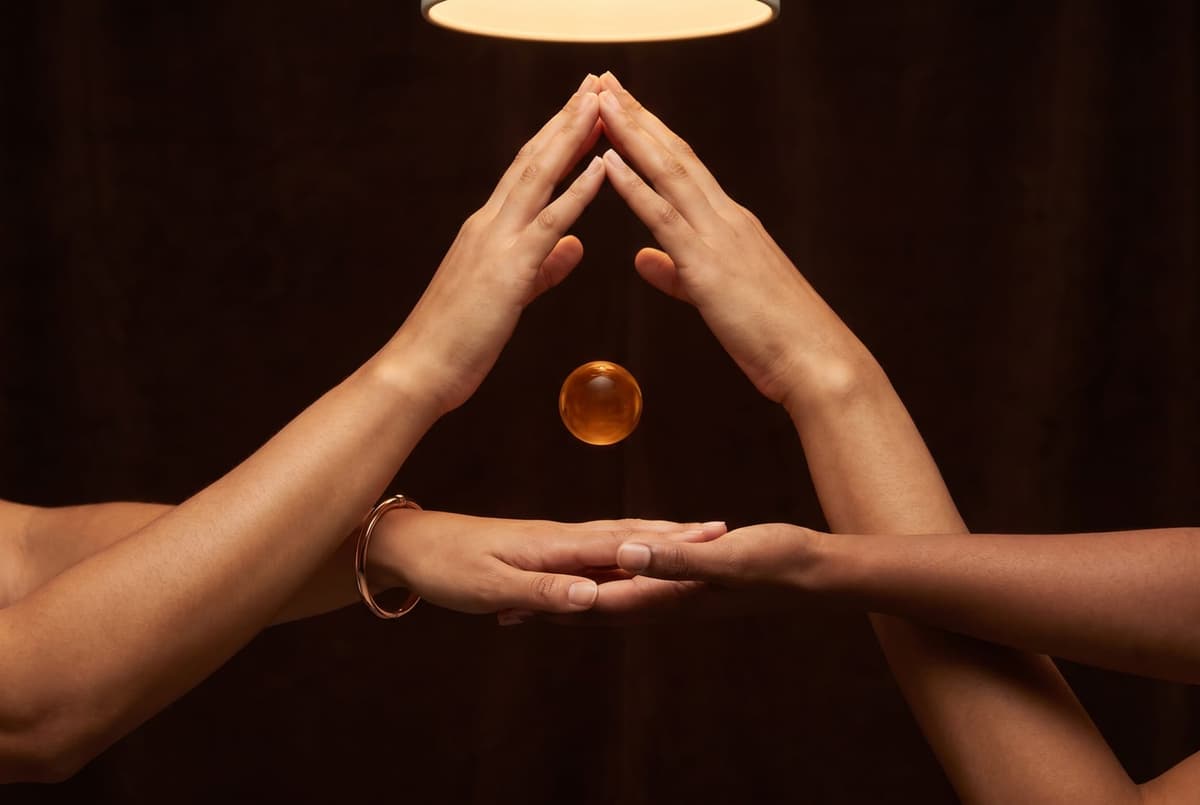
Trine Sun–Neptune — symbolic illustration

Trine · 120°

Sun trine Neptune

A harmonious aspect: the two planets support each other and tend to pull in the same direction. Read it as a resource to notice, not a guarantee.

120°Orb up to 6°HarmoniousNatal · synastry · transit
120°Sun trine NeptuneOrb up to 6° · major aspect
Oksana MiatovaWritten by Oksana Miatova·10 min read

For entertainment and self-reflection only. Not medical, legal, financial or psychological advice. Consult a qualified professional for important decisions.

The short answer

Sun trine Neptune is a harmonious 120° contact in which your will and sense of self come with built-in access to imagination, empathy and a fine reading of the room. The gift is gentle and easy to use — but left unactivated it tends to stay a background daydream rather than a realised talent.

What a trine is

The geometry behind the reading

A trine is an angle of 120° between two planets, and classically it is treated as one of the most flowing aspects in the whole catalogue. The working orb in a natal chart goes up to about six degrees; for transits and synastry I usually tighten it to four or five. Geometrically the trine is a third of the circle, and planets that hold it almost always sit in signs of the same element. For the Sun–Neptune pair that means the solar sense of identity runs in the same channel as Neptune's softening of edges: in fire it lights up an image, in earth it tames the dream down into a craft, in air it turns it into an idea, in water it deepens it into pure feeling. The catch in the geometry is that the current is so pleasant you can drift along it for years without realising there is a genuine artist, healer or mystic inside you.

Three ways to read it

The same aspect, three different stories

One aspect reads differently depending on where you find it: inside a single birth chart, between two people, or moving across the sky right now. Read each as a way to notice patterns, not as a forecast.

Sun trine Neptune in the natal chart

If you have Sun trine Neptune in your natal chart, you probably won't notice it as a special aspect at all — at least not for a long while. It is not a loud configuration. It does not give a biography its drama. It simply stands in the background your whole life, like a soft light in a room that you stop registering until somebody switches it off. And it's then, in the moments when the Neptunian supply runs thin — a low patch, a spell of overload, a stint living in an environment that isn't yours — that you first realise how much of it you'd been quietly running on.

What does it amount to at the everyday level? It's the ability to walk into a room and read it inside a minute: who belongs here and who doesn't, who has just had a row, who has come in with good news. It's being able to look at a painting, a landscape or a human face and see an image rather than a sum of details. It's an ear for music — not necessarily a trained one, but accurate: you hear when someone is faking it, and you hear when someone is singing from the inside. It's dreams that now and then point at something useful, and an intuition you've learned to listen to because it so rarely lets you down.

What does it mean at the level of identity? Your sense of 'I' is not as dense as it is in people with strongly drawn Saturnian or Martian structures. You take on other people's states more easily, you dissolve into a shared mood more easily, you pick up the speech and the thinking of whoever you spend a lot of time with. On one hand that gives a remarkable plasticity: you can work with all sorts of people, move through all sorts of settings, and fit in everywhere. On the other hand, somewhere around thirty to thirty-five, you may catch yourself one day not quite knowing who you are without all those settings.

That, in fact, is the central task of Sun trine Neptune in the natal chart — learning to separate yourself from the images and states you slip into so effortlessly. Not to shut the plasticity down, because it is your gift, but to learn to come home to yourself. I'd point here towards any regular practice that demands precisely your own voice: a journal, morning pages, voice notes to yourself, drawing with no reference. Anything at all that pulls out into the light not what you heard somewhere, but the thing that exists only in you.

There's one more theme that often gets overlooked. People with this trine nearly always have a problem with money for their own work. Not with money as such, but specifically with naming a price, sending an invoice, declining to hand it over for free 'because it's no trouble for me anyway'. Neptune blurs the line between 'I am doing this' and 'this just exists in the world', and it can feel almost shameful to charge for something like that. It's a very common shadow side. If that rings true, try a simple thing: keep a ledger where every piece of work you finish is written down with a rate against it. Not to make you harder, but to teach you to see your own contribution from the outside. When the Neptunian gift acquires a price tag, it becomes a profession for the first time, rather than a talent dissolved in the air. And that's the point at which it's worth looking at your whole natal chart, to understand where exactly this gift is wired in and what kind of work it prefers.

It's worth saying plainly that none of this is a forecast. The trine describes a leaning, a colour, a way of being in the world — not events that are going to happen to you. Two people with the same aspect can live very different lives, depending on the sign and house it falls in, the planets it touches, and frankly what they decide to do with it. The houses matter especially. The same Sun–Neptune trine landing on the fifth house tends to read as a creative, playful, image-led life; on the sixth, as a vocation in healing or quiet service; on the tenth, as a public role built on intuition and atmosphere. Read across the chart as a whole, it stops being a vague label and becomes something you can actually work with.

When it flows

  • Imaginative thinking — you take in the world through pictures, music and atmosphere rather than facts in a row
  • A fine, wordless read on people and spaces, without having to analyse anything
  • Natural empathy — the person next to you tends to exhale and relax almost at once
  • An artistic, musical or healing streak that often shows from childhood

When it grates

  • A blurred sense of will — it's genuinely hard to pin down what, concretely, you want
  • A habit of slipping away from a direct question into a beautiful turn of phrase
  • Trouble with money, rates and invoices — the urge is always to give it away for nothing
  • A pull to feed your sense of being alive from outside: films, music, a drink, being in love

The shadow side, and what to do with it

The shadow side of Sun trine Neptune is that the person never quite learns to be themselves in the dense, concrete world. The will dissolves into other people's expectations so softly that its absence goes unnoticed. By the mid-thirties this can curdle into a quiet sense of having lived someone else's life — agreeable, accommodating, but with no answer to the question 'who am I'. The way through is to ground the Neptunian gift in a craft: to draw with your hands, sing with your own voice, heal with the body, charge money for your own work. Done that way, the trine stops being fog and becomes a material — one that turns into things no other aspect could ever make.

Trine — symbolic still life

How close is close

The orb decides the volume

A trine is rarely exact. The smaller the gap between the two planets — the orb — the louder the aspect plays. Here is roughly how the three bands read.

Tight

0–2°

Reads as a defining feature

At 0–2° the trine is at maximum intensity. In the natal chart a tight orb fuses the solar identity and the Neptunian gift into a single fabric: the person lives through imagery so naturally that they often have no idea other people are wired differently. Artistic, musical or intuitive abilities show from childhood and feel entirely normal. In synastry a tight orb gives a couple that rare sense of a 'shared frequency', as if someone invisible had tuned them to the same key. In transit the exact contact fires on the date of the aspect give or take a day, and that is the time to catch creative insights, slip into practices and do fine work with people.

Medium

2–5°

A steady background pattern

At 2–5° the aspect is significant, with clear expressions. In the natal chart a medium orb leaves a gap between the two functions, and self-awareness lives in that gap. You can see where you dream and where you act, and you can choose. A trine like this is easier to turn into a profession and harder to lose yourself in rose-tinted glasses. In synastry a medium orb gives a couple who feel the subtle closeness without mistaking it for mind-reading. In transit a medium orb opens the window two or three weeks before the exact aspect and as long again afterwards, so it pays to plan creative and intuitive work with a margin of days.

Loose

5–8°

A faint colouring, felt in crises

At 5–8° the trine is present, but only in the background. In the natal chart a wide trine is less a strong talent than a leaning towards daydreaming and a softness of heart. It shows in moments of tiredness and moments of inspiration, and stays off-stage in ordinary life. In synastry a wide orb is an atmosphere of shared tenderness that helps a couple weather hard patches, without becoming their main resource. In transit a wide orb gives a stretched-out background period when the world feels a touch softer and the dreams come brighter. Leaning on a transit like that as your main window for action is unwise — it lights things up, but it does not move them.

Trine with a partner — what does it mean for the two of you?

A full synastry reading — every aspect between your two charts

Sun trine Neptune inside one chart is an inner mechanism. Between two charts it becomes the dynamic of a relationship. Enter both birth details and get a synastry reading — where the conjunctions sit, where the squares pull, where the oppositions draw you together — all calculated with the Swiss Ephemeris. Read it as a way to notice patterns, not a forecast.

Check your compatibilityfrom £1 · for entertainment

Compare with a neighbouring aspect

Same planets, a different distance

Sun square Neptune tells a different story. If you're reading this to make sense of a specific chart, it's worth glancing at the neighbouring aspect too.

Sun square Neptune
  • The trine hands you the Neptunian gift with no resistance; the square arrives through lost illusions and disappointment
  • In the trine the Sun and Neptune share an element; in the square they pull against each other from tense, crossed modalities
  • The trine's risk is passivity and a retreat into the fog; the square's is deception, dependence and crises of identity
  • In real lives the square more often forges a conscious artist or spiritual seeker through pain; the trine, a gentle carrier of the gift with no drama
  • The ideal configuration has both in the chart: the square gives depth, the trine gives access

Lived examples

A few charts where you can see it

Public figures with a verified Rodden birth-data rating (AA/A/B). No invented data.

Frequently asked questions

What does Sun trine Neptune mean in the natal chart?
It's a built-in sensitivity to imagery, music and atmosphere. You read people finely, you slide easily into creative or caring work, and empathy comes of its own accord. The downside is a blurring of the will and trouble setting goals in plain terms. The talent often stays in the background unless you ground it deliberately — through a craft, a practice, a rate you actually charge. Read it as a pattern to notice and work with, not a verdict on your life.
Is Sun trine Neptune a lucky aspect?
It's counted among the soft, creative aspects: it gives intuition, an eye for beauty and the knack of soothing people simply by being present. But Neptunian good fortune doesn't turn into a career by itself — that takes structure, which the trine never builds on its own. Without some discipline the aspect drifts off into daydreaming, into dependencies, or into living someone else's life. The 'luck' is real, but it's raw material rather than a finished outcome.
What orb should I use for Sun trine Neptune?
The standard orb in a natal chart is up to about 6°. For transits and synastry I tighten it to roughly 4–5°. Because Neptune is a slow planet, a transiting trine gathers over a long time, with retrograde loops, so the window of effect can stretch across months. In the natal chart, the tighter the aspect, the more obviously the talent shows from childhood.
Is Sun trine Neptune good for a marriage in synastry?
It's a favourable contact for a couple, especially if subtle closeness and shared creativity matter to you. Partners sense each other without words and ride out the hard stretches together with ease. The risk is idealisation and blurred boundaries, particularly around money and commitments. Couples who talk the prose of everyday life on a regular basis tend to live very happily with this trine. As ever, treat it as a lens on the relationship's patterns, not a forecast of how it will end.
Transiting Sun trine my natal Neptune — what should I do with it?
Use it for fine work: writing, composing, meditating, taking up practices, going on retreat, doing sessions with people. It's a good time to catch insights in a notebook or a voice memo. It's a poor time to sign credit agreements, start legal proceedings or make rigid promises. The window is delicate and passing, so the important thing is to capture what comes — otherwise it slips away and leaves only a faint impression that something good was there.
Is Sun trine Neptune different for men and women?
Structurally it works the same way for everyone: access to the imaginative and intuitive, a softness, an easy empathy. Socially it tends to surface differently — in men this aspect often shows through a creative profession or an unconventional path; in women, more often through caring fields and subtle relationships. But that's a reflection of cultural expectation, not of the astrology, and plenty of charts ignore the pattern entirely.
Which famous people have Sun trine Neptune?
Among examples verified against AstroDatabank: Vincent van Gogh (Sun in Aries, Neptune in Pisces) and Steve Jobs (Sun in Pisces, with a strongly Neptunian cast to his identity). For an aspect this specific it's worth checking each chart yourself at a Rodden rating of AA or A rather than trusting a name quoted in passing — birth times matter, and a loosely cited figure can mislead you.
Does Sun trine Neptune guarantee artistic talent?
It guarantees access to the imaginative and intuitive, but not that you'll turn it into work. Many people with this trine feel beautifully their whole lives and create nothing, because they never learn a craft. The talent is there, the material is there, but the tool is missing. Grounding the trine through regular practice is the one way to move it from a mood into a result — for self-reflection, not as a promise about your career.
Is there a risk of dependency with Sun trine Neptune?
There's a risk, though it's gentler than with the square or opposition of Sun and Neptune. The trine gives easy access to altered states, and a person can start, almost without noticing, to top up their sense of aliveness from outside — films, a drink, infatuations, intense spiritual groups. It's a tendency rather than a fate, and the useful move is to watch for it and swap it out for steady practices: bodily, breath-based, artistic. None of this is destiny; it's something to keep an eye on.

Related pages

The other aspects between Sun and Neptune

The same two planets at a different angle — each reads differently.

Oksana Miatova
Oksana Miatova

Astrologer, co-founder of WowAstro

Oksana Miatova is a practising astrologer and co-founder of WowAstro. Natal charts, synastry and forecasts grounded in the Western classical tradition — explained through real-life examples and plain language.

More about the author →

For entertainment and self-reflection only. Not medical, legal, financial or psychological advice. Consult a qualified professional for important decisions.