Skip to content
Square Sun–Neptune — symbolic illustration

Square · 90°

Sun square Neptune

A challenging aspect: the two planets rub against each other and ask for conscious handling. Tension here is a source of movement, not a verdict.

90°Orb up to 6°ChallengingNatal · synastry · transit
90°Sun square NeptuneOrb up to 6° · major aspect
Oksana MiatovaWritten by Oksana Miatova·10 min read

For entertainment and self-reflection only. Not medical, legal, financial or psychological advice. Consult a qualified professional for important decisions.

The short answer

Sun square Neptune is a tense right angle between will and dream. The 'I' is real and strong, but it keeps dissolving into a mist where it's hard to tell your own wish from someone else's. The pattern gives genuine sensitivity and an artist's ear alongside a leaning towards self-deception, and through the friction it slowly grows a grown-up knack for telling illusion from reality.

What a square is

The geometry behind the reading

A square is a ninety-degree angle between two planets, and for a pairing with the Sun the working orb runs to about six degrees. In the hierarchy of aspects the square sits among the tense ones, second in raw force only to the conjunction. It isn't a 'bad' aspect, it's a mechanical one: two planets meet at a right angle and neither will let the other slip quietly past. That standoff creates friction, and friction is what gets things moving — squares build character the way harmonious aspects hand out talent. What makes the Sun–Neptune square particular is that it pits two principles from completely different weight classes against each other: the personal 'I' and the great boundary-dissolving outer planet. One pole wants to say cleanly 'this is who I am'; the other melts any such statement into a wider, hazier picture. Because Neptune moves so slowly, a whole cohort is born with this pattern roughly every eighteen months to two years, whenever transiting Neptune squares the stretch of zodiac the Sun is crossing — so it's a generational signature as much as a personal one.

Three ways to read it

The same aspect, three different stories

One aspect reads differently depending on where you find it: inside a single birth chart, between two people, or moving across the sky right now. Read each as a way to notice patterns, not as a forecast.

Sun square Neptune in the natal chart

If this pattern sits in your chart, you've been on speaking terms since childhood with a strange state: a strong 'I want' suddenly evaporates into the air, and its place is taken by somebody else's 'you ought to', or by a flattering picture of yourself. You'll remember it from school. You knew perfectly well that you liked one thing, yet you agreed to another — because that was how the adults looked at you, because the mood in the room nudged you that way, because you were afraid of letting someone down. From the outside you might have been read as a soft, understanding, sensitive child. On the inside there was a sense that the real you was somewhere close by, but you could never quite reach it.

The square between the Sun and Neptune is mechanically simple and lived with some difficulty. The Sun is the clear 'I', the will, the centre of the personality. Neptune is dissolution, dream, everything that is larger than a single separate self. At a right angle these two principles can't get round one another. Every time you want to say cleanly 'this is who I am', Neptune adds, 'but it could also be this way, and this way, and this way'. Each statement turns into a cloud of options. This isn't weakness; it's a feature of the tuning, one in which clarity is not handed to you at birth but earned through work.

In youth it tends to produce two familiar scenarios. The first is the retreat into fantasy: books, films, music, long internal monologues in which you are the hero, the rescuer, the artist. Living in that world is easier than living in the real one, where you keep bumping into your own uncertainty. The second is service to someone else's will: beside a strong person, or inside a strong idea, you finally feel an outline. Another self becomes a prop for your own, and from it comes a deceptive sense of your own strength.

Somewhere around twenty-five or thirty the same thing usually happens to both scenarios. Reality starts to puncture them. The illusory projects collapse, the idealised partner turns out to be a living person with interests of their own, the rescuer role burns out. This is exactly the moment the square begins to work for you rather than against you. Out of the wreckage of the illusions you rebuild a self, and in this second version the 'I' takes Neptune into account instead of fighting it. You stop demanding clarity from yourself on every question. You learn to say 'I don't know yet', and it stops being a confession of weakness.

The strong side of this tuning sounds like fineness. You hear what others miss — the subtext in a sentence, the shift in a group's mood, the false note in a beautiful promise. You can sit beside a person inside their difficult feeling without trying to fix the feeling. That is a rare capacity, and out of it grow artists, therapists, teachers, doctors, those drawn to the contemplative life — every calling where the work is with the invisible. The shadow side sounds like leakage. Without a routine, without the body, without honest feedback from the people close to you, you spread out into other people's tasks and your own daydreams, and by evening you can't recall what it was you yourself wanted.

The road of integration with this configuration sounds almost coarse after all the Neptunian dreaming. It's a return to the simple and the concrete. How much did I sleep today. What did I eat. Who did I phone. What did I make with my hands. When the 'I' is assembled out of small facts like these, the mist doesn't lift at once, but it lifts. Underneath it you find the real you — not a hero and not a failure, but a living person with specific interests, energies and limits. That is the mature work with a Sun–Neptune square: not to renounce sensitivity, but to stop paying for it with dissolution. Treat all of this as a frame for reflection rather than a forecast of how your life must go.

To see how exactly this square is built in your own chart — which sign the Sun stands in, which house Neptune catches, what other planets are drawn into the configuration — the simplest route is a detailed reading of the whole natal chart, read for self-understanding and for fun, not as a script of fate.

When it flows

  • A fine-tuned reading of other people's moods and of the atmosphere of a place
  • An artist's ear — music, film and writing land deeper than they do for most
  • A knack for sensing the mood of a whole group and turning it into an image
  • Through wrestling with illusion, a mature ability to tell your own self from everyone else's

When it grates

  • A blurred sense of self — the simple question 'what do I actually want right now' is genuinely hard
  • An easy slide into other people's scripts: the rescuer, the victim, the perfect child
  • A chronic feeling that real life is somewhere nearby, just not quite here
  • Trouble with boundaries — energy leaks out into people and projects without a count being kept

The shadow side, and what to do with it

The shadow of this square is the quiet swapping of your own will for a flattering picture of yourself. You look in the mirror and see not a person but an image — the saviour, the artist, the spiritual seeker — and you bend the actual life to fit the portrait. The energy goes on propping up the illusion rather than on the work. The way through runs, almost rudely, back into the body and into plain facts: how many hours did I sleep, what did I eat, who did I ring, what did I make with my hands today. When the 'I' is assembled out of concrete actions the mist thins, and underneath it you find the real self rather than the invented one. It's slow work, but it gives the thing this chart needs most — steadiness without the loss of sensitivity.

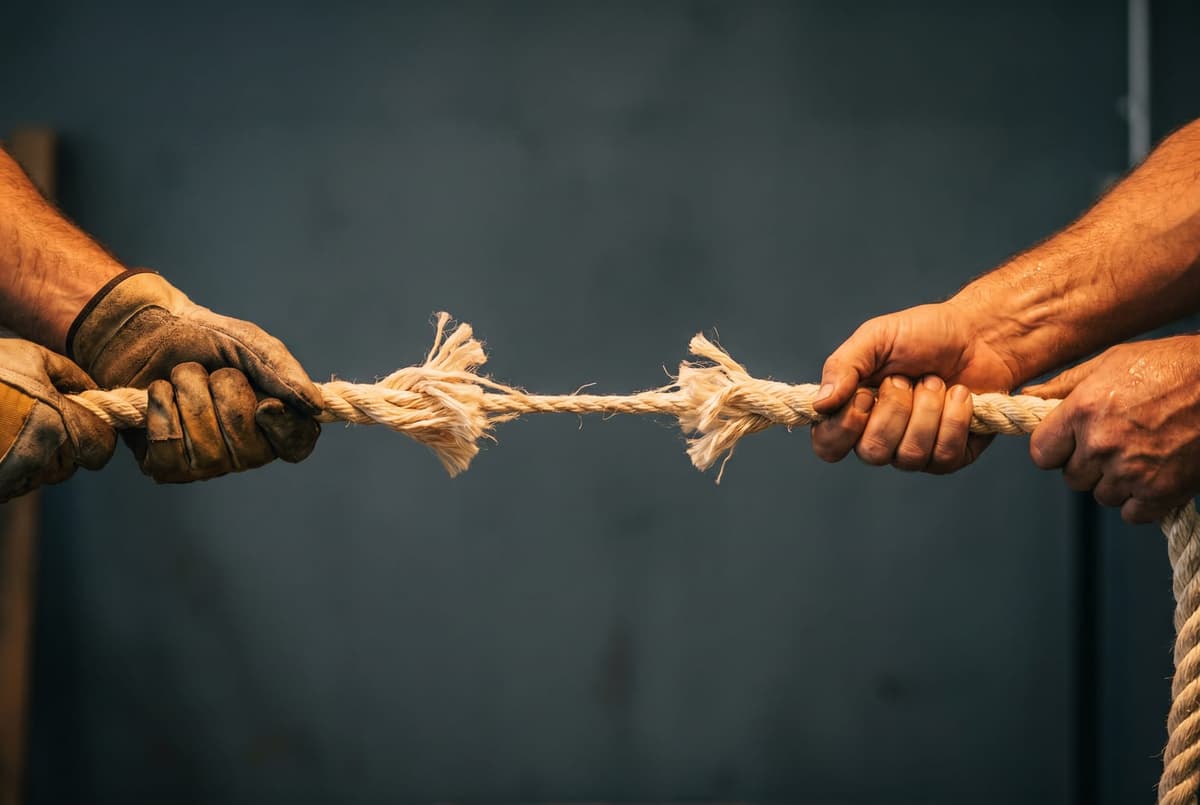
Square — symbolic still life

How close is close

The orb decides the volume

A square is rarely exact. The smaller the gap between the two planets — the orb — the louder the aspect plays. Here is roughly how the three bands read.

Tight

0–2°

Reads as a defining feature

At 0–2° the square is exact and at its most intense. The clash between a clear 'I' and a dissolving Neptune sounds out every single day. The person lives with a constant sense of being at once highly sensitive and highly unstable. When tired they drift easily into fantasy, alcohol, screens and the idealising of others. When resourced, it is precisely this configuration that produces the artist, the therapist, the subtle listener — anyone whose work is the handling of the invisible. On a tight orb the aspect demands deliberate hygiene: a settled routine, attention to the body, plain facts, honest feedback from the people close to you.

Medium

2–5°

A steady background pattern

At 2–5° the tension is real but not round-the-clock. The aspect switches on in specific situations: in creative work, at the start of a new relationship, at moments of important choice. In ordinary life the person doesn't feel the blurring — their 'I' holds. But let a strong impression arrive — a film, a person, a promise — and the edges go soft. People in this band often describe their lives as an alternation of clear stretches and foggy ones.

Loose

5–8°

A faint colouring, felt in crises

At 5–8° it's a background presence. At the level of temperament it shows as a gentle dreaminess and a habit of seeing more in people than is really there. It doesn't sway decisions much, but it tints the whole style of perception towards trusting an impression over a fact. People in this band often say they're bad at refusing, that 'no' is hard to say, that they wander off into daydreams mid-conversation. It isn't a malfunction; it's a quirk of tuning in which Neptune simply plays a touch louder than everyday clarity needs.

Square with a partner — what does it mean for the two of you?

A full synastry reading — every aspect between your two charts

Sun square Neptune inside one chart is an inner mechanism. Between two charts it becomes the dynamic of a relationship. Enter both birth details and get a synastry reading — where the conjunctions sit, where the squares pull, where the oppositions draw you together — all calculated with the Swiss Ephemeris. Read it as a way to notice patterns, not a forecast.

Check your compatibilityfrom £1 · for entertainment

Compare with a neighbouring aspect

Same planets, a different distance

Sun trine Neptune tells a different story. If you're reading this to make sense of a specific chart, it's worth glancing at the neighbouring aspect too.

Sun trine Neptune
  • In the trine the Sun and Neptune get along: sensitivity is built into the 'I' with no pain and no split
  • The square teaches you to sort illusion from reality through mistakes; the trine hands that skill over at birth
  • The trine tends to give easy access to creativity; the square delivers creativity through resistance and crises
  • In relationships the trine is a quiet softness; the square is drama and a waking-up through disappointment
  • The square builds a mature sensitivity by way of shadow-work; the trine gives it as a gift and sometimes lets you take it for granted

Lived examples

A few charts where you can see it

Public figures with a verified Rodden birth-data rating (AA/A/B). No invented data.

Frequently asked questions

What does Sun square Neptune mean in the natal chart?
It is a tension between a clear 'I' and a dissolving Neptune: the will is strong but keeps losing its edge in a fog of other people's expectations, idealisations and daydreams. The person is sensitive to the moods around them and inclined to an artistic way of seeing the world, yet struggles to answer the plain question 'what do I want right now'. Out of this pattern, over the years, grows a mature ability to tell your own self from everyone else's. Read it as a tendency to notice, not a fixed fate.
Is Sun square Neptune a bad aspect?
No, it's a working aspect. All squares in astrology are built the same way: they create friction, and character grows out of the friction. The Sun–Neptune square gives sensitivity as a resource and illusions as a growth zone. It only turns heavy when a person believes in their invented self-image and bends life to fit it, instead of returning to the facts. Like everything here, it's a way to understand a pattern rather than a prediction.
Is Sun square Neptune good in synastry?
It's an intense contact that hands over the 'as if I've known you for years' feeling almost at once. Partners read each other finely and dream well together, but they slide easily into projection: each sees an ideal in the other rather than a real person. Through disappointments and awkward, concrete questions a mature closeness can grow from such a link, but without working on the projections it often ends in a sharp waking-up. It describes a dynamic to watch, not the outcome of the relationship.
What orb should I use for Sun square Neptune?
The classic square orb for the lights runs to about 6–8°, and for the Sun–Neptune pair an orb of up to 6° is treated as working. On a tight orb (0–2°) the aspect is felt every day; on a medium one (2–5°) it switches on in specific situations; on a wide one (5–8°) it lingers as a background tint that colours the style of perception more than the decisions themselves.
Which celebrities have Sun square Neptune?
Among confirmed charts at Rodden rating A are Kurt Cobain (born 20 February 1967) and Nikola Tesla (born 10 July 1856). Both biographies can be read through this configuration: a fine sensitivity to the invisible through which their central work was done, and a chronic struggle with the boundary between intuition, self-image and reality. Always check a chart yourself on AstroDatabank before relying on it — this aspect is specific enough that a loosely quoted name will mislead you.
How does this aspect work in transit?
A transit of the Sun to natal Neptune lasts roughly a day; a transit of Neptune to the natal Sun runs for several years with three contacts because of the retrograde loop. In both windows physical energy drops, intuition rises, and decisions get made that later need revisiting. A good rule of thumb for entertainment-minded self-reflection: hold off on signatures, large purchases and abrupt moves until the period has passed.
How do I tell Sun square Neptune from other Neptunian aspects?
A Sun–Neptune conjunction gives a dreaminess built into the 'I' without a split; the trine gives easy access to sensitivity; the opposition stages the conflict through significant others. The square is set apart precisely by the sense of inner friction: the person feels a powerful will yet regularly loses it in the mist, and each time has to reassemble the 'I' from scratch through facts and the body. It's a way to recognise a flavour of experience, not a diagnosis.
Can you 'cure' Sun square Neptune?
Aspects in a natal chart aren't cured — they're structure. What changes is the way you handle them. With Sun square Neptune the handling runs through the hygiene of fact: a regular routine, attention to the body, honest feedback from the people close to you, and the habit of testing impressions against deeds. With that footing in place the sensitivity stays a resource rather than a hole that energy drains into. None of this is a prescription; it's an idea to play with.
Does Sun square Neptune work the same for men and women?
The basic dynamic — the clash of will and dream — is the same, but the colouring differs. In a woman's chart it shows more often through the idealising of men and a pull to pour herself into rescuing a partner. In a man's chart it shows more through a blurred professional 'I': 'I don't know who I want to be', 'everything interests me on the surface'. In both cases the mature work with the aspect runs through a return to the concrete facts of one's own life. This is archetype, not destiny.
Is this aspect common?
Sun square Neptune forms in the charts of a whole cohort roughly every eighteen months to two years, whenever transiting Neptune sits in the matching stretch of zodiac. So it's fairly widespread — entire groups of people born in the same span carry the configuration, and through that cohort certain motifs enter the culture: an aesthetic of mist, a romanticising of vulnerability, and an ongoing fascination with boundaries and dependency. It's a generational signature you can spot, not a label that defines anyone.
Can I check Sun square Neptune myself?
Yes. Open your natal chart and find the degree positions of the Sun and of Neptune. A square is roughly a ninety-degree separation, so if the two are about 90° apart (within an orb of around 6°) you have the aspect. A quick shortcut: signs that sit square to one another fall into the same modality — cardinal with cardinal, fixed with fixed, mutable with mutable — three signs apart in the wheel. Past about 8° the square is considered to have loosened off. For self-reflection and entertainment, that quick check is all you need.

Related pages

The other aspects between Sun and Neptune

The same two planets at a different angle — each reads differently.

Oksana Miatova
Oksana Miatova

Astrologer, co-founder of WowAstro

Oksana Miatova is a practising astrologer and co-founder of WowAstro. Natal charts, synastry and forecasts grounded in the Western classical tradition — explained through real-life examples and plain language.

More about the author →

For entertainment and self-reflection only. Not medical, legal, financial or psychological advice. Consult a qualified professional for important decisions.