Skip to content
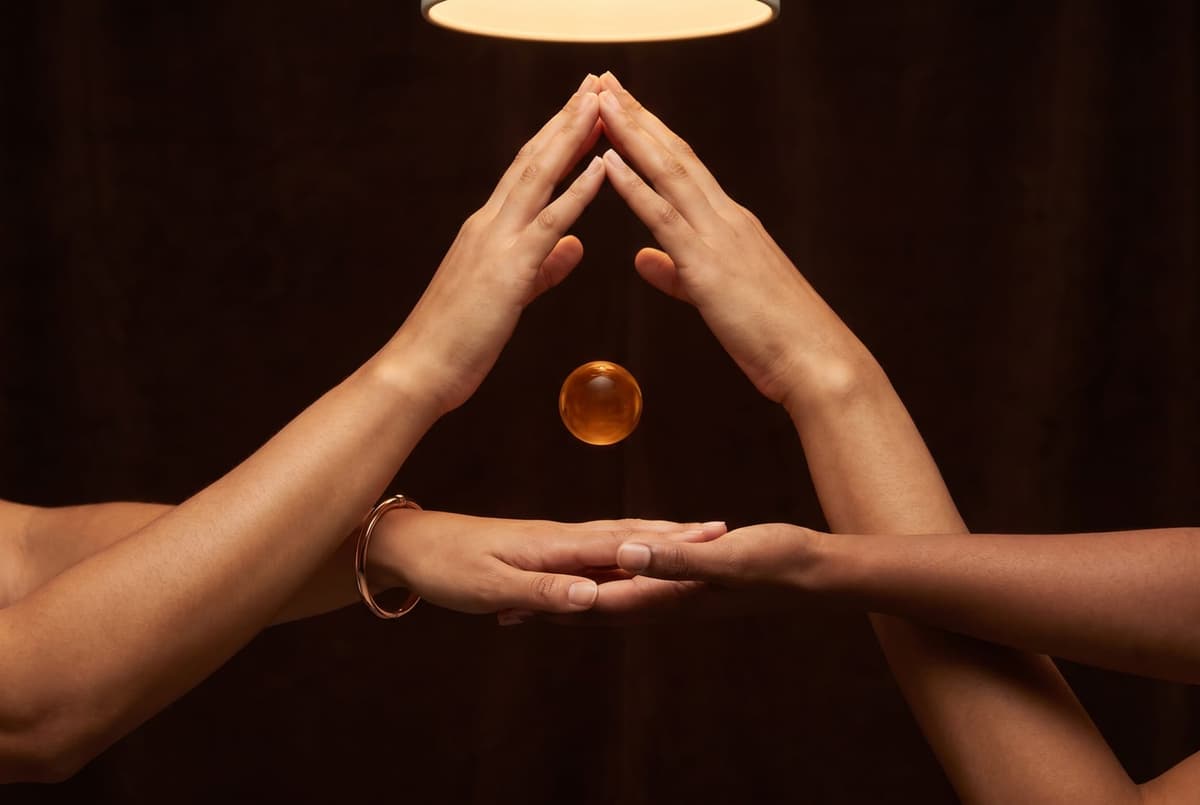
Trine Sun–Mars — symbolic illustration

Trine · 120°

Sun trine Mars

A harmonious aspect: the two planets support each other and tend to pull in the same direction. Read it as a resource to notice, not a guarantee.

120°Orb up to 6°HarmoniousNatal · synastry · transit
120°Sun trine MarsOrb up to 6° · major aspect
Oksana MiatovaWritten by Oksana Miatova·11 min read

For entertainment and self-reflection only. Not medical, legal, financial or psychological advice. Consult a qualified professional for important decisions.

The short answer

Sun trine Mars is a harmonious 120° aspect in which will and the ability to act run as a single mechanism. The energy flows without resistance, so a person rarely ends up fighting themselves. The main risk is failing to notice that support and never putting it fully to work.

What a trine is

The geometry behind the reading

A trine is an angle of 120 degrees between two planets, and it is treated as one of the most fluid aspects in classical astrology. The standard orb when reading a natal chart runs to about six degrees, while for transits and synastry I tend to keep it tighter, around four to five. Geometrically 120° is a third of the circle, which means the two planets nearly always fall in signs of the same element. For the Sun and Mars that means desire and will are painted in one colour — fire, earth, air or water — and run on the same wavelength. There is no gap between 'I want to show up' and 'I'm going to do it', the gap where doubt usually lives. The downside is the one every trine shares: there is no pressure. Whatever switches on by itself is easy to overlook and easy to leave unused.

Three ways to read it

The same aspect, three different stories

One aspect reads differently depending on where you find it: inside a single birth chart, between two people, or moving across the sky right now. Read each as a way to notice patterns, not as a forecast.

Sun trine Mars in the natal chart

If Sun trine Mars sits in your natal chart, you most likely grew up sensing that there isn't much distance between 'I want' and 'I do'. Plenty of people around you spend months working themselves up to an important call, a difficult conversation, the start of a project — and at some point you simply get up and go. It isn't heroism and it isn't self-discipline. It's the basic setting of your body and your will. They run on the same frequency, and to you that feels like the normal way of things.

From the inside it registers as a steady background hum of your own competence. The body switches on in the morning, there's strength by midday, and by evening you can still manage a conversation or a workout. Dips happen, of course, but they don't knock you out of action for long. You come back to form faster after illness, recover your working state faster after a clash, find the next step faster after a setback. That isn't to say emotions come easily — Sun trine Mars is not about sensitivity. It's about rarely getting stuck in paralysis when you need to act.

In childhood there is usually no conflict between 'I like it' and 'I do it'. Liked sport, went into sport. Liked drawing, drew. Wanted to scrap, scrapped — not in the sense of being unruly, but in the sense of a short distance between an impulse and its expression. Parents and teachers may remember you as 'persistent' or 'stubborn', and usually with respect rather than irritation, because persistence of the trine sort has no strain in it. It isn't aggressive; it simply doesn't stop.

And here is the first trap. You've had no experience of an inner brake, because the inner accelerator is always pressed. In ordinary life, up to about thirty, that is enough with plenty to spare. You keep up three jobs, several hobbies, an active personal life, and you don't burn out, because the strength really is there. Somewhere between thirty and forty, many people with this configuration meet for the first time the fact that the old pace no longer comes for free. The body starts sending signals it never used to. Joints, the heart, blood pressure, the accumulated tiredness. And it turns out the skill of rationing your strength was never built.

The second trap is subtler. When something gets hard — when you'd need to push through, out-argue, lean in — a person with a trine often steps back not from weakness but from indifference. There's a habit of doing exactly as much as is comfortable, because comfortable, for you, means doing a great deal. If a task demands going over that comfortable ceiling, the trine alone won't haul you there. The trine gives you power, but not anger. And to leap your own ceiling you usually need precisely anger — and anger lives in the squares and oppositions, not in the trines.

The third layer is about self-worth. Sun trine Mars makes self-assurance a fact of daily life rather than the result of work. You don't stop to wonder whether you're entitled to a voice in the room, to initiative in a relationship, to a project of your own. You're entitled, and you take it. That eases life enormously, but it creates a blind spot towards those who don't have that background. Partners, children, colleagues can look lazy or limp to you, when in fact they simply carry a different configuration. The capacity to see that your normal isn't everyone's normal usually arrives through head-on collisions with the people closest to you, the ones worn down by your pace.

Mature work with Sun trine Mars sounds simple but doesn't come at once. Learning to do less for the same result, rather than more on principle. Learning to rest as a skill, not as a reaction to a breakdown. Learning to hear it when the body says 'not today' and not to read that as defeat. Then the trine stops being a teenager's habit of sprinting and becomes the grown-up ability to hold a pace over the long haul. The sign the pair sits in tints the whole picture — fire makes it leadership, earth makes it stamina, air makes it argument, water makes it endurance — and to see exactly how your own Sun–Mars link plays out, the element it works in and the other planets that strengthen or rein it in all have to be read together.

When it flows

  • Healthy decisiveness — a habit of turning intention into action without a long run-up
  • The body obeys the will: sport, exertion and routine come without forcing yourself
  • Conflict doesn't put you out of action; after a clash you recover your working footing quickly
  • Sexual temperament matches your self-image — no split between 'who I am' and 'what I want'

When it grates

  • A tendency to overrate your own capacity — promising yourself to three jobs at once
  • Coasting where you could have pushed: doing exactly as much as is comfortable, no more
  • A blind spot for other people's tiredness — assuming everyone can keep your pace
  • The drive surges on day one of a project and fades over the long haul without structure

The shadow side, and what to do with it

The shadow side of Sun trine Mars is that you never learn to hold back or pace yourself. There is no inner brake, because the inner accelerator is always pressed, and in ordinary life that is enough. But grown-up work, high-level sport, parenthood and running a business are not about the accelerator — they are about managing power. Somewhere between thirty and forty, many people with this aspect run into the same wall: I can still go like I did at eighteen, but the cost has gone up. The way through is to introduce rest and strategy on purpose, as a skill — learning to do less for the same result rather than more on principle. Then the trine stops being a habit of sprinting and becomes the ability to hold a pace.

Trine — symbolic still life

How close is close

The orb decides the volume

A trine is rarely exact. The smaller the gap between the two planets — the orb — the louder the aspect plays. Here is roughly how the three bands read.

Tight

0–2°

Reads as a defining feature

At 0–2° the aspect is exact, at maximum intensity. In the natal chart it means will and the capacity to act have fused into one function, with no gap between 'I've decided' and 'I'm doing it'. People in this band usually know from their teens that physical effort is their territory, and rarely complain of having no energy. In synastry a tight trine gives a couple who never need to spell out who is responsible for what, in a project or around the house. In transit the exact contact fires on the date of the aspect give or take a day, and that is when defences, presentations, sporting starts and important physical actions go best.

Medium

2–5°

A steady background pattern

At 2–5° the aspect is significant, with clear expression. Here the orb no longer fuses the functions: a gap opens between will and action, and self-awareness fits into that gap. The person can see where the drive simply switches on and where they are adding effort on top. A trine in this band is easier to steer than a tight one and tips into overload less often. In synastry the medium orb gives a couple who feel their coordination without mistaking it for the absence of boundaries. In transit it opens the window several days before the exact aspect and as many after, so it pays to plan active steps with some margin.

Loose

5–8°

A faint colouring, felt in crises

At 5–8° the aspect is present but runs in the background. In the natal chart a wide trine is less an engine than a tendency to pull yourself together at the right moment. In everyday life such a person can seem unhurried, then turn unexpectedly fast and precise in a crisis. In synastry a wide orb is a general 'compatibility of tempo' rather than an active resource for the couple. In transit it gives a faint sense of vigour over a fortnight, without a sharp date to start on. Leaning on a transit this loose as the main support for something important isn't wise, but as a contributing factor it does its bit.

Trine with a partner — what does it mean for the two of you?

A full synastry reading — every aspect between your two charts

Sun trine Mars inside one chart is an inner mechanism. Between two charts it becomes the dynamic of a relationship. Enter both birth details and get a synastry reading — where the conjunctions sit, where the squares pull, where the oppositions draw you together — all calculated with the Swiss Ephemeris. Read it as a way to notice patterns, not a forecast.

Check your compatibilityfrom £1 · for entertainment

Compare with a neighbouring aspect

Same planets, a different distance

Sun square Mars tells a different story. If you're reading this to make sense of a specific chart, it's worth glancing at the neighbouring aspect too.

Sun square Mars
  • The trine harnesses will and action together; the square sets them butting heads
  • In the trine the Sun and Mars share one element; in the square they sit in different modes of the same cross
  • The trine risks passivity and self-overestimation; the square risks aggression and blow-ups
  • In real life the square more often produces a loud result through resistance, the trine a quiet competence
  • In the charts of champions and entrepreneurs both often appear — the trine gives the base, the square the motor

Lived examples

A few charts where you can see it

Public figures with a verified Rodden birth-data rating (AA/A/B). No invented data.

Frequently asked questions

What does Sun trine Mars mean in the natal chart?
It is built-in access to action. Will and physical drive switch on as one mechanism, so the person rarely spends energy fighting themselves. The downside is a tendency not to push when 'it's fine as it is', and to overrate your own reserves. The talent disperses without conscious load. Read it as a pattern to notice in yourself, not a verdict on who you are.
Is Sun trine Mars a good aspect?
It is one of the more favourable aspects in classical astrology. It tends to give a healthy temperament, stamina and the ability to rally when it counts. But unlike the square, the trine doesn't press or compel, so without conscious activation it often stays a background support rather than the engine of a result. Treat this as a lens for self-reflection rather than a promise of outcomes.
What orb should I use for Sun trine Mars?
The standard orb in the natal chart runs to about 6°. For transits and synastry it's tighter, usually 4–5°. The closer the aspect, the more plainly it works: at 0–2° the functions of will and action are almost fused, while at 5–8° it stays a background note that surfaces mainly in crises or in very active stretches. Beyond about 10° the trine is treated as dissolved.
Is Sun trine Mars good for a relationship in synastry?
It is a favourable aspect for a couple, especially for those who live an active shared life — sport, business, children, moving house. Partners work as one team easily and the sexual chemistry tends to be steady. The risk is the absence of the friction relationships usually grow on, and a habit of leaving important things unspoken while 'it's fine as it is'. None of this predicts a relationship; it describes patterns to watch.
Transiting Sun trine my natal Mars — what should I do with it?
Use it as a runway for one concrete action, not fifteen. The window opens a few days before the exact aspect and closes about the same span after. It suits physical exertion, procedures, defences, presentations and negotiations. What it doesn't reward is expecting the surge of energy to stay as a fixture of your life. As ever, this is framing for reflection, not a forecast about you.
Is Sun trine Mars different for men and women?
Structurally it works the same — access to will and action without inner conflict. Socially it tends to read differently. In men it more often shows up as career push and a sporting trajectory; in women, as the capacity to sustain long loads across several areas at once. But that is a consequence of cultural expectation, not a property of the aspect itself.
Sun trine Mars and health — what's worth bearing in mind?
Read for entertainment, not as medical advice. In broad astrological terms the aspect is usually framed as a plus — good stamina, quick recovery, a body that obeys the will. The narrative risk people describe is a habit of loading up without limit because 'the energy's there'. The traditional steer is to treat planned rest as a skill rather than a reaction to a setback. For anything to do with your actual health, speak to a qualified professional.
Sun trine Mars and sport — does it make a champion?
On its own, no. The trine gives a base — a steady flow of strength and the absence of a psychological barrier before exertion. To make a champion you usually also need a tense configuration, more often a square or opposition to Mars, which work as the motor. In the charts of professional athletes both aspects, the trine and the square, frequently appear, and they run as a pair.
How do you read Sun trine Mars in a woman's chart?
In a woman's chart Mars traditionally describes the type of man she's drawn to and her sexual temperament. A trine to the Sun makes that choice consonant with her identity — she tends towards a man who doesn't clash with her sense of self. Such unions read as steady in tempo, but without inner resistance partners rarely grow together quickly. This is an archetypal lens, not destiny.
Which celebrities have Sun trine Mars?
From examples verified against AstroDatabank: Albert Einstein (Sun in Pisces, Mars in Capricorn — a water–earth trine) and Madonna (Sun in Leo, Mars in Taurus — fire–earth). Both show the trine as long-distance competence rather than a short flare. Accurate examples always need checking at a Rodden rating of AA or A, and you can verify anyone in a minute on astro.com: look for the Sun and Mars in signs of the same element, within about 8° of an exact 120°.

Related pages

The other aspects between Sun and Mars

The same two planets at a different angle — each reads differently.

Oksana Miatova
Oksana Miatova

Astrologer, co-founder of WowAstro

Oksana Miatova is a practising astrologer and co-founder of WowAstro. Natal charts, synastry and forecasts grounded in the Western classical tradition — explained through real-life examples and plain language.

More about the author →

For entertainment and self-reflection only. Not medical, legal, financial or psychological advice. Consult a qualified professional for important decisions.