Skip to content
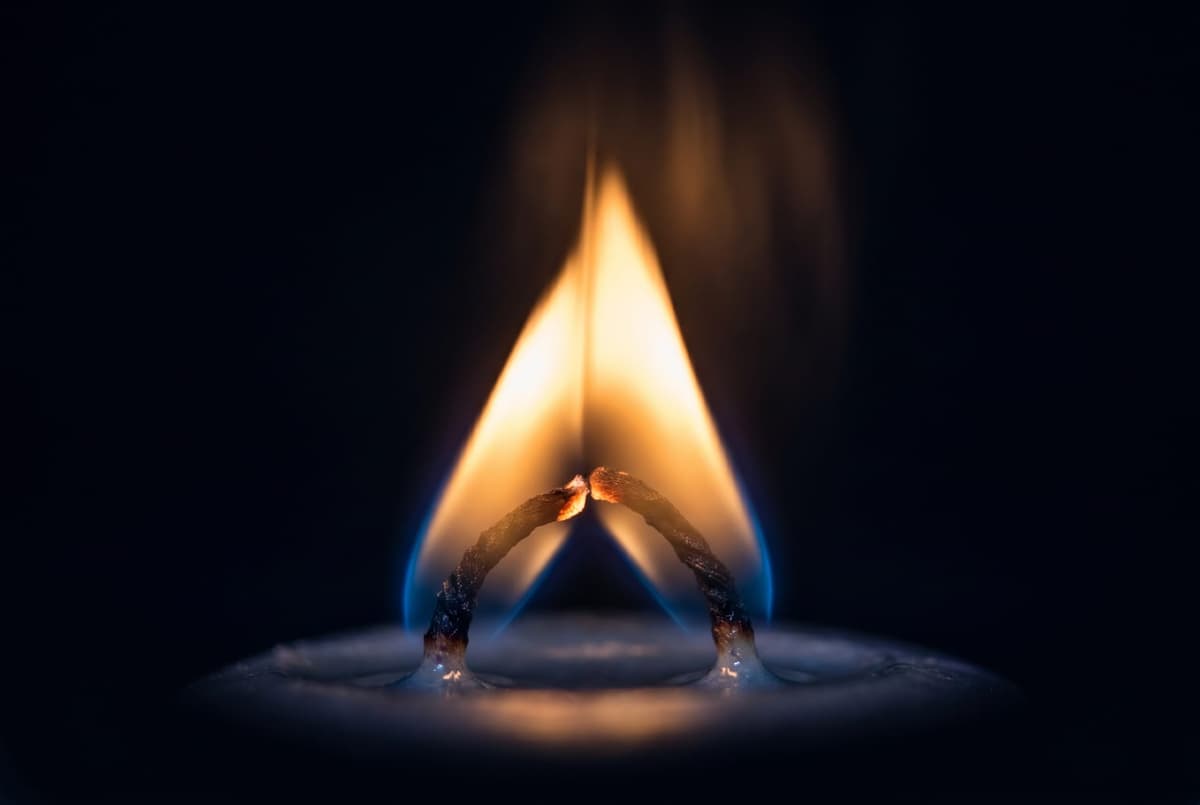
Conjunction Sun–Mars — symbolic illustration

Conjunction · 0°

Sun conjunction Mars

A neutral aspect: it amplifies both planets, and how it plays out depends on the signs they sit in and the rest of the chart.

Orb up to 8°NeutralNatal · synastry · transit
0°Sun conjunction MarsOrb up to 8° · major aspect
Oksana MiatovaWritten by Oksana Miatova·12 min read

For entertainment and self-reflection only. Not medical, legal, financial or psychological advice. Consult a qualified professional for important decisions.

The short answer

Sun conjunct Mars is will and action fused at a single point of the chart. In the natal chart it gives a big tank of physical energy and a tendency to act before thinking; in synastry it sparks strong physical attraction alongside quick-flaring conflict; in transit it opens a short, charged window for active starts that asks you to handle sudden decisions with care.

What a conjunction is

The geometry behind the reading

A conjunction is a separation of zero degrees between two planets, and by intensity it is the strongest of the major aspects. The textbook orb for a Sun–Mars conjunction is allowed up to eight degrees, though when I read a natal chart I usually tighten that to about six, and for transits and synastry to four. Geometrically the conjunction is neutral by nature — it doesn't split the planets into harmony and tension, it simply welds them into one current. For the Sun and Mars, that welding means the central will of the person and their motor drive — the urge to act, the assertiveness, the raw physical and sexual charge — run as a single engine. The aspect is strong, visible, the sort other people read off you in the first minute of meeting. How it actually sounds depends on the sign, the house and the condition of both planets.

Three ways to read it

The same aspect, three different stories

One aspect reads differently depending on where you find it: inside a single birth chart, between two people, or moving across the sky right now. Read each as a way to notice patterns, not as a forecast.

Sun conjunct Mars in the natal chart

If Sun conjunct Mars sits in your natal chart, your will and your body run as a single system. You can hear it in the voice, see it in the walk, read it in the way you come into a room. People clock you in the first few seconds and can't always say why. On the inside it's often felt as a constant background heat that demands somewhere to go. When there's an outlet, you feel in good form. When there isn't, the heat turns into irritability, rows over nothing, broken sleep, or a low-grade inflammation that settles somewhere in the body.

The strength of the aspect shows from childhood. A child built like this is lively, direct, physically game. They're the first up the tree, the first to jump from a height, the first into a scrap — and usually the one who walks away from it on top. Early on they form a sense that the body is a reliable tool, that they can lean on physical strength where others have to stop and think. It hands them a particular kind of confidence that has nothing to do with the intellectual sort: it's the conviction that I'll manage with my hands, that I'll come through, that the body will carry me.

In adulthood that wiring becomes a large reserve of working energy. A person like this can put in twelve-hour days in the fields, on a building site, in theatre, behind the wheel, in an operating room — and recover quickly. They tend to push through illness on their feet. Where someone else would have checked into hospital long ago, this person keeps functioning. In my practice I regularly see clients with this aspect who at fifty are working at the same pace they kept at thirty, genuinely puzzled that their contemporaries can't.

But there's a price for that strength, and it's a real one. The central trouble is the missing pause between impulse and action. When will and motor drive have grown together, a wish becomes a deed in the same breath. Any anger turns into a move before the mind has weighed it. Any irritation on the road turns into a sharp manoeuvre. Any slight turns into a sentence spoken aloud that can't be unsaid. Out of all this grows the pattern of 'did it first, regretted it later', which repeats for decades and trails a long tail of soured relationships, derailed careers and missed chances.

A second recurring theme is mishaps. Among people with this aspect I keep meeting long histories of burns, cuts, breaks, scrapes behind the wheel. It isn't a sentence so much as a knock-on of pace: they simply live faster than average, more often land in situations that need a fast reaction, more often take on physically risky work, and more often skip basic caution because they're used to the body bailing them out. By forty it can add up, and that's usually when the first warning note arrives — from the heart, or from blood pressure. None of that is destiny written in stone; it's a tendency that ordinary care can soften considerably.

A third theme is the combative edge. Seen from outside, a person like this often reads as aggressive even when there's no aggression inside. It's just that the pace of their speech, their bluntness, their habit of not picking their words is, for most people, a bit much. In a team they either become the leader or trigger friction and pushback, depending on how far they've learnt to govern the charge. Unfortunately, the penny tends to drop only after a few painful episodes — a dismissal here, a break-up there.

The sign the conjunction sits in colours all of it. In fire signs the person reads as a leader from childhood, drawn to sport, the forces or enterprise. In earth signs they come across as a grafter built for heavy physical work, often with a thread of building, craft or the land. In air signs they show up as a debater and an arguer who'll hold a position to the finish, frequently at home in journalism, the law or politics. In water signs the heat runs inward — a person with a deep inner struggle whose energy often pours into art, psychotherapy or some spiritual practice; the risk of self-undermining is highest of all here, and the outlet matters most.

Integrating this aspect is slow work, and it's tied above all to the body. Mindfulness practices done purely in the head help little, because the energy moves before the thought does. What helps is anything that gives the body a systematic exit: daily physical activity, a martial art, working with your hands, sex as a conscious release. Over time a gap opens between the wish and the deed, and the strong charge turns from a source of trouble into one of the chief assets of the chart. To see exactly how Sun conjunct Mars plays out for you, the sign, the house and the aspects to Saturn, Pluto and Neptune all have to be read together — they decide which way your energy runs.
When it flows

  • A deep reserve of physical energy that lets you work flat out and bounce back fast
  • A direct will — what you decide on you tend to start straight away, without long deliberation
  • Natural courage in the moments where most people hesitate and weigh things up
  • The knack of deciding fast in a crisis, when something has to be done right now

When it grates

  • Impulsiveness that, over the long run, wrecks plans, relationships and the body
  • A leaning towards mishaps — burns, cuts, breaks, scrapes behind the wheel
  • A combative edge others read as aggression even when there's none inside
  • Inner pressure that, with no physical outlet, curdles into irritability or low-grade illness

The shadow side, and what to do with it

The shadow side of Sun conjunct Mars is the fusing of your sense of self with the impulse to act. When will and motor drive have grown together, you lose the pause between wanting and doing — anger becomes a move before the mind has caught up with it. Out of that grows the old pattern of 'do it first, regret it later', which repeats for decades and frays both work and relationships. The way through is to grow that pause on purpose: sport as a daily discharge of the charge, breath work, the habit of sleeping on any serious decision. In time the energy turns from explosive to aimed, and the aspect becomes one of the real assets of the chart rather than a liability.

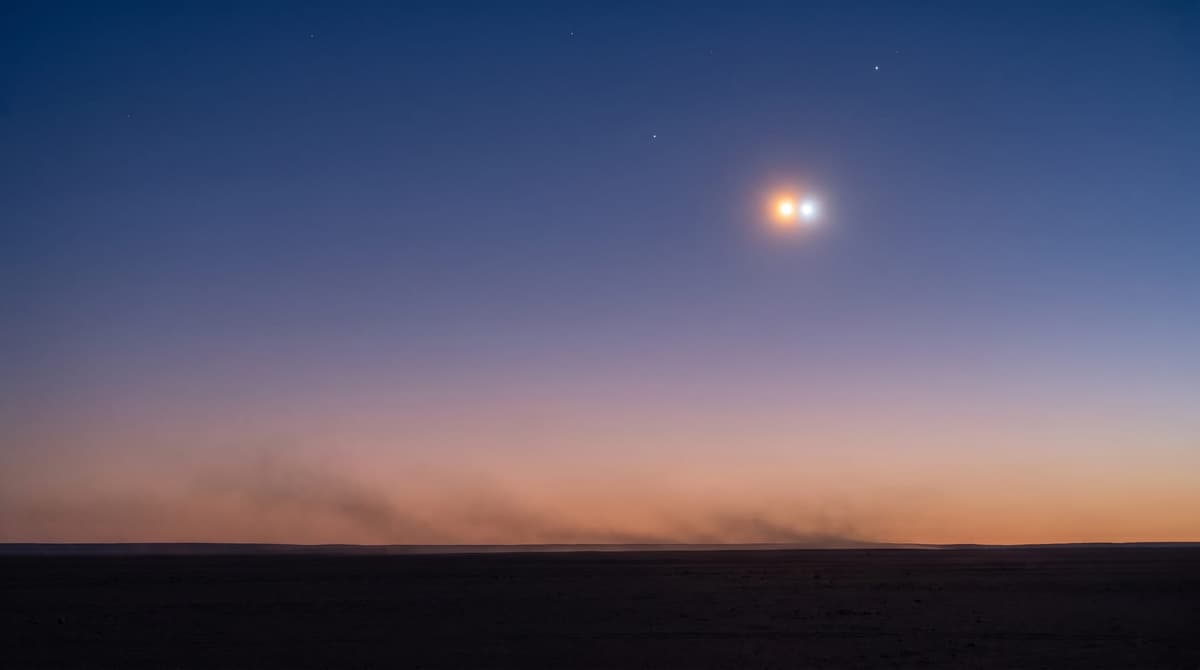
Conjunction — symbolic still life

How close is close

The orb decides the volume

A conjunction is rarely exact. The smaller the gap between the two planets — the orb — the louder the aspect plays. Here is roughly how the three bands read.

Tight

0–2°

Reads as a defining feature

At 0–2° the fusion reads as the dominant note of the whole chart. You physically radiate energy — people clock you in any room within seconds. Inside, it's often felt as a constant background heat that demands an outlet. In this band the aspect sets the keynote of a life: learning to manage your own force, because unspent it tips into self-destruction, and spent on random conflicts it cancels your results out. Those born with the exact conjunction often pick, early on, work that calls for physical nerve — sport, the forces, surgery, hands-on trades at the sharp end. A sedentary life sits badly with this chart; the body starts to protest.

Medium

2–5°

A steady background pattern

At 2–5° the aspect works as a steady feature of temperament, but it now allows a gap between impulse and action. You know your own tendency towards fast reactions and, over time, learn to rein it in. A sporting habit is typical here as a natural form of regulation — without it, irritation starts to bank up. Professionally, people in this band often gravitate to dynamic roles where they can move and solve things on the spot, rather than getting bogged down in long sign-offs. The sexual charge is high but manageable; it doesn't dictate decisions the way it can at the exact orb.

Loose

5–8°

A faint colouring, felt in crises

At 5–8° the merge acts as a context light rather than as the structure of temperament. You feel the link between your will and your body, but you don't suffer from their fusing. In this band the aspect surfaces more in crisis moments or under heavy transits — a Saturn return, a serious Pluto crossing, the turning points of a life. In ordinary times it works as background physical stamina and a leaning towards plain, direct communication. The sign and house the conjunction sits in matter more here than the bare fact of the aspect.

Conjunction with a partner — what does it mean for the two of you?

A full synastry reading — every aspect between your two charts

Sun conjunction Mars inside one chart is an inner mechanism. Between two charts it becomes the dynamic of a relationship. Enter both birth details and get a synastry reading — where the conjunctions sit, where the squares pull, where the oppositions draw you together — all calculated with the Swiss Ephemeris. Read it as a way to notice patterns, not a forecast.

Check your compatibilityfrom £1 · for entertainment

Compare with a neighbouring aspect

Same planets, a different distance

Sun opposite Mars tells a different story. If you're reading this to make sense of a specific chart, it's worth glancing at the neighbouring aspect too.

Sun opposite Mars
  • An opposition sets the planets 180° apart — you live in a standing tension between 'who I am' and 'how I act'
  • The conjunction welds them into one current; the opposition stretches them along an axis and makes you keep brokering a truce between intent and deed
  • The conjunction's main risk is explosive impulsiveness with no pause; the opposition's is inner sabotage, with will and action pulling opposite ways
  • The conjunction buys direct force at the price of being unable to stop; the opposition buys sight at the price of constant inner conflict
  • In synastry the conjunction glues partners through physical chemistry; the opposition draws them through provocation and mutual goading

Lived examples

A few charts where you can see it

Public figures with a verified Rodden birth-data rating (AA/A/B). No invented data.

Frequently asked questions

What does Sun conjunct Mars mean in the natal chart?
It is will and physical energy merged at one point of the chart. The person comes across as driven, direct, sometimes sharp. The great strength is a deep tank of energy and the ability to act fast. The great weakness is impulsiveness, a leaning towards mishaps and a combative edge. Over the long run the aspect works well when you learn to channel the charge through sport, manual work or an active line of work; left unaimed, the energy comes out as irritability and self-undermining. Read it as a pattern to notice, not a verdict on who you are.
Is Sun conjunct Mars good or bad in synastry?
It is a very charged contact, not straightforwardly lucky. There's a strong physical pull, sexual chemistry tends to spark quickly, and the two of you work well together on anything active. The downside is a high level of domestic flare-ups and a pull towards rivalry. Over the long run the aspect holds up when both people agree on how they'll handle rows and discharge the charge together — sport, sex, shared active ventures. As with everything here, this is a way to understand a relationship's patterns, not a prediction about it.
What orb should I use for Sun conjunct Mars?
Classically up to 8°, but for practical work I tighten it to about 6° in the natal chart and 4° in synastry and transits. Inside 2° the aspect sets the keynote of the whole chart and reads as the dominant note of the character. From 2–5° it works steadily but already allows a pause between impulse and action. From 5–8° it works more as background and surfaces mainly in crises. Beyond about 10° the conjunction is considered to have dissolved.
Which celebrities have Sun conjunct Mars?
Accurate examples need checking against AstroDatabank at a Rodden rating of AA or A. Names that get quoted casually — Schwarzenegger, Thatcher, Mike Tyson among them — turn out on inspection to have other aspects between the Sun and Mars, or none at all. I deliberately avoid listing figures without verifying them, so as not to pass an error along. You can check anyone in a minute on astro.com's AstroDatabank: look for the Sun and Mars in the same sign within 8° of each other.
Is Sun conjunct Mars different for men and women?
Archetypally there's a real difference. In a man's chart the aspect amplifies the classically masculine notes — will, assertiveness, competitiveness, sexual drive; with a fire or earth sign he usually expresses it through physical or leadership roles. In a woman's chart it makes her more 'masculine' in her way of acting — direct, initiating, ill at ease in any 'weaker sex' role. Such women often build careers in traditionally male fields, or become the de facto head of the family even when that isn't formally their role. None of this is destiny; it's a lens for noticing.
Sun conjunct Mars in a child's chart — what should I look out for?
A child with this aspect is usually lively, direct and prone to scrapping with their peers. You can't keep them at a table for an hour; they need to be moving. The strength is high physical vitality and a quick reaction. The risk areas are injuries — burns and breaks especially — and conflict in the playground. From an early age it helps to channel the charge into a physical club where it's spent systematically: martial arts, swimming, athletics. If the energy isn't given direction it tends to come out as fights and defiance, so the aim is an outlet, not a clamp.
Does Sun conjunct Mars always mean strong sexuality?
The sexual charge with this aspect is genuinely high, but it doesn't always show up as an active sex life. Sometimes the energy goes wholesale into work, sport or a fight, and the sexual sphere stays secondary. More often the conjunction gives a strong libido, a direct approach to choosing a partner and a fast bond at the start of a relationship. The fine-tuning depends on the state of Venus and the Moon in the chart, not on Mars and the Sun alone — so the whole chart matters here, not this one contact.
Sun conjunct Mars and the body — what's worth keeping an eye on?
People with this aspect tend to live faster than average, so they more often end up in situations that call for a quick reaction and more often take on physically risky jobs. Many carry a long history of small mishaps — burns, cuts, scrapes behind the wheel. It isn't fate, just a knock-on of pace. For self-care, the steady advice is regular physical activity as a release without overtraining, and not brushing aside the body's early signals. This is general reflection for entertainment, not medical guidance — anything to do with health belongs with a doctor.
What do I do with a transiting Sun conjunct Mars?
A transiting conjunction comes round about once every two years and lasts a few days, peaking on the day of the exact contact. In those days, plan plenty of physical work and as little high-stakes negotiation as you can. It's good for kicking off active projects, starting a training programme, getting stuck into manual work. It's poor for driving when tired, picking fights at work or making decisions about ending a relationship. The charge is high and needs aiming — otherwise it tends to come out through conflict or a mishap.
What is a progressed Sun conjunct Mars?
A progressed conjunction happens far less often — depending on the original gap between the Sun and Mars in the natal chart it might fall once in a lifetime, or not arrive at all. When it does, the window stretches two or three years around the exact date and almost always coincides with a real mobilisation: a change to a more active line of work, a return to sport after years away, a move into running your own thing, a physical reset. Treat it as a deliberate window for a physical and willed overhaul, and don't force the big steps in the first months.
Can I check Sun conjunct Mars myself?
Yes. Open your natal chart and find the positions of the Sun and Mars. If they're in the same sign and less than 8° apart, you have a conjunction. If they're in neighbouring signs but still under 8° (say, Sun at 28° Aries and Mars at 2° Taurus) it counts as a conjunction 'across the sign cusp', working a little more weakly. Past about 10° the aspect has formally dissolved. For entertainment and self-reflection, that quick check is all you need.

Related pages

The other aspects between Sun and Mars

The same two planets at a different angle — each reads differently.

Oksana Miatova
Oksana Miatova

Astrologer, co-founder of WowAstro

Oksana Miatova is a practising astrologer and co-founder of WowAstro. Natal charts, synastry and forecasts grounded in the Western classical tradition — explained through real-life examples and plain language.

More about the author →

For entertainment and self-reflection only. Not medical, legal, financial or psychological advice. Consult a qualified professional for important decisions.