Skip to content
Square Sun–Mars — symbolic illustration

Square · 90°

Sun square Mars

A challenging aspect: the two planets rub against each other and ask for conscious handling. Tension here is a source of movement, not a verdict.

90°Orb up to 6°ChallengingNatal · synastry · transit
90°Sun square MarsOrb up to 6° · major aspect
Oksana MiatovaWritten by Oksana Miatova·13 min read

For entertainment and self-reflection only. Not medical, legal, financial or psychological advice. Consult a qualified professional for important decisions.

The short answer

Sun square Mars is a ninety-degree angle between will and action, two functions of the same personality pulling in different directions. In the natal chart it gives a person who grows through a quarrel with themselves; in synastry it lights a spark of rivalry inside a bond; in transit it exposes the gap between who you are and how you actually behave.

What a square is

The geometry behind the reading

A square is a separation of ninety degrees between two planets, and it is the most combative of the major aspects. The textbook orb runs to about six degrees, stretched to seven for the lights. The Sun carries the conscious 'I' — your will, your direction, the person you are trying to become. Mars carries the way you move towards that goal, defend a boundary and turn a wish into a push. In a trine the two run in step; in a square they argue across the two elements of a single modality. A square does not drain the personality of energy — it forces that energy to keep announcing itself. That is why the aspect rarely produces passive people, but very often produces tired ones.

Three ways to read it

The same aspect, three different stories

One aspect reads differently depending on where you find it: inside a single birth chart, between two people, or moving across the sky right now. Read each as a way to notice patterns, not as a forecast.

Sun square Mars in the natal chart

If this square sits in your natal chart, two functions are living inside one person and they simply won't come to terms. The Sun is in charge of who you take yourself to be — your aims, the kind of person you want to become, the direction your will is pointing. Mars is in charge of how you go after it, defend a boundary, turn a wish into movement. In a trine those two run in step. In a square they argue. On an everyday level it often looks like this: you set yourself a goal and immediately take a step in precisely the opposite direction. Or you say one thing while behaving, all on your own, as if you believed in something else entirely.

There are many scripts, and they're recognisable. A common one: you're calmly getting ready to make an important phone call, and a minute beforehand you've started a row with someone close over a teacup. The force has found somewhere to spill, and there's none left for the conversation. Another runs the other way. For a long stretch you hold up beautifully — everything under control, no blow-ups — and then one small thing, and you lose your temper to a degree that surprises even you. That isn't a 'bad temperament'. It's the work of an aspect that had no lawful outlet and found a random one instead.

In men the pattern often reads as a conflict with the father and with one's own role as 'the strong one'. One pole wants to live up to it, the other resists, and the person either goes to war with the world — with bosses, with the system, with anyone older — or goes to war with themselves, through chronic injury, through working to burnout, through risky behaviour. In women the drawing is similar but cast in different terms. The argument runs between 'the proper one' and 'the insistent one'. One part won't allow itself to want too loudly; the other is hurt by everyone who failed to hear the quiet version.

The sign and modality the square falls in shade the whole thing. In the cardinal modality the friction is quick and impatient — you decide, you act, and a clash follows almost in the same breath; the theme is initiative and a wish to be in control of how things start. In the fixed modality the same square draws out into a long stand-off: you can hold a grievance or a goal for years, refusing to bend, and the danger is a fight carried on past the point where anyone remembers what it was about. In the mutable modality it tends to come out in words — sparring, sharp opinions, a course that keeps shifting — and the conflicts gather around beliefs and ways of living rather than around territory. None of this fixes what you'll do with it; it only tells you the accent the friction is likely to take.

What turns this aspect into a strength rather than a source of repeated meltdowns? Chiefly, having a piece of work to pour the Martian energy into. Without it, the square plays itself out through domestic rows, through sport pushed to injury, through quarrels with the people closest, through abrupt decisions you later regret. With it, the square becomes an engine. A surgeon with this square operates on the difficult cases; a coach pulls a team out of a dead end; an entrepreneur drags a project through a crisis; a soldier holds the line. The force is one and the same — the difference is its address.

The body often signals first, and that deserves a separate word. People with Sun square Mars not infrequently meet headaches, swings of temperature, a leaning towards injury in tense periods, trouble with blood pressure. This is offered for reflection rather than as a medical claim — and it's neither a sentence nor a reason to worry, but a reminder that the body needs a lawful outlet for Martian energy. Regular physical activity, for you, is less sport for sport's sake and more a steadying habit. When the force goes out through legs and arms, it less often comes out through a meltdown, an injury, a row. Anything you're genuinely concerned about belongs with a doctor, not with a chart.

And here is the main thing worth saying. This square is not a defect. It's a construction that will, all your life, ask you for awareness. Where other people can get away with 'do what you feel', you'll have to learn to tell the difference: is this my choice right now, or have I just been swept off my feet? Those who manage that task come into a rare kind of strength in maturity — they know how to act without pointless aggression and to hold their will where others give way. The work isn't done in a month, and it isn't done by a single flash of insight. It's done across years of watching yourself and slowly rebuilding habits. If it matters to you to see how your own Sun square Mars looks in the full chart — with houses, signs and the other aspects taken together — it's worth looking at your whole natal chart rather than this one piece of it.

When it flows

  • High capacity for work and real staying power under load, as long as the goal is clear
  • An ability to swim against the current without coming apart under pressure
  • Strong physicality and quick reflexes, especially in sport and in any work that rewards speed
  • An inner gauge for risk — a sense of where you can push and where you'd better step back

When it grates

  • Overheating and a sudden blow-up out of nowhere, after long stretches of 'everything's fine'
  • Recurring clashes with authority figures, often male, that replay the same script
  • Impulsive moves you later have to apologise for
  • The body signals first — knocks, headaches, a temperature with no obvious cause

The shadow side, and what to do with it

I won't soften this one. People come to a consulting room with this square carrying a story that runs either 'I don't understand why I lost it again' or 'everything's good in my life, so why am I burnt out'. Inside, the Sun says one thing and Mars acts in precisely the opposite direction, and as long as one function is owned and the other treated as shameful, the person walks in a circle. Integration begins with an admission: the will and the force are both yours, and both are needed. Once that lands, anger stops being forbidden, and drive stops working against your own aims.

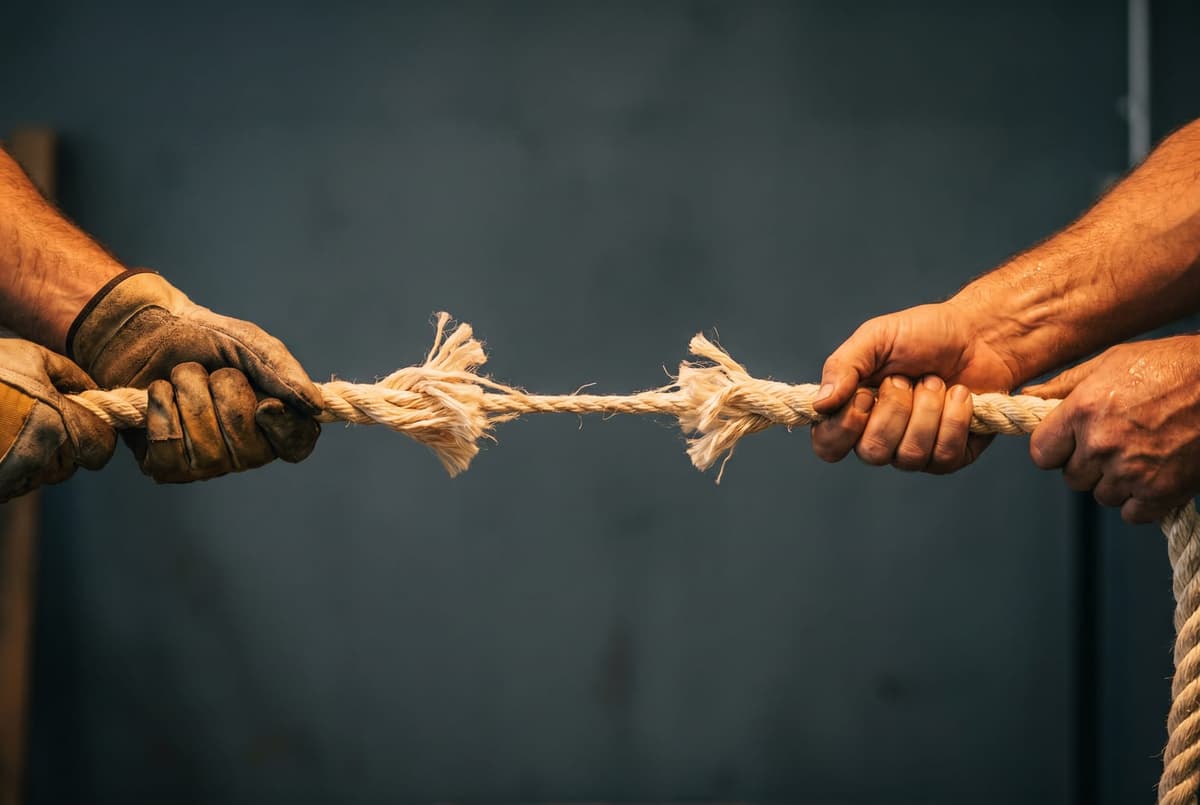
Square — symbolic still life

How close is close

The orb decides the volume

A square is rarely exact. The smaller the gap between the two planets — the orb — the louder the aspect plays. Here is roughly how the three bands read.

Tight

0–2°

Reads as a defining feature

At 0–2° the square is exact and at its sharpest. In the natal chart a separation this tight between Sun and Mars gives a person almost no rest from the theme of will: everything to do with 'I want' and 'I do' runs through the body and through decisions, sometimes through injury. In synastry a narrow orb produces a constant spark that is hard to ignore, even when the rest of the charts don't match up. In transit a tight orb lands on a specific day or two, when the inner heat is especially high and the force is looking for somewhere to go.

Medium

2–5°

A steady background pattern

At 2–5° the square works as a confident, dependable feature. In the natal chart the friction between will and action shows up in the person's typical run-ins — with bosses, with a father, with themselves — but there is now a gap in which you can learn to see the two functions separately. In synastry the couple feels the tension, yet it can be talked about, provided both are willing to discuss power and leadership. A transit at this orb lasts roughly three to five days and slots into ordinary life as a spell of raised activity and irritability.

Loose

5–8°

A faint colouring, felt in crises

At 5–8° the effect is a background one. In the natal chart the aspect reads as a tendency rather than a headline: a person can spend a decade without treating it as a central theme, though in a crisis it will surface without fail. In synastry a weak orb gives a faint needling — not enough for serious conflict, but not enough for steady charge either. A transit at 5–8° is barely caught by the body, showing as mild nerviness and a leaning towards small impulsive acts.

Square with a partner — what does it mean for the two of you?

A full synastry reading — every aspect between your two charts

Sun square Mars inside one chart is an inner mechanism. Between two charts it becomes the dynamic of a relationship. Enter both birth details and get a synastry reading — where the conjunctions sit, where the squares pull, where the oppositions draw you together — all calculated with the Swiss Ephemeris. Read it as a way to notice patterns, not a forecast.

Check your compatibilityfrom £1 · for entertainment

Compare with a neighbouring aspect

Same planets, a different distance

Sun trine Mars tells a different story. If you're reading this to make sense of a specific chart, it's worth glancing at the neighbouring aspect too.

Sun trine Mars
  • A trine sets the lights in one element — will and action run alongside each other with no resistance
  • The square sets them in two different elements of one modality — the functions argue and provoke growth
  • The trine gives confidence and physical ease; its risk is laziness and unused force
  • The square gives acceleration through friction; its risk is burnout and repeated clashes with authority
  • In synastry the trine works as an even, shared drive; the square works as a rivalry edged with the threat of a row

Lived examples

A few charts where you can see it

Public figures with a verified Rodden birth-data rating (AA/A/B). No invented data.

Frequently asked questions

What does Sun square Mars mean in the natal chart?
It means the Sun and Mars sit at roughly ninety degrees in the chart, within about 6–7°. At the level of character it produces a steady friction between will and action. In life it shows as a high capacity for work, fighting qualities, the typical run-ins with authority figures, and swings between resolve and collapse. The square doesn't spoil a chart — it forces a person to keep asserting themselves and to learn to do it in a way that doesn't end in burnout. Read it as a pattern to notice, not a verdict.
Is Sun square Mars bad in synastry?
Not bad, but not easy. The aspect gives a couple a high charge, strong physical attraction and the power to move each other along in work. The price is a constant tussle over leadership and sharp rows from nothing. For a couple who can talk about power and roles, it's a workable dynamic — the friction is reworked into a shared push. For a couple used to defeating one another, it becomes a source of repeated wars. Much depends on the other contacts, the Moon and Saturn especially. Treat it as a way to understand a relationship's patterns, not a prediction about it.
What orb should I use for Sun square Mars?
The standard square orb is 6°, sometimes stretched to 7° for the lights. At 0–2° it works as a dominant note; at 2–5° as a confident working feature; at 5–7° more as a background. In synastry some astrologers allow 7–8° between one person's Sun and another's personal planet, reasoning that the force of two people interacting justifies the gap. Past 8°, though, the square is no longer counted.
Which celebrities have Sun square Mars?
Among verified biographies are Angelina Jolie (Sun in Gemini, Mars in Aries) and Kurt Cobain (Sun in Pisces, Mars in Sagittarius). Both figures show the pattern directly: enormous breaking-through force alongside a conflict between the public role and how the body withstood it. Other names crop up in the press, but without a confirmed birth time (Rodden AA or A) such mentions are best left aside. You can check anyone in a minute on astro.com's AstroDatabank: look for the Sun and Mars about 90° apart within 6–7°.
When does Sun square Mars happen in transit?
A transiting square between the Sun and Mars occurs several times a year — the exact dates depend on the speed of Mars, which shifts because of its retrograde periods. The aspect usually lasts three to seven days. A calendar of specific dates for the current year sits in the ephemeris. For your own chart, what matters isn't every such square in the sky but the times when it lands on your natal planets or angles.
Is Sun square Mars different for men and women?
The basic mechanics are the same: friction between will and action. The social scripts differ, though. In men the aspect more often reads as a conflict with the father and with one's own role as 'the strong one', breaking out sometimes through a fight with the world and sometimes through a fight with oneself. In women the pattern often plays out through relationships with men and through the right to be forceful: one part is used to standing up for itself, the other is shy of that same strength. In both cases the work is identical — letting both functions into life without picking a side. None of this is destiny; it's a lens for noticing.
How is Sun square Mars different from the trine?
Geometry and elements. A trine sets both planets in one element (fire with fire, earth with earth), and their functions run in step without pain. A square splits them across two elements of one modality (cardinal, fixed or mutable), and the functions argue. The trine gives confidence and physical ease; its risk is unused force. The square gives acceleration through friction and a risk of burnout, but it makes you grow.
Can you work through Sun square Mars?
You can't remove the aspect from a chart — it's part of the framework. But you can stop walking the same script. Step one: own both functions, the will and the anger alike. Step two: learn to notice when the old pattern fires — resolve curdling into stubbornness, or a goal drowned in an argument with someone higher up the ladder. Step three: give the aspect's energy a lawful outlet — sport, physical work, projects with a clear finish line — rather than playing it out through loved ones and bosses. It's a process measured in years, not a month, and it's a way to understand a pattern rather than a fix for fate.
Do the signs the Sun and Mars sit in affect how the square is read?
They affect it strongly. A square in the cardinal modality (Aries, Cancer, Libra, Capricorn) gives fast conflicts driven by initiative and a wish for control; in the fixed (Taurus, Leo, Scorpio, Aquarius) a drawn-out stand-off, themes of stubbornness and power, a fight to the last; in the mutable (Gemini, Virgo, Sagittarius, Pisces) verbal sparring, a wobbling course, conflicts around beliefs and lifestyle. Within each modality the specific pair of signs adds its own colour.
What should I do during a transiting Sun square Mars to my natal planets?
It depends which natal planet the transit reaches. If the transiting square touches your natal Sun or Mars, the theme sharpens for you personally — in a career, in the body, in dealings with authority. To the Moon, emotional reactivity and sleep are stirred up. To Venus, the themes of relationships and money are touched. To Saturn, an old script of holding back your own wants may surface, or a conflict with a father figure. The general strategy: don't make sharp decisions at the peak, and steer the energy into physical action rather than into showdowns.

Related pages

The other aspects between Sun and Mars

The same two planets at a different angle — each reads differently.

Oksana Miatova
Oksana Miatova

Astrologer, co-founder of WowAstro

Oksana Miatova is a practising astrologer and co-founder of WowAstro. Natal charts, synastry and forecasts grounded in the Western classical tradition — explained through real-life examples and plain language.

More about the author →

For entertainment and self-reflection only. Not medical, legal, financial or psychological advice. Consult a qualified professional for important decisions.