Skip to content
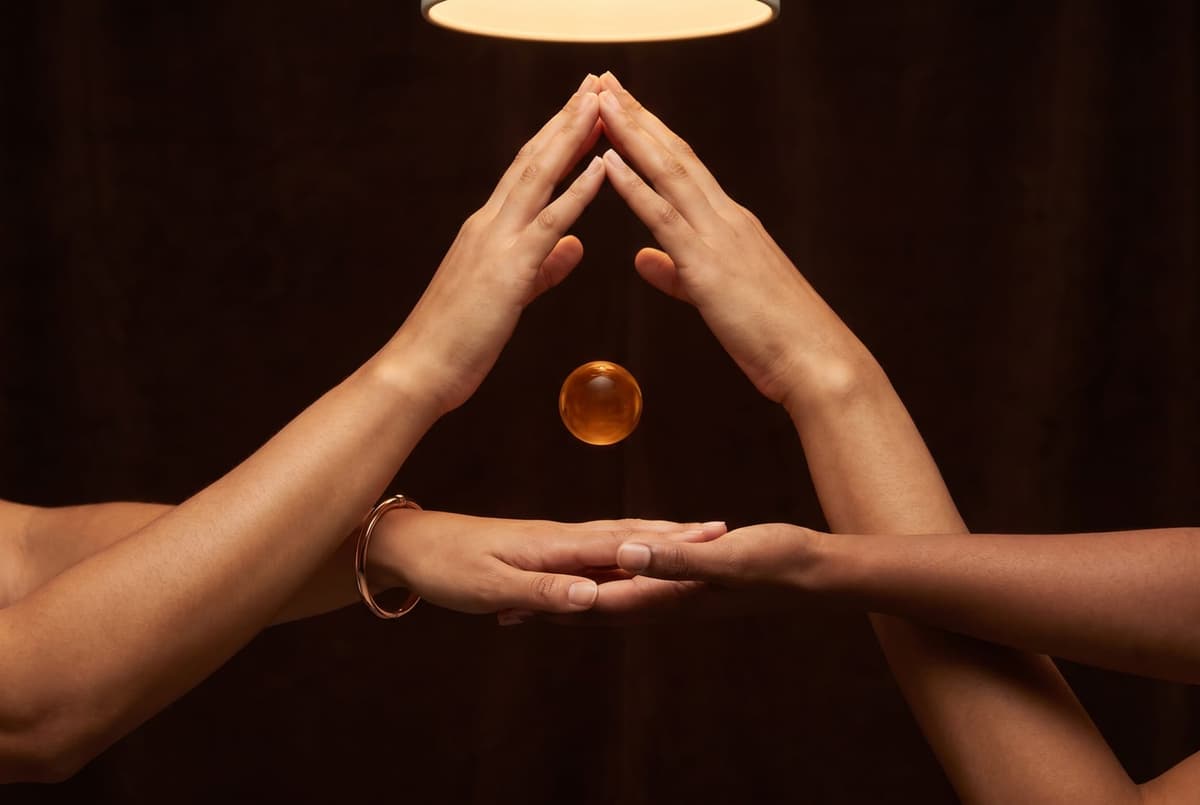
Trine Neptune–Pluto — symbolic illustration

Trine · 120°

Neptune trine Pluto

A harmonious aspect: the two planets support each other and tend to pull in the same direction. Read it as a resource to notice, not a guarantee.

120°Orb up to 6°HarmoniousNatal · synastry · transit
120°Neptune trine PlutoOrb up to 6° · major aspect
Oksana MiatovaWritten by Oksana Miatova·11 min read

For entertainment and self-reflection only. Not medical, legal, financial or psychological advice. Consult a qualified professional for important decisions.

The short answer

Neptune trine Pluto is a harmonious generational aspect at 120°, where the collective unconscious reshapes itself gently through art, faith and ideals. It offers deep change without the rupture, yet because it arrives so easily it is just as easy to sleep right through it.

What a trine is

The geometry behind the reading

A trine is a separation of 120 degrees between two planets, a third of the zodiac wheel, and the three points of a grand trine usually sit in signs of the same element — fire, fire, fire, or water, water, water. That shared element is why the two energies seem to speak the same language and help one another along without an argument. In the hierarchy of aspects the trine sits third for sheer strength: gentler than a conjunction or a square, but noticeably louder than a sextile. The default orb I work with for a trine is about six degrees, though some schools stretch it from five to eight, and with the outer planets I happily look at the wider end because they move so slowly. That slowness is the whole point with Neptune and Pluto. The two of them crawl, so a trine between them can hold for decades and sweep up enormous cohorts of people born inside the same stretch of years. For that reason its personal flavour shows up only through the houses of your chart and through any personal planets it happens to touch.

Three ways to read it

The same aspect, three different stories

One aspect reads differently depending on where you find it: inside a single birth chart, between two people, or moving across the sky right now. Read each as a way to notice patterns, not as a forecast.

Neptune trine Pluto in the natal chart

If this aspect sits in your natal chart, the first thing worth grasping is that it is not yours alone. Neptune trine Pluto is a generational aspect. The outer planets move so slowly that 120° between them holds for years, and the whole age-layer of people around you carries the same configuration. At the level of your own chart that means you share with an entire era a common tone in how you relate to depth: to dreams, to inner change, to collective memory, to the quiet forms of strength.

Inside that shared frame, though, you have a personal story, and it is written by the houses Neptune and Pluto occupy and by the personal planets that fall into aspect with them. If your Neptune sits in the fifth house and your Pluto in the first, the trine will speak about how creativity and identity assemble each other without rupture. If Neptune is in the eighth and Pluto in the twelfth, it turns towards subtle work with loss and the unseen. The very same aspect sounds completely different from one person to the next, and the houses are the reason.

At the level of character, Neptune trine Pluto feels like the capacity to live through large inner shifts without the effect of a life torn in two. You rethink a relationship, walk away from an old line of work, change how you see the people close to you, and from the outside it barely looks like a crisis at all. The energy of the change runs along a channel that has already been laid. Dreams come to your aid. A piece of music lands at exactly the right moment. A book falls open by accident on the very line you needed to read. You have access to the language of symbol, and that is not magic — it is simply a skill that feels native to you.

In my own practice I keep noticing one shared trait in people with a tight Neptune–Pluto trine: the inner life is often richer and more detailed than the outer one. On the inside they have lived dozens of versions of themselves, reforged their relationship with their parents, reweighed how they feel about their country and their era. On the outside there may be five years in one job and a thin scattering of meetings with friends. That isn't bad in itself — it is just a tilt, and a tilt worth seeing clearly.

And here is where the shadow side of the trine begins. It is not that something is wrong with your will or your discipline. It is that the energy is distributed almost too well. When everything is flowing as it should on the inside, there is no sharp signal telling you it is time to change something on the outside. You can spend years in an armchair — reading, watching films, meditating, talking with deep people — and it will be a real, full life in which, all the same, nothing much happens. After a decade of that rhythm, many people find a whole world has grown inside them while little has been built outside.

So the work with this trine is, above all, work with translation. Inner shifts have to be given an outer form — not to show off, not to prove to anyone that you are alive, but so that the inner thing doesn't dissolve back into the background hum. A journal, a project, a conversation, a movement, one small decision you have been putting off: any form will do. What matters is that months do not pass between the inner motion and the outer act.

There is one more common slip among people with this trine, and that is magical thinking. When something changes inside, it feels as though the outer world should respond on its own. Sometimes it does — the right people appear, doors open. But that is a bonus, not a rule. The rule is that the world responds to action. The trine hands you excellent material and a calm state in which to act; the decision to take the step remains yours. And once you understand exactly how your Neptune and Pluto are woven together in the chart, it becomes clearer which steps are natural for you and which would only be a kind of violence against yourself.

When it flows

  • Easy access to deep imagery and symbol — dreams, art and music read like a meaningful language rather than background noise
  • An ability to live through large inner transformations gently, without the sense of a life torn in two
  • A fine-tuned sensitivity to collective currents — you pick up the changing mood of an era before most people do
  • Inner steadiness in situations where others lose their footing: faith, hope and trust in life act as a genuine resource

When it grates

  • Too quiet and too natural — a real gift goes unused for years simply because it never registers as a gift
  • A drift into contemplation and aesthetics in place of actual steps: a beautiful vision, no movement at all
  • Blurred boundaries — you slip easily into other people's deep processes and lose track of yourself
  • Magical thinking: the belief that inner shifts will somehow surface in the outer world without any effort

The shadow side, and what to do with it

The shadow side of Neptune trine Pluto is not a flaw but a temptation. Change comes so smoothly that you long to trust the current and do nothing about it. Ten years on you discover that a whole life has been lived on the inside while almost nothing has shifted on the outside. Integrating the aspect asks for one skill above all: translating inner shifts into concrete outer forms. A journal, a project, a conversation, a single step, anything that pins down the invisible work. The trine hands you the raw material, but responsibility for the shape it takes stays squarely with you.

Trine — symbolic still life

How close is close

The orb decides the volume

A trine is rarely exact. The smaller the gap between the two planets — the orb — the louder the aspect plays. Here is roughly how the three bands read.

Tight

0–2°

Reads as a defining feature

At 0–2° the trine between Neptune and Pluto is at its strongest. On so tight an orb the aspect forms one of the load-bearing lines of a generation: a shared way of seeing the era, a shared dream, a shared wound. For an individual chart the tight orb matters most when one of the two planets sits on an angle or conjunct a personal planet — at that point the generational backdrop becomes the personal theme of a life. In synastry a tight trine gives the feeling that you've met one of your own.

Medium

2–5°

A steady background pattern

At 2–5° the trine is significant but less intense. The energy of the two planets flows freely between them yet does not dominate the chart. This is the band most people fall into who were born inside the long stretch when the trine was in force — it is present, it does its work, but it needs a personal planet or a particular house to lift it into an audible note of character. In transit the medium orb holds for months and sets the general tone of the period.

Loose

5–8°

A faint colouring, felt in crises

At 5–8° the orb is wide and the trine is there only as a light support. At that distance Neptune and Pluto are still linked, but the link works in the shadows: it surfaces at moments of deep choice, in dream work, in a crisis, and in daily life you may not notice it at all. In synastry the wide orb gives a shared cultural language of the generation, but not an individual closeness on this pair — for that you need personal aspects.

Trine with a partner — what does it mean for the two of you?

A full synastry reading — every aspect between your two charts

Neptune trine Pluto inside one chart is an inner mechanism. Between two charts it becomes the dynamic of a relationship. Enter both birth details and get a synastry reading — where the conjunctions sit, where the squares pull, where the oppositions draw you together — all calculated with the Swiss Ephemeris. Read it as a way to notice patterns, not a forecast.

Check your compatibilityfrom £1 · for entertainment

Compare with a neighbouring aspect

Same planets, a different distance

Neptune square Pluto tells a different story. If you're reading this to make sense of a specific chart, it's worth glancing at the neighbouring aspect too.

Neptune square Pluto
  • In the trine Neptune and Pluto co-operate quietly; in the square they argue and force a choice between the dream and the transformation
  • The trine hands you a resource that is easy to sleep through; the square lets you sleep through nothing, because the pressure compels action
  • The trine generation gently reworks the ideals of an era; the square generation breaks them open through crisis
  • In synastry the trine creates a sense of kinship with no work behind it; the square grows the bond through regular disagreement

Lived examples

A few charts where you can see it

Public figures with a verified Rodden birth-data rating (AA/A/B). No invented data.

Frequently asked questions

What does Neptune trine Pluto mean in the natal chart?
It is a harmonious generational aspect: you were born during a period when Neptune and Pluto stood 120° apart. At the level of your own chart it gives easy access to deep imagery and the ability to live through large inner changes without rupture. At the level of a generation it is a shared, quiet way of looking at how the world transforms. The personal flavour appears through the houses involved and through any personal planets the aspect touches. Read it as a pattern to notice about yourself, not a verdict.
Is Neptune trine Pluto good or bad?
It is a harmonious aspect, so on paper it is favourable: the two planets co-operate rather than argue. But the trine has a hidden snag — it works as a background, so the opportunities it offers are easy to miss. Change comes so smoothly that you may not notice you have gone years without turning inner shifts into outer forms. The trine gives you raw material, not a finished result. None of this is destiny; it's a lens for understanding your own tendencies.
What orb should I use for Neptune trine Pluto?
The standard orb for a trine is about 6°, with different schools allowing anything from 5° to 8°. For slow generational planets like Neptune and Pluto it is worth looking at the wider orbs too, because their motion is so gradual and the aspect holds for a very long time. The closer it sits to exact — inside 0–2° — the more clearly the theme registers in an individual chart.
Does everyone have Neptune trine Pluto?
No, but whole age-groups do. Neptune and Pluto move so slowly that a trine between them forms over decades and sweeps up entire generations. People born across wide stretches of the second half of the twentieth century, for instance, often carried different configurations of a trine between the two. Your own age-cohort either has it or doesn't — and that is simple to check against your natal chart.
How is Neptune trine Pluto different from the square?
The trine gives co-operation without strain: image and transformation support each other. The square forces a choice and often runs through a crisis — illusions fall apart and you are made to change for real. The trine is the lighter ride, but its risk is passivity. The square is more painful, yet it leaves no option: change becomes unavoidable. Two different mechanisms, not better or worse versions of the same thing.
How does Neptune trine Pluto show up in synastry?
In synastry this trine gives a feeling of long-standing kinship: a matching sensitivity to imagery, similar deep values, trust that needs no words. That is good ground for long relationships and for shared spiritual or creative projects. The snag is merging and idealisation — it becomes easy to miss the real person behind a shared picture of the world. As ever, it describes the patterns of a bond rather than predicting its course.
What is a transiting Neptune trine Pluto?
It is a period when Neptune and Pluto stand 120° apart in the sky. Because they move so slowly, such transits last for years and touch whole eras at once. For an individual chart a transiting trine works gently: what changes is less your outer life than your inner angle on it. It is a good stretch for quiet but deep inner projects rather than dramatic outer moves.
Can you sleep through Neptune trine Pluto?
You can, and that is precisely the main risk of harmonious aspects. The energy feels so natural that it doesn't register as a resource. For the trine to actually do something, you have to use it on purpose: translate inner change into concrete action — a note, a project, a conversation, a step. Without that, the resource stays in potential and quietly drains away.
What does it mean if Neptune trine Pluto touches my personal planet?
If one end of the trine sits conjunct your Moon, Sun, Venus or another personal planet, the generational theme becomes a personal note for you. What runs as background for your peers moves into the foreground in your case: a heightened sensitivity to collective currents, a capacity for deep transformation through imagery, a pull towards the spiritual or cultural sphere. It is still a tendency to work with, not a fate.
Neptune trine Pluto and creativity — is there a link?
The link is direct. Neptune is image, music, film, poetry; Pluto is depth and transmutation. Their trine gives the capacity to make work that changes people from the inside rather than merely entertaining them. Generations carrying this trine often shape a new cultural language for an era — gently, without loud manifestos. Whether you use it that way, of course, depends on what you choose to build with the material.

Related pages

The other aspects between Neptune and Pluto

The same two planets at a different angle — each reads differently.

Oksana Miatova
Oksana Miatova

Astrologer, co-founder of WowAstro

Oksana Miatova is a practising astrologer and co-founder of WowAstro. Natal charts, synastry and forecasts grounded in the Western classical tradition — explained through real-life examples and plain language.

More about the author →

For entertainment and self-reflection only. Not medical, legal, financial or psychological advice. Consult a qualified professional for important decisions.