Skip to content
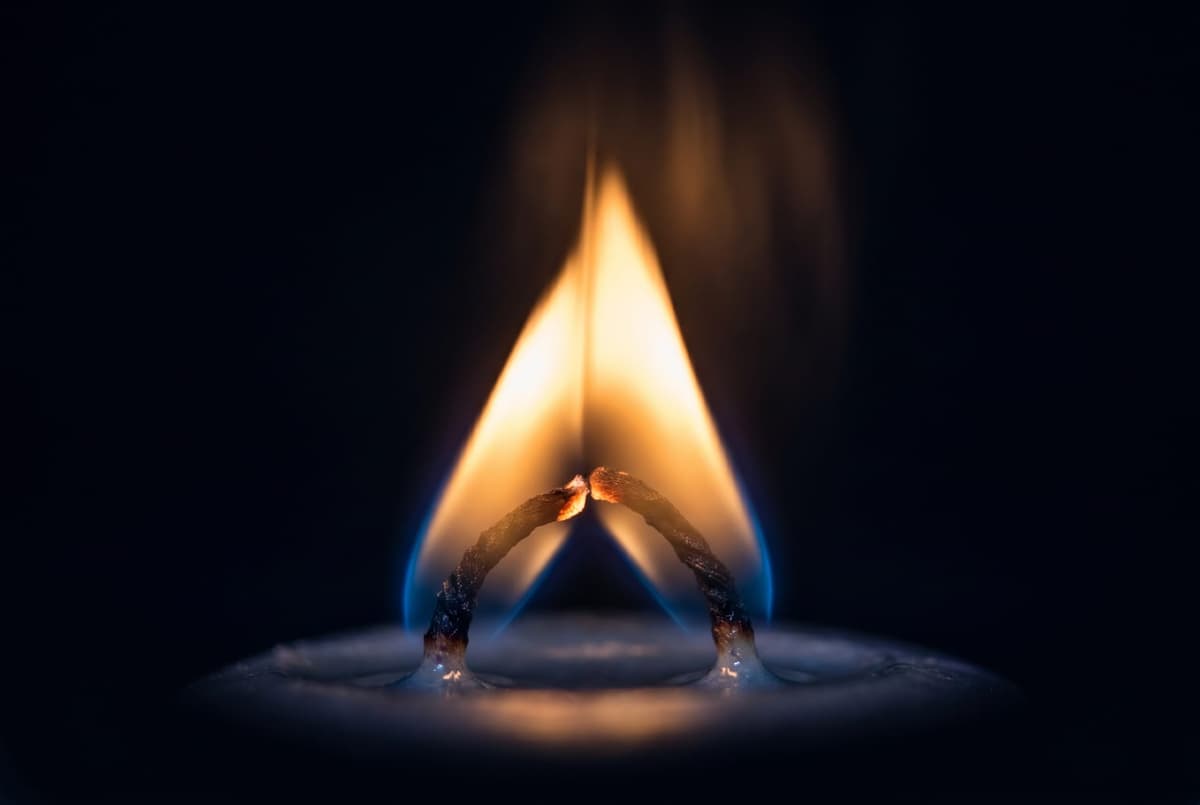
Conjunction Neptune–Pluto — symbolic illustration

Conjunction · 0°

Neptune conjunction Pluto

A neutral aspect: it amplifies both planets, and how it plays out depends on the signs they sit in and the rest of the chart.

Orb up to 8°NeutralNatal · synastry · transit
0°Neptune conjunction PlutoOrb up to 8° · major aspect
Oksana MiatovaWritten by Oksana Miatova·11 min read

For entertainment and self-reflection only. Not medical, legal, financial or psychological advice. Consult a qualified professional for important decisions.

The short answer

Neptune conjunct Pluto is a generational aspect that fuses a dream of the future with the power to remake the old. In the natal chart it marks a whole cohort rather than one person; in synastry it only comes alive when it lands on a partner's personal point; in transit it spans centuries and reshapes entire eras.

What a conjunction is

The geometry behind the reading

A conjunction is a separation of less than eight degrees between two planets, and it is the strongest of the major aspects — at this angle the two natures stop behaving as separate things and start reading as one block of meaning. A conjunction carries no built-in flavour of its own: it brings neither the ease of a trine nor the friction of a square, only fusion, and the tone is set by the planets involved and the sign they share. With Neptune and Pluto that fusion means the ideal and the buried power of transformation, the dream and the act of melting down, run through a single point. A person or an age born under it receives both the vision of a new world and its deep engine at once. Because Neptune and Pluto are the two slowest-moving bodies in the chart, their exact meeting is genuinely rare — once in roughly 492 years — which is why this aspect is read as a generational marker rather than a personal trait.

Three ways to read it

The same aspect, three different stories

One aspect reads differently depending on where you find it: inside a single birth chart, between two people, or moving across the sky right now. Read each as a way to notice patterns, not as a forecast.

Neptune conjunct Pluto in the natal chart

If Neptune conjunct Pluto sits in your natal chart, the first honest thing to admit is that every single one of your contemporaries has it too. The aspect is exact in the charts of people born roughly between 1890 and 1894, and across a wider orb it takes in the whole generation of the late nineteenth century. On its own it says nothing about you as an individual — it speaks about the time your soul opened its eyes. And yet, in a personal chart, it isn't an empty line either. It comes to life precisely where it touches other points: the Sun, the Moon, the personal planets, the angles of the chart, the ruler of the Ascendant.

Start with the code itself. Neptune governs the capacity to see what does not yet exist — the image, the dream, the ideal, the fine layer in which the future is already present in outline. Pluto supplies the force that can actually drag that future into being: it melts down the old, gives the old the shape of an ending, and pulls something new out of the same clay. When the two stand right next to each other, in a single point, the dream and the instrument for realising it fuse. For a generation with this conjunction, the idea and the muscle that drives it come in one package. They don't separate them, even privately.

In the gentler version this gives a person an acute sense of their era. They hear where the culture is moving before it becomes news. They have ready access to the deep subjects — the psyche, the unseen, mortality, the shadow side of power, the buried history of a family or a people. They aren't frightened of looking there, and very often it's through exactly these themes that they do their work, whether in art, in research, in practice or in public life. I quite regularly see charts like this in people for whom talking about death, the body, money and power is not a taboo but a working language.

In the harder version the same code turns into substitution. Neptune draws a beautiful picture, Pluto lends it force, and the person submits to their own image as though it were someone else's will. From there come the grand illusions about mission, the pull towards closed groups around a charismatic figure, the absorption in ideologies where the idea matters more than living people. From there, too, come the family stories in which care masks control and closeness demands dissolving into another. These plots don't arrive by accident — they're often already built into the family system, and the conjunction in the chart simply throws a light on them.

A separate and tricky theme is the relationship with extreme states. This conjunction is drawn to intensity: substances, spiritual practices taken to the edge, the ecstasy of an idea, love that goes as far as dissolving. It isn't always destructive, but it always asks for honesty. The danger marker is plain. If a state is valued above relationships and obligations, if something living is constantly sacrificed for its sake, that's already a sign that Neptune and Pluto have locked together without the oversight of consciousness.

So what do you do if this aspect is in your chart? First, don't mistake it for a diagnosis — your whole age group has it, and most people live it out as background. Second, look at where exactly the conjunction sits. The sign of Gemini puts the accent on word, language, contact and the exchange of ideas: this generation received a powerful language as a tool. The house the conjunction falls in shows the area of life where the theme of ideal and remaking sounds loudest. In the second house the conversation runs towards money and values; in the seventh, towards partnership; in the tenth, towards the public role.

Third, look at which personal planets the conjunction makes contact with. A link to the Sun raises the question of identity and direction. To the Moon it brushes deep emotional programming, often through the family system. To Mercury it surfaces in speech and ideas, the channel through which the conjunction expresses itself. To Venus it touches love, values and one's relationship with beauty. To Mars it becomes action, sometimes impulsive and ideologically charged. And a last honest note: this aspect is about a growing-up that lasts a lifetime. No single insight and no single course of therapy ever closes it. Every decade it turns a new face to you — sometimes through a great cultural wave, sometimes through a private crisis, sometimes through an old family theme returning in new clothes. The best thing to do with it, I think, is neither to try to break it in nor to make a hero of it, but to notice when it switches on, and at that moment to come back to the small, concrete life where there's a body, the names of people you love, and the tasks of today.
When it flows

  • An instinct for where culture is heading, often sensed before it has words
  • Easy access to deep, image-rich thinking and a strong feel for collective mood
  • A pull towards the themes that overturn a culture — psychology of the depths, the unseen, history's shadow
  • The capacity to live a crisis as a passage to a new picture of the world rather than as an ending

When it grates

  • A blurred line between a dream and a manipulation — easy to be carried away, and easy to carry others
  • Heavy family scripts where an ideal quietly covers control or dependency
  • A susceptibility to fantasies of being chosen, of carrying a special mission
  • A risk of retreating from ordinary life into ideology, a closed group, a substance or a fixed idea

The shadow side, and what to do with it

The shadow of this conjunction is substitution. Neptune paints a beautiful image, Pluto lends it the energy of power, and the result is an idea that people bend themselves and others to. Generations carrying this configuration produced both the great utopias and the great catastrophes of the last century. In a personal chart the integration begins with one honest question: where am I mixing up 'I want to save the world' with 'I want to be in charge'? What helps is anything that returns you to the concrete — work with the body, hands-on tasks, contact with actual named people rather than an abstract humanity. In practice I notice that these charts do well with the kind of therapy that grounds a person back in the small daily things.

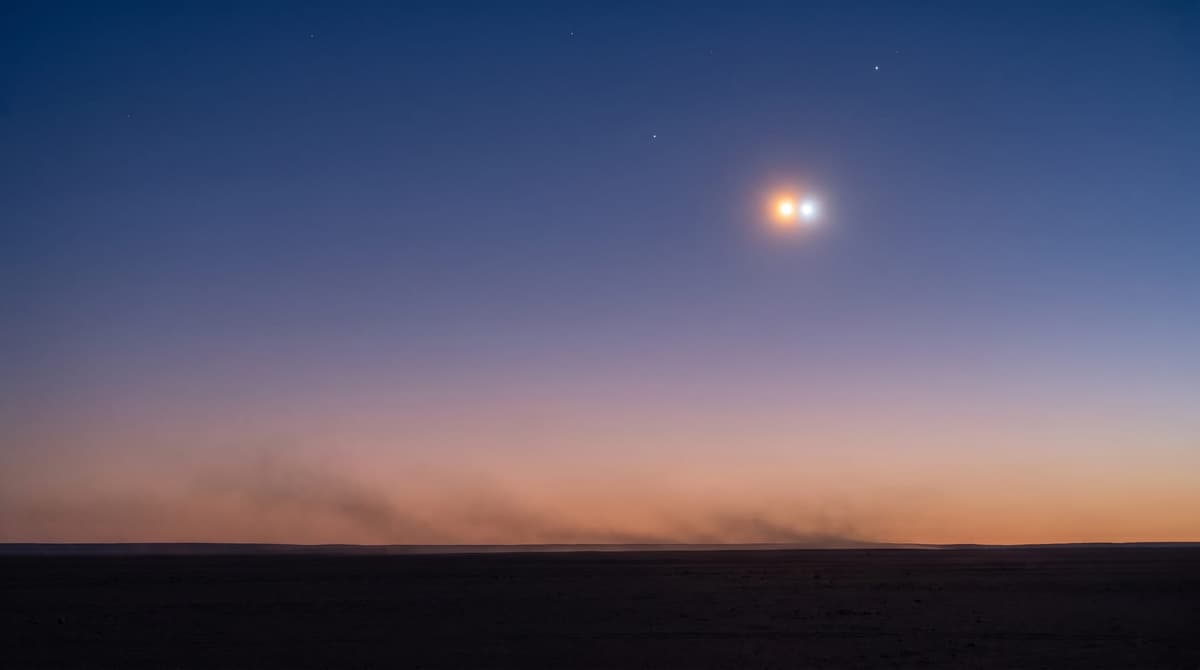
Conjunction — symbolic still life

How close is close

The orb decides the volume

A conjunction is rarely exact. The smaller the gap between the two planets — the orb — the louder the aspect plays. Here is roughly how the three bands read.

Tight

0–2°

Reads as a defining feature

At 0–2° the conjunction is at its densest. The Neptune and Pluto themes sound through a generation at once, and the image of the future and the force of remaking converge on a single point. In a personal chart this orb belongs to people born in the very heart of the era, and it reads as a strong undertone running through a whole biography: life will, one way or another, keep posing the question of an ideal and its price.

Medium

2–5°

A steady background pattern

At 2–5° the conjunction is still significant. Neptune and Pluto can still hear each other, but a small gap has opened between them. That gap lets you separate the dream from the power a little, the ideal from the instrument. In the natal chart this orb tends to belong to people born nearer the edge of the era, and it usually shows up as the ability to work with very large themes without dissolving into them entirely.

Loose

5–8°

A faint colouring, felt in crises

At 5–8° the conjunction is faint — a background colour rather than a personal storyline. The planets are still within an acceptable orb, but they read as the general tone of an age more than as an individual plot. In such charts the Neptune–Pluto theme tends to surface through other, tighter configurations, while the conjunction itself works as a soft generational lining. I would read it last, after the personal planets.

Conjunction with a partner — what does it mean for the two of you?

A full synastry reading — every aspect between your two charts

Neptune conjunction Pluto inside one chart is an inner mechanism. Between two charts it becomes the dynamic of a relationship. Enter both birth details and get a synastry reading — where the conjunctions sit, where the squares pull, where the oppositions draw you together — all calculated with the Swiss Ephemeris. Read it as a way to notice patterns, not a forecast.

Check your compatibilityfrom £1 · for entertainment

Compare with a neighbouring aspect

Same planets, a different distance

Neptune opposite Pluto tells a different story. If you're reading this to make sense of a specific chart, it's worth glancing at the neighbouring aspect too.

Neptune opposite Pluto
  • The conjunction fuses the ideal and the remaking at one point; the opposition stretches them along an axis
  • Under the conjunction a person or an era can't see the line between dream and power; under the opposition they feel it constantly
  • The conjunction gives a single pooled energy; the opposition gives a dialogue between two poles that has to be held
  • Neptune–Pluto conjunctions are extremely rare; oppositions recur more often across history and are felt more sharply as a fault line between eras

Lived examples

A few charts where you can see it

Public figures with a verified Rodden birth-data rating (AA/A/B). No invented data.

Frequently asked questions

What does Neptune conjunct Pluto mean in the natal chart?
It is a generational aspect that marks everyone born in a narrow window at the end of the nineteenth century, so it reads not as an individual trait but as a background belonging to an age of upheaval. On its own it says little about you personally. It only becomes concrete where the conjunction touches a personal planet — the Sun, Moon, Mercury, Venus or Mars — or one of the chart's angles. Treat it as a pattern of the time you were born into, a lens for reflection, not a verdict on your character.
Is Neptune conjunct Pluto good or bad in synastry?
Between two people of the same generation the conjunction is almost always present and works only faintly — it signals a shared era rather than a personal bond. It becomes meaningful when one partner's Neptune or Pluto lands on a personal planet of the other. Then you can get both a deep, wordless understanding and a strong co-dependence. The tone is decided by the couple's other contacts and by both people's personal planets, so this is a way to notice a relationship's patterns, not a forecast about it.
What orb should I use for Neptune conjunct Pluto?
The classic orb for a conjunction between outer planets is up to eight degrees. It reads as tight at 0–2°, medium at 2–5°, and faint or background at 5–8°. The wider the orb, the softer the effect and the more it depends on other configurations in the chart. Because both planets move so slowly, a conjunction this exact covers years of births rather than a single moment.
Which famous people have Neptune conjunct Pluto?
A whole generation born roughly between 1890 and 1895 carried this conjunction in Gemini. Among figures with reliable birth data — verified at a Rodden rating of AA — are the writer J.R.R. Tolkien, the composer Cole Porter and the poet Edna St. Vincent Millay. Their biographies show very different ways of living out the same shared generational code, from world-building fiction to popular song to lyric poetry.
When is the next Neptune conjunct Pluto?
The last exact Neptune–Pluto conjunction fell in 1891–1892 in the sign of Gemini. The cycle between two such conjunctions runs to about 492 years, so the next one is due late in the twenty-fourth century. This is why, in practice, we never work with the conjunction as a live transit — we work with the generation that carries it in their charts, and with the separate transits of Neptune and Pluto moving through our own.
Is Neptune conjunct Pluto different for a man and a woman?
The aspect itself works the same way, but social roles draw their own pattern over it. Historically the masculine version more often pushed a person towards public ideology and politics, and the feminine version towards art, literature and psychology. Today that boundary is dissolving, and it matters far more to look at the personal planets than at the sex of the chart's owner. Read this as a cultural lens, not a fixed rule.
Why is Neptune conjunct Pluto called a generational aspect?
Because both planets move through the signs very slowly — Neptune stays around fourteen years in a sign, Pluto anywhere from twelve to thirty. Their conjunction therefore lasts several years and takes in everyone born within that window. The code is shared by millions of people at once, and it only becomes personal through the other, tighter configurations in an individual chart.
How is Neptune conjunct Pluto linked to the ideologies of the twentieth century?
The generation born under the 1891–1892 conjunction in Gemini came of age in the 1910s to 1930s and shaped much of the era's large ideological and cultural shifts. A conjunction in the sign of communication gave that age both a powerful language and powerful illusions at the same time — something you can read in its art and its politics alike. None of this is prediction; it is simply how this slow planetary pairing tended to play out before.
What should I do if Neptune conjunct Pluto touches my personal planet?
Then the generational code becomes personal. I'd look at which planet falls under the conjunction and in which house, and read the storyline as a lifelong theme rather than a one-off event. A conjunction to the Sun raises questions of identity and direction; to the Moon it reaches deep emotional programming, often through the family; to Venus it touches love and values. Because the reading depends on a dozen other factors, this is the kind of placement that's best explored as gentle self-reflection.
Can you separate the Neptune part from the Pluto part in the conjunction?
In a tight conjunction, barely — they sound like a single block. With a medium or wide orb you can sometimes tell from the storyline of a life which planet is louder. If someone lives mainly through image, ideal and art, Neptune is speaking; if mainly through power, crisis and being remade, Pluto is. Usually both are at work and one simply carries further, and the only honest way to tell is by looking at the whole chart together.

Related pages

The other aspects between Neptune and Pluto

The same two planets at a different angle — each reads differently.

Oksana Miatova
Oksana Miatova

Astrologer, co-founder of WowAstro

Oksana Miatova is a practising astrologer and co-founder of WowAstro. Natal charts, synastry and forecasts grounded in the Western classical tradition — explained through real-life examples and plain language.

More about the author →

For entertainment and self-reflection only. Not medical, legal, financial or psychological advice. Consult a qualified professional for important decisions.