Skip to content
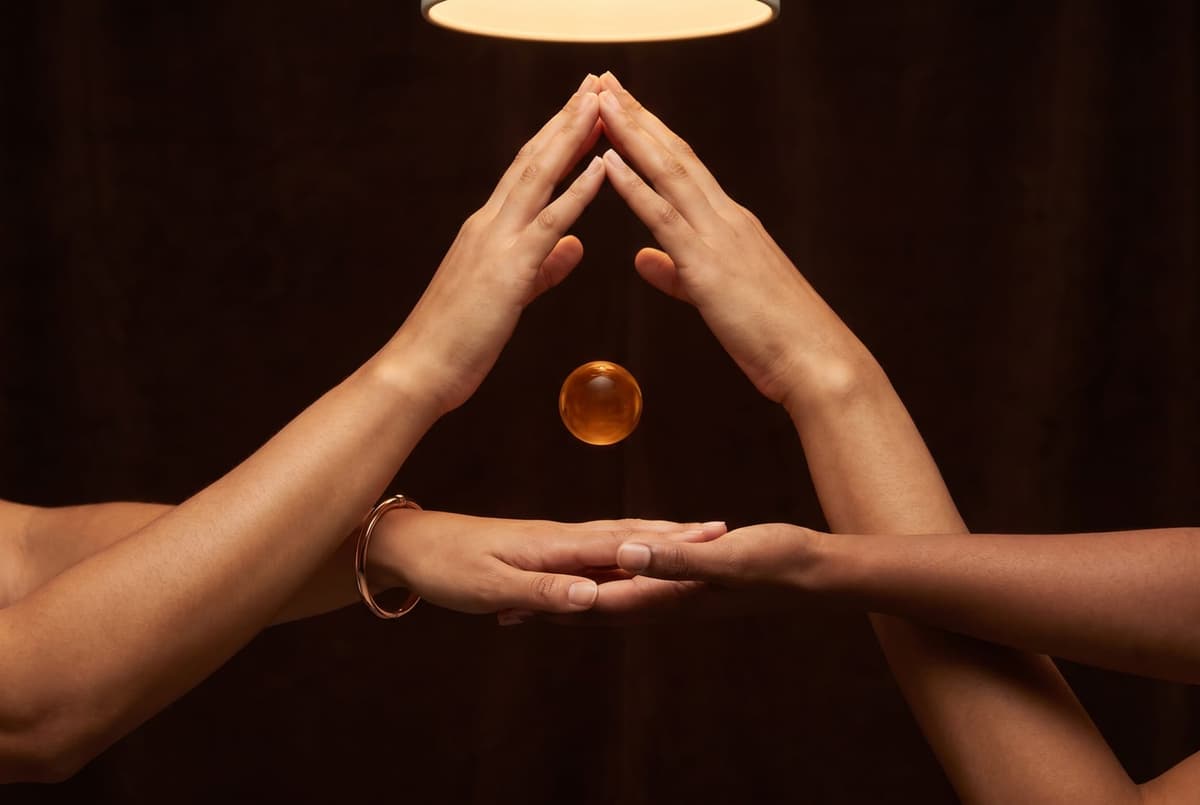
Trine Moon–Jupiter — symbolic illustration

Trine · 120°

Moon trine Jupiter

A harmonious aspect: the two planets support each other and tend to pull in the same direction. Read it as a resource to notice, not a guarantee.

120°Orb up to 6°HarmoniousNatal · synastry · transit
120°Moon trine JupiterOrb up to 6° · major aspect
Oksana MiatovaWritten by Oksana Miatova·12 min read

For entertainment and self-reflection only. Not medical, legal, financial or psychological advice. Consult a qualified professional for important decisions.

The short answer

Moon trine Jupiter is a harmonious 120° aspect in which your emotional world and the principle of expansion sit in the same element and support each other with no effort at all. In the natal chart it gives optimism as a default setting and a generous heart; in synastry it builds the feeling of a safe home; in transit it opens a soft window for emotional growth that is far too easy to sleep through.

What a trine is

The geometry behind the reading

A trine is an angle of 120 degrees, where the two planets fall in signs of the same element — fire with fire, earth with earth, water with water, air with air. For most trines I allow an orb up to six degrees, but for the Moon and Jupiter I tighten it to about five, because the Moon reacts to a precise point and a wide orb blurs its voice. By nature the trine is the easiest of the major aspects: the energy flows without resistance, and you don't have to apply any conscious effort to get the two planets to cooperate. That is exactly why it tends to be underrated. Where the tense square knocks on the door through crises, the trine works quietly in the background — you draw on its support without noticing that you are drawing on anything at all. For the Moon-and-Jupiter pair, this means a built-in reserve of emotional optimism and a natural generosity that are easily mistaken for ordinary character traits rather than a gift of the chart.

Three ways to read it

The same aspect, three different stories

One aspect reads differently depending on where you find it: inside a single birth chart, between two people, or moving across the sky right now. Read each as a way to notice patterns, not as a forecast.

Moon trine Jupiter in the natal chart

If this aspect sits in your natal chart, the odds are you've never thought of it as anything special. A warmth of heart, the ability to comfort other people, an easy link to your mother or her image, a calm attitude to money and a comfortable home — all of it just reads as ordinary, like the weather. And that's exactly how it should feel. Moon trine Jupiter has its reputation as one of the kindest aspects in the chart precisely because it asks nothing of you. It runs in the background from birth. Somewhere inside sits the sense that the world is, on balance, well-meaning, that the people you love are, on balance, nearby, that there will, on balance, be food on the table. That basic safety is the thing that lets you weather a crisis without catastrophising, help others without burning out, and accept your own life roughly as it is.

I often say one rather uncomfortable thing to clients with this aspect. The biggest danger of Moon trine Jupiter isn't anything bad — it's the merely good. When life arranges itself for you, there's no inner pressure to develop the gifts that come easily. A flair for languages, for psychology, for teaching, for cooking, for pulling off a big family occasion — it all stays at the level of a hobby, or a quiet competence you share with the people close to you but never turn into a body of work. Twenty years on you look round and notice that the talent you were born with never quite found a shape. It isn't a tragedy the way a square would make it one; nobody blames you, nobody takes anything away. It's simply missed.

The body, under this aspect, tends to be inclined towards softness in the most literal sense. The Moon governs how we take things in, Jupiter how we expand and store, and a harmonious link between the two means the system is happy to absorb food, warmth and care and is in no rush to let any of it go. In the good years the weight comes on easily; in the harder ones it can drop, because the appetite goes when the mood does. The body is very emotion-led. That's not a fault to be corrected, just something useful to know about yourself: the eating habits you keep in the calm years tend to set the shape of things for a long while afterwards. None of which is a health verdict — anything that genuinely concerns you is a question for a doctor, not a chart.

The bond with the mother deserves a section of its own. In most people with this aspect a 'good mother' lives somewhere inside — a warm, accepting figure you can turn to in your own head. The real history may have been nothing like it: the mother might have been cold, absent, or lost early. Even then the chart tends to hold on to the resource of a mothering figure — sometimes through a grandmother, sometimes through some significant woman from childhood, sometimes through a religious image. It's a remarkably steady support. Where the actual relationship was hard, Moon trine Jupiter often helps in later life to forgive and to re-read the past — not by denying the truth of it, but by filling that truth out with some compassion.

Money tends to sit easily under this aspect. Not richly — easily. Inside there's a quiet assumption that 'it'll work out somehow', and more often than not it does: help turns up in time, work gets found, the bills get covered. The catch is that financial discipline never quite develops. Savings stay a good intention, the sensible investing gets deferred, the expensive impulses recur, because somewhere underneath lives the conviction that the world will top you up. Worth knowing about yourself before you build a life around it.

In your dealings with other people, you're the one they come to in order to get something off their chest. The ability to listen without judging, to comfort without dispensing advice, to make a space feel safe — that's your background gift. People draw on it more than you're really prepared to give, and you tend to notice the imbalance only after a long delay. Learning to say no, with this aspect, is a separate skill that won't turn up by itself. Without it, a warm openness slowly curdles into an emotional overload you carry around in silence.

If you'd like to see honestly how Moon trine Jupiter is actually built into your own chart — which sign and house it falls in, and how it sits with the other aspects — the picture only really opens up in a personal reading. Take all of the above as a starting frame for self-reflection rather than the final word on who you are.

When it flows

  • A baseline optimism that needs no recharging from outside — somewhere inside sits the sense that, on the whole, things tend to work out
  • The knack of comforting people simply by being there, with no clever words and no technique
  • An easy relationship with money and the everyday: a degree of plenty feels like normal background weather rather than a trophy
  • A good bond with the mother or her image, even when the real family was difficult — a 'good mother' lives on inside regardless

When it grates

  • The comfort zone is so comfortable that warning signals from the body and the psyche get noticed only after a long delay
  • A reluctance to develop the gifts that come easily — a flair for languages, psychology or teaching that never grows past a hobby
  • A habit of taking the path of least resistance in relationships, tolerating 'good enough' partners for years on end
  • A tendency to put on weight in the settled, happy stretches: the body takes in Jupiter's warmth and is in no hurry to give it back

The shadow side, and what to do with it

The shadow side of Moon trine Jupiter isn't drama — it's a slow dissolving into comfort. In my practice I regularly meet people with this aspect for whom everything looks 'fine', and then at around forty comes the feeling that life rather passed them by: the talents never developed, the relationships warm but not deep, an extra stone or two crept on without anyone noticing. The way through isn't a crisis but a deliberate choice of a narrower format than you'd naturally pick — a little less on the festive plate, one concrete course rather than a vague 'one day', one deep friend instead of ten pleasant ones. Once the resource stops spreading out, it starts to do real work.

Trine — symbolic still life

How close is close

The orb decides the volume

A trine is rarely exact. The smaller the gap between the two planets — the orb — the louder the aspect plays. Here is roughly how the three bands read.

Tight

0–2°

Reads as a defining feature

At 0–2° the aspect is exact and at its strongest. In this band Moon trine Jupiter behaves like a piece of background armour: even through difficult stretches the person keeps an inner sense that 'it'll be all right', and more often than not it is. In synastry an exact trine creates an almost familial bond from the first meeting — a recognition, as though you've known each other for years. In transit such an orb gives three to five days of peak emotional lift, and these are exactly the days to take one concrete step rather than let the energy melt away into comfort.

Medium

2–5°

A steady background pattern

At 2–5° the aspect is significant and works as an even, steady background. In this band Moon trine Jupiter reads as a stable trait of character: optimism, generosity, a trust in life, but without anything flashy about it. People here rarely register the aspect as 'my gift' — they take it for the normal state of things. In synastry a medium orb gives a couple who are comfortable to live with but without the sense of destiny; a union of this kind is durable, warm and calm. In transit the medium window lasts about a week and is put to its best use on settling the home and the practical side of life.

Loose

5–8°

A faint colouring, felt in crises

At 5–8° the aspect is present but firmly in the background. On a wide orb Moon trine Jupiter works as a soft support that is easy to miss altogether. In the natal chart it shows up as 'luck in small things' — minor everyday protection, warm coincidences, kind encounters. In synastry a wide trine creates a friendly atmosphere, but without much depth. In transit a weak trine gives a couple of days of light mood that pass almost unnoticed. It isn't something to lean on as a resource — better to treat it as a bonus.

Trine with a partner — what does it mean for the two of you?

A full synastry reading — every aspect between your two charts

Moon trine Jupiter inside one chart is an inner mechanism. Between two charts it becomes the dynamic of a relationship. Enter both birth details and get a synastry reading — where the conjunctions sit, where the squares pull, where the oppositions draw you together — all calculated with the Swiss Ephemeris. Read it as a way to notice patterns, not a forecast.

Check your compatibilityfrom £1 · for entertainment

Compare with a neighbouring aspect

Same planets, a different distance

Moon square Jupiter tells a different story. If you're reading this to make sense of a specific chart, it's worth glancing at the neighbouring aspect too.

Moon square Jupiter
  • The square knocks through excess — overeating, compulsive generosity, emotional exaggeration; the trine carries the very same themes in the background, without the drama
  • The square forces you to work with the shadow; the trine lets you ignore it for years — both scenarios are dangerous in their own way
  • In synastry the square creates swings of 'now closeness, now distance', while the trine gives an even warmth that can lull a couple to sleep
  • In transit the square is impossible to miss, the trine slips by easily — which is why you work with a trine through deliberate planning and with a square through restraint
  • The trine's dark side is laziness about developing your gifts; the square's is a conflict with your own nature through overflow

Lived examples

A few charts where you can see it

Public figures with a verified Rodden birth-data rating (AA/A/B). No invented data.

Frequently asked questions

What does Moon trine Jupiter mean in the natal chart?
It is a natural emotional optimism and a trust in life that run quietly in the background. People with this aspect rarely feel truly alone, comfort others easily, and take a relaxed view of money and the everyday. The main risk is the comfort zone: gifts that come easily are rarely developed, and real difficulties get put off to 'later', because somewhere inside sits the feeling that 'it'll sort itself out somehow'. Read it as a pattern to notice about yourself, not a verdict — and certainly not a guarantee of an easy life.
Is Moon trine Jupiter good in synastry?
It's one of the warmest aspects in compatibility. The couple builds the feeling of home easily, rides out crises calmly and tends to infect the people around them with good cheer. The downside is that an atmosphere this pleasant relaxes you: the sharp topics get deferred, the obligations pile up, the emotional load is shared unevenly. The aspect asks for a deliberate course-correction every six months or so, otherwise the couple simply runs on inertia. As ever, this is a lens for understanding the patterns of a relationship, not a forecast about it.
What orb should I use for Moon trine Jupiter?
The classic orb for a trine is 6°, but for the Moon I usually tighten it to 5°. An aspect within 2° counts as exact, 2–5° as medium, 5–8° as wide. An exact trine works like background armour; a medium one as an even optimism; a wide one as a light support that's easy to miss entirely. On a wide orb I wouldn't make it the load-bearing part of any interpretation.
Which celebrities have Moon trine Jupiter?
Among well-known people who carry this aspect are Oprah Winfrey (Moon in Sagittarius, Jupiter in Cancer), Brad Pitt and Johnny Depp (Moon in Capricorn, Jupiter in Aries). All three charts show that the trine guarantees neither happiness nor success on its own: it hands you a resource that can be turned into real work — or quietly dissolved into a comfortable life. It's worth checking any chart against a reliable source like AstroDatabank before relying on it.
Is Moon trine Jupiter different for men and women?
In its basic expression there's no real difference: in both men and women it gives optimism, an open-hearted generosity and an easy link to the mother figure. In women's charts the aspect tends to show up more through the themes of mothering and caring for others; in men's charts more through generosity towards loved ones and a calm attitude to money. But that's a shift of emphasis, not a difference of nature, and none of it is destiny — only a way of noticing.
Can Moon trine Jupiter lead to putting on weight?
It's a recognised tendency rather than a rule. The Moon governs the body and emotional feeding, Jupiter governs expansion and accumulation, and a harmonious link between them often goes with an easy gain in weight during the contented stretches — the body takes in the warmth and is slow to give it back. This is framed for self-reflection, not as medical advice: it simply makes a case for paying conscious attention to eating habits in the settled, comfortable years, and for taking any health questions to a professional rather than to a birth chart.
Moon trine Jupiter and a leaning towards habits that soothe — is there a link?
There's no direct link to dependency, but there is a risk of using food, box sets, shopping or travel as a way to keep the emotional weather pleasant. Combined with tense Neptune contacts it can reinforce a pull towards soft, soothing habits. The trine on its own isn't destructive, but it rewards keeping an honest eye on the small comforts. As always, treat this as a prompt for self-awareness, not a diagnosis — anything that genuinely worries you belongs with a qualified person, not an astrology page.
What if the trine doesn't seem to 'work' — no optimism, no generosity?
That's the classic picture of an un-activated harmonious aspect: the resource is there, but the habit of drawing on it never formed, often because of difficult early family experience. It tends to switch on through deliberate practice — body-based routines (a warm home, regular meals, real rest), giving to others, study in psychology or the caring professions. A trine needs to be given a shape; it doesn't arrive on its own. None of this is a promise of a transformation, just a way of putting a latent tendency to use.
Moon trine Jupiter and parenting — how does it play out?
The aspect is very favourable for parenthood: it gives a natural ability to make a home, to sense a child's mood, and to not burn out on the everyday grind. The risk is over-protection and a struggle to let grown children go. The Jupiterian wish to give 'as much as possible', married to lunar sensitivity, can occasionally tip into an emotional overload for the children themselves. Read this as a pattern worth watching in yourself, rather than a rule about how any family will turn out.
How is Moon trine Jupiter different from Moon sextile Jupiter?
A sextile is a weaker harmonious aspect at 60°, which works like a small opportunity and needs active use — leave it alone and it barely shows up at all. A trine hands you the resource by default, with no effort required. The sextile is closer to a chance; the trine is closer to a background climate. That's exactly why people tend to activate a sextile and tend to take a trine for granted.
When is the next exact Moon trine Jupiter in transit?
The transiting Moon forms a trine to your natal Jupiter roughly once a month, lasting a few hours — too brief for serious decisions. Transiting Jupiter to your natal Moon comes round about once every twelve years and holds for several weeks; that's the one worth planning around. The exact dates depend on your own chart, so this is general guidance for reflection rather than a calendar you can act on blindly.

Related pages

The other aspects between Moon and Jupiter

The same two planets at a different angle — each reads differently.

Oksana Miatova
Oksana Miatova

Astrologer, co-founder of WowAstro

Oksana Miatova is a practising astrologer and co-founder of WowAstro. Natal charts, synastry and forecasts grounded in the Western classical tradition — explained through real-life examples and plain language.

More about the author →

For entertainment and self-reflection only. Not medical, legal, financial or psychological advice. Consult a qualified professional for important decisions.