Skip to content
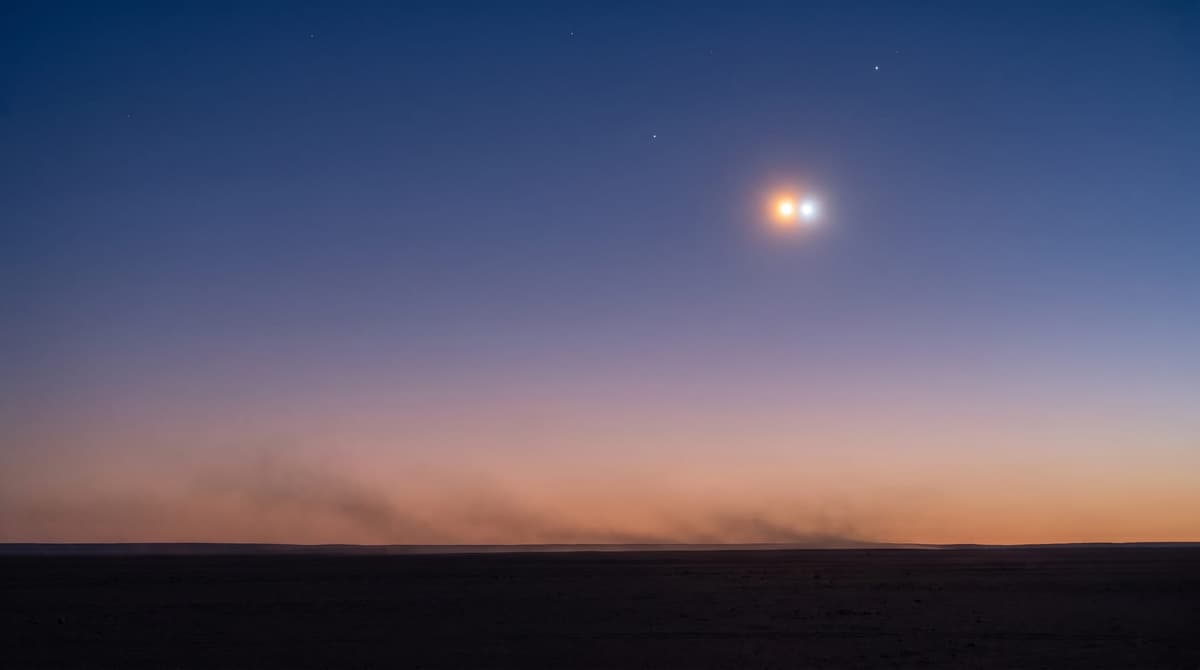
Conjunction Moon–Jupiter — symbolic illustration

Conjunction · 0°

Moon conjunction Jupiter

A neutral aspect: it amplifies both planets, and how it plays out depends on the signs they sit in and the rest of the chart.

Orb up to 8°NeutralNatal · synastry · transit
0°Moon conjunction JupiterOrb up to 8° · major aspect
Oksana MiatovaWritten by Oksana Miatova·12 min read

For entertainment and self-reflection only. Not medical, legal, financial or psychological advice. Consult a qualified professional for important decisions.

The short answer

Moon conjunct Jupiter is feeling fused with the urge to expand. In the natal chart it gives a generous heart and a quiet faith that things will turn out well; in synastry it builds a sense of 'home that's bigger than you'; in transit it widens the emotional field, warming you up but also nudging you to soothe yourself with too much of a good thing.

What a conjunction is

The geometry behind the reading

A conjunction is a separation of zero degrees between two planets, and it is classically the strongest of the major aspects. For the Moon–Jupiter pair the textbook orb runs to about eight degrees, but in practice I tighten it to six in the natal chart and to four for transits and synastry — the Moon reacts at a fine point, and on a wide orb her voice gets lost. Geometrically the conjunction is neutral by nature: neither harmonious nor challenging, just a merging whose outcome depends on the sign, the house and the wider chart. For the Moon and Jupiter, that merge means the inner world and the principle of 'bigger, wider, further' start moving as one. It gives emotional breadth, a trust in life, and a rare gift for comforting other people. But the same fusion strips out the filter between 'this feels good' and 'this is enough', which is why the generosity is sometimes a present and sometimes a form of emotional overeating.

Three ways to read it

The same aspect, three different stories

One aspect reads differently depending on where you find it: inside a single birth chart, between two people, or moving across the sky right now. Read each as a way to notice patterns, not as a forecast.

Moon conjunct Jupiter in the natal chart

If this aspect sits in your natal chart, you move through life with a background sense that the world is, on the whole, a warm place and that the people in it deserve the benefit of the doubt. That is a rare bit of starting capital. I often hear the same phrase from clients with Moon conjunct Jupiter: "in our family we've always sort of caught one another". And that isn't family folklore so much as a character you carry inside you. It isn't only your nearest who gravitate towards you — strangers do too. The person beside you on the plane tells you their whole life story; a neighbour shares a problem forty seconds into the conversation; the woman at the bakery counter unexpectedly wells up over the till. There's something in your face that people want to walk towards.

From the inside it feels like a capacity to hold. Where another person closes their ears to someone else's drama, because they've quite enough of their own, you somehow find one more compartment inside. A big heart, in the most literal sense — Jupiter widens the lunar bowl. In family life, in friendship, in parenthood, that is a priceless resource. You remember the birthdays of second cousins, you know which of your friends has a child who isn't sleeping, you're the first to turn up with soup when somebody's mother is ill. It's part of your natural outline, not a favour you're granting.

Now the shadow, because the conversation about Jupiter is incomplete without it. The Moon–Jupiter merge removes the filter between "I'm sorry for you" and "I'll take this on". In the moment of sympathy it genuinely feels as though you've the strength to shoulder someone else's load, and so you actually do — the spare room for relatives for half a year, the emotional guardianship of a friend in a depression, an extra after-school club for the neighbour's child. A couple of months later you find yourself wrung out and surprised by it: "I didn't really do anything special". You did. It's just that other people's pain registers inside you as your own, and the body works it off as well.

The second layer of the shadow, and one that gets talked about less, is emotional overeating. Jupiter is about expansion, the Moon about comfort, and in the merge a feeling is experienced as hunger. Sad? Eat. Anxious? Eat. Happy? Mark it with cake. Hurt? Order a takeaway. You don't notice straight away that food has become the universal translator for every emotion, and that the body is answering in volume. The same goes for shopping, for box sets, for sweet, soap-opera relationships — anything that delivers an instant "I feel good right now" easily slots in where the real feeling should be. This isn't a reason to wage war on yourself; it's a reason to learn to hear which emotion is actually knocking under the guise of hunger.

A third part of the shadow, especially common in women with this aspect, is the idealising of the mother. In childhood your mother is lit up for you by Jupiter, and any failing of hers gets pushed off into the zone of "but she did so much for me". That works in favour of a good relationship with her, but it gets in the way of living through real hurt where there was some. Sometimes at forty comes the realisation: "it turns out she really couldn't cope with me, and for thirty years I was protecting her from my own feelings". It's hard work, but it's precisely the work that clears space for a mothering of your own that doesn't repeat the same suppression.

With age you'll notice that Jupiter starts to work more finely. The planet's returns, roughly every twelve years, open windows for a big step in the family story: the birth of children, a large family's relocation, opening the home to relatives — or, the other way, separating off and building your own keep. If in youth you took those windows on a wave of compassion for all comers, by maturity a skill appears: sensing whose grief is actually yours, and which can be gently handed back to its owner.

When you want to see how exactly Moon conjunct Jupiter is wired into the full picture — which sign it sits in, which house, which planets stand near it — that's already a piece of work with the natal chart as a whole, rather than with a single aspect. And it's worth saying plainly: all of this is a lens for self-understanding and for entertainment, not a fixed account of who you must be.
When it flows

  • A big heart as a background trait — the ability to feel with people without burning out at every turn
  • An everyday trust in life: the 'mother inside' always believes it will be all right
  • A talent for atmosphere — the home, the table, the celebration seem to assemble themselves
  • A memory tilted towards the good: the warm scenes of childhood are lit more brightly than the hard ones

When it grates

  • Emotional overeating, literally and figuratively — through food, relationships, impressions
  • Idealising the mother, or the image of the mother, so that real hurt gets pushed out of sight
  • A habit of inflating feeling — every parting is 'forever', every joy is 'nothing like this ever before'
  • The body answers stress by putting on weight: the Moon takes its warmth through food, Jupiter hands out the volume

The shadow side, and what to do with it

The shadow side of this conjunction is feeling inflated past the size the body can hold. I regularly meet women with this aspect for whom everything looks 'kind' from the outside, while inside there's a quiet tiredness from carrying the emotional weather of a large family or a circle of friends. Integration doesn't come from rationing the generosity, it comes from putting the filter back: letting yourself say 'I'm sorry, but I won't take this on', finding comfort somewhere other than the fridge, noticing the moment compassion tips into self-sacrifice. Then the warmth stops being a load and turns back into a resource.

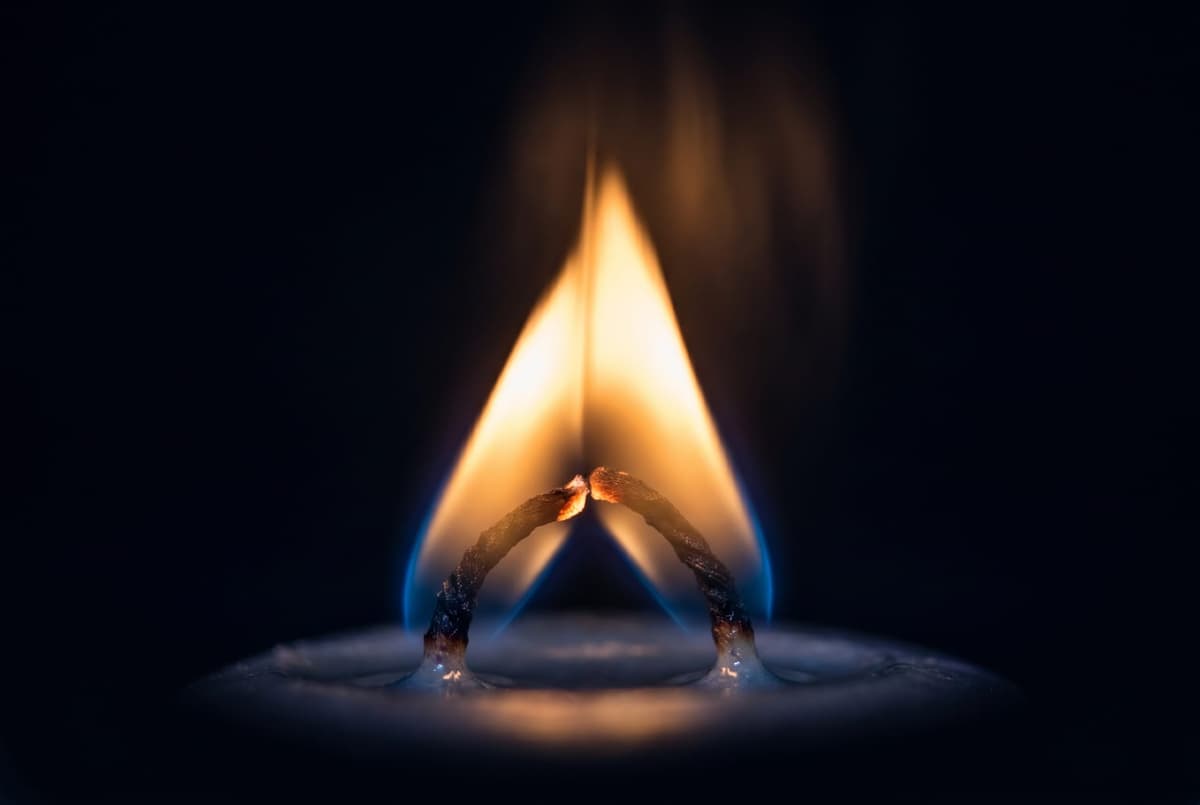
Conjunction — symbolic still life

How close is close

The orb decides the volume

A conjunction is rarely exact. The smaller the gap between the two planets — the orb — the louder the aspect plays. Here is roughly how the three bands read.

Tight

0–2°

Reads as a defining feature

At 0–2° the merge works as the leading note of the personality. Other people read this person as 'warm' regardless of their actual temperament — even near-strangers gravitate towards them for support. A Jupiterian background runs through every family storyline: extended kin, frequent guests, friendships that reach back to childhood. In this band the loss of filter between 'I'm sorry for you' and 'I'll carry it' is especially risky: commitments are born that then have to be hauled around for years. The lifelong task is to tell compassion apart from self-sacrifice, and to keep a portion of that Jupiter for yourself, so there's enough left to be warm by choice rather than by duty.

Medium

2–5°

A steady background pattern

At 2–5° the aspect is clearly present but allows for correction. This person can be generous and still keep the ability to say 'no' without guilt, especially after thirty, when the Jupiter theme in the chart matures. The emotional baseline usually sits above average — low spells are rarer than for their sign-mates, though when they come there's a temptation to drown the worry in food, shopping or box sets. The sign the conjunction sits in is loud in this band: a fire sign gives the temperament of a generous inspirer, a water sign a healer and empath, an earth sign the one who feeds the family, an air sign the life of the party and the link between people.

Loose

5–8°

A faint colouring, felt in crises

At 5–8° the merge works as background support. This person rarely feels 'chosen by fate', but does notice that in hard moments other hands catch them: neighbours, colleagues, long-forgotten relatives. The aspect shows up most clearly on the Jupiter returns (roughly every twelve years), on strong lunar transits, and in the years when a person becomes a parent or loses one. In this wide band the sign and house the conjunction occupies matter most — they show which door Jupiter most often brings the warmth through.

Conjunction with a partner — what does it mean for the two of you?

A full synastry reading — every aspect between your two charts

Moon conjunction Jupiter inside one chart is an inner mechanism. Between two charts it becomes the dynamic of a relationship. Enter both birth details and get a synastry reading — where the conjunctions sit, where the squares pull, where the oppositions draw you together — all calculated with the Swiss Ephemeris. Read it as a way to notice patterns, not a forecast.

Check your compatibilityfrom £1 · for entertainment

Compare with a neighbouring aspect

Same planets, a different distance

Moon opposite Jupiter tells a different story. If you're reading this to make sense of a specific chart, it's worth glancing at the neighbouring aspect too.

Moon opposite Jupiter
  • An opposition sets the Moon and Jupiter 180° apart, and the expansion arrives through another person rather than from within
  • The conjunction gives warmth from inside; the opposition delivers warmth through a partner, a mentor, a foreign culture
  • The conjunction tends to overeat emotionally from within; the opposition leans towards dependence on someone else's generosity and care
  • The conjunction gathers a home around itself; the opposition pulls you towards other people's homes and cities in search of your own
  • In synastry the conjunction fuses partners into a shared domestic life; the opposition draws them through a difference of cultures and family models

Lived examples

A few charts where you can see it

Public figures with a verified Rodden birth-data rating (AA/A/B). No invented data.

Frequently asked questions

What does Moon conjunct Jupiter mean in the natal chart?
It is the emotional world fused with the principle of expansion. The person lives with a background sense of 'home' they're glad to invite others into, sympathises easily and recovers quickly after losses. The downside is a leaning towards emotional overeating (literally and figuratively), idealising the mother, and a habit of inflating feeling to a size that becomes hard to bear later. The aspect works for warmth when there's someone close who's allowed to say 'that's enough'. Read it as a pattern to notice, not a verdict on who you are.
Is Moon conjunct Jupiter good or bad in synastry?
More often good than not. The partners become a source of warmth and faith for each other, and a ritual of care springs up easily — dinners, celebrations, trips. The shadow side is that the pair retreats into domestic life and food as into an anaesthetic, while the real conversations get postponed. The aspect holds up well when both people have the habit of returning to the uncomfortable subjects rather than closing them off with a nice meal. As ever, this is a way to understand a relationship's patterns, not a prediction about it.
What orb should I use for Moon conjunct Jupiter?
Classically up to 8°, but for practical work I tighten it to about 6° in the natal chart and 4° in transits and synastry — the Moon reacts at a fine point, and on a wide orb her voice is barely audible. Inside 0–2° the aspect becomes a leading trait of character; at 2–5° it's a steady background that allows correction; at 5–8° it works as contextual support, surfacing mainly during the Jupiter returns and on strong lunar transits. Beyond about 10° the conjunction is considered to have dissolved.
Which celebrities have Moon conjunct Jupiter?
From charts verified against AstroDatabank at a Rodden rating of AA: Oprah Winfrey (Moon–Jupiter in Sagittarius), Princess Diana (Moon–Jupiter in Aquarius, orb roughly 4°) and Albert Einstein (Moon–Jupiter in Sagittarius, a wide orb). The biographies show the same logic at work: a big heart and a capacity to hold other people's pain, and alongside it the price the body or psyche pays for that volume. I check each chart rather than quote names loosely, so as not to pass an error along.
Transiting Jupiter to the natal Moon — what should I do with it?
Use it as a window for family events, inner work and refreshing daily life: a move, a renovation, a celebration, a gathering of relatives, the start of therapy. But large emotional decisions with long tails — making up after a serious wound, opening a guesthouse out of love for guests, taking on a third child — are better held back until the transit moves past a 3° orb. Inside the window, feel things and pour yourself into the people you love; then fix the big choices with a cool head. This is for self-reflection, not a forecast of events.
Is Moon conjunct Jupiter different for men and women?
Socially, yes; psychologically, no. In a woman's chart the expansion tends to read as maternal generosity, a home that feeds and welcomes, an active role in a large family. In a man's chart the same aspect more often shows as emotional leadership — the ability to gather people around himself and to hold them in a hard moment. The inner mechanism is identical: it's difficult to say 'not my grief to carry', so life often runs emotionally richer than the body's resource. None of this is destiny; it's a lens for noticing.
How is Moon conjunct Jupiter different from a trine?
A trine gives a gentle flow of emotional generosity without pressure: the optimism is built into the background but doesn't push you to care for anyone in particular. The conjunction fuses feeling and expansion into one point, so the person can no longer 'not take in' other people's pain — they're carried by it. A trine more often stays a resource held in reserve; the conjunction becomes an engine of the biography (a big family, charity work, a helping profession) and, at the same time, its main risk.
Moon conjunct Jupiter and weight — why is it linked to putting on weight?
Jupiter is associated with growth and accumulation, the Moon with water in the body and the need for comfort. In the merge you get a direct channel: feeling is experienced as hunger, hunger is met with food, the body answers with volume. It isn't a sentence, though — the same channel can draw energy from hugs, walks by water, conversation and bodywork. The body tends to put on weight where the heart hasn't received its warmth by another route. Treat this as a pattern to observe, not a medical or dietary claim.
How does this aspect show up in childhood?
The child tends to be soft and warm, often a 'chubby little one' in the early years. They reach for big company early, love celebrations, guests and journeys. Emotionally they're very open and will cry at someone else's pain as if it were their own. The downside is overeating from a young age and a tendency to take on other people's feelings in the family, the mother's especially. The thing here isn't to forbid them from feeding others, but to teach the difference between 'I really am sorry' and 'I'm frightened I'm not loved'.
What if Moon conjunct Jupiter sits in a tense sign?
In Virgo, Capricorn or Scorpio the aspect works with a contradiction: the expansion of feeling meets a sign used to controlling or deepening. That gives a dense, capacious quality to the emotions but takes more time to learn to trust. In a reading I usually suggest holding off on abrupt emotional moves until around thirty, while the sign teaches Jupiter some discipline. After that the aspect can work more powerfully than in any water sign: the person has both the generosity of the heart and a filter of common sense. As always, read this as a way to reflect, not a fixed outcome.

Related pages

The other aspects between Moon and Jupiter

The same two planets at a different angle — each reads differently.

Oksana Miatova
Oksana Miatova

Astrologer, co-founder of WowAstro

Oksana Miatova is a practising astrologer and co-founder of WowAstro. Natal charts, synastry and forecasts grounded in the Western classical tradition — explained through real-life examples and plain language.

More about the author →

For entertainment and self-reflection only. Not medical, legal, financial or psychological advice. Consult a qualified professional for important decisions.