Skip to content
Square Sun–Uranus — symbolic illustration

Square · 90°

Sun square Uranus

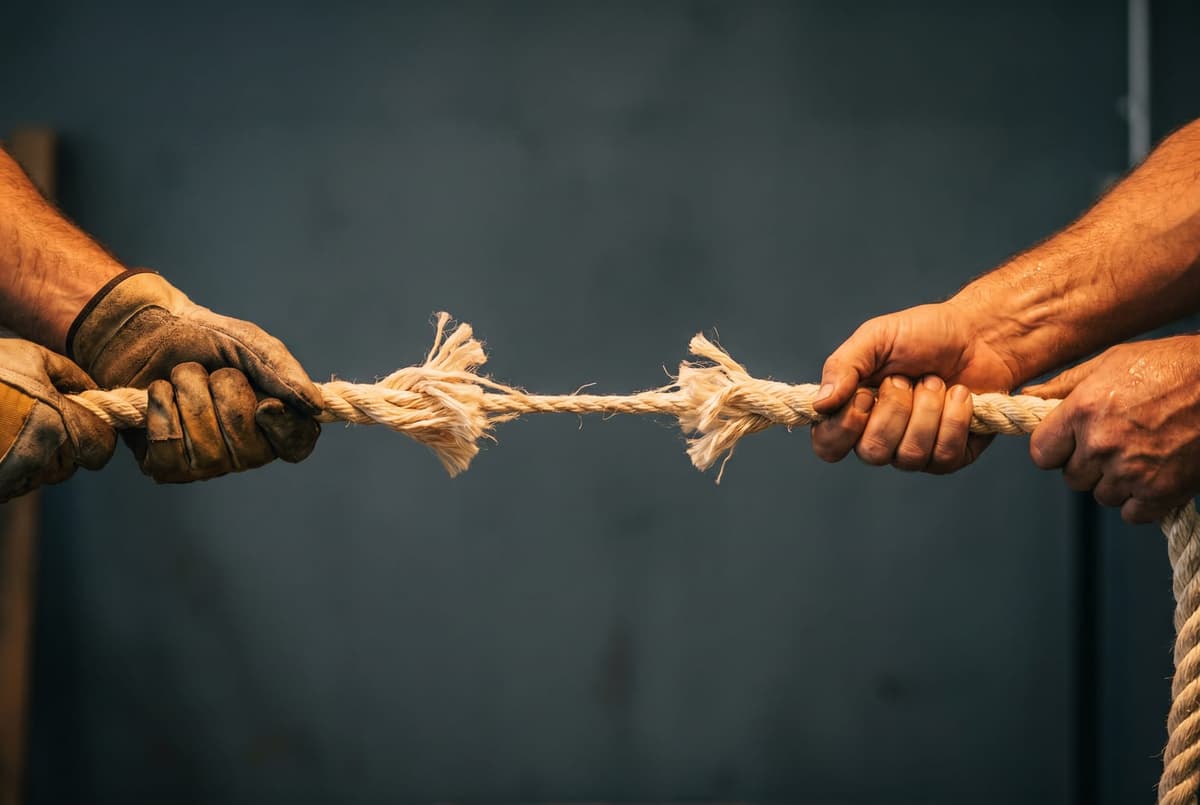
A challenging aspect: the two planets rub against each other and ask for conscious handling. Tension here is a source of movement, not a verdict.

90°Orb up to 6°ChallengingNatal · synastry · transit
90°Sun square UranusOrb up to 6° · major aspect
Oksana MiatovaWritten by Oksana Miatova·12 min read

For entertainment and self-reflection only. Not medical, legal, financial or psychological advice. Consult a qualified professional for important decisions.

The short answer

Sun square Uranus sets conscious will against the need for freedom and reinvention. In the natal chart it gives an unmistakably independent character that keeps dismantling whatever it builds; in synastry it makes a couple wake each other up and unsettle each other in equal measure; in transit it opens a short, loud window where it suddenly becomes obvious what no longer fits. The tension is fuel, but it needs a channel, or it discharges in lurches.

What a square is

The geometry behind the reading

A square is a separation of ninety degrees, where two planets sit in signs of the same modality but a different element, and classically it ranks among the strongest of the major aspects — second only to the conjunction for sheer force, and second to none for drama. The textbook orb for a square runs to about six degrees, though for a pairing of a personal planet with an outer one I treat five degrees as the practical edge of a noticeable effect, and two degrees as the tight band where the aspect works almost without a break. A square is tense by nature, but tense is not the same as bad — it is closer to a drive shaft. The friction between two functions levers a person out of inertia and forces them to find a way through. For the Sun and Uranus, that friction sits between the most basic urge to be yourself on your own terms and the urge to break apart anything that has started to feel settled, which is exactly the engine, and exactly the hazard, of the aspect.

Three ways to read it

The same aspect, three different stories

One aspect reads differently depending on where you find it: inside a single birth chart, between two people, or moving across the sky right now. Read each as a way to notice patterns, not as a forecast.

Sun square Uranus in the natal chart

If Sun square Uranus sits in your natal chart, two strong functions inside you are forever tugging in opposite directions. The Sun carries your will, your conscious 'I', the way you assert yourself in the world and see your role through to the end. Uranus carries freedom, originality, the ability to look at the familiar and suddenly find it absurd, and the nerve to break it. In a square these two don't complement each other and they don't merge — they collide at a right angle. Which means any attempt you make to build a life to plan runs, sooner or later, into resistance from within: something in you actively refuses to live smoothly, even when everything outwardly is arranged well.

That becomes visible early. As a child you don't fit the rules of the nursery or the classroom — not out of protest, but because those rules feel like someone else's. The adolescent revolt often arrives ahead of schedule and runs deeper than it does in your peers: not loud, but structural. The decision to live off the family script gets made quietly and then held for years. One of the recognisable signs of this aspect is that early sense that the ready-made templates of a life simply don't suit you, and you'll have to invent your own.

In adulthood the square plays out in cycles. You build something — a career, a relationship, a business, a way of living in a new city — and after a few years the inner Uranus starts demanding a break. Sometimes the break arrives as an outside circumstance: the company shuts, the partner leaves, the country changes. Sometimes you set it off yourself, and from the outside it can look unmotivated — everything was fine, and then the person stood up and walked the other way. There was a motive, of course; it was simply internal, building up until at some point it tipped the balance.

Conflict with figures of authority is an almost unavoidable theme. A father, a boss, the state, any structure that claims the right to tell you how to live, becomes a point of collision sooner or later. That doesn't make you a rebel for the sake of it. It's more that your nature can't bear situations where your own will is swapped out for someone else's. In the gentler version it gives the ability to hold your position and choose your own line of work. In the harder version it brings a run of resignations, ruptures with people close to you, and social conflicts through which you keep, each time, finding yourself again.

The nervous system with this aspect overloads faster than it does for people who have the harmonious links between the Sun and Uranus. A rigid routine, long monotonous effort, the attempt to fit into someone else's tempo — these drain you more than they appear to from outside. By contrast, on variable loads and your own rhythm you're capable of an output others can't reach. Many people with this aspect find their strength in work where they can plan the day themselves, switch between tasks, go away and come back. A life run to someone else's timetable is the format that wears you down quickest of all.

The shadow side of the aspect is the cyclical demolition of what you built yourself. The business folds a month before it would have turned a profit; the relationship comes apart a week before the anniversary; the move falls through the day before signing. More often than not this isn't outside force majeure but the same inner Uranus, which couldn't take the mounting structural pressure and blew the construction up from within. If that pattern recurs in your life — not as a one-off but as a recurring plot — a Sun–Uranus square is almost certainly part of it.

The sign and house the square falls in colour all of this. In fire signs the friction reads as restless will and a hunger to lead from your own ideas. In earth signs it grounds into a practical reformer who reshapes systems from the inside rather than torching them. In air signs it sounds like a sharp, contrarian mind drawn to debate and invention. In water signs it goes quieter and stranger, a felt sense for where the emotional currents of a family or a culture are about to shift.

The main task with this aspect is to learn to design a life with the option of change sewn in. Don't try to raise a permanent fortress for forty years — build so that in three to five years you can turn a corner without razing the foundations. That applies to everything: career, relationships, geography, property. Professions with a cycle already in them — projects, contracts, transitions between roles — are carried more easily by you than monolithic careers are. Relationships in which both people respect an individual rhythm hold longer than attempts to build the perfect domestic order once and for all. When a life is arranged so that it has turning points designed into it, the square stops working as a wrecker and starts working as an engine — and your natal chart, read with the sign, the house and the aspects to other planets, especially Saturn, Pluto and Jupiter, is what shows you where to lay those turning points in.

When it flows

  • A real knack for putting yourself back together after the old life caves in — a redundancy, a divorce, a move across the world
  • A non-standard sense of self: you worked out early that off-the-peg templates don't fit you, and you'd need to invent your own
  • A sharp instinct for the obsolete — you can see where a system is held up by habit alone
  • A pull towards anything that needs fresh eyes: technology, reform, art that sits across the join of two genres

When it grates

  • Cycles of sudden reversals in career and private life with no obvious outside trigger
  • Friction with the father, with the boss, with any sanctioned authority
  • Difficulty staying with one thing for more than a few years before the urge to overturn it rises from inside
  • A nervous system that overloads faster than other people's, especially when you try to slot into a rigid routine

The shadow side, and what to do with it

The shadow side of Sun square Uranus is the cyclical collapse of whatever you've built yourself. The business folds a month before it would have broken even; the relationship comes apart a week short of the anniversary; the move falls through the day before signing. More often than not this isn't bad luck from outside, it's quiet self-sabotage: the Uranian will can't take the structural pressure and detonates the construction from within. The way through is to design a life with the option of change built into it on purpose. Don't try to raise a fortress for the ages — build so that in three to five years you can turn a corner without razing the foundations. Work and projects that have a cycle baked in are carried far more easily than monolithic forty-year careers. Read it as a pattern to plan around, not a verdict on who you are.

Square — symbolic still life

How close is close

The orb decides the volume

A square is rarely exact. The smaller the gap between the two planets — the orb — the louder the aspect plays. Here is roughly how the three bands read.

Tight

0–2°

Reads as a defining feature

At 0–2° the square works as a constant background hum to a life. Will and the love of freedom collide every day, even over small things: you can't stand being herded into a frame, and at the same time you keep building frames for yourself that you then tear out of. The tight band gives a vivid, recognisable trait of character that the people around you clock from childhood. At best it reads as an early sense of your own path and an ability to live off-template. At worst it's a run of cyclical break-ups with whatever you built yourself. In this band almost any transit can switch the aspect on, which gives a biography studded with regular crisis points.

Medium

2–5°

A steady background pattern

At 2–5° the square gives a contradiction you can recognise, but it leaves pauses between flare-ups. You can live quietly for years, drop into a sharp stretch, then settle back into a normal channel. Conscious work is possible here: you can learn to feel a crisis phase coming and let off pressure ahead of time through a change of rhythm — a holiday, a move, a new project. In this band the aspect is often switched on by progressions and slow transits, so its timetable can genuinely be worked out.

Loose

5–8°

A faint colouring, felt in crises

At 5–8° the wide orb feels like a background that stays quiet for most of a life. You can spend decades with a sense of complete normality and then run into a single large reversal — a redundancy, a move, a divorce, the loss of a role — in which the aspect discharges its stored tension all at once. Between such events life runs smooth. Knowing a wide square is there is worth it mainly so that, when the crisis comes, you don't take it for a random accident but read it as a logical stage of development.

Square with a partner — what does it mean for the two of you?

A full synastry reading — every aspect between your two charts

Sun square Uranus inside one chart is an inner mechanism. Between two charts it becomes the dynamic of a relationship. Enter both birth details and get a synastry reading — where the conjunctions sit, where the squares pull, where the oppositions draw you together — all calculated with the Swiss Ephemeris. Read it as a way to notice patterns, not a forecast.

Check your compatibilityfrom £1 · for entertainment

Compare with a neighbouring aspect

Same planets, a different distance

Sun trine Uranus tells a different story. If you're reading this to make sense of a specific chart, it's worth glancing at the neighbouring aspect too.

Sun trine Uranus
  • A square sets the lights 90° apart in collision — will and the love of freedom pull opposite ways and force a choice
  • A trine sets the same planets flowing together — freedom feels like an extension of the will, not a sabotage of it
  • The square forges character through friction, the trine through giftedness; the first more often spills into public conflict, the second into quiet novelty
  • The trine risks staying unspent: everything comes easily, so a rare gift can simply go unused
  • The square makes you move through pain, but it's that very pain that more often produces a biography you can see from the outside

Lived examples

A few charts where you can see it

Public figures with a verified Rodden birth-data rating (AA/A/B). No invented data.

Frequently asked questions

What does Sun square Uranus mean in the natal chart?
It is a standing contradiction between conscious will and the need for freedom and change. You build your life, and after a while you dismantle it yourself, because whatever you've built has started to feel too tight. The aspect gives a non-standard character, an early revolt against templates, and a leaning towards cyclical reversals in the life story. The tone is tense, but the direction depends on the signs, the houses and the other aspects in the chart. Read it as a pattern to notice, not a verdict on who you are.
Is Sun square Uranus a bad aspect?
No. In modern astrology squares are treated as tense but not bad. They supply friction, and friction is the only source of character development astrology really knows — without squares a chart tends to be soft and inert. Sun square Uranus in particular turns up often in the charts of people with a noticeable public trajectory, because it forces movement where others would stand still. It is a lens for noticing patterns, not a label of doom.
What orb should I use for Sun square Uranus?
Classically up to about 6° for a square. For a pairing of a personal planet (the Sun) with an outer one (Uranus), it's more practical to treat 5° as the edge of a clearly noticeable effect and 2° as the tight band where the aspect works almost without a break. If the pair also touches a fast-moving planet in the chart, the effective orb can stretch by another degree or so. Beyond about 8° the square is taken to have largely dissolved into background.
How does Sun square Uranus show up in synastry?
One partner wakes boldness and originality in the other, while the other irritates the first with unpredictability or a need for stability. The union gets a lot of energy but asks for its agreements to be revisited constantly. It works well for couples ready to grow through crises, and badly in pairings where one partner is hoping for calm routine. This is a way to understand a relationship's dynamics, not a forecast about it.
What does a transiting Sun square Uranus mean for my chart?
A short, dense window in which it becomes clear what no longer works. Unexpected offers often arrive that reroute the trajectory. The danger is taking tiredness for permission to burn everything down and start from scratch. If a decision to change course has been ripening for a long time, the transit gives the energy to act on it; if it has appeared out of nowhere, it's wiser to let it sit for at least a couple of weeks before doing anything irreversible.
Which public figures have Sun square Uranus?
From charts with a solid Rodden rating, Diana, Princess of Wales (Sun in Cancer, Uranus in Leo, an orb of about two degrees) and Johnny Depp (Sun in Gemini, Uranus in Virgo, AstroDatabank AA) are reliable examples. Both played out the theme of the square biographically: she by stepping out of a protocol role, he through a career built on refusing the studio rulebook and a run of cyclical public crises. As ever, check anyone you mean to cite against AstroDatabank before relying on the chart.
Can Sun square Uranus be softened?
The aspect itself can't be removed — it's part of the chart. What softens it are habits: designing a life with the option of change built in every three to five years, choosing professions and projects that already have a cycle to them, changing your surroundings in small doses so it never builds to an explosion, and letting off pressure through physical activity and creative work. The aim isn't to suppress the aspect but to stop taking cyclical demolitions from it.
Sun square Uranus and the relationship with the father — what's the link?
It often shows as an early conflict with the father figure, or his absence, or the sense of the father as an unpredictable, detached, non-standard presence. That template tends to get carried later onto any authority figure, from a boss to the state. Working consciously with the theme of the father, sometimes through therapy, can noticeably lower the intensity of the aspect in the social conflicts of adult life. None of this is destiny; it's a lens for noticing.
Is Sun square Uranus different for men and women?
The function of the aspect itself doesn't depend on sex. The difference is in social reception: a man with this aspect tends to find it easier to win approval for being unconventional and rebellious, whereas the same trait in a woman more often meets resistance and gets read as unpredictability or a tendency to make scenes. For a reading, that usually means the question of channelling the energy into work and a public role tends to come up more sharply for a woman. It's a way to notice patterns, not a rule about anyone.
Sun square Uranus and wellbeing — what's worth keeping an eye on?
The nervous system tends to be the sensitive area. The aspect can bring heightened excitability, a leaning towards poor sleep, and a low tolerance for rigid routines and long monotony. Regular movement, walks, a sane sleep rhythm without heroics, and going easy on stimulants in fraught stretches all tend to help. If nervous strain becomes hard to manage, it makes sense to speak to a qualified professional rather than wait for it to settle in — this page is for entertainment and self-reflection, not medical guidance.

Related pages

The other aspects between Sun and Uranus

The same two planets at a different angle — each reads differently.

Oksana Miatova
Oksana Miatova

Astrologer, co-founder of WowAstro

Oksana Miatova is a practising astrologer and co-founder of WowAstro. Natal charts, synastry and forecasts grounded in the Western classical tradition — explained through real-life examples and plain language.

More about the author →

For entertainment and self-reflection only. Not medical, legal, financial or psychological advice. Consult a qualified professional for important decisions.