Skip to content
Conjunction Sun–Uranus — symbolic illustration

Conjunction · 0°

Sun conjunction Uranus

A neutral aspect: it amplifies both planets, and how it plays out depends on the signs they sit in and the rest of the chart.

Orb up to 8°NeutralNatal · synastry · transit
0°Sun conjunction UranusOrb up to 8° · major aspect
Oksana MiatovaWritten by Oksana Miatova·13 min read

For entertainment and self-reflection only. Not medical, legal, financial or psychological advice. Consult a qualified professional for important decisions.

The short answer

Sun conjunct Uranus fuses your will with your need for freedom into a single impulse. You feel independent by default, but you pay for it with a restless sense of self and a habit of sharp, unexpected turns in your life.

What a conjunction is

The geometry behind the reading

A conjunction is the strongest of the major aspects — zero degrees of separation between two planets. Unlike a sextile or trine it hands you no ready-made gift, and unlike a square or opposition it draws no clean line of conflict. It works differently: it welds two planets into one motive, so you stop being able to tell where one function ends and the other begins. The whole tone of a conjunction is set by the nature of the planets involved, which is why the Sun with Venus reads gently, with Mars it runs hot, and with Uranus it crackles — nervy and unpredictable. The orb here is generous, up to about eight degrees, because the fusion is felt even at a distance. This is a first-order aspect in the hierarchy: if it is absent we usually begin a reading elsewhere, but where it is present it is nearly always the headline.

Three ways to read it

The same aspect, three different stories

One aspect reads differently depending on where you find it: inside a single birth chart, between two people, or moving across the sky right now. Read each as a way to notice patterns, not as a forecast.

Sun conjunct Uranus in the natal chart

If Sun conjunct Uranus stands in your natal chart, the odds are you felt 'not like everyone else' early on. Not in the sense of being cast out, but in the sense of basic wiring: you struggle to breathe in a setting where everything is laid out in advance, where there's only one right way to do a thing, where people expect predictable behaviour from you. That pull towards air isn't really a protest — it's a nervous necessity. Without it something inside goes numb, and a feeling creeps in that your own self is about to dissolve.

The central difficulty of this configuration is that your will and your need for freedom are welded together. Most people can separate what they want from how they want to get it. For you the border between the motive and the style of carrying it out is rubbed away. You want something, and at the same time you want to reach it by an unconventional route. When life offers a tidy, obvious path to the prize, something inside digs its heels in — not because the goal is wrong, but because a road that straight feels like the walls closing in.

Out of this grows a signature script. You move towards something that matters, everything is going to plan, and at the very moment there's only a single step left, you make a sharp turn away. From the outside it looks like sabotage; from the inside it feels like a gulp of air. Only after many years does the understanding settle in that you were turning away not from the goal but from the sense of confinement around it — and that you could have taken that last step and then arranged your personal space your own way afterwards.

There's a quieter cost to this, too, and it tends to surprise people who carry the aspect. The very originality that others admire in you can leave you oddly lonely. You arrive at conclusions by routes nobody else took, which means your reasoning is hard to share — you announce a decision and the people around you hear only the conclusion, never the long, sideways path that led there. Over time some learn to trust your jumps; many simply find them alarming. The temptation is to read that gap as a sign you're surrounded by the wrong people. More often it's just the ordinary friction of a non-standard mind in a world that runs, sensibly enough, on patterns. Naming it as friction rather than rejection takes a good deal of the sting out of it.

The body flags very early what's going on with you. Uranus in a strong aspect to the Sun nearly always gives an electrical constitution: you sleep poorly, you wind up easily, and under stress an arrhythmia or a nervous tremor can surface. This isn't a pathology, it's a design. Fighting it is pointless; the trick is learning to service it. Regular physical discharge, sleep treated as non-negotiable hygiene, a wary respect for stimulants — coffee and alcohol tend to hit you harder than they hit the people around you.

Working life usually runs along a non-linear track. A long career in one company with slow, steady promotion is not your story, and attempts to build one tend to end in a blow-up. The formats that suit you have novelty built in: freelancing across different clients, project work, your own venture with room to change direction, professions that sit on the seam between fields. The role that fits you best is the one who walks into someone else's tangled situation, finds the off-beat way out, and moves on.

Relationships throw up the same pattern. You need a partner able to weather your unpredictability without trying to tame it. The trouble is that such partners are rare, and the more common reaction from those close to you is an effort to make you 'steadier', 'more normal', 'like everyone else'. To every such effort your configuration answers by ramping up the rebellion, and the bond falls apart. The healthiest match tends to be a person with their own strong Uranus or Saturn — someone who carries their own inner ballast and makes no claim on changing you.

The main task of integration is learning to tell a genuine impulse of freedom apart from a simple nerve discharging. From the inside the two feel almost identical, and both demand immediate action. But a genuine impulse keeps returning, again and again, in the calm moments, while a nerve discharge arrives in the thick of stress and makes no sense at all a day later. The plain practice of a twenty-four-hour pause between deciding and doing spares you most of the needless ruptures. If the wish to leave, to break it off, to move hasn't cooled in a day, it's real — go. If it has cooled, you were only discharging a nerve. That discernment doesn't arrive at once; it usually comes after a run of sharp gestures you came to regret. And it's exactly that discernment that becomes the maturity Sun conjunct Uranus grows in you by the middle of life. To see precisely how your will is fused with your need for freedom — through the sign, the house and the aspects to other planets, Saturn and Pluto especially — the whole chart has to be read together.
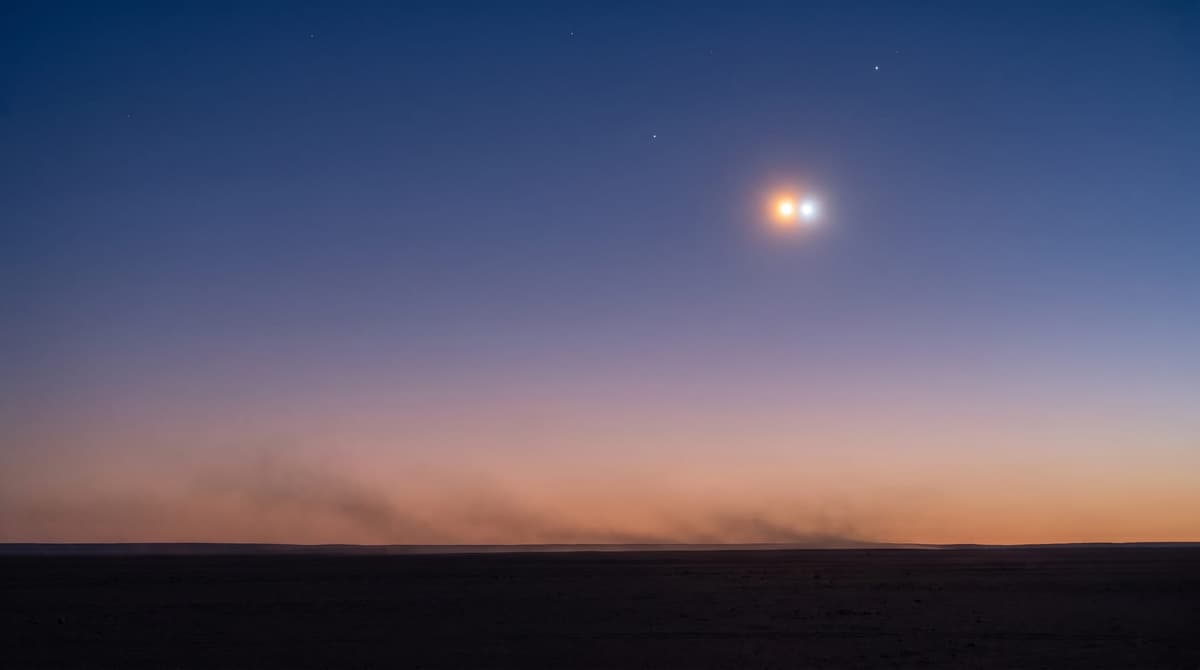
When it flows

  • A strong, built-in sense of your own originality — you don't need to copy anyone to feel like yourself
  • An eye for the odd angle on a familiar situation, with solutions other people simply don't arrive at
  • Real inner freedom from other people's expectations — a parent's view, a boss's view, society's view, none of it runs your choices automatically
  • Quick decisions in a crisis: while others are still framing the problem, you've already acted

When it grates

  • A chronic restlessness of identity — the picture you hold of yourself can shift sharply, sometimes more than once a year
  • Difficulty carrying a long project to the finish, because the will keeps hunting for the next turn
  • A nervous, electrical body under stress — broken sleep, a racing or skipping heart, tremor, tics
  • Other people read you as unpredictable, and that can unravel a close bond before you've even noticed the pattern

The shadow side, and what to do with it

The shadow of this conjunction is the sudden, self-sabotaging gesture made simply to taste freedom — walking out of a job within the hour, ending a relationship in a single message, moving cities with no plan. From the inside it feels like a gulp of air; from the outside it looks like a breakdown. Integration starts with realising that freedom is not the absence of ties but the ability to stay inside them without dissolving. A deliberate pause helps more than anything: put at least twenty-four hours between the impulse and the act. If the urge is still there a day later, it's real. If it has cooled, it was a nerve discharging, not a choice.

Conjunction — symbolic still life

How close is close

The orb decides the volume

A conjunction is rarely exact. The smaller the gap between the two planets — the orb — the louder the aspect plays. Here is roughly how the three bands read.

Tight

0–2°

Reads as a defining feature

At 0–2° the conjunction is exact and the intensity is at its maximum. Uranus grows straight into your sense of self: you don't separate who you are from your need for freedom, and the faintest hint of a limit registers as a threat to your existence. The life shows the signature of sudden reversals, an unconventional path, eccentric choices made early. The body answers in a nervous register — insomnia as a background hum, a fluttering heart under stress. The great strength of this band is sensing change before anyone else does and being the first to move.

Medium

2–5°

A steady background pattern

At 2–5° the conjunction is significant and clearly felt. Will and the appetite for novelty walk arm in arm, but there's a gap between them wide enough for reflection. You more often manage to ask yourself what exactly the sharp gesture is for. In work and relationships there's a pull towards unconventional formats — freelancing, remote work, a non-linear career. In a crisis, inventiveness switches on in place of panic, but through the quiet stretches a restlessness accumulates that demands regular change.

Loose

5–8°

A faint colouring, felt in crises

At 5–8° the conjunction sits in the background — visible in tendencies rather than as the whole character. Uranus adds a note of independence to the solar will without dictating the tempo of your days. You value freedom, gravitate to flexible professions, tolerate micromanagement badly, but on the whole you're capable of long commitments. The abrupt turns come once every few years and usually coincide with other strong transits. This is an aspect felt at the moment of choice rather than every single day.

Conjunction with a partner — what does it mean for the two of you?

A full synastry reading — every aspect between your two charts

Sun conjunction Uranus inside one chart is an inner mechanism. Between two charts it becomes the dynamic of a relationship. Enter both birth details and get a synastry reading — where the conjunctions sit, where the squares pull, where the oppositions draw you together — all calculated with the Swiss Ephemeris. Read it as a way to notice patterns, not a forecast.

Check your compatibilityfrom £1 · for entertainment

Compare with a neighbouring aspect

Same planets, a different distance

Sun opposite Uranus tells a different story. If you're reading this to make sense of a specific chart, it's worth glancing at the neighbouring aspect too.

Sun opposite Uranus
  • In the conjunction the Sun and Uranus are welded together — you can't tell where your will ends and your need for freedom begins
  • In the opposition the two energies sit at opposite poles, and you have to keep choosing between a stable 'I' and the pull to break free
  • The conjunction shows up as an inner impulse; the opposition arrives as an outside trigger, most often through significant people
  • The conjunction gives a steady, baked-in eccentricity; the opposition gives cyclical crises of independence every few years

Lived examples

A few charts where you can see it

Public figures with a verified Rodden birth-data rating (AA/A/B). No invented data.

Frequently asked questions

What does Sun conjunct Uranus mean in the natal chart?
It's the fusion of your will with your need for freedom. You feel independent by default, tolerate limits badly, lean towards unconventional solutions and sudden reversals. The strength is originality of thought and a fast reaction in a crisis. The weakness is an unstable sense of self and a habit of impulsive gestures you later regret. Read it as a pattern to notice, not a verdict on who you are.
Is Sun conjunct Uranus good or bad in synastry?
Neither, really. A couple with this aspect is never bored — the two of you spur each other towards personal discoveries. The price is sharp breaks and an emotional see-saw, because one of you keeps living out the need for freedom through the relationship itself. It works well when both people are mature enough to tell personal growth apart from the partnership. As always here, this is a lens for understanding a relationship's patterns, not a prediction about it.
What orb should I use for Sun conjunct Uranus?
The standard conjunction orb of about 8°, because the conjunction is the strongest aspect and is felt even at a wide distance. An exact conjunction within 0–2° works almost like a single planet. A medium orb of 2–5° leaves a gap for reflection. A loose orb of 5–8° is felt in the background. Past roughly 10° the conjunction is considered to have dissolved.
Which public figures have Sun conjunct Uranus?
Barack Obama has the Sun in Leo in a wide conjunction with Uranus — the first African-American US president. Winston Churchill had the Sun in Sagittarius conjunct Uranus and a career built on abrupt political reversals. Both are remembered for breaking established patterns and taking pivotal decisions at moments of crisis. As ever, it's worth checking any chart against AstroDatabank at a Rodden rating of AA or A before relying on it.
Is Sun conjunct Uranus different for men and women?
The underlying mechanism is the same — will fused with independence. The differences come through social expectation. In a man's chart the aspect more often surfaces as a public image of the rebel or the innovator. In a woman's chart it more often shows as a break from the 'mother–wife–steady job' script, an early refusal of the expected role. In close relationships both find it matters to keep personal space and not cling to the conventional. None of this is destiny; it's simply a lens for noticing.
How does transiting Uranus conjunct natal Sun affect life?
It's a rare and powerful transit — for most people it happens only once, since Uranus takes about 84 years to circle the chart. It opens a window for changes that were already ripe: a change of work, a move, an exit from a role you've outgrown. If the change has been turning over in your mind for a year, the transit is the right moment. If the idea arrived last night in a bout of sleeplessness, it's a nerve discharging, and it's worth waiting until Uranus has moved off. The transit runs around a year and a half once the retrograde loops are counted in.
Is Sun conjunct Uranus the aspect of genius?
Not on its own. The aspect gives unconventional thinking and an ability to see the familiar from a new angle, but without other supports in the chart — a strong Mercury, backing from Jupiter or Saturn — the originality stays at the level of impulses. Genius also needs the discipline to carry an idea through to a result. A bare Sun–Uranus conjunction tends to give originality more often than productivity.
Can the instability of Sun conjunct Uranus be softened?
It can't be removed entirely — the aspect works across a whole life. But integration is possible. A twenty-four-hour pause before sharp decisions helps: if the urge hasn't cooled in a day, it's real. Building regular change into a stable structure helps too — say, switching projects each year inside one profession rather than switching profession every three years. The body responds well to physical practices that discharge nervous tension, such as swimming, running or breathwork. Treat all of this as self-reflection, not a prescription.

Related pages

The other aspects between Sun and Uranus

The same two planets at a different angle — each reads differently.

Oksana Miatova
Oksana Miatova

Astrologer, co-founder of WowAstro

Oksana Miatova is a practising astrologer and co-founder of WowAstro. Natal charts, synastry and forecasts grounded in the Western classical tradition — explained through real-life examples and plain language.

More about the author →

For entertainment and self-reflection only. Not medical, legal, financial or psychological advice. Consult a qualified professional for important decisions.