Skip to content
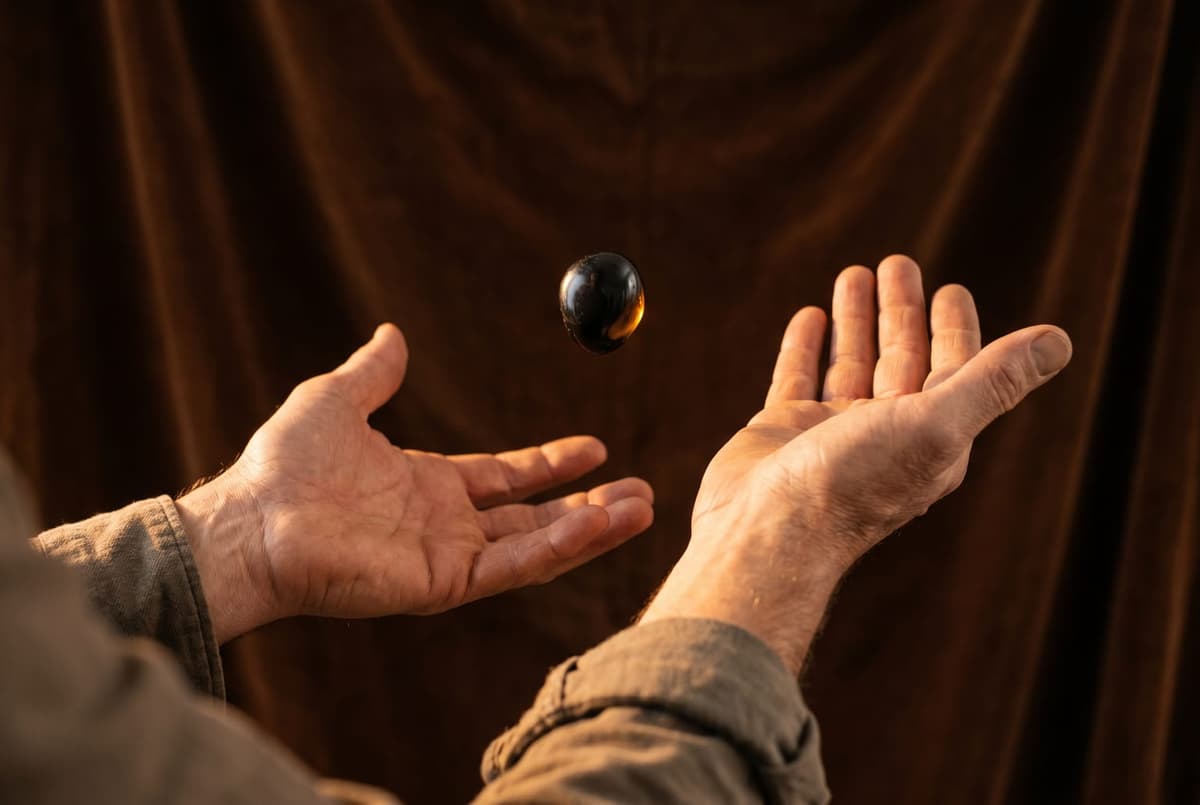
Sextile Sun–Uranus — symbolic illustration

Sextile · 60°

Sun sextile Uranus

A harmonious aspect: the two planets support each other and tend to pull in the same direction. Read it as a resource to notice, not a guarantee.

60°Orb up to 4°HarmoniousNatal · synastry · transit
60°Sun sextile UranusOrb up to 4° · major aspect
Oksana MiatovaWritten by Oksana Miatova·12 min read

For entertainment and self-reflection only. Not medical, legal, financial or psychological advice. Consult a qualified professional for important decisions.

The short answer

Sun sextile Uranus is a harmonious 60° aspect in which will and the need for freedom are wired together gently. In the natal chart it shows as a quiet originality and an ease with going your own way; in synastry it's a partner you can breathe more freely beside; in transit it opens a short window for a change that's been brewing for a while.

What a sextile is

The geometry behind the reading

A sextile forms a 60° angle between two planets and sits fourth in strength among the classical aspects, behind the conjunction, the opposition, the square and the trine. For the natal chart I keep the orb to about four degrees, and for transits I tighten it to two. Geometrically the 60° links signs of the same polarity — fire with air, earth with water — so the elements don't fight; they complement one another, and energy passes between them without resistance. The defining quality of a sextile as a type is that it never insists on itself. If you don't use it, it simply stays quiet. Unlike a square, which forces you to reckon with it, a sextile waits to be noticed, which is why I call it the aspect of possibility: it's there, but whether you take it up or walk past is the chart-owner's choice. With the Sun and Uranus that possibility is the right to be your own person — to live a little differently from everyone around you, calmly, without having to make a scene of it.

Three ways to read it

The same aspect, three different stories

One aspect reads differently depending on where you find it: inside a single birth chart, between two people, or moving across the sky right now. Read each as a way to notice patterns, not as a forecast.

Sun sextile Uranus in the natal chart

If you carry Sun sextile Uranus in your chart, you hold a quiet right to be unlike everyone else. Not a loud right, not a defiant one, nothing adolescent about it. More of a background fact, familiar since childhood. You might have gone years without quite registering it, until one day you noticed that your decisions rarely line up with what people expect of you, and yet no great drama comes of that. You simply walk your own route, and at some point you turn round to find a trail behind you that doesn't look like anyone else's.

The Sun stands for will, for the central spine of a person, for the way you feel the word 'I'. Uranus adds a need for freedom, an originality, the capacity to step somewhere none of your people have walked before. In a sextile those functions are gathered together gently. Will doesn't resist freedom; freedom doesn't dismantle will. You can be slotted into an ordinary profession and at the same time live differently from most of your colleagues. You can be part of a family and still keep a piece of yourself untouched. You can work inside a large structure without dissolving into its rules.

That softness is deceptive. From the outside it looks as though everything comes easily to you — the unconventionality, the adapting, the balance. From the inside it's lived differently. Most often as a quiet effort you've long since stopped noticing: not letting other people's expectations in, holding your own tempo, breaking free of the common current at least in short bursts. When that effort drops away, the aspect goes to sleep. It doesn't resist, doesn't protest; it just falls silent. After a few years inside someone else's script you begin to feel a vague 'something isn't right', and you won't immediately connect it to the fact that your Uranus hasn't had any air in a long while.

So when I work with charts like these I nearly always ask one question: where does your freedom actually live right now? Not in the abstract, but at concrete points in the week. It might be a profession where you can do things your own way. It might be a project running alongside the main job. It might be one evening a week given over to something nobody expects of you. It might be a circle of people you can be yourself with, no explanations required. Without points like those, Sun sextile Uranus quickly goes quiet, and a person starts living a borrowed life with the feeling that 'everything's basically fine'.

Professionally, a will like this settles well wherever a fresh eye and an off-pattern move are valued. Technology, research, the creative industries, education, psychotherapy, entrepreneurship, work across the seams between fields. What ties these together is the absence of a rigid vertical and a tolerance for your own rules of play. In corporations with multi-stage approvals the carrier of the aspect can hold down a job, but usually dreams quietly of leaving for a venture of their own — and at some point does.

There are quiet difficulties too, and the first is underrating your own originality. You've grown so used to your way of being that you take it for everyone's norm. 'Everyone does this, don't they?' you say, and you're surprised to find that colleagues are nervous of even small departures from the template. Two unpleasant things grow out of that underrating: you don't develop the gift on purpose (it came free, after all) and you never learn to fit your originality properly into your work, your career, your own name. What feels effortless to you seems to you to be worth nothing.

The second difficulty is a habit of not carrying off-pattern ideas through to a result. The aspect hurries you onward, to the next bend, and a fair share of your own projects get left at the 'I've more or less cracked it, no longer interesting' stage. The fix isn't discipline but outside structures: a partner, a deadline, a public commitment, a small team. When there's someone beside you who's waiting, Sun sextile Uranus pulls itself together and finishes the job. When there's no one, it flies off to the next thing.

The third difficulty is the reaction to rigid hierarchy and formal pressure. Institutional ritual, cults of seniority, layers of sign-off — the aspect tolerates all of it badly. If your environment is seventy per cent made of that, it's worth deliberately seeking a way into freer structures. That isn't a whim; it's working with your own resource. Otherwise, a few years on, you'll end up with a quiet burnout that has no visible cause.

The full picture depends on the sign your Sun sits in, the house Uranus falls in, and the other aspects woven into the contact. To understand how your particular Sun sextile Uranus actually plays, the whole chart has to be read together — and it's worth treating any reading as a mirror for self-reflection rather than a script of what's fixed.

When it flows

  • A quiet independence with no loud rebellion against the world
  • A knack for finding unconventional solutions while still being entirely yourself
  • An easy relationship with change — with moving house, switching jobs, starting again
  • A natural right to be unlike the crowd, with nothing to prove about it

When it grates

  • A habit of not carrying your more original ideas through to a finished result
  • Real irritation at rigid hierarchies and any kind of formal pressure
  • A tendency to tweak everything a little to suit yourself, even when it isn't needed
  • Underrating your own originality — 'everyone's like this, surely?'

The shadow side, and what to do with it

The chief shadow of Sun sextile Uranus is freedom left unspent. The aspect doesn't ache and doesn't shove you in the back, so it's perfectly possible to live half a life inside someone else's script and never notice that the chart held a door of your own. Integration begins with a quiet act of permission — 'I'm allowed to live differently from how it's done in my family and my circle.' After that comes one concrete step outwards from the familiar norm. It needn't be dramatic: a change of working rhythm, a new line of work, a move to another city, the dropping of a role that's gone stale. The aspect strengthens with use and dims when left idle.

Sextile — symbolic still life

How close is close

The orb decides the volume

A sextile is rarely exact. The smaller the gap between the two planets — the orb — the louder the aspect plays. Here is roughly how the three bands read.

Tight

0–2°

Reads as a defining feature

At 0–2° the aspect works noticeably, and your originality registers with people from the first few minutes of meeting you. From childhood you tend to choose your own route — not by kicking up a fuss, but simply by doing things your way. In this band the sextile gives a steady edge wherever a fresh angle is wanted: creative work, research, technology, anything at the meeting point of fields. The gift is quiet, but it's plain to anyone who knows how to look.

Medium

2–5°

A steady background pattern

At 2–4° the aspect is alive but asks to be used consciously. It won't push you towards freedom by itself, and it's not the first voice to speak up in a crisis. Turn to it, though, and it switches on at the moment you need it. This band is typical of people who discover their Sun–Uranus later in life — through a change of profession, a divorce, a move — after which they suddenly grasp that living differently is allowed and entirely normal.

Loose

5–8°

A faint colouring, felt in crises

At 4–6° the sextile has formally dissolved, yet a soft influence lingers. It's no longer a gift you can lean on but more of a tint: a mild leaning towards novelty, towards unconventional company, towards an irregular schedule. In my practice, people with orbs this wide often find they feel best precisely in mixed settings, in shifting circumstances, in work without a rigid chain of command — that's the aspect's quiet voice.

Sextile with a partner — what does it mean for the two of you?

A full synastry reading — every aspect between your two charts

Sun sextile Uranus inside one chart is an inner mechanism. Between two charts it becomes the dynamic of a relationship. Enter both birth details and get a synastry reading — where the conjunctions sit, where the squares pull, where the oppositions draw you together — all calculated with the Swiss Ephemeris. Read it as a way to notice patterns, not a forecast.

Check your compatibilityfrom £1 · for entertainment

Compare with a neighbouring aspect

Same planets, a different distance

Sun square Uranus tells a different story. If you're reading this to make sense of a specific chart, it's worth glancing at the neighbouring aspect too.

Sun square Uranus
  • The sextile offers freedom; the square tears it loose through a crisis
  • With the sextile change comes smoothly; with the square it arrives through a breakdown and an abrupt rupture
  • A sextile is easy to sleep through your whole life; a square cannot be slept through
  • The square gives a sharper, more provocative style of self-expression; the sextile a steadier one
  • The sextile's shadow is freedom left unspent; the square's is burnout from chronic resistance

Lived examples

A few charts where you can see it

Public figures with a verified Rodden birth-data rating (AA/A/B). No invented data.

Frequently asked questions

What does Sun sextile Uranus mean in the natal chart?
In the natal chart Sun sextile Uranus gives a quiet independence, a natural originality and the ability to live your own way without loud rebellion. It's a soft aspect — it doesn't press on you, so plenty of people live a whole life with it and never use the gift in full. It switches on through one concrete step outwards from the familiar script: a change of profession, a move, the dropping of a role that's gone stale. Read it as a pattern to notice in yourself, not a verdict on who you are.
What orb should I use for Sun sextile Uranus?
Working with a natal chart I keep the orb to about 4°. For transits I tighten it to 2°. Between 4° and 6° the aspect has formally dissolved, but a soft background influence remains — a mild leaning towards novelty and unconventional choices. Inside 2° the aspect works noticeably from childhood, and people read the originality straight away. Past those bands the sextile is best treated as gone.
Is Sun sextile Uranus good for relationships in synastry?
For the level of freedom and mutual breathing room, yes — it's one of the pleasant contacts. The partners don't lean on each other, they support one another's originality, and they move through change calmly. But on its own a synastric Sun sextile Uranus holds a couple together only weakly over the long haul. Without other, more adhesive aspects (Moon–Venus, Saturn, contacts to the chart angles), a pair can drift apart simply because freedom outweighs the shared fabric. It's a lens for understanding a relationship, never a prediction about it.
How does Sun sextile Uranus differ from the square?
The sextile is the harmonious 60° aspect, where change and independence are wired in gently. The square is the tense 90°, where the same themes break out through a rupture, a falling-out, sleeplessness, impulsive moves. A sextile is easy to sleep through; a square can't be slept through. Each has its own shadow: for the sextile, freedom left unspent; for the square, burnout from chronic resistance. Both describe tendencies, not fixed outcomes.
Which public figures had Sun sextile Uranus?
The contact tends to turn up in people whose biography is built around a route of their own rather than the common rails: Steve Jobs (leaving and returning to Apple), Albert Einstein (a scientific revolution from inside academia), Oprah Winfrey (media on her own terms). It doesn't mean every carrier of the aspect becomes famous, only that the direction of 'living your own way, calmly' is supported by the configuration. Charts are always worth checking against AstroDatabank before quoting a name.
What should I do with a transiting Sun sextile Uranus?
Use the window for a change you've long been mulling over but kept putting off: leaving a job you've outgrown, switching to a freer schedule, dropping a stale role, starting a project that felt too bold. The transit is short — the transiting Sun to your natal Uranus gives a one-to-three-day window, while transiting Uranus to your natal Sun runs several months with three passes. Without a concrete question, the transit hands you only a light mood you can't translate into action later on.
Does Sun sextile Uranus help in a career?
Yes, in the fields that value a fresh angle and unconventional solutions: technology, the creative industries, research, entrepreneurship, work at the meeting point of disciplines. The aspect helps you hold your own line calmly even under the pressure of the environment. In rigid hierarchies with layer upon layer of formal sign-off it tends, by contrast, to stall and quietly sabotage. Treat any of this as a leaning, not a guarantee.
Is Sun sextile Uranus a sign of a tendency towards solitude?
More a sign of choosing your own rhythm of life. The carrier of the aspect doesn't suffer from loneliness the way people with an afflicted Moon can, but doesn't crave constant company either. It can read from the outside as a slightly 'cool' or detached character, when inside it's simply a calm claim to one's own air. A family and a partnership are entirely possible — on terms of mutual freedom.
How can I help a child develop Sun sextile Uranus?
Don't pin them into a rigid role too early. Give them material the aspect can unfold in: varied activities, changes of setting, the right to choose, construction kits, technology, projects with an open ending. Don't rush them towards a single focus before fourteen to sixteen. A hard narrowing in the early years dampens the aspect and leaves a vague sense that 'life is heading the wrong way'. This is general guidance for nurturing temperament, not a forecast of the child's path.
Does Sun sextile Uranus affect health?
The aspect itself points to no specific condition. It's more about rhythm: carriers often cope poorly with a rigid regime and a monotonous schedule, and recover better in freedom and a change of scene. Under a heavy load of formal work, restlessness can surface — broken sleep, jitteriness, a disrupted rhythm. A diagnosis comes from a doctor, never from an astrologer; I'm describing tendencies for reflection, not making medical claims.
Will I have Sun sextile Uranus if the planets are in neighbouring signs?
No. A sextile forms between signs of different elements but the same polarity (fire–air, earth–water). If the Sun and Uranus sit in adjacent signs, or in the same element, that's a different contact (a semi-sextile or a sign-to-sign link) and it works in another way altogether. Check the exact separation: it should be roughly 60°, with a tolerance of up to 4°. Beyond that the aspect doesn't hold.

Related pages

The other aspects between Sun and Uranus

The same two planets at a different angle — each reads differently.

Oksana Miatova
Oksana Miatova

Astrologer, co-founder of WowAstro

Oksana Miatova is a practising astrologer and co-founder of WowAstro. Natal charts, synastry and forecasts grounded in the Western classical tradition — explained through real-life examples and plain language.

More about the author →

For entertainment and self-reflection only. Not medical, legal, financial or psychological advice. Consult a qualified professional for important decisions.