Skip to content
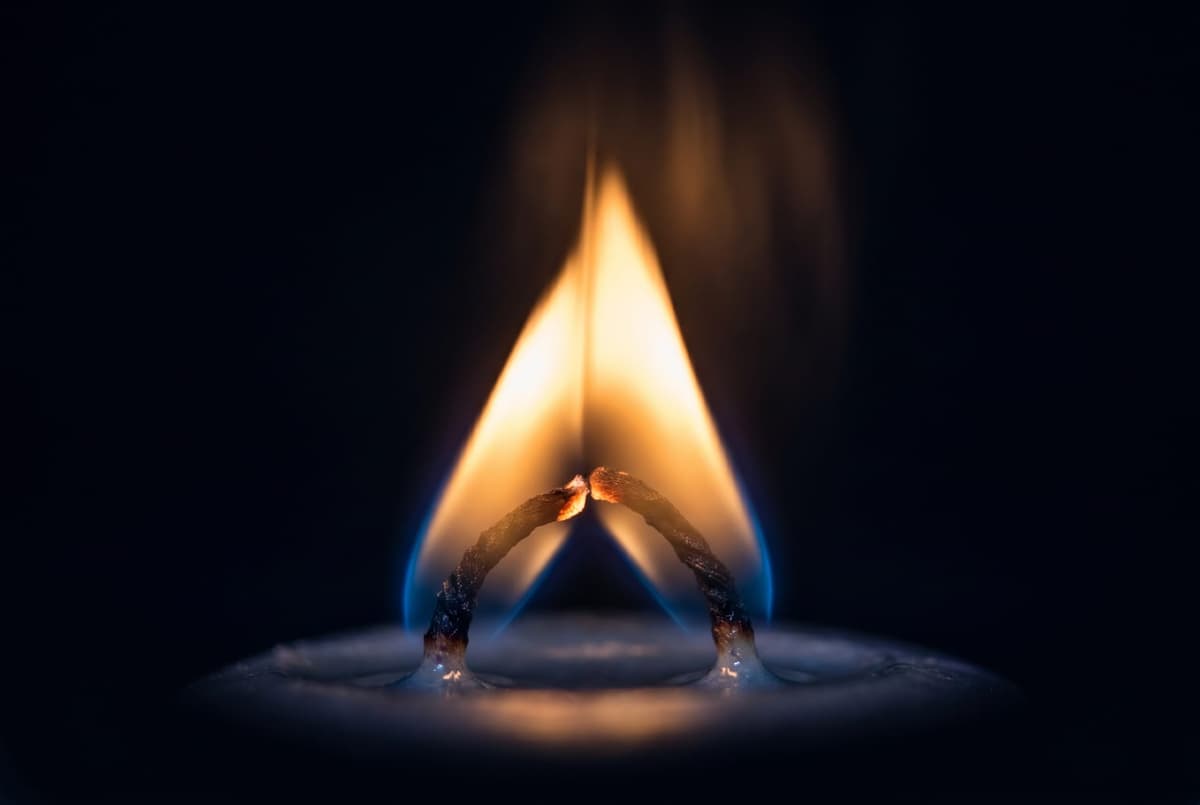
Conjunction Mars–Saturn — symbolic illustration

Conjunction · 0°

Mars conjunction Saturn

A neutral aspect: it amplifies both planets, and how it plays out depends on the signs they sit in and the rest of the chart.

Orb up to 8°NeutralNatal · synastry · transit
0°Mars conjunction SaturnOrb up to 8° · major aspect
Oksana MiatovaWritten by Oksana Miatova·11 min read

For entertainment and self-reflection only. Not medical, legal, financial or psychological advice. Consult a qualified professional for important decisions.

The short answer

Mars conjunct Saturn fuses the urge to act with the rule that checks it. Every impulse passes through a filter of discipline before it becomes a movement — so you either build slowly and precisely, or you spend your energy fighting your own brake. The outcome turns on which of the two is leading.

What a conjunction is

The geometry behind the reading

A conjunction is a separation of zero degrees between two planets — a state of full merging — and it is classically counted the strongest of the major aspects. The textbook orb for a Mars–Saturn conjunction runs up to eight degrees, though for synastry and transits I usually tighten that to about five. Unlike the tense aspects, where two functions argue across a distance, and the harmonious ones, where they help each other through a comfortable angle, the conjunction leaves the planets no separate ground. They become one point in the chart, one voice in the inner argument. For a personal-and-social pair like Mars and Saturn the merge carries real weight: it plants the social regulator right inside the personal impulse, so every act passes a check of maturity and consequence before it has even begun. That gives a rare staying power and a built-in brake at once, and both grow from the very same fusion.

Three ways to read it

The same aspect, three different stories

One aspect reads differently depending on where you find it: inside a single birth chart, between two people, or moving across the sky right now. Read each as a way to notice patterns, not as a forecast.

Mars conjunct Saturn in the natal chart

If Mars conjunct Saturn sits in your natal chart, the odds are you knew the feeling long before you ever heard the word "astrology". It is simply the speed you are built at. Between the impulse "I want to do this" and the moment your body actually starts to move, there is always a pause. Inside that pause live the appraisal, the estimate, the silent dry run. Other people don't understand why you take so long before you act; you, for your part, find it strange that they manage not to think at all.

That pause isn't a flaw. It is the working mechanism of the conjunction. Mars carries the action, the impulse, the wanting; Saturn carries the frame, the weighing of consequences, the responsibility. When the two are merged into a single degree of the chart, every move you make passes through a Saturnian filter by default. What comes out the other side rarely needs redoing. The price of that precision is low spontaneity and a slow start. For you to begin something new, an inner infrastructure has to fall into place first: a clear goal, a clear route, a clear measure of how much you'll be answerable for.

With age this often turns into an advantage. Where your peers dart between projects, abandon one thing for another and lose their tempo, you keep walking. You don't need to keep topping up your motivation; you have a built-in inertia. A business, a renovation, a long course, recovery after an injury, a year-long change of habits — any undertaking where the winner is the one who stayed rather than the one who started fastest plays to your side. Which is why your results usually show not at the start but in the fifth or tenth year.

The dark side of the same mechanism comes to the surface when Saturn's filter switches itself on for everything. Then you stop telling the important from the routine and start applying a standard of quality to your weekends, your rest, your friendships, your sleep. The body answers first. Chronic tension across the back and neck, teeth grinding at night, trouble with the teeth, aching knees, morning stiffness — these are common companions of the aspect. I should say plainly that this is astrological folklore about a temperament, not a medical claim: if your body is telling you something, the place to take it is a doctor, not a birth chart. What the chart describes is a tendency to drive yourself even while lying down.

The second sign is suppressed anger. Mars under Saturn rarely goes off loudly; it stores up. So the flares arrive at an unexpected moment and land on the wrong people — not the ones you actually had a grievance with. Often this frightens you yourself: "where did all that come from", "I'm a calm person". Where from is no mystery: from all the "you mustn'ts" that Saturn pinned onto simple wishes. From the holiday postponed five years running. From "just hold on a little longer" in a situation where there has been nothing left to hold out for in three years.

The third effect is fear of error at the start. This is the most cunning one, because it looks like sensible caution. In fact Saturn is blocking Mars before it has had the chance to show what it can do. You don't write the book because "I need to prepare better". You don't launch the project because "it isn't time yet". You don't go and have the conversation because "I have to think it through". Year by year the unbegun piles up, and at some point it becomes a weight in its own right — a shame about your own hesitancy laid on top of the original fear.

The path of integration for this conjunction is not "shake Saturn loose" but "give Mars zones with no rules". It is counter-intuitive: it feels as if you need more control, not less, because chaos is frightening. In practice the opposite heals. Regular zones where you deliberately switch off the quality filter. A run with no stopwatch. Dancing with no mirror. Drawing with no plan to show it to anyone. A conversation with no aim. At first all of it will feel like wasted time. By the second or third month, the living wish to act returns in your main pursuits. It never left; it was simply buried under layers of "I must". How exactly the aspect plays out for you depends on the sign it falls in, the house it occupies, and its links to the other planets — those have to be read together before anything firm can be said.
When it flows

  • Stamina over the long haul — where others give up after six months, you can keep walking for ten years
  • Precise, measured action with a low cost of error and a habit of getting it right first time
  • An ability to work inside strict conditions — deadlines, rules and hierarchy steady you rather than break you
  • Self-discipline without anyone watching, because the inner overseer is already standing at every task

When it grates

  • A chronic inner brake — you want to act, but your hand hovers over the button
  • Suppressed anger that builds quietly and then goes off cold, with no real release
  • Hardness towards yourself that edges into self-punishment — rest can feel like a crime
  • Fear of error that freezes the start; better not to begin than to do it imperfectly

The shadow side, and what to do with it

The shadow side of this conjunction is the slow turning of yourself into a tool that has forgotten what it is working for. The goals stay, the motivation drains away, and what is left is the rut. The body answers first — the back, the joints, the teeth. The way through is not to loosen Saturn but to let Mars into the zones where there are no rules at all: sport with no stopwatch, a craft with no deadline, a conversation with no aim. At first it will feel like wasted time. A month or two on, the living wish to act comes back.

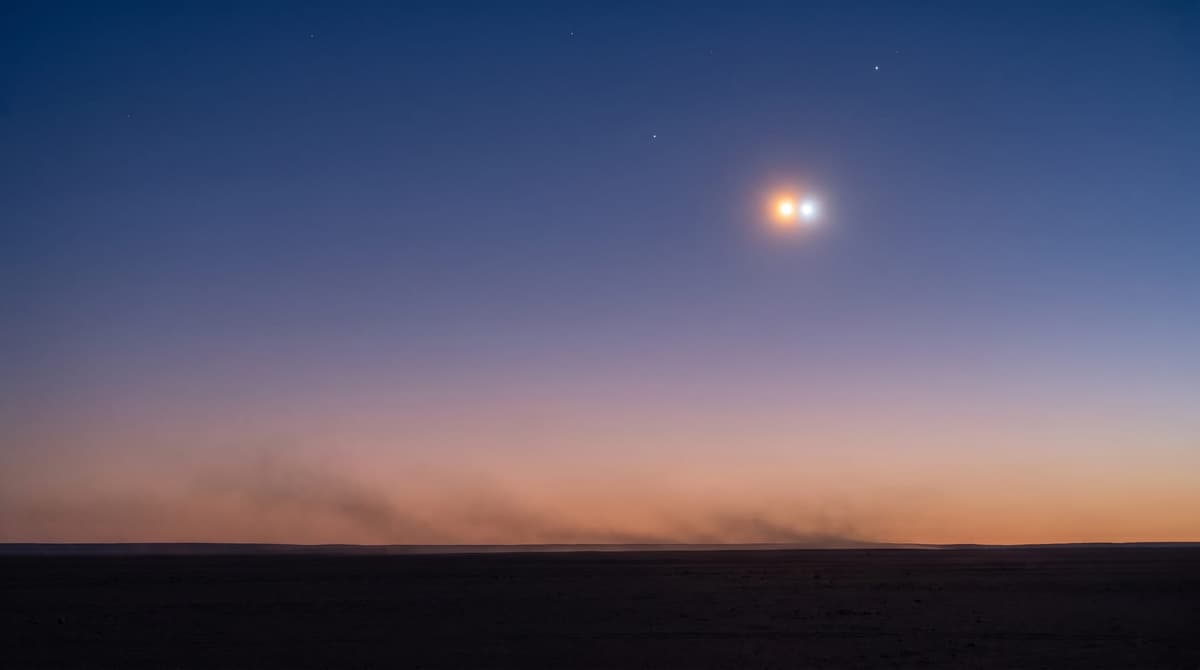
Conjunction — symbolic still life

How close is close

The orb decides the volume

A conjunction is rarely exact. The smaller the gap between the two planets — the orb — the louder the aspect plays. Here is roughly how the three bands read.

Tight

0–2°

Reads as a defining feature

At 0–2° the merge reads as the dominant note of the whole chart. Mars and Saturn are effectively poured into one centre, so the urge to act and the brake on it arrive at the same instant — which is why, from the outside, the person can look either like a statue or like a machine. There is almost no inner dialogue between the two functions, only a single state. At this density the themes of the father, of early responsibility and of physical restraint tend to switch on. Working with a tight conjunction means learning to feel which of the two planets is leading at any moment and shifting the weight on purpose. Otherwise the fusion runs you, not the other way round.

Medium

2–5°

A steady background pattern

At 2–5° the conjunction is a significant feature but the two voices are now distinct, even if they still sound together. Action is almost always shadowed by an assessment of 'am I allowed', and the fear of error runs in the background without blocking the start. People in this band usually have a working strategy: they have learned to launch things in small steps, check, and carry on. This is the comfortable, practical version of the aspect — the stamina is there, the paralysis is not. The cost is low spontaneity and the feeling that any move needs an inner permit before it can happen.

Loose

5–8°

A faint colouring, felt in crises

At 5–8° the planets feel related but not fused. Saturn shapes the general tone of Mars's life — seriousness, calculation, the capacity to work for a long time — without interfering in each separate act. At this density the conjunction often shows through a life groove rather than a single function: you choose disciplined fields, strict bosses, long projects. The aspect is rarely experienced as a problem in itself, but in a crisis it explains why your instinct is always to tighten your belt and keep going rather than drop everything and run.

Conjunction with a partner — what does it mean for the two of you?

A full synastry reading — every aspect between your two charts

Mars conjunction Saturn inside one chart is an inner mechanism. Between two charts it becomes the dynamic of a relationship. Enter both birth details and get a synastry reading — where the conjunctions sit, where the squares pull, where the oppositions draw you together — all calculated with the Swiss Ephemeris. Read it as a way to notice patterns, not a forecast.

Check your compatibilityfrom £1 · for entertainment

Compare with a neighbouring aspect

Same planets, a different distance

Mars opposite Saturn tells a different story. If you're reading this to make sense of a specific chart, it's worth glancing at the neighbouring aspect too.

Mars opposite Saturn
  • In the conjunction Mars and Saturn are fused into one act — the energy and the brake fire together, from inside
  • In the opposition they stand at opposite poles — the action comes from you, the brake arrives from outside, through people and circumstances
  • The conjunction is easier to recognise in yourself; it is simply your usual speed, whereas the opposition more often feels like the unfairness of the world
  • The conjunction gives a built-in discipline; the opposition teaches discipline through the resistance of outside rules
  • The conjunction works towards stamina; the opposition works towards the skill of negotiating with whatever holds you back

Lived examples

A few charts where you can see it

Public figures with a verified Rodden birth-data rating (AA/A/B). No invented data.

Frequently asked questions

What does Mars conjunct Saturn mean in the natal chart?
It is the fusion of action and the rule. Mars's energy passes through Saturn's filter before it can become a movement, so what comes out is a person who can work for a long time, precisely and inside strict conditions. The price is low spontaneity, a frequent inner brake and a leaning towards self-punishment through overload. It is a strong aspect for a marathon and a hard one for a sprint. Read it as a pattern to notice in yourself, not a verdict on your character.
Is Mars conjunct Saturn good or bad?
The conjunction is neutral by nature; the outcome depends on how you carry it. In its working version it is stamina, discipline and the ability to see things through to the end. In its unworked version it is chronic tension, suppressed anger and the fear of error. The very same aspect can build a president and grind down a person who never learns to rest. This is a way to understand your own tendencies, not a forecast of how your life will go.
What does Mars conjunct Saturn give in synastry?
A capacity to pull long projects together and to ride out crises as a pair. The downside is that closeness slips easily into discipline — one person instructs, the other obeys or rebels. In the bedroom it often runs cool, with spontaneity the first thing to go. It tends to work best in business alliances and in couples who have a shared outside goal to point both energies at. As always, this describes a pattern in the bond, not its fate.
What orb should I use for Mars conjunct Saturn?
The classical orb for a conjunction is eight degrees. At 0–2° it is a dense fusion that sets the keynote of the personality. At 2–5° it is a working conjunction with the voices of Mars and Saturn distinct but sounding together. At 5–8° the influence is broad — more of a general tone than a separate function. For synastry and transits it is sensible to tighten the orb to about five degrees.
Which well-known people have Mars conjunct Saturn?
Abraham Lincoln (Pisces, 12th house) carried stamina through a run of defeats; Frida Kahlo (Pisces) gave decades of work through physical pain; Immanuel Kant (Gemini) built a life by timetable as the condition for an intellectual breakthrough. All three show one line: the conjunction delivers a result through limitation, not against it. Each is worth checking against AstroDatabank yourself — for an aspect this specific, a casually quoted name can easily mislead.
Mars transiting natal Saturn — what should I expect?
About a week at exact conjunction and up to a fortnight within orb. Energy drops, simple tasks take twice as long, and friction with figures of authority sharpens. The body answers to overload — the back, the joints, the teeth. It is not a time for breakthroughs but a time for foundations. Do fewer things, but do them better. None of this is a prediction; it is a way to plan your effort more kindly than usual.
Is Mars conjunct Saturn different for men and women?
The basic dynamic is one and the same — the merging of action and brake — but it tends to surface differently. In a man's chart it more often runs through career, physical strain and the theme of the father, and a crisis feels like 'I can't break through'. In a woman's chart it more often runs through the body, through limits in relationships and the theme of denying herself, and a crisis feels like 'I'm not allowed to want'. In both cases the same medicine helps: the zones with no rules. None of this is destiny; it is a lens for noticing.
Can you work with Mars conjunct Saturn?
The conjunction cannot be removed — it is part of the structure of the chart. What you can learn is not to fuse with it. The main move is to give Mars zones where Saturn isn't needed: bodily practices with no goal, impulsive choices in safe contexts, conversation with no task. In parallel, load Saturn with its proper work — projects with a clear structure, hierarchy, long commitments. Then the planets stop competing for the same resource. Treat this as gentle self-reflection rather than a fix.
Mars conjunct Saturn and the body — what to keep an eye on?
Astrologers traditionally associate this pairing with the musculoskeletal frame — especially the spine, the knees and the teeth — and with chronic muscular stiffness, back trouble from long sitting and night-time teeth-grinding. This is folklore, not medicine: if anything genuinely worries you, see a doctor, not a chart. As a habit rather than a cure, gentle regular movement — swimming, yoga — tends to suit this temperament better than intense bursts twice a year.
In which sign does Mars conjunct Saturn run more softly?
In the earth signs — Taurus, Virgo, Capricorn — the conjunction tends to feel like a natural speed rather than a brake. In the water signs, especially Pisces and Cancer, it tends to give stamina through emotional strain. It is usually felt most sharply in the fire signs, where Mars wants to charge ahead and Saturn holds the line — Aries and Leo often experience the aspect as a cage. As ever, the whole chart decides; one aspect never tells the story on its own.

Related pages

The other aspects between Mars and Saturn

The same two planets at a different angle — each reads differently.

Oksana Miatova
Oksana Miatova

Astrologer, co-founder of WowAstro

Oksana Miatova is a practising astrologer and co-founder of WowAstro. Natal charts, synastry and forecasts grounded in the Western classical tradition — explained through real-life examples and plain language.

More about the author →

For entertainment and self-reflection only. Not medical, legal, financial or psychological advice. Consult a qualified professional for important decisions.