Skip to content
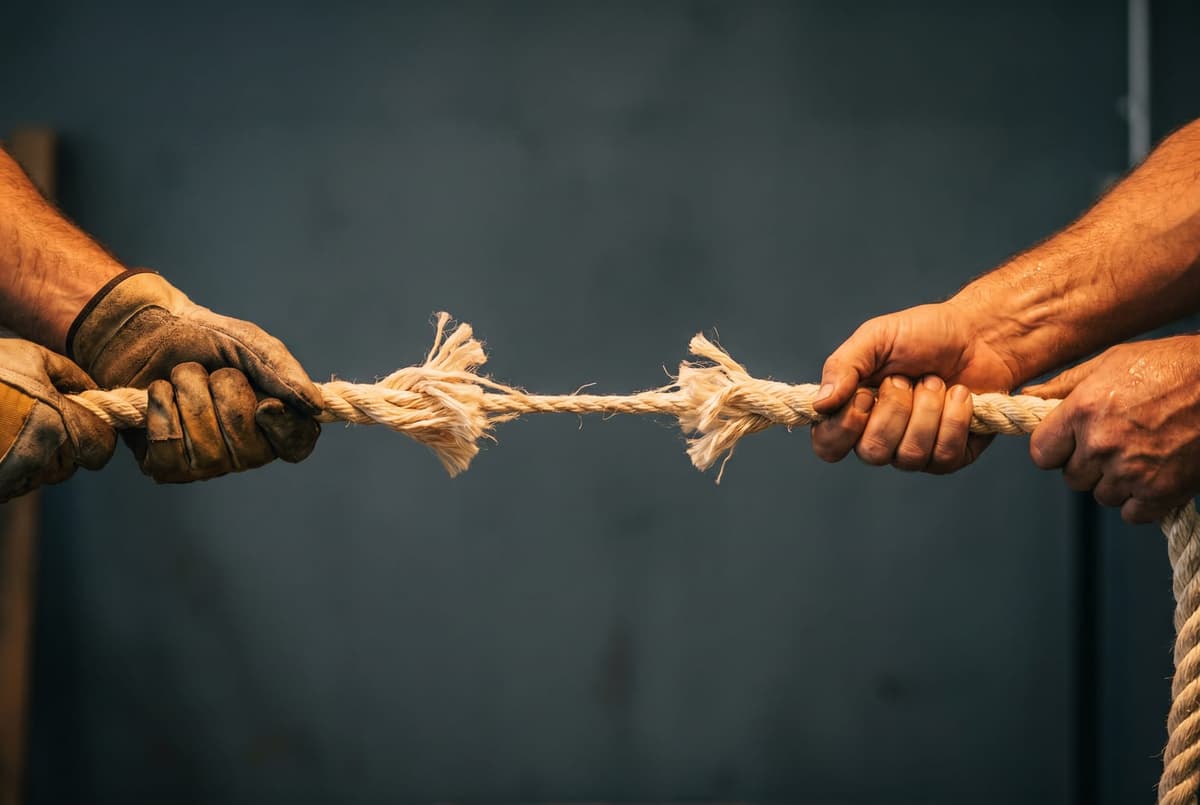
Square Mars–Saturn — symbolic illustration

Square · 90°

Mars square Saturn

A challenging aspect: the two planets rub against each other and ask for conscious handling. Tension here is a source of movement, not a verdict.

90°Orb up to 6°ChallengingNatal · synastry · transit
90°Mars square SaturnOrb up to 6° · major aspect
Oksana MiatovaWritten by Oksana Miatova·11 min read

For entertainment and self-reflection only. Not medical, legal, financial or psychological advice. Consult a qualified professional for important decisions.

The short answer

Mars square Saturn is a challenging 90° aspect where the urge to act runs straight into fear, limitation and an inner brake. It isn't a block so much as a coiled spring: every attempt to move compresses it, and patient work with the frustration turns it into stamina and a grown-up kind of discipline.

What a square is

The geometry behind the reading

A square is a 90° angle between two planets, and in the hierarchy of the classical aspects it sits second in strength after the conjunction. By tone, squares are counted as challenging — though good astrologers long ago dropped the lazy 'bad aspect' label. A square sets up friction between two energies that share a quality (a modality) but sit in different elements. The friction is uncomfortable, and that is precisely its use: it won't let you settle into the easy zone. Every square works like a built-in engine of development — you can't ignore the conflict, you're obliged to do something with it. The orb for a square is taken up to about 6°; the tightest configurations (within 2°) feel like daily pressure, while wide ones (5–6°) show more as a background pattern you only notice in a crisis.

Three ways to read it

The same aspect, three different stories

One aspect reads differently depending on where you find it: inside a single birth chart, between two people, or moving across the sky right now. Read each as a way to notice patterns, not as a forecast.

Mars square Saturn in the natal chart

If Mars square Saturn sits in your natal chart, you live with a particular kind of inner weather: the part of you that wants to move keeps meeting the part of you that says 'wait', 'not yet', 'you'll be judged'. It isn't a flaw, and it isn't a curse. It's a piece of geometry — two planets at right angles, in the same modality but different elements — and that right angle creates a friction you can feel in almost everything you attempt. The friction is the point. It won't let you settle into the comfortable, and over a lifetime it tends to forge people who are far tougher and more capable than they ever believed they were.

The early form is usually frustration. As a child or a teenager with this aspect, you wanted to act and the world kept answering with limits — a strict parent, scarce resources, a sense that effort never quite paid off the way it seemed to for others. That can lay down a deep belief that wanting something is the first step towards being disappointed in it. Some people respond by going quiet and stopping themselves before they start; others by pushing harder against every door until something gives. Both are the same spring, compressing in different directions.

What the spring builds, over years, is stamina. I've watched many clients with this aspect and the common thread is endurance: they can keep working long after the initial enthusiasm has gone, in conditions that would make most people quit. They tend to be realistic about time and resources — they don't promise what they can't deliver — and they're often the ones who finish the hard, unglamorous project that everyone else abandoned. That reliability is the gift of Saturn lending Mars a frame.

The cost is a chronic, low-grade tension that lives in the body as much as the mind. This aspect is classically linked to where the body holds strain: the muscles, the joints, the bones — the back, the knees, the teeth. (That's a symbolic correspondence, not a medical claim — if something physical is genuinely wrong, that's a conversation for a doctor, not a chart.) The emotional cost is a particular anger pattern: not an even temper that flares and settles, but a long swallowing of frustration that finally bursts. People with Mars square Saturn often surprise others — and themselves — with the size of an outburst, because nobody saw the months of pressure behind it.

There's also a sabotage loop worth naming. Because action and fear are fused into one knot, you can find yourself putting off exactly the steps that matter most, then driving yourself hard on things that don't, as if to prove you're not lazy. The cure isn't more willpower applied to the same loop — that just compresses the spring further. It's changing the relationship between drive and structure: choosing your own discipline rather than fighting an imposed one.

The sign and house the square falls in colour the whole thing. In fire signs the friction reads as a hot impulse meeting a hard ceiling — bold starts that keep hitting limits. In earth signs it's more grinding and physical, often around work and money, with real building power once the frustration is channelled. In air signs it can show as a clash between what you want to say and a fear of saying it, or between fast thinking and slow execution. In water signs the tension goes inward, surfacing as guilt, repression and a struggle to let desire move freely.

Integration is the slow part, and it's less dramatic than people hope. It begins the day you stop experiencing limitation as the enemy and start using it as a form. Saturn gives the frame; Mars fills it with action. Choose a frame the right size — a deadline you set, a scope you can actually hold, a practice you keep — and the same friction that wore you out becomes a steady, low-strain power. The people I see who've made peace with this aspect are not the ones who removed the resistance; they're the ones who found work where the resistance became an advantage. To see exactly how Mars square Saturn plays for you, the sign, the house and the other contacts to both planets all have to be read together, and the chart is best treated as a way to notice your own patterns rather than a script you're bound to.

When it flows

  • Above-average stamina — able to keep going for a long time, in hard conditions, without breaking
  • A mature discipline of action that builds with the years: less impulse, more strategy
  • A realistic read on timelines and resources — this person doesn't build castles in the air
  • The capacity to drive a difficult project to the finish when others give up

When it grates

  • A chronic inner conflict: 'I want' collides with 'not allowed' or 'too soon'
  • Putting off important steps for fear of failing or of being judged
  • Bursts of irritation after long patience — explosive rather than even-tempered anger
  • Tension that settles in the muscles, joints and bones: back, knees, teeth

The shadow side, and what to do with it

On its shadow side, Mars square Saturn lives in someone who carries a coiled spring of anger for years and never lets themselves a single spontaneous move. In extreme forms that turns either into self-destruction through overload — injuries, chronic inflammation — or into total passivity with a quiet hatred of one's own life. Integration arrives when you stop treating limitation as the enemy and start using it as a form. Saturn gives the frame, Mars fills it with action. Get the frame the right size and you have a craftsperson who works long, precisely and without strain. Read it as a pattern to work with, not a sentence.

Square — symbolic still life

How close is close

The orb decides the volume

A square is rarely exact. The smaller the gap between the two planets — the orb — the louder the aspect plays. Here is roughly how the three bands read.

Tight

0–2°

Reads as a defining feature

At 0–2° it's an exact square, at maximum intensity. In the natal chart it shows as a lifelong theme: every serious move comes with resistance from the environment or with inner fear, and every breakthrough is earned through sustained effort. In synastry a tight Mars–Saturn square keeps the relationship under constant load — the couple either tempers or breaks, with little in between. In transit a tight contact feels like two or three days of leaden pressure.

Medium

2–5°

A steady background pattern

At 2–5° it's a significant square that reads steadily. In the natal chart it forms a recognisable pattern: the person can endure but sometimes explodes; learns to plan but sabotages their own plans. In synastry the medium square shows up in stock situations — money, commitments, sex, the pace of the relationship — and asks for conscious agreements. A transit of moderate strength runs about a week and is noticeable as a dip in energy and a rise in irritability.

Loose

5–8°

A faint colouring, felt in crises

At 5–8° it's wide and in the background. In the natal chart it's felt as an undertone: a general leaning towards braking or towards overspending energy, but without sharp storylines. In synastry it works more as a statistical backdrop than an active dynamic, giving light friction and mutual misunderstanding on practical matters. A wide transit is barely legible on its own, but it amplifies other difficult configurations of the period.

Square with a partner — what does it mean for the two of you?

A full synastry reading — every aspect between your two charts

Mars square Saturn inside one chart is an inner mechanism. Between two charts it becomes the dynamic of a relationship. Enter both birth details and get a synastry reading — where the conjunctions sit, where the squares pull, where the oppositions draw you together — all calculated with the Swiss Ephemeris. Read it as a way to notice patterns, not a forecast.

Check your compatibilityfrom £1 · for entertainment

Compare with a neighbouring aspect

Same planets, a different distance

Mars trine Saturn tells a different story. If you're reading this to make sense of a specific chart, it's worth glancing at the neighbouring aspect too.

Mars trine Saturn
  • A Mars–Saturn trine gives a calm endurance from birth, with no need to go through breakdowns first
  • In the square every action is tested for strength; in the trine the resource is available by default
  • The trine doesn't teach, it gifts; the square doesn't gift, it teaches — and over a long run that schooling often proves the more valuable
  • The trine's downside is slackness and a habit of ease; the square's is chronic tension and a habit of struggle
  • Trine plus square in one chart is the best of both: an inborn resource and a built-in engine of development

Lived examples

A few charts where you can see it

Public figures with a verified Rodden birth-data rating (AA/A/B). No invented data.

Frequently asked questions

Is Mars square Saturn considered a bad aspect?
No — that label belongs to an older, cruder way of reading charts. A Mars–Saturn square is hard, yes: it puts drive and restraint in constant friction. But the same friction is its gift, because it won't let you coast. People with this aspect tend to build real stamina, a realistic sense of timing and the ability to finish difficult things. The cost is chronic inner tension and a tendency to put off important moves out of fear. Read as a pattern to work with, it's one of the most character-building aspects there is.
What does Mars square Saturn mean in the natal chart?
It means the part of you that wants to act keeps running into the part that fears, doubts or insists on waiting. Day to day that feels like a brake on your own impulses: you start, you stop, you start again. Handled badly it becomes procrastination and bottled anger that erupts. Handled well it becomes discipline — you learn to size the task, pace yourself and grind out results that flashier people can't sustain. The tension settles physically too, often in the back, knees and teeth, so movement and rest both matter. It's a tendency to notice, not a verdict.
What orb should I use for Mars square Saturn?
Up to about 6°. Within 2° it's an exact, intense square that reads as a lifelong theme. Between 2° and 5° it's a steady, recognisable pattern. From 5° to 8° it works in the background — felt more as an undertone than an active storyline. Beyond that it has effectively dissolved. For transits the same scale applies, compressed in time: tight contacts feel like a few leaden days, wider ones barely register on their own.
Is Mars square Saturn hard in synastry?
It can be, and it's also one of the great maturity tests of relationship astrology. The Saturn partner tends to cool the Mars partner's initiative, and Mars can read that caution as a put-down and push back. Left unexamined, the couple gets stuck as 'the attacker and the brake'. But where both accept that one brings movement and the other structure — and that both are needed — the same aspect makes a couple unusually resilient and good at long, patient projects. As ever, this is a way to understand the dynamic between two people, not a forecast about it.
What happens during a Mars square Saturn transit?
Energy tends to drop and obstacles seem to multiply: friction with authorities, plans that stall, the urge to force a result. Forcing is exactly the trap — injuries and burnt bridges cluster around this transit. Its real job is to show you which walls are solid and which you imagined. The window is short, days to a couple of weeks. Used well it's a good stretch for endurance work and for finishing what's been dragging, and you come out with a cleaner plan. Treat any of this as a prompt for self-reflection, not a prediction of events.
How long does a transiting Mars square Saturn last?
A transiting Mars square to natal Saturn (or the reverse) is short — usually a few days around the exact aspect, up to a week or so at the tighter orbs, because Mars moves quickly. A square between transiting Mars and transiting Saturn in the sky is also brief. The slower, heavier versions involve Saturn by transit to a natal Mars, which can colour a stretch of weeks. The exact dates depend on your own chart, so a general window only gets you so far.
What's the difference between Mars square Saturn and Mars conjunct Saturn?
Both bring drive and restraint into one story, but the geometry changes the feel. The square (90°) is friction: the two energies pull at right angles and you feel the grind of doing anything. The conjunction (0°) is fusion: drive and control are welded together, which can read as a cold, deliberate force or as an action permanently shadowed by caution. The square teaches through repeated effort; the conjunction tends to make restraint feel like a permanent feature rather than a recurring clash.
How do I work with a Mars square Saturn?
Stop treating Saturn as the enemy of Mars. Give your drive a frame the right size — clear deadlines, a manageable scope, a discipline you choose rather than one imposed — and the friction turns into stamina. Practically: break big goals into steps you can actually start, build in physical training (the body holds this aspect's tension and needs an outlet), and watch the explosive-anger pattern, which usually comes after too long a stretch of swallowing frustration. The aim isn't to remove the resistance but to put it to work.
Is Mars square Saturn linked to physical issues?
Astrologically it's associated with where the body stores strain — muscles, joints and bones, classically the back, knees and teeth — and with injury when drive is forced against an obstacle. That's a traditional symbolic correspondence, not a medical claim, and nothing here is a diagnosis or health advice. If you have an actual physical concern, the right move is a qualified medical professional. The astrology is only a lens for noticing where you might tend to carry tension.

Related pages

The other aspects between Mars and Saturn

The same two planets at a different angle — each reads differently.

Oksana Miatova
Oksana Miatova

Astrologer, co-founder of WowAstro

Oksana Miatova is a practising astrologer and co-founder of WowAstro. Natal charts, synastry and forecasts grounded in the Western classical tradition — explained through real-life examples and plain language.

More about the author →

For entertainment and self-reflection only. Not medical, legal, financial or psychological advice. Consult a qualified professional for important decisions.