Skip to content
Pluto in Cancer — symbolic illustration

Natal astrology

Pluto in Cancer

A water, cardinal sign ruled by Moon. What this placement tends to look like in real life — read for self-reflection, not as a forecast.

WaterCardinalRuler: Moon21 June – 22 July

Essential dignity

Neutral

Coloured by the sign

Pluto in Cancer

Pluto sits in a neutral status in Cancer. The natures of planet and sign neither amplify nor dampen each other — the function tends to come through plainly.

Pluto in Cancer tends to transform a person through family, home and inherited scripts. It's a generational placement, roughly 1914 to 1939, which makes ties to one's roots heavily charged: they either heal at depth or wound below the reach of ordinary therapy. The core task tends to be telling what's ancestral apart from what's actually yours.

Oksana MiatovaWritten by Oksana Miatova·4 min read

For entertainment and self-reflection only. Not medical, legal, financial or psychological advice. Consult a qualified professional for important decisions.

What's inside

Six things you might recognise

  • Holds a childhood grievance against a grandparent as if it happened yesterday
  • Cannot throw out a late mother's letters even twenty years on
  • Reads, within fifteen minutes in someone else's home, who here is at war with whom
  • Falls ill with the same complaint a grandparent had, at the same age
  • Breaks into a shout when a loved one threatens to leave, even briefly
  • Carries distant nieces and nephews further than their own parents do

What people with this placement rarely notice is that they tend to live at the seam of two lives — their own and their family's — without telling them apart. It feels entirely natural to grieve a sister's divorce more keenly than the sister does, to keep the medical history of every relative back seven generations in your head, to dread an adult child moving out like a small death. Underneath, the placement often seems to be processing a large volume of unlived family memory through one person. Without some deliberate work to separate what belongs to others from what belongs to you, the years can pass living other people's pain as if it were your own.

Want the whole chart, not just this placement?

A full natal reading — every planet, house and aspect

Enter your date, time and place of birth and get a detailed reading of your whole chart, written in plain language — where you tend to default, where you burn fuel, and what's worth paying attention to.

Build your natal chartfrom £1 · for entertainment

Strengths

What this placement does well

  • A deep, almost instinctive grasp of how wounds travel down the generations
  • Creates a space safe enough for another person to finally weep over something old
  • Genuine emotional staying-power in a crisis: holds what tends to break other people
  • Carries an extended family in a way that keeps three generations bound together
  • Keeps and passes on memory — the archives, the recipes, the stories nobody else recalls

Shadows

Where it burns fuel

  • Lives a mother's or grandmother's pain as their own, never sorting out whose is whose
  • Leans on emotional pressure in close ties, often without realising — through worry and quiet hurt
  • Clings to the past until the present has nowhere left to be built
  • Turns the family into a closed system that no one is quite allowed to leave on good terms
  • Reacts painfully to any hint of a break: an old fear of loss switches on far harder than the moment warrants
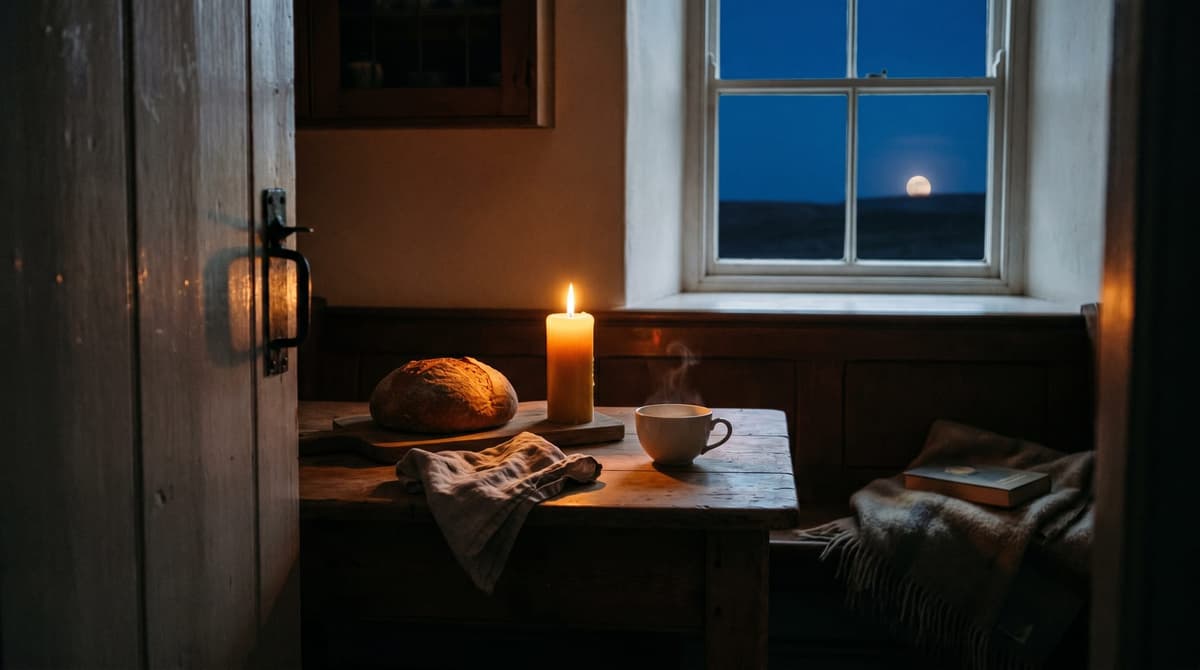
Pluto — symbolic still life

Love

Love and relationships

In relationships, a person with Pluto in Cancer tends to fold a partner into the family system rather quickly. It isn't good or bad, it simply works this way: closeness becomes possible only at the depth where someone turns into one of your own, like a sibling or a parent. I've watched this with clients who carry the placement — they describe a husband not as "he" but as "our dad", as though the partner stepped, from the very start, into a vacant seat in the family's private mythology.

Falling in love here rarely arrives through ease or first impressions. It tends to come through recognition. Some gesture, an inflection, the particular way a person holds a cup, and the body quietly decides: this one is mine, we've known each other a hundred years. After that, coming apart feels almost impossible, even when it's been obvious for ages that the relationship isn't working. The body holds the partner as part of its own home, and pulling them out feels like knocking down a wall.

The real risk lies in emotional pressure and merging. When a break is threatened, the oldest wound of loss switches on, and the reaction tends to be wildly out of proportion to the trigger. A partner going away for a week's work can be lived as though they were leaving for good, and what they get for it is a long, sometimes silent grievance — heavier precisely because it stays unspoken. Without some work on this mechanism, the relationship tends to harden into a family fortress that no one is allowed to leave on good terms.

A healthier way of carrying the placement shows up through one quiet sign: beside the right partner, there isn't a constant background hum of "it could all collapse any moment". If love always runs a little cold with the fear of losing the other, that often isn't love speaking — it tends to be ancestral memory of the ones already lost. The two can be told apart, and once they are, love can become a home to live in rather than a fort to defend. None of this is fixed in stone — it's a pattern worth noticing in yourself, not a script you're bound to follow.

Work and vocation

Where this person thrives

Professionally, Pluto in Cancer tends to come into its own where the work itself lets a person process large family and ancestral themes. Think family therapists, constellation facilitators, specialists in the parent–child bond, perinatal psychologists. Think historians, biographers and researchers who spend years gathering the stories of whole generations — restoring the names of war victims, or writing two hundred years of one family's chronicle. Each client, each chapter, tends to rework a small piece of the author's own lineage, and the work quietly turns into a long inner therapy.

Work with the very old and the very young tends to sit well too. Geriatric care, hospice teams, leading groups for the bereaved, working in children's homes. The capacity to hold another person's grief and keep an atmosphere of acceptance becomes a professional tool — especially where there's good supervision and the practised skill of handing other people's states back to them. Without that skill, a heavy burnout often arrives by around forty, because someone with this placement quite literally stacks the pain of everyone they've helped into their own body.

A strong second branch is working with the space of home as a space of meaning. Architects of family houses, designers of homes built to be lived in across generations, restorers of old flats, authors of books about home and belonging and the émigré's longing for it. Their projects aren't usually the most fashionable, but they hold a layer of memory that fashionable work tends to lack. Ten years on, it's their interiors people quietly want to recreate.

The danger zone is a career chosen out of duty to the family. When someone picks a profession not because it's theirs but because the family decreed it, or because they're meant to "pull us all out", Pluto in Cancer tends to burn them down within a decade, with little chance of recovery. So I'd put it this way: the vocation wants to be about reworking the family theme, not about standing in for several generations at once. The line between the two is fine, but it tends to be exactly the line that separates a deep, long career from a slow and silent burnout.
Five practices

Ways to work with this placement

Less a description, more a few things you could try this week to see whether the placement starts working for you rather than against you.

  1. 01

    Conversation script

    A line for talking to a parent

    When a parent comes at you through an old grievance or a wave of worry, answer steadily: 'I can hear this is hard for you right now. That's your feeling, and I'm not taking it on. Tell me what's actually going on with you.' Shifting the focus tends to loosen the merging without a row. Keep the tone warm — the aim is to hand the feeling back, not to push the person away.

  2. 02

    Ritual

    A separating gesture

    Take an object that came to you from a relative who has died, hold it in both hands and say out loud: 'thank you for being here; your life was yours, mine is mine'. If there's heavy grief attached to the object, don't throw it out — move it to a separate box so it isn't sitting in your everyday field. Repeat whenever the old weight starts to follow you around the house again.

  3. 03

    Journaling prompt

    A map of inherited scripts

    Once or twice a year, draw three generations on a single sheet, down the mother's line and the father's line. Beside each name write one main event and one main feeling. Then look at which of those feelings are alive in you right now, and ask which ones you'd be willing to hand back to their owner. Re-read it the following year and watch what has shifted.

  4. 04

    Body practice

    A check that returns you to yourself

    When you notice you've spent three days low for no clear reason, lie on the floor, rest your hands on your belly and breathe for ten minutes with one question: 'is this my mood, or did I pick it up on a family phone call?' The body tends to answer fairly quickly once you give it some quiet. Trust the first response rather than talking yourself out of it.

  5. 05

    Relational exercise

    An exercise for the people close to you

    Once a month, ask an adult relative not to tell you about their troubles for the length of one conversation. They talk about something good; you listen with no need to rescue or fix. That single hour gently resets the habit of being the family's container for pain. It can feel oddly difficult at first — that difficulty is the point.

The house Pluto sits in

Three typical houses for Pluto in Cancer

The sign tells you which energy the planet works with. The house tells you in which area of life that energy becomes visible.

4

4th house — roots, home, lineage

In the 4th house, Pluto in Cancer stops being merely generational and becomes a very personal storyline. The person tends to live inside a family myth almost literally: they sense who died within these walls before them, can't bring themselves to sell a grandmother's flat, spend years doing up a home where half the furniture is older than they are. Crises arrive through the death of elders, through the dividing of an inheritance, through a reappraisal of the bond with parents — and each one tends to transform at a depth other placements rarely reach.

8

8th house — crisis, inheritance, shared resources

In the 8th house this placement tends to work through family money, legacies and secrets. People often learn, in adulthood, a story that was kept from them for half a life: an adoption, a persecuted ancestor, a grandfather who wasn't who they thought, a father who wasn't the father. Such discoveries can rebuild a whole sense of identity. Financially, the person either carries the upkeep of an extended family or, the opposite, breaks hard out of inherited poverty through a clean cut.

10

10th house — career and public role

In the 10th house, Pluto in Cancer brings family and care into public life as a vocation. These tend to be specialists in ancestral memory — family therapists, constellation facilitators, biographers, authors of books on generational trauma. A career here often forms around a single large theme, such as restoring the names of war victims or working with the children of migrants, and that theme tends to reprocess the author's own family story into a public form.

Sphere radar

The placement across seven spheres

This profile shows which spheres the placement plays loudly in, and which it keeps quiet. High values aren't 'better' — they're amplitude, not a score.

Love0Career0Health0Money0Family0Shadow0Gift0

0 = quiet, 100 = the loudest this sphere plays for this placement

Oksana Miatova, co-founder of WowAstro

Oksana's advice

Three things for Pluto and Cancer starting out

If you or someone close to you has Pluto in Cancer, try not to fight the energy — it doesn't break, it only reroutes. Give it a job where this nature becomes a strength rather than a nuisance, and you get a steadier, warmer person instead of one worn out by an inner tug-of-war. Read it as a way to notice your own patterns, not a verdict on who you are.

Oksana Miatova, co-founder of WowAstro

Frequently asked questions

What does Pluto in Cancer mean in a birth chart?
It tends to make family and home the main arena of transformation. Inherited wounds seem to pass through the person as if through a very sensitive filter, and until later life many find it hard to say where the family's pain ends and their own begins. As a generational placement it speaks loudest when Pluto sits in an angular house, aspects the Sun or Moon, or touches the ruler of the Ascendant. Read it as a prompt for self-reflection, not a verdict.
What years was Pluto in Cancer?
Pluto was in Cancer roughly from 1914 to 1939, allowing for its retrograde loops. That generation lived through both world wars, upheaval, famine and mass migration. Most people with this placement are now well into their nineties, and many have died. The next ingress of Pluto into Cancer is expected somewhere around 2157 to 2178, so for almost everyone reading this it's an ancestral, not a personal, signature.
Which public figures have Pluto in Cancer?
Because it's a generational placement shared by everyone born between roughly 1914 and 1939, naming individual figures isn't very meaningful — a vast slice of the twentieth century's public life carried it. It tends to read most distinctly in charts where Pluto sits on an angle of the chart or in close aspect to the personal planets, rather than as a blanket trait of a famous name. That's why this reading leans on patterns rather than a celebrity list.
What does Pluto in Cancer mean for a woman?
A woman with this placement often becomes the keeper of the line: she remembers the dates, holds the branches of a family together, gathers everyone for the occasions. I'd say her central task tends to be telling care that flows from love apart from care that flows from inherited guilt. The first kind fills her up; the second keeps her cast as everyone's mother — including, sometimes, mother to her own parents.
What does Pluto in Cancer mean for a man?
For a man this placement often shows up as a deep, hidden attachment to the mother and to the idea of home. On the surface he may look tough and held at arm's length from the family, yet in a crisis the domestic space tends to be the one place he genuinely recovers. He often chooses a partner who echoes the maternal image, then spends years working out where his wife ends and an old pattern with his mother begins.
Pluto in Cancer and migration — is there a link?
The themes of leaving, of losing a homeland, of cutting away from home tend to sound especially deeply for this generation and for anyone with the placement strong by aspect. Many either went through a move themselves or were born into families where migration was the defining event of the era. The decision to emigrate often reads as a Plutonic one for them: all or nothing, with usually no road back.
How is Pluto in Cancer different from the Moon in Cancer?
The Moon in Cancer governs the everyday emotional weather — how a person habitually reacts and where they find comfort. Pluto in Cancer is about deep restructuring through family, about ancestral memory and crises that reshape one's relationship to home for decades. Someone with both placements tends to live inside the family field around the clock, and each crisis of the line transforms them personally rather than just unsettling the mood.
How can someone work with the shadow side of Pluto in Cancer?
The core practice here tends to be learning to hand other people's states back to their owners. Rather than silently taking a mother's, a sister's or a grandmother's pain into your own body, you say — inwardly or out loud — 'this is yours; I'm here, but it isn't mine.' The second piece of work is separating remembering the dead from holding on to them. To remember and still let go isn't betrayal; it tends to be a condition of having your own life.
What does Pluto in Cancer in the 4th house mean?
It tends to be the most personal version of the placement. The home becomes the site of large Plutonic work: deaths, inheritances, secrets and a reappraisal of bonds with elders all pass through it. Such a person often can't bring themselves to leave the flat where three generations grew up — or, the reverse, makes a sharp break from the parental home and then spends a lifetime rebuilding the link piece by piece.
Is the Pluto in Cancer reading a prediction?
No. It describes tendencies you might recognise, not events that are bound to happen. In this reading astrology is simply a vocabulary for noticing your own patterns — the choices, the boundaries and the healing stay entirely with you and the people you trust. Treat it as a prompt for reflection and a bit of fun, not a forecast of how your family story will turn out.

Related pages

Related placements for Pluto and Cancer

Neighbouring placements that already have a reading of their own.

Oksana Miatova
Oksana Miatova

Astrologer, co-founder of WowAstro

Oksana Miatova is a practising astrologer and co-founder of WowAstro. Natal charts, synastry and forecasts grounded in the Western classical tradition — explained through real-life examples and plain language.

More about the author →

For entertainment and self-reflection only. Not medical, legal, financial or psychological advice. Consult a qualified professional for important decisions.