Skip to content
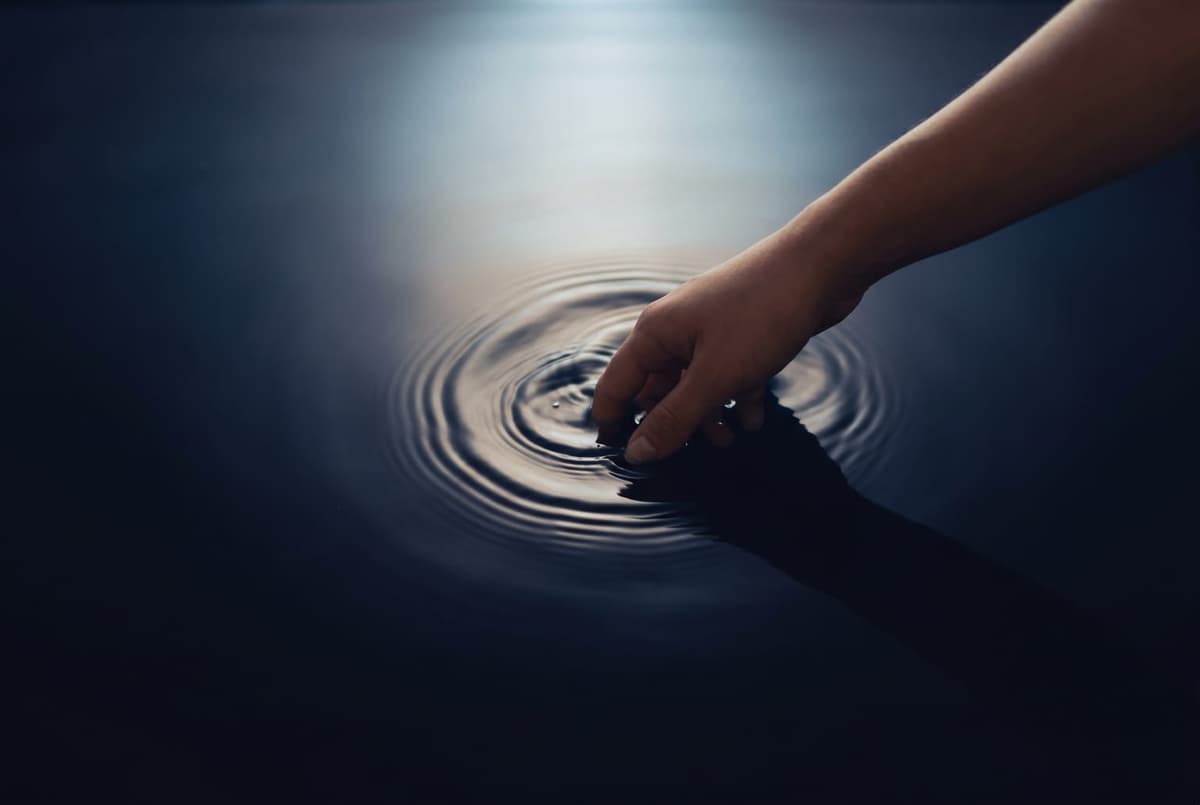
Neptune in Pisces — symbolic illustration

Natal astrology

Neptune in Pisces

A water, mutable sign ruled by Neptune. What this placement tends to look like in real life — read for self-reflection, not as a forecast.

WaterMutableRuler: Neptune19 February – 20 March

Essential dignity

Domicile

The planet at home

Neptune in Pisces

Neptune is at home in Pisces. The planet expresses its function naturally and strongly: its nature lines up with the nature of the sign.

Neptune in Pisces sits in its own home sign and plays at full volume. It marks a generation, roughly born 2011–2025, whose line between the inner and outer world tends to thin almost to nothing: deep intuition and easy compassion on one side, a raised pull towards dependency, merging and a quiet drift away from ordinary life on the other.

Oksana MiatovaWritten by Oksana Miatova·4 min read

For entertainment and self-reflection only. Not medical, legal, financial or psychological advice. Consult a qualified professional for important decisions.

What's inside

Six things you might recognise

  • Walks into a room and senses, without a word, who was arguing in it ten minutes ago
  • Cries at a song through their headphones in the street and doesn't clock the people passing
  • Falls asleep to a series running, because the silence without another voice feels too big
  • Gives the last of their energy to whoever is having a worse day than they are
  • Feels alcohol, caffeine and medication land harder than they seem to for other people
  • Has dreams that later turn out true in the small, specific details

What I notice about people carrying this placement, when it's brought into focus by a personal point, is that they live with thin skin and without the inner filter most people run by default. They pick up other people's moods like a radio and often can't tell where their own sadness ends and where they've simply walked past someone having a hard day. It's an enormous creative resource and, in the same breath, a lifelong task: learning to shut the door. Without that work the gift tends to drain off into fantasy and dependency, and the person can spend years living other people's lives instead of their own. None of this is a verdict — it's a pattern worth watching for in yourself, especially in a child or teenager of this age band.

Want the whole chart, not just this placement?

A full natal reading — every planet, house and aspect

Enter your date, time and place of birth and get a detailed reading of your whole chart, written in plain language — where you tend to default, where you burn fuel, and what's worth paying attention to.

Build your natal chartfrom £1 · for entertainment

Strengths

What this placement does well

  • A near-direct line to the creative source — images, music, lines and frames seem to arrive almost without effort, and the main job is simply to sit down and catch them
  • A capacity to settle and steady other people just by being in the room, with no words and no therapist's certificate required
  • A fine ear for art, music and nature, felt at a level close to a physical sensation
  • Compassion with nothing calculated behind it, so the people life has hit hardest tend to thaw out nearby

Shadows

Where it burns fuel

  • An unusually high pull towards every kind of dependency — alcohol, substances, screens, co-dependent relationships, endless spiritual courses standing in for real change
  • Dissolving into someone else's pain right up to their own collapse, after which they may need weeks to come back to themselves
  • A habit of slipping off into dreams, fantasy and virtual worlds exactly when ordinary life is asking for a firm decision
  • Weak guard against manipulators: takes people at their word, sees a wounded child in a predator, and excuses what really shouldn't be excused
Neptune — symbolic still life

Love

Love and relationships

In love, Neptune in Pisces — where it's strong enough in a personal chart to colour the romantic life — tends to look for something more than a partner. What it's really after is the feeling of complete merging, the state where loneliness ends and the line between "me" and "you" quietly disappears. I often see people with this placement fall fast and half-blind, seeing not the actual person in front of them but a long-held ideal image, and then spending years trying to finish the real partner off into the shape of that image.

They tend to love through the body, through music, through shared silence, through a readiness to give away what's theirs. It's often easier for them to hold someone than to put it into words. The partner beside them gets a rare experience: being accepted whole, without conditions — and that, more than any heat of passion, is what tends to hold the relationship together over time.

The soft spot is plain enough. It's genuinely hard for this placement to see a cold operator, or simply a self-interested person, for what they are. They'll excuse what other people wouldn't. In my experience it's exactly this position that produces the longest co-dependent cycles — the repeated returns to someone they're not well beside — and not out of foolishness, but out of a stubborn belief that love can pull a person out of the dark.

When the bond does form with a healthy partner, they tend to come into bloom and, in turn, become a quiet steadying presence through any crisis. The note I keep coming back to is this one: it helps to learn the difference between love and rescue, and between compassion and merging. Otherwise the romance slides, fairly quickly, into unpaid round-the-clock work as someone's unqualified therapist. None of this is fixed — it's a tendency to notice in yourself, not a script you're bound to follow.

Work and vocation

Where this person thrives

This placement tends to come alive wherever there's art, care for living things, or work with the subtler states of mind. I'd call it the least practical and, at the same time, the most gifted of Neptune's positions: competing and counting KPIs leaves it cold, while making something or healing someone is what it reaches for. The roles that tend to fit are the musician, the painter, the poet, the director, the actor, the psychotherapist, the doctor, the midwife, the vet, the nurse, the hospice worker, the carer, the teacher of body-based practices.

Careers here rarely build along a tidy plan. They tend to be steered by chance meetings, quiet recommendations, sometimes by a dream or a hunch. Work often finds the person through someone they once helped with nothing expected in return. Life pays it back late, but it does tend to pay it back.

Growth tends to come through giving the sensitivity a creative or a spiritual form. It matters, for this placement, to bring the inner depth out into something you can hold: a piece of text, a frame, a phrase of music, a moment of real contact in the therapy room, a drawing, a dance. Without that form the Neptune tends to drain off into fantasy, into series and chat threads, and the person quietly aches that there's so much talent and so little to show for it.

The main risk in any of this is burnout and dependency. The work can become a way of living someone else's life while your own slides to the back. What tends to help here is the unglamorous infrastructure: regular supervision, a cap on consulting hours, personal therapy, exercise, and one non-negotiable slot in the week that nobody gets into — not even the most beloved client. Treat all of the above as a pattern to work with for your own wellbeing and enjoyment, rather than a prediction of where any single career will land.
Five practices

Ways to work with this placement

Less a description, more a few things you could try this week to see whether the placement starts working for you rather than against you.

  1. 01

    Conversation script

    A line for when they ask you to understand, again

    Before you answer, say it under your breath: 'This is their pain, not mine. I can stay close, but I'm not here to rescue.' Only then decide what you're actually willing to offer. With this placement the word 'yes' tends to leap out of compassion before the head has switched on, and the bill — your own plans, your own sleep — often lands a week later.

  2. 02

    Ritual

    A daily anchor in the body

    Ten minutes each morning of the same plain action: a shower with a cold finish, a cup of tea by the window, a walk along one fixed route. No staging, no apps. This Neptune badly needs repeating points in the body and in the day, or the hours blur into fog and the sense of actually living your own life quietly slips away.

  3. 03

    Journaling prompt

    A question for the page

    What did I do today to escape, rather than to live? How many hours went on series, scrolling the feed, talking over other people's dramas? And what did I not do, out of the things that have been waiting for ages? Write by hand for about ten minutes, no editing, without re-reading as you go.

  4. 04

    Body practice

    Daily contact with water

    Some contact with water every day: a shower, a salt bath, a swim, or at the very least your feet in warm water. Water is this Neptune's home element and, at the same time, a way to set down whatever has stuck to you from other people through the day. Heads tend to clear noticeably afterwards. (This is for everyday wellbeing, not a treatment for anything.)

  5. 05

    Relational exercise

    An exercise for the people close to you

    Agree a short signal with the person nearest to you — one word or one gesture — for the moment you start speaking for them or living inside their feelings. The moment you hear it, you stop and come back to yourself. It's a quick way to see how often the line between you blurs, and to practise rebuilding it without anyone taking offence.

The house Neptune sits in

Three typical houses for Neptune in Pisces

The sign tells you which energy the planet works with. The house tells you in which area of life that energy becomes visible.

12

12th house — the inner world, the hidden, secrets

Neptune in Pisces in the 12th house sounds about as full as it gets: both the sign and the house are about dissolving, mystery and withdrawal. This person tends to be drawn to closed spaces, to behind-the-scenes work, to the territory of sleep, meditation, therapy, retreats and hospitals. Luck, when it comes, arrives quietly and almost invisibly. The risk runs the other way — isolation, low moods, early dependency, especially where childhood held little live contact and a great deal of screen. Regular therapy and one real, in-person community tend to be what steadies this position.

4

4th house — home, roots, family

In the 4th house this placement often describes a family where the lines between the generations are blurred, where there may be a thread of addiction, a heavy maternal story or hidden secrets in the family history. As a child the person tends to soak up everything their parents never lived out and to carry it forward without quite meaning to. The grown-up work is to separate what's theirs from what belongs to the family line, to stop finishing other people's plots, and to build their own anchoring home — one with quiet in it and a predictable rhythm.

6

6th house — health, work, daily rhythm

In the 6th house Neptune in Pisces brings a sensitivity to routine, to medicines, to food and to working conditions. The body tends to react to stress faster and more finely than other people's, and substances like caffeine often land harder. Many with this placement move towards the caring professions — medicine, animal care, psychotherapy. The shadow side is burnout, psychosomatic complaints and a habit of self-diagnosing online. Gentle forms of exercise, steady sleep and a practitioner they genuinely trust tend to matter more here than usual.

Sphere radar

The placement across seven spheres

This profile shows which spheres the placement plays loudly in, and which it keeps quiet. High values aren't 'better' — they're amplitude, not a score.

Love0Career0Health0Money0Family0Shadow0Gift0

0 = quiet, 100 = the loudest this sphere plays for this placement

Oksana Miatova, co-founder of WowAstro

Oksana's advice

Three things for Neptune and Pisces starting out

If you or someone close to you has Neptune in Pisces, try not to fight the energy — it doesn't break, it only reroutes. Give it a job where this nature becomes a strength rather than a nuisance, and you get a steadier, warmer person instead of one worn out by an inner tug-of-war. Read it as a way to notice your own patterns, not a verdict on who you are.

Oksana Miatova, co-founder of WowAstro

Frequently asked questions

What does Neptune in Pisces mean in a birth chart?
Neptune in Pisces sits in its own home sign and works at full volume. It marks a generation that tends to have thin skin, strong intuition and a natural pull towards art and the spiritual. At the same time it's Neptune's most exposed position: a raised pull towards dependency, co-dependency and escape into fantasy. The central task for someone with this placement, especially where it's emphasised personally, is to learn to stay open without dissolving, and to feel compassion without losing themselves. It's a reading for self-reflection, not a verdict.
Which generation was born with Neptune in Pisces?
Neptune moved into Pisces in early 2011 and leaves the sign in early 2026, so this is broadly children born between about 2011 and 2025 — today's teenagers and primary-schoolers. Their childhood has fallen across an era where the line between the real and the virtual has blurred, where therapy and the esoteric have boomed and institutional religion has wobbled at the same time. This generation looks likely to rethink faith, art and compassion in its own way as it grows up.
Neptune in Pisces for a woman — what stands out?
On its own this is a generational position, so it doesn't hand out separate 'male' or 'female' traits. It turns personal when it sits near the Ascendant, in an angular house, or in a strong aspect to the Sun, Moon, Venus or Mars. Where that's the case, it can read for a woman as strong intuition, a pull towards art and towards a mothering or caring role, a tendency to idealise partners and to take on other people's pain as her own. Without work on boundaries, the risk of co-dependent relationships tends to run high. Treat it as a prompt for reflection, not a forecast.
Neptune in Pisces for a man — how does it show up?
For a man, where the placement is personal rather than only generational, it tends to read as softness, sensitivity and a pull towards creativity and the inner life. Often it's the musician, the painter, the psychologist, the doctor, the director, the developer with an eye for aesthetics. The inner task is not to hide that sensitivity behind alcohol, a cynical mask or the rescuer role, but to find it a living form of expression.
How is Neptune in Pisces different from the Sun in Pisces?
The Sun in Pisces is a personal placement — it describes the core of one person and stays in a sign for about a month. Neptune in Pisces is generational: it sits in a sign for around fourteen years and describes the cultural code of a whole age band. The Sun in Pisces speaks to your character; Neptune in Pisces speaks to the background dream and the background illusions of your generation. For many people the two overlap, but they're different layers of the chart.
What does Neptune in Pisces in the 12th house mean?
It's a doubling of the theme — Neptune's sign and Neptune's natural house land together. The person tends to live closer to the unconscious than most, and to be drawn towards closed spaces: retreats, hospitals, the therapy room, quiet. Luck tends to arrive softly, through people who go unnoticed. The risk is isolation, low moods and early dependency. Here, in particular, regular therapy and one real in-person community tend to make the difference, because the pull is otherwise towards solitude and the screen.
Are there public figures with Neptune in Pisces?
The current Neptune-in-Pisces cycle belongs to children born roughly 2011–2025, who don't yet have a public adult career — so I won't list 'celebrities' for it, because that would mean inventing examples. The previous pass of Neptune through Pisces ran from about 1847 to 1862, and that cohort included figures such as Vincent van Gogh, Paul Gauguin and Arthur Rimbaud — a generation that did a great deal to shape modern art and literature.
What should someone with Neptune in Pisces be wary of?
The main thing to keep an eye on is any form of dependency or escape — alcohol, substances, screens, co-dependent relationships, an endless run of esoteric courses standing in for real work. The second is dissolving into other people's pain to the point of burnout. The third is naivety around money and paperwork: taking people at their word and not reading the contract. The fourth is a tendency to trust charismatic teachers without checking the facts. This is a prompt for awareness, not a prediction.
How can someone build on the strong side of Neptune in Pisces?
Through a regular creative or caring practice that has a living form: music, drawing, ceramics, dance, therapy, medicine, looking after animals or plants. Through an anchor in the body — exercise, contact with water, walks. Through one community made of real people, not only chat threads. And through boundaries — learning to say 'no' before the body has worn itself out on yet another round of rescuing.
Is Neptune in Pisces a prediction of how someone's life will go?
No. It describes tendencies a person might recognise, more so where the placement is emphasised personally, not events that are going to happen. In this reading astrology is a vocabulary for noticing your own patterns — the choices, the work and the boundaries stay entirely yours. Treat it as a prompt for self-reflection and a bit of fun, not a forecast of how things will turn out.

Related pages

Related placements for Neptune and Pisces

Neighbouring placements that already have a reading of their own.

Oksana Miatova
Oksana Miatova

Astrologer, co-founder of WowAstro

Oksana Miatova is a practising astrologer and co-founder of WowAstro. Natal charts, synastry and forecasts grounded in the Western classical tradition — explained through real-life examples and plain language.

More about the author →

For entertainment and self-reflection only. Not medical, legal, financial or psychological advice. Consult a qualified professional for important decisions.