Skip to content
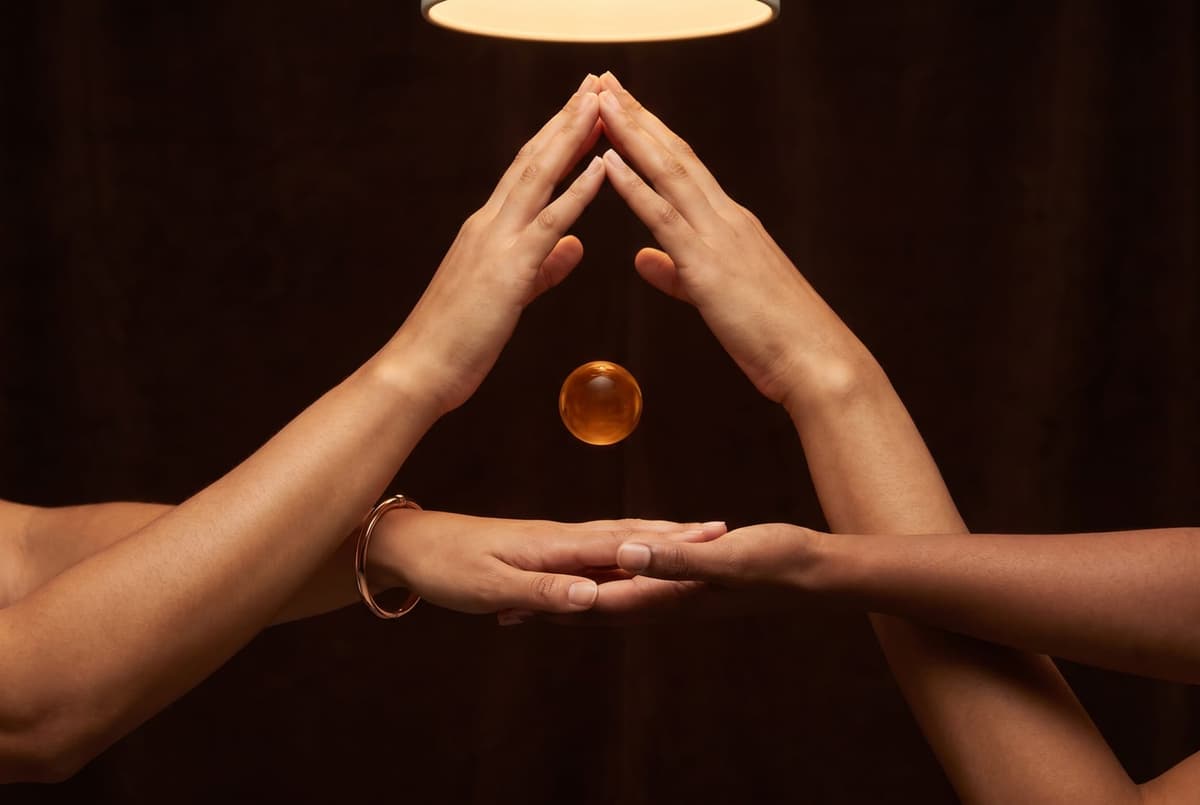
Trine Uranus–Neptune — symbolic illustration

Trine · 120°

Uranus trine Neptune

A harmonious aspect: the two planets support each other and tend to pull in the same direction. Read it as a resource to notice, not a guarantee.

120°Orb up to 6°HarmoniousNatal · synastry · transit
120°Uranus trine NeptuneOrb up to 6° · major aspect
Oksana MiatovaWritten by Oksana Miatova·10 min read

For entertainment and self-reflection only. Not medical, legal, financial or psychological advice. Consult a qualified professional for important decisions.

The short answer

Uranus trine Neptune is a harmonious generational aspect between freedom and fine perception. In the natal chart it gives a knack for sensing what's coming before anyone has named it, and an easy way of living outside old forms; in synastry it creates recognition at the level of worldview; in transit it opens a soft, easily-missed window for change. It is a talent that only works once you realise you have it.

What a trine is

The geometry behind the reading

A trine is a separation of 120 degrees between two planets — the angle of an equilateral triangle. In the hierarchy of aspects it sits behind the square and the opposition: those put on pressure, the trine offers flow. The energies of the two planets are joined naturally, without resistance, and they exchange almost without the mind being involved. The trine has a flip side, though, which is that whatever comes easily is rarely noticed. In practice I see the strongest harmonious aspects lying dormant all the time — a person lives as if the resource simply weren't there. A trine doesn't shout, it whispers. It is switched on not by a crisis but by a decision, the moment you consciously start leaning on the pairing and training it. Without that it becomes a comfort zone you'd rather not leave, and in the end it brings neither growth nor any recognisable result. With Uranus and Neptune the flow is even quieter than usual, because both planets are slow, impersonal and generational by nature — the gift belongs to a whole cohort, and the work of making it personal falls to you alone.

Three ways to read it

The same aspect, three different stories

One aspect reads differently depending on where you find it: inside a single birth chart, between two people, or moving across the sky right now. Read each as a way to notice patterns, not as a forecast.

Uranus trine Neptune in the natal chart

If this trine sits in your natal chart, the chances are you spent a long time not realising there was anything unusual about you. That's how generational aspects work: you assume everyone around you is much the same, that anyone can feel change approaching as a background hum, that anyone can sense the invisible structure under an ordinary situation. And then one day — usually somewhere around thirty, or later — it lands that no, not anyone. This is your own instrument, not a faculty the whole era shares.

I read a lot of charts with this pairing, and the same story keeps recurring. At twenty, plenty of interests and not one of them chosen. At twenty-five, an attempt at a single direction, and it feels like the answer. At thirty, a letting-go of that direction, because it has grown too small from the inside. And only afterwards, sometimes much later, a path of your own appears — one that wasn't in the textbooks and wasn't in anyone's advice. Uranus governs the sudden knowing that arrives without logic. Neptune governs a sensitivity to layers of reality that words don't describe. Joined by a trine, they give a person the ability to live by a map nobody else holds.

The difficulty here isn't in how the aspect works but in how invisible it is. A trine doesn't press. It creates no pain to force a change. You could live a whole life with this pairing and never once activate it, and to the outside world look like an ordinary person who just happens to have odd intuitions now and then. The talent stays in the background, and often only those closest to you notice that you see things differently.

Where to point the pairing is a separate conversation. The aspect alone gives no answer about which field it will open up in. That answer comes from the houses Uranus and Neptune occupy, and from the aspects these planets make to the personal ones — to the Sun, the Moon, Mercury, Venus and Mars. With Uranus in the third house, you probably write or speak in a way that opens something new to people. In the tenth, you bring a format into your profession that wasn't there before. In the seventh, you meet people who themselves become turning points in your life. Neptune nearby adds depth: whatever you do carries a flavour of meaning rather than mere novelty.

There is a shadow side, and it's worth naming honestly. Uranus trine Neptune slips easily into escapism. Books, films, philosophical conversations, an endless run of self-development courses — all of it starts to stand in for living action. You carry an idea inside you for years, tell it to friends, talk it over at the kitchen table, and each time you feel you're on the very edge of bringing it to life. But the bringing-to-life never quite happens. Uranus promises a breakthrough, Neptune promises meaning, and between them they manufacture a sense of being chosen without any obligation attached. It is the commonest trap for people with this aspect.

The way out is simple in structure and hard in practice. You have to choose one field — one, not three — and start taking concrete steps in it regularly. Not inspired bursts twice a year, but a steady weekly practice. The trine will answer: the right information will start arriving, the right people will appear, doors will open. But the first move is always made by the person. That is the most honest law of harmonious outer-planet aspects.

If you'd like to see how exactly this trine works in your own chart — where Uranus and Neptune are pointed, which personal planets they touch, in which houses they'll open up their resource — a full natal reading shows the whole picture rather than the generational outline alone.

When it flows

  • Picking up new ideas and shifts in the mood of the times before the people around you, effortlessly, almost as background noise
  • A natural marriage of intuition and unconventional thinking — a gentle, unforced originality
  • Freedom from dogma without rebellion: you quietly live by your own inner rules
  • An ear for technology, art and spiritual practice as equally valid languages of reality

When it grates

  • The talent stays in the background — you use it without noticing and never build anything serious on it
  • Blurred aims: many directions interest you, none is chosen as the main one
  • A drift into escapism — books, films and ideas standing in for actual action
  • Other people may miss your depth, because it is too quiet, with no bright delivery

The shadow side, and what to do with it

The shadow side of this trine is the illusion that everything will arrive by itself. Uranus promises a breakthrough, Neptune whispers of a higher meaning, and together they conjure a sense of being chosen without any obligation attached. You can carry valuable intuitions inside you for years and never once bring a single one into the world. The way through is to pick one field — art, psychology, a new kind of technology, helping people — and start grounding in it whatever comes to you. The trine gives back exactly as much as you are willing to take in your hands.

Trine — symbolic still life

How close is close

The orb decides the volume

A trine is rarely exact. The smaller the gap between the two planets — the orb — the louder the aspect plays. Here is roughly how the three bands read.

Tight

0–2°

Reads as a defining feature

At 0–2° the trine is exact and the generational aspect works at full strength. Your sensitivity to collective shifts is almost physical — you register a change in the mood of the era before it shows up in the news. In a personal chart this tightness gives the ability to carry new meanings into your own circle, but only if you use it consciously. Otherwise the talent dissolves into the general background and is mistaken for ordinary intuition shared by everyone.

Medium

2–5°

A steady background pattern

At 2–5° the trine is significant and reads clearly in the chart. The link between freedom and fine perception works in everyday conditions: in creative projects, at moments of choosing a new path, in the company of people of your own generation. The aspect switches on when a Uranian or Neptunian theme is activated by transit or by a turn in your life. In the background it is a soft resource you can lean on whenever you need to see a situation more widely.

Loose

5–8°

A faint colouring, felt in crises

At 5–8° the trine works in the background, at the edge of the orb for a slow, impersonal pair. The influence is there but shows up subtly: now and then you make an unconventional choice intuitively and afterwards can't quite explain why. Most often it's felt as a steady inner calm towards change. The aspect doesn't run your life, but it softens transitions and leaves you more receptive to collective currents.

Trine with a partner — what does it mean for the two of you?

A full synastry reading — every aspect between your two charts

Uranus trine Neptune inside one chart is an inner mechanism. Between two charts it becomes the dynamic of a relationship. Enter both birth details and get a synastry reading — where the conjunctions sit, where the squares pull, where the oppositions draw you together — all calculated with the Swiss Ephemeris. Read it as a way to notice patterns, not a forecast.

Check your compatibilityfrom £1 · for entertainment

Compare with a neighbouring aspect

Same planets, a different distance

Uranus square Neptune tells a different story. If you're reading this to make sense of a specific chart, it's worth glancing at the neighbouring aspect too.

Uranus square Neptune
  • In a square Uranus and Neptune collide: freedom demands clarity, intuition demands proof, and the contradiction presses until it finds an outlet
  • The trine gives the pairing without pain, but without pain there is often no movement; the square forces you to act
  • A generation with the square more often breaks the form of its era; a generation with the trine more often slips quietly into the new one
  • Someone with the square feels they must do something with the gift; someone with the trine feels they may, but needn't
  • In synastry the square draws partners together through friction; the trine binds them through a shared, undemanding recognition

Lived examples

A few charts where you can see it

Public figures with a verified Rodden birth-data rating (AA/A/B). No invented data.

Frequently asked questions

What does Uranus trine Neptune mean in the natal chart?
It is a generational aspect describing a natural link between freedom and fine perception. The person picks up new ideas before society has put them into words and lives easily outside old forms. But the talent sits in the background — it only works if you know it's there and lean on it on purpose. Left alone, the trine stays a pleasant comfort zone that produces no recognisable result. Read it as a pattern to notice in yourself, not a verdict on your life.
Is Uranus trine Neptune a generational aspect?
Yes. Uranus and Neptune move slowly, so their trine forms over several years and takes in a whole generation. In 1939–1943, for instance, Uranus was in Taurus and Neptune in Virgo — an earth-sign trine. What makes it personal in your own chart is where the two planets fall by house and which aspects they make to the personal planets — the Sun, Moon, Mercury, Venus and Mars.
Is Uranus trine Neptune a strong bond in synastry?
Strong in depth, mild in intensity. The partners understand each other at the level of values and outlook without explanations. But the link itself doesn't push anyone towards action — you can spend years side by side without taking steps into a shared life. It works best between people with an age gap of nought to three years, for whom the trine is also generational. As ever, this is a way to understand a relationship's patterns, not a prediction about it.
What orb should I use for Uranus trine Neptune?
The classic orb for a trine is about six degrees. For the social and outer planets you can widen it to roughly eight, because these planets move slowly and their aspects stay in force for a long time. The tighter the orb, the more strongly the aspect works in a personal chart and the more sensitive the person is to collective currents.
When is the next Uranus trine Neptune in the sky?
Uranus and Neptune were conjunct in 1989–1993 in Capricorn. Their next exact trine after that conjunction forms roughly 55–60 years later, somewhere around the mid-2040s. Trines and oppositions of the outer planets are rare events, and a single generation often lives through only one such configuration in a lifetime.
How does the trine differ from the square between Uranus and Neptune?
The square applies pressure: intuition and freedom demand a response, and the aspect is hard to ignore. The trine gives the same resource without pressure — you can use it or leave it. A generation with the square more often becomes visible reformers; a generation with the trine more often becomes the quiet carriers of a new era. Both paths matter, but they call for different strategies.
Which public figures have Uranus trine Neptune?
The 1939–1943 generation carried it: John Lennon (1940) and Bob Dylan (1941) are well-documented examples, with several of their contemporaries among the voices of the 1960s cultural shift. That is the textbook expression of the generational trine of Uranus in Taurus to Neptune in Virgo. In a personal chart, though, the aspect always works individually, through the houses and the personal planets — and any figure is worth checking against a reliable birth record before you rely on the example.
A transiting Uranus trine to Neptune — what should I do?
Listen to what arrives as an idea or an impulse, and take one concrete step in that direction. The period runs for one to two years, counting the retrograde loops, and its danger is not a crisis but the chance that the moment passes. Write down what you want to do and check back in six months — it's the best way to tell genuine intuition from an agreeable fantasy. Treat any of this as a prompt for reflection, not as a forecast of what will happen.

Related pages

The other aspects between Uranus and Neptune

The same two planets at a different angle — each reads differently.

Oksana Miatova
Oksana Miatova

Astrologer, co-founder of WowAstro

Oksana Miatova is a practising astrologer and co-founder of WowAstro. Natal charts, synastry and forecasts grounded in the Western classical tradition — explained through real-life examples and plain language.

More about the author →

For entertainment and self-reflection only. Not medical, legal, financial or psychological advice. Consult a qualified professional for important decisions.