Skip to content
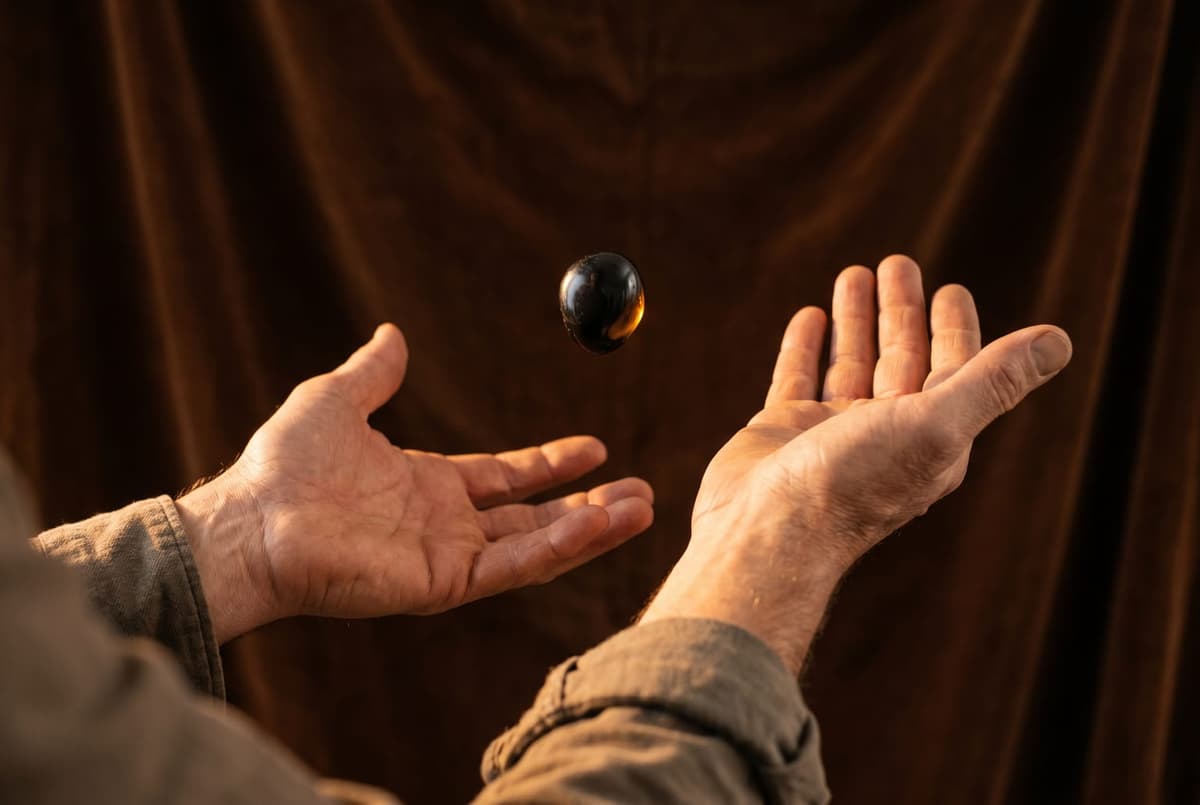
Sextile Uranus–Neptune — symbolic illustration

Sextile · 60°

Uranus sextile Neptune

A harmonious aspect: the two planets support each other and tend to pull in the same direction. Read it as a resource to notice, not a guarantee.

60°Orb up to 4°HarmoniousNatal · synastry · transit
60°Uranus sextile NeptuneOrb up to 4° · major aspect
Oksana MiatovaWritten by Oksana Miatova·11 min read

For entertainment and self-reflection only. Not medical, legal, financial or psychological advice. Consult a qualified professional for important decisions.

The short answer

Uranus sextile Neptune is a gentle generational aspect that links inventiveness with intuition. The energy is soft and runs in the background, so most people never notice it; it only starts to work when you deliberately bring fresh ideas together with your own quiet sense of where things are heading.

What a sextile is

The geometry behind the reading

A sextile is a separation of sixty degrees, the fourth-strongest of the major aspects and the mildest of the ones worth reading. The orb I allow is small, around four degrees, because the energy is faint and easy to miss. With the two outer planets, Uranus and Neptune, the sextile takes on a special character: both move so slowly that the aspect holds for years at a stretch and describes a whole generation rather than one person. In the hierarchy of aspects the sextile sits below the conjunction, the opposition and the square, and that is precisely why it asks to be switched on consciously — left alone, it simply slides past. Think of it as an aspect of quiet opportunity: the resource sits there like an open door, but you have to choose to walk through it.

Three ways to read it

The same aspect, three different stories

One aspect reads differently depending on where you find it: inside a single birth chart, between two people, or moving across the sky right now. Read each as a way to notice patterns, not as a forecast.

Uranus sextile Neptune in the natal chart

If this aspect sits in your natal chart, the odds are you never knew it was there. Uranus sextile Neptune doesn't press on you, doesn't ache, doesn't stand at the front of the chart demanding to be read. It lies somewhere deeper down, like a quiet stream, and a great many people live with it for decades without ever suspecting that something has been wired into them — a faculty for seeing and hearing a touch more finely than most of the people around them.

At root it's a generational resource. Uranus and Neptune move so slowly that the sextile between them stays in place across a whole cohort, sometimes for years on end. So the first honest thing to say about it is this: millions of your contemporaries carry the very same aspect. It only becomes something distinctly yours when it catches on a personal planet, a luminary or one of the chart's angles. If, say, your Uranus sits conjunct your Sun and your Neptune conjunct your Moon, that generational sextile suddenly turns into a personal line running through your life.

What does it actually give you? Above all, a feel for cultural shifts before they have gone mass-market. You needn't be a futurist or a seer, but if you look back, you'll often notice that certain subjects landed with you earlier than they did with most of your circle. You got interested in psychology, and a few years on everyone was talking about it. You started listening to a particular kind of music, and then it became the mainstream. That's the fine work of Uranus and Neptune together: one planet brings in the new, the other senses which way the wind is blowing.

The second face of the aspect is inward. You probably don't keep a hard wall between rational and intuitive perception. You can listen to a sensation without drifting off into fantasy. You can build a chain of logic without hardening into a dry pragmatist. That ability to live on the seam between the two is genuinely valuable, especially in work that asks you to think in systems and feel for people at the same time. Psychology, education, the media, marketing, design, research — anywhere that needs both a head and an instinct, this sextile quietly lends a hand in the background.

And here is the shadow: its very invisibility. It doesn't kick the way a square does, doesn't squeeze the way an opposition does. If you grew up somewhere that treated intuition as silliness and innovation as a fad, the resource may simply never have switched on. You lived a normal, sensible life, and only now and then there came a vague feeling that somewhere along the way there had been a door you didn't open. That isn't a fault and it isn't a punishment. It's the nature of the soft aspects — they hand you a possibility, not a task. Without a step from you, a possibility is all they remain.

So what do you do with it? The simplest move is to start noticing which subjects pull at you for no obvious reason — not the fashionable ones, not the financially sensible ones, just the ones that draw you in. That's the zone where your sextile is working. The next step is to put yourself somewhere those subjects get talked about, somewhere there are people who think the same way. And the third is to practise trusting first impressions. When something clicks inside as this is for me or this isn't, it usually clicks for a reason. The Uranus–Neptune contact is precisely about that faint inner signal.

I'd add one more suggestion. Keep a small notebook of hunches — not as an esoteric ritual but as a tool for watching yourself. Jot down the moments: for some reason I felt that person wouldn't last in the project; I had a sense this subject would take off within a year. Come back to your notes six months later and compare. It's the best way I know to gauge how switched-on your Uranus–Neptune sextile really is, and which corner of your life it reads most accurately.

To see exactly how this aspect is built into your own chart, and where it joins up with your other configurations, you'd want a full reading of the whole natal picture — and, as ever, hold all of this as a lens for self-reflection rather than a forecast of what's coming.

When it flows

  • A knack for catching a trend before it goes mainstream — whether that's a technology, an idea or a cultural shift
  • A pull towards subjects where science meets intuition: psychology, neuroscience, lucid dreaming, the study of consciousness
  • An easy blend of practical thinking with openness to the unexplained, neither credulous nor dismissive
  • Under real pressure an unexpected insight tends to surface, pointing to a way out nobody else had seen

When it grates

  • The aspect runs at the level of a generation, so in a personal chart it often feels like 'nothing in particular', even though the resource is genuinely there
  • Without other activations to Uranus or Neptune a person may never reach their real theme and simply live out a standard script
  • Intuitive nudges arrive but get waved away, because there's no outside confirmation to lean on
  • If the chart carries a heavy Saturn or a strongly earthy emphasis, the sextile can vanish entirely into practicality

The shadow side, and what to do with it

The main risk with Uranus sextile Neptune is how easily it goes unnoticed. It doesn't press, it doesn't hurt, it doesn't demand anything of you. Plenty of people carry this sextile their whole lives and never realise they had a capacity to read the road a step ahead and to hear what others let pass. To work with it, start paying attention to the inner signals that keep repeating — especially the ones that arrive just before a wider shift in the world around you. I'd suggest keeping a short notebook of your hunches and checking back on it six months later. Bit by bit you learn to trust your own perception and to spot the area where, for you, this sextile actually pulls its weight.

Sextile — symbolic still life

How close is close

The orb decides the volume

A sextile is rarely exact. The smaller the gap between the two planets — the orb — the louder the aspect plays. Here is roughly how the three bands read.

Tight

0–2°

Reads as a defining feature

At 0–2° the sextile works at its brightest for the generation. A whole cohort is born with a heightened ability to join intuition and innovation. In the natal chart these are the thought-leaders, the founders of new directions, the artists and psychologists. In synastry, two people from such a cohort feel an almost physical kinship of outlook. In transit, periods this tight tend to be marked by major cultural shifts and scientific breakthroughs.

Medium

2–5°

A steady background pattern

At 2–5° the sextile is a working generational aspect. The natal meaning holds, but it only shows in people who consciously engage with the themes of Uranus or Neptune. In synastry, partners realise they share a language for the big subjects, though it colours the relationship rather than defining it. In transit the effect is gentle, noticeable only if you're paying attention to your own shifts.

Loose

5–8°

A faint colouring, felt in crises

At 5–8° the sextile is on the edge of mattering at all. In the natal chart it's a background bonus that only switches on with a strong personal investment in growth and the search for meaning. In synastry and transit an orb this wide is barely counted — but if there are parallel activations to Uranus or Neptune through personal planets, the effect picks up again.

Sextile with a partner — what does it mean for the two of you?

A full synastry reading — every aspect between your two charts

Uranus sextile Neptune inside one chart is an inner mechanism. Between two charts it becomes the dynamic of a relationship. Enter both birth details and get a synastry reading — where the conjunctions sit, where the squares pull, where the oppositions draw you together — all calculated with the Swiss Ephemeris. Read it as a way to notice patterns, not a forecast.

Check your compatibilityfrom £1 · for entertainment

Compare with a neighbouring aspect

Same planets, a different distance

Uranus square Neptune tells a different story. If you're reading this to make sense of a specific chart, it's worth glancing at the neighbouring aspect too.

Uranus square Neptune
  • The square between Uranus and Neptune feels like the world coming apart — old ideals dying before the new ones have formed. The sextile, by contrast, opens the door quietly, with nothing broken
  • The square is lived as a generational crisis of faith, illusions and ideologies; the sextile as a gradual, painless upgrade of one's outlook
  • The square is hard to sleep through — it presses through events and the mood of the era. The sextile you can live right past, and only later be surprised that years went by
  • In the square, Uranus–Neptune energy is spent tearing illusions down; in the sextile, on renewing them gently
  • A transiting square shifts a society's paradigms through shock; a transiting sextile shifts them through a quiet cultural drift

Lived examples

A few charts where you can see it

Public figures with a verified Rodden birth-data rating (AA/A/B). No invented data.

Frequently asked questions

What does Uranus sextile Neptune mean in the natal chart?
It's a gentle, generational aspect that gives a capacity to join inventive thinking with intuition. In a personal chart it shows up as an interest in subjects where science meets the inner life, and as an ease in catching trends before they go mainstream. The effect is faint and runs in the background, and it only really works when you switch it on consciously. Read it as a flavour to notice in yourself, not a verdict on who you are.
Is Uranus sextile Neptune a good aspect?
On the whole, yes — it's mild and supportive. But it doesn't hand you ready-made gifts, and it's easy to miss entirely. It works well for people who deliberately stay curious about the new and who listen to their own intuition. For everyone else it tends to drift past, a background opportunity nobody happened to use. As with everything here, it's a way to understand your own patterns rather than a promise about your life.
What orb should I use for Uranus sextile Neptune?
The classic orb for a sextile is around four degrees. For outer planets like Uranus and Neptune a tighter orb of two to three degrees is usually preferred, because these planets move so slowly that the aspect between them holds for years. Beyond about five degrees the influence is, in practice, no longer counted. For self-reflection, that quick orb check is all you need.
Is this a generational aspect or a personal one?
First and foremost it's generational. Uranus and Neptune move so slowly that the sextile between them persists across whole cohorts of people born in the same stretch of years. It becomes personal only when both planets are caught up in the individual configuration of a chart — tied to the angles, the lights or the personal planets. That's the difference between sharing a backdrop with millions and carrying a genuine personal thread.
Which generation had Uranus sextile Neptune?
One of the most pronounced modern windows was the mid-1950s, when Uranus was in Cancer and Neptune in Libra. That cohort produced a striking number of people who reshaped technology, media and culture at the same time. There are other historical windows too, but the mid-1950s is usually treated as the clearest recent example. You can check anyone's chart against AstroDatabank to see whether the orb holds.
How do I make use of Uranus sextile Neptune?
The key thing is not to wait for the energy to show up by itself. Stay deliberately curious about new subjects, especially the ones that join practice with meaning — psychology, biotech, the arts, the ecology of the mind. It helps to keep a notebook of your intuitive hunches and to check back on it now and then. That's how the aspect goes from a background hum to a working tool you can actually rely on.
Does Uranus sextile Neptune work in synastry?
Only weakly. It's a shared generational backdrop between two people from the same cohort, not a personal dynamic of the couple. It gives a common cultural code and a similar view of the big questions, but it doesn't forge a strong link between the charts. For a serious read on a relationship, the personal aspects — Venus, Mars, the lights and the Moon between the charts — matter far more. Treat the sextile as a pleasant footnote, not the headline.
When is the next transiting Uranus sextile Neptune?
Transiting sextiles between Uranus and Neptune come round periodically because the two planets travel at different speeds. After their conjunction in 1993 they have been gradually separating, and the sextile forms only after several decades. The exact windows are best read from the ephemeris for the years in question, or from a personal year-ahead overview that places them against your own chart. The dates are particular to each chart, so general guidance only goes so far.
What's the difference between the sextile and the trine for Uranus and Neptune?
The trine is stronger and shows up more naturally — a person lives with those qualities as a given, almost without effort. The sextile is fainter and asks for conscious work: the resource sits there like an open door, but you have to walk through it yourself. Put simply, the trine tends to hand you a talent, while the sextile hands you the chance to develop one.
Can I spot this aspect in my own chart without an astrologer?
Yes, if you have a free natal chart from a site or an app. Find the degree positions of Uranus and Neptune and work out the gap between them. If it's close to sixty degrees — give or take about four — you have this sextile. A full reading of the chart will show you how it actually weaves into the rest of your placements, but the quick check is enough to tell you whether the aspect is there at all.

Related pages

The other aspects between Uranus and Neptune

The same two planets at a different angle — each reads differently.

Oksana Miatova
Oksana Miatova

Astrologer, co-founder of WowAstro

Oksana Miatova is a practising astrologer and co-founder of WowAstro. Natal charts, synastry and forecasts grounded in the Western classical tradition — explained through real-life examples and plain language.

More about the author →

For entertainment and self-reflection only. Not medical, legal, financial or psychological advice. Consult a qualified professional for important decisions.