Skip to content
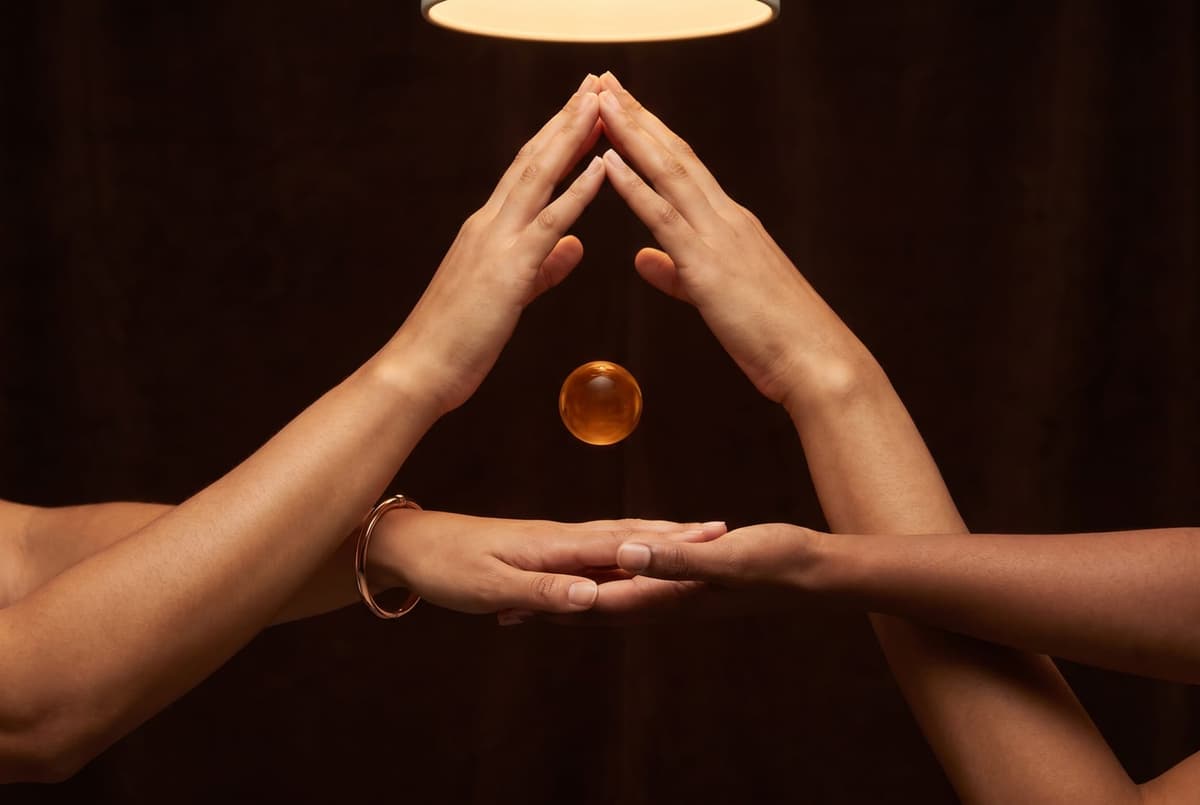
Trine Moon–Uranus — symbolic illustration

Trine · 120°

Moon trine Uranus

A harmonious aspect: the two planets support each other and tend to pull in the same direction. Read it as a resource to notice, not a guarantee.

120°Orb up to 6°HarmoniousNatal · synastry · transit
120°Moon trine UranusOrb up to 6° · major aspect
Oksana MiatovaWritten by Oksana Miatova·10 min read

For entertainment and self-reflection only. Not medical, legal, financial or psychological advice. Consult a qualified professional for important decisions.

The short answer

Moon trine Uranus is a harmonious 120° aspect where feeling and the need for freedom run in the same channel. The person is emotionally supple, weathers change without drama, and rarely clings to the familiar simply because it is theirs.

What a trine is

The geometry behind the reading

A trine is a third of the circle, 120 degrees, and classically it ranks as one of the gentler harmonious aspects. The two planets usually sit in signs of the same element, so they recognise each other almost without being introduced. The trine doesn't shove you in the back, doesn't put you in an awkward posture, doesn't ask hard questions — it opens a channel and leaves you to decide whether to use it. When the planets in question are the Moon and Uranus, that softness becomes a gift and a trap at once. The gift is an inner freedom, an ease in the emotions, an absence of stifling attachment. The trap is that a habit of freedom can quietly turn into an inability to stay. For practical work I treat the orb as up to about six degrees, and the closer the angle sits to an exact 120°, the more naturally the link between feeling and the need for space tends to work.

Three ways to read it

The same aspect, three different stories

One aspect reads differently depending on where you find it: inside a single birth chart, between two people, or moving across the sky right now. Read each as a way to notice patterns, not as a forecast.

Moon trine Uranus in the natal chart

If Moon trine Uranus sits in your natal chart, your emotional nature is wired a little differently from most people's. You don't cling. Not because you don't care, but because a different setting was there from the start: feelings arrive, live out their span and leave again, clearing room for the next thing. Friends grumble about an ex for years; a month on, you're already puzzling over why the two of you were ever together at all. A colleague nurses a setback for weeks; you spend one evening turning over what went wrong and wake up in a different frame of mind. From the outside that looks like strength, and often it genuinely is. But sometimes it's something else, plain and simple — a property of the psyche you were handed without any say in the matter.

The lunar part of you knows perfectly well what warmth and a home and a family table are about. But living alongside it is a Uranian engine that loves a draught, an open window, a coat left undone. These two inside you rarely quarrel, because the trine is fundamentally about agreement. More often than not you find, by instinct, a rhythm of life that holds both attachment and freedom. The nest is there, but the door is always open. The people close to you are there, but nobody is holding anybody. To some that looks unstable; to you it's simply normal.

The great strength of this aspect is steadiness through change. A move to another city, a change of profession, a long journey, a divorce, a new relationship — the things that knock other people sideways for years, you tend to come through in a matter of months. Not because it hurts less in the moment, but because the psyche adapts fast. There's a built-in navigator that goes looking for new ground the instant the old earth shifts under your feet. That's a rare resource, especially in an age with less stability on offer and adaptation prized above predictability.

The drawbacks hide in the very same place as the gifts. When letting go comes too easily, the depth can sometimes drain away with the pain. You might live ten years with someone and realise one morning that you remember the dates and the events but not what you felt while they happened. You might change four jobs in five years and find, at forty, that you never really put roots down anywhere and so never quite grew anywhere either. The Uranian charge inside the Moon will occasionally serve up lightness not as maturity but as a way of not lingering where things might have become genuinely important.

There's another fine note here — a coolness you don't notice yourself. It doesn't feel to you like coldness; it feels like being calm and level-headed. But the people closest to you may read it differently: that you switch over too quickly, that you don't need their warmth the way they need yours. It isn't an unkind streak, but it's worth knowing. Once you realise the lunar part of you can pull the window shut at any moment, you can deliberately leave it open a while longer. Not flee into freedom at the first impulse. Not announce to yourself that you've let go while something inside is plainly still alive.

A strong suit of this trine is creative intuition and a feel for the new. You're among the first to catch what's shifting in the air — which shape of relationship is becoming ordinary, which line of work is just being born, which way of living has stopped being fringe. You rarely put it into words, but you sense it. If you work in a creative, media, psychological or entrepreneurial field, this aspect becomes a quiet competitive edge: not the dazzling genius, but the person who turns the wheel at the right moment. Used well, that instinct compounds — small, well-timed pivots add up over a working life.

If you're at a stage where you want to understand exactly how your Moon and your Uranus are arranged in the chart — in which signs, in which houses, towards which other planets they reach — that becomes visible in a detailed natal-chart reading, where the whole architecture of your emotional life can be seen at once. None of it is a forecast; it's a map for self-reflection.

When it flows

  • Emotions reset quickly — what keeps other people up for days tends to loosen its grip on you within the hour
  • A genuine nose for what's shifting: you catch the change in the air before it has a name
  • Comfortable in your own company, without an aching need for someone beside you every minute
  • Upheavals — moves, a new rhythm of life, a change of routine — pass through you without tearing you apart

When it grates

  • Attachments run light and often fray first; where others hold on, you tend to walk
  • Sitting in one emotional state for long feels hard — even the good can start to bore you
  • People close to you sometimes call you cool, though that isn't how it feels from the inside
  • Home rarely becomes a place you put roots into; it reads more as a base than a nest

The shadow side, and what to do with it

The shadow side of this trine is an emotional rootlessness dressed up as lightness. When feelings let go too readily, the depth can leave with the pain. People with this aspect will often say, truthfully, that everything's fine — and the 'fine' is real, only there can be an emptiness inside it. Integration begins with allowing yourself to stay where things are a little dull, a little predictable, a little the same as yesterday. Not every flicker of the inner weather has to become a change of scenery. Sometimes holding still is exactly what growing up the lunar part of you looks like.

Trine — symbolic still life

How close is close

The orb decides the volume

A trine is rarely exact. The smaller the gap between the two planets — the orb — the louder the aspect plays. Here is roughly how the three bands read.

Tight

0–2°

Reads as a defining feature

At 0–2° the trine is exact and the Moon and Uranus work as one system: the emotional response retunes to the new instantly, and you barely have time to catch on the past. In transit this band gives the most vivid shifts of inner mood, the ones after which decisions about a move, a break-up or a new venture come easily. In synastry it is a couple who read each other's emotional changes without a word and aren't frightened by them.

Medium

2–5°

A steady background pattern

At 2–5° the trine is meaningful but not dominant. The Uranian note in the feelings shows up situationally: open to change in some areas of life, holding to the familiar in others. In transit the window is open but needs attention, or it slips past unnoticed. In synastry the pair values each other's freedom, but that isn't the only thing the bond rests on — there are sturdier threads as well.

Loose

5–8°

A faint colouring, felt in crises

At 5–8° the trine works as a background tint. The Moon–Uranus link reads as a mild leaning towards emotional independence, no more. In the natal chart the person is capable of bold inner moves but usually waits for an outside prompt. In transit the effect is almost imperceptible and often overlaid by tighter aspects. In synastry it gives a couple a shared language in moments of change without setting the character of the relationship as a whole.

Trine with a partner — what does it mean for the two of you?

A full synastry reading — every aspect between your two charts

Moon trine Uranus inside one chart is an inner mechanism. Between two charts it becomes the dynamic of a relationship. Enter both birth details and get a synastry reading — where the conjunctions sit, where the squares pull, where the oppositions draw you together — all calculated with the Swiss Ephemeris. Read it as a way to notice patterns, not a forecast.

Check your compatibilityfrom £1 · for entertainment

Compare with a neighbouring aspect

Same planets, a different distance

Moon square Uranus tells a different story. If you're reading this to make sense of a specific chart, it's worth glancing at the neighbouring aspect too.

Moon square Uranus
  • The square knocks you off balance emotionally through events — sudden losses, break-ups, moves forced by circumstance
  • The trine gives the same emotional freedom but without the shocks: you leave and let go by your own choice
  • The square develops the Uranian side of the Moon through resistance; the trine through calm use of it
  • Someone with the square often has a jagged, vivid emotional biography; someone with the trine, a quiet but free one inside
  • The square won't let you ignore Uranus in your feelings; the trine will — and that is precisely where the main risk lies, in missing a resource

Lived examples

A few charts where you can see it

Public figures with a verified Rodden birth-data rating (AA/A/B). No invented data.

Frequently asked questions

What does Moon trine Uranus mean in the natal chart?
It is a harmonious 120-degree aspect in which a person's emotional nature and their drive for freedom move in step. Such people are naturally supple in their feelings, take change in their stride, live comfortably on their own, and rarely cling to the past out of sheer inertia. Read it as a tendency to notice in yourself, not a verdict on who you are — the sign, the house and the rest of the chart all shade how it actually plays out.
Is Moon trine Uranus good or bad in synastry?
On the whole it leans helpful: a couple gets lightness, emotional freedom and a mutual acceptance of each other's quirks. But harmony doesn't do the work for you. If the two of you never agree on how much closeness and shared household life you actually want, the relationship can stay beautiful on the surface for a long time and one day come apart without any loud reason. It is a way to understand a relationship's patterns, not a forecast of how it will end.
What orb should I use for Moon trine Uranus?
The classic orb for a trine is up to about six degrees. The most vivid expression sits within two degrees, the moderate band up to five, and a faint background effect out to eight. The nearer the angle is to an exact 120°, the more organically the link between the emotions and the need for freedom tends to work. Beyond the orb the trine is treated as having dissolved.
Which celebrities have a lunar–Uranian signature?
Among public figures with verified data, Angelina Jolie and Madonna both read clearly for the lunar–Uranian theme — in each case emotional independence and a capacity for change come across as a backbone trait rather than a one-off decision. As always, accurate aspect examples need checking against AstroDatabank at a Rodden rating of AA or A; I flag charts for the trait and avoid passing along anything unverified.
Can Moon trine Uranus be called a talent?
More a predisposition than a talent. The person gets free access to emotional flexibility and to letting go quickly. Whether that ripens into maturity or stays a surface lightness depends on the will, and on a willingness to hold a connection in place when the urge is to bolt. The aspect hands you a resource; what you build with it is up to you.
How is Moon trine Uranus different from the conjunction?
A conjunction fuses the Moon and Uranus at a single emotional point: the person lives Uranian feelings as simply themselves, sometimes unable to tell their own mood from an outside impulse. The trine leaves the planets apart but joins them by a soft channel — so there is a choice about whether to use the freedom, and enough distance to be aware of it in the first place. The conjunction is more all-or-nothing; the trine is gentler and more optional.
How do I make use of a transiting Moon trine Uranus?
Don't wait for a big sign. Listen for the quiet shifts in mood. Inside this window what once felt frightening usually becomes possible: to leave, to stop, to start. The window works briskly and closes without regret, so putting a decision off 'for later' tends not to pay here. Treat anything that surfaces in a dream or a chance conversation as the signal the transit came to bring.
Is Moon trine Uranus different for men and women?
The aspect itself works the same way for everyone: emotional freedom and pliancy. The difference is in the social projection. A man is forgiven his emotional independence almost automatically, whereas a woman often has to defend her right not to be permanently 'warm and holding'. None of that is destiny — it's a lens for noticing how the same trait can be read differently from the outside.
Is Moon trine Uranus compatible with a long relationship?
It is, but not automatically. The aspect on its own doesn't wreck a bond, yet it doesn't manufacture clinginess either. For a relationship to last over time you have to build shared rhythms, rituals and habits on purpose — otherwise a couple ends up living in parallel rather than together. The trine gives you the freedom; the staying power is something you choose to add.
What if I feel too cold with this aspect?
Check whether you're confusing lightness with detachment. The trine gives emotional pliancy, but it doesn't dictate coolness. If the people close to you say they're short on warmth, try lingering in a feeling on purpose rather than releasing it at the first impulse to slip back into freedom. It's a gentle practice, not a personality flaw to fix.

Related pages

The other aspects between Moon and Uranus

The same two planets at a different angle — each reads differently.

Oksana Miatova
Oksana Miatova

Astrologer, co-founder of WowAstro

Oksana Miatova is a practising astrologer and co-founder of WowAstro. Natal charts, synastry and forecasts grounded in the Western classical tradition — explained through real-life examples and plain language.

More about the author →

For entertainment and self-reflection only. Not medical, legal, financial or psychological advice. Consult a qualified professional for important decisions.