Skip to content
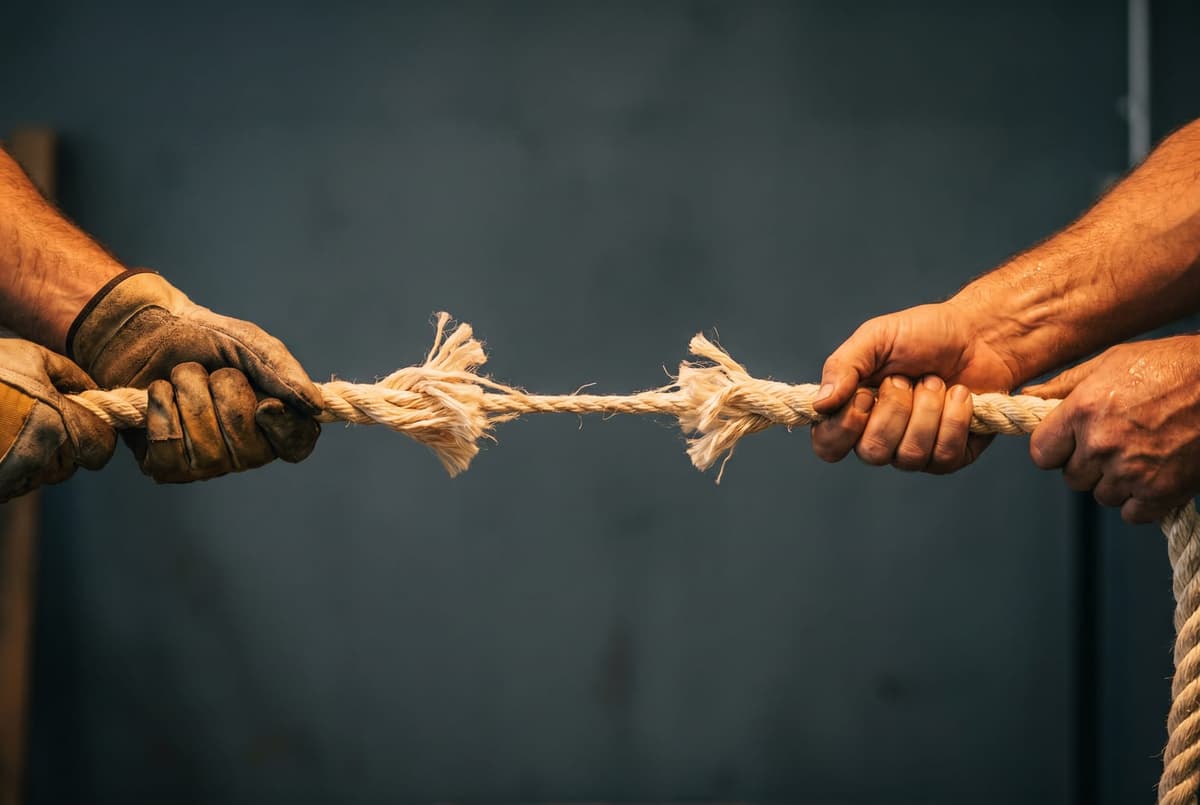
Square Uranus–Pluto — symbolic illustration

Square · 90°

Uranus square Pluto

A challenging aspect: the two planets rub against each other and ask for conscious handling. Tension here is a source of movement, not a verdict.

90°Orb up to 6°ChallengingNatal · synastry · transit
90°Uranus square PlutoOrb up to 6° · major aspect
Oksana MiatovaWritten by Oksana Miatova·11 min read

For entertainment and self-reflection only. Not medical, legal, financial or psychological advice. Consult a qualified professional for important decisions.

The short answer

Uranus square Pluto is a ninety-degree friction between freedom and deep transformation. In the natal chart it marks a generation that feels boxed in by old forms, and a person born with the impulse to break things in order to rebuild them. In synastry it gives a couple an atmosphere of unpredictable change; in transit it lines up with the eras when familiar systems stop holding together.

What a square is

The geometry behind the reading

A square is a separation of ninety degrees, and after the opposition it is the most charged of the major aspects, with an orb allowed up to about six degrees. Uranus and Pluto are two of the outer planets, both very slow-moving, so a square between them holds in the sky for years at a stretch. That single fact changes how you read it: this is almost never the private quirk of one chart but the signature of a whole generation. Uranus governs suddenness, the broken pattern, technology and the demand to be free; Pluto governs deep restructuring, power, crisis and the things that cannot be sidestepped. In a square these two forces press on each other across the two elements of the same modality, and from the outside it shows up as an age of ruptures, revolutions and abrupt social shifts.

Three ways to read it

The same aspect, three different stories

One aspect reads differently depending on where you find it: inside a single birth chart, between two people, or moving across the sky right now. Read each as a way to notice patterns, not as a forecast.

Uranus square Pluto in the natal chart

If this square sits in your natal chart, there is one thing worth saying straight away. Uranus and Pluto are slow planets, and a square between them holds in the sky for years. That means the aspect doesn't land in a single chart but in the charts of a whole generation born across the same handful of years. So the first thing to see isn't a personal quirk of character — it's your membership of a wave of people who carry a shared shape of restlessness inside. After that, your own individual pattern takes over: which signs the planets fall in, which houses, what each makes by aspect to the Moon, the Sun and Saturn.

Inside, this square is felt as an unbroken background signal that everything is arranged not quite as it should be. It isn't necessarily acute. More often it's a dull pressure that surfaces in the moments when outer life asks you to fit into a ready-made form and sit there quietly. In some people it shows through chronic unease and a craving for change; in others through cyclical crises; in still others through the sense that ordinary people somehow live more simply, while something inside keeps getting in your way. That is not a defect. It is the work of two outer planets that refuse to let you be conservative.

Uranus, in this pair, carries the impulse that everything should be different and right now. It loves freedom, technology, the broken pattern, acceleration. Pluto answers to something else entirely: deep restructuring, the things that can't be gone around, the work with what lies at the bottom. In a square these two forces press on each other. Uranus strains to change the outside, Pluto demands change from within, and until you've learned to tell them apart they move together and tip you, again and again, into radical decisions whose pieces then have to be picked up.

The typical arc of such a life looks like this. Years of relative calm, in which pressure quietly gathers, invisible to those around you. Then, over a few months, a sharp turn: a change of work, a move, the end of a relationship, sometimes all at once. From outside it reads as 'out of the blue'; from inside it had been assembling for a long time. After the lurch comes a new phase of quiet, in which you rebuild your life, and the cycle repeats a few years on. For some people that rhythm becomes productive — they are woven into change, they work with deep themes, with psychology, research, new technology, social projects. For others the same rhythm becomes destructive, because every turn tears living tissue and leaves a long recovery behind it.

The body often runs in parallel with this pattern. Broken sleep in the crisis years, blood-pressure swings, flare-ups of chronic themes, sometimes marked dips in resistance. That is less superstition than the arithmetic of accumulated pressure. When you learn to read the body's signals as an early sign that a rebuilding is under way inside, you gain the chance not to push things to the point where there is no choice left.

The most painful side of this square is that a person often can't tell two different signals apart. One is Plutonic, and it says: 'here it really is time to change at the root, the form has died, a different depth is needed.' The other is Uranian, and it says: 'I can't bear the pressure any longer, I'm dropping everything.' From outside the two look identical. From inside they are different. The first asks for a conscious rebuild that takes time. The second demands an immediate exit. If you don't separate them, you spend years burning down what could have been rebuilt more gently, and each cycle costs more than it brings.

Integration begins with a small step: noticing the pressure before it becomes unbearable, and granting it reality rather than writing it off as 'just my character' or 'just tiredness'. Then giving the rebuilding a span measured in years, not weeks. Done that way, the same generational resource works for you rather than against you, and you begin to see that Uranus square Pluto is not a sentence but a resource of rare strength that asks for respect towards your own rhythm. The full portrait of your particular square depends heavily on which houses the planets occupy and what contacts they make with the personal points of the chart, and that picture is best assembled from a natal reading rather than from a general description.

When it flows

  • A natural readiness for large-scale change — you don't panic when the course of your life turns
  • An instinct for systems that have outlived their use, spotting before others do that an old form no longer works
  • The capacity to come through a personal crisis without falling apart, with a real reserve for radical renewal
  • A pull towards the themes that change people: depth psychology, new technology, social shifts

When it grates

  • A background restlessness that ordinary methods don't settle
  • A tendency to burn down what could have been rebuilt more gently — relationships, work, habits
  • Living life in lurches: years of quiet, then everything torn up inside a single month
  • The body answering the build-up of pressure through poor sleep, blood-pressure swings, flare-ups in the crisis years

The shadow side, and what to do with it

The most painful side of this square is that you often can't tell the difference between the moment when it really is time to change your life and the moment when you simply can't stand the pressure that has gathered and tear something apart on the spot. Underneath sits a conviction that everything is arranged wrongly and cannot go on as it is. Left unexamined, that becomes a run of sharp turns with heavy losses each time. Integration starts when you learn to separate the Plutonic signal — 'this needs rebuilding at the root' — from the Uranian impulse — 'burn it all down right now' — and give the rebuilding time rather than an ultimatum.

Square — symbolic still life

How close is close

The orb decides the volume

A square is rarely exact. The smaller the gap between the two planets — the orb — the louder the aspect plays. Here is roughly how the three bands read.

Tight

0–2°

Reads as a defining feature

At 0–2° the square is exact and at full strength. When Uranus and Pluto close to within two degrees the aspect works as the dominant note of an era — the outward ruptures are visible without any special knowledge, and for anyone born with that tight a configuration the theme of rebuilding becomes one of the main threads of a life. In synastry a tight orb between one person's Uranus and the other's Pluto gives the couple the sense of standing inside the same storm. In transit the close orb coincides with the months when the news sounds especially fraught and the inner urge to change something at once is hardest to resist.

Medium

2–5°

A steady background pattern

At 2–5° the orb is workable and the aspect is felt with confidence. In the natal chart this middle band gives a steady undertow of restlessness and a pull towards large change, but a gap now opens between impulse and action in which there is room to think. In synastry this orb gives a pair a shared sensitivity to the themes of crisis and renewal without a permanent state of emergency. A transit at 2–5° lasts months and is easier to fold into conscious planning — a year or two of careful rebuilding rather than one abrupt turn.

Loose

5–8°

A faint colouring, felt in crises

At 5–8° the effect is more of a backdrop. With a wide orb in the natal chart the aspect sets the general mood of a generation rather than an individual script: you belong to an age of ruptures, but other configurations in your own chart may run stronger. In synastry a loose orb gives the couple a gentle nudge towards change without sharp conflict. A transiting square at 5–8° between Uranus and Pluto works as a long historical backdrop — the broad shifts are visible, but particular days rarely stand out.

Square with a partner — what does it mean for the two of you?

A full synastry reading — every aspect between your two charts

Uranus square Pluto inside one chart is an inner mechanism. Between two charts it becomes the dynamic of a relationship. Enter both birth details and get a synastry reading — where the conjunctions sit, where the squares pull, where the oppositions draw you together — all calculated with the Swiss Ephemeris. Read it as a way to notice patterns, not a forecast.

Check your compatibilityfrom £1 · for entertainment

Compare with a neighbouring aspect

Same planets, a different distance

Uranus trine Pluto tells a different story. If you're reading this to make sense of a specific chart, it's worth glancing at the neighbouring aspect too.

Uranus trine Pluto
  • A trine sets Uranus and Pluto in the same element — revolution and transformation run side by side, smoothly, without strain
  • The square splits them across the two elements of one modality; the same themes break through against resistance and rupture
  • The trine hands a generation a natural gift for gentle renewal of systems — its risk is leaving the resource underused
  • The square gives a generation a habit of radical change — its risk is tearing down what could have been rebuilt
  • In synastry the trine works as mutual support through change; the square works as mutual provocation towards ruptures

Lived examples

A few charts where you can see it

Public figures with a verified Rodden birth-data rating (AA/A/B). No invented data.

Frequently asked questions

What does Uranus square Pluto mean in the natal chart?
It is a generational aspect: Uranus and Pluto move slowly, so their square holds for years and falls into the charts of thousands of people of the same age. At the individual level it gives a steady inner tension between the wish for freedom and a deep impulse to rebuild. You rarely manage to live a whole life inside one form — you keep outgrowing it. In daily life it shows through large changes of work, relationships and home, and through a pull towards the themes of depth and renewal. The exact picture depends on which houses the planets sit in and what aspects each makes to the Moon, Sun and Saturn. Read it as a pattern to notice, not a verdict.
Is Uranus square Pluto bad in synastry?
Not bad, but turbulent. The aspect gives a couple an atmosphere of mutual catalysis: beside each other, both of you change faster than you would apart. That is both a plus and a risk. The plus is that the relationship won't let you get stuck in an old script. The risk is that the pair slips easily into sharp blow-ups over things that, in a calm moment, a conversation would have settled. Much depends on the other contacts between the charts — especially Moon, Venus and Saturn — which either soften the heat or stoke it. This is a way to understand a relationship's patterns, not a prediction about it.
What orb should I use for Uranus square Pluto?
The standard orb for a square is 6°, sometimes widened to 8° for aspects involving the very slow outer planets. At 0–2° it works as the dominant theme of an era and of a personal life; at 2–5° as a confident working backdrop; at 5–8° as a generational context. Beyond about 8° the square is no longer counted, even in synastry.
Which celebrities have Uranus square Pluto?
Among the verified charts are Barack Obama (Uranus in Leo, Pluto in Virgo) and Angelina Jolie with her generational configuration in Libra. Both show the pattern plainly: large rebuilds in public life, a readiness to break familiar forms, productive work with the themes of power and renewal. The press throws around many other names, but without a confirmed birth time at Rodden AA or A those mentions aren't worth taking. You can check anyone in a minute on astro.com's AstroDatabank.
When does Uranus square Pluto happen in transit?
An exact transiting square between Uranus and Pluto is rare — it comes round roughly once a generation and lasts several years once the retrograde loops are counted in. The last full series fell across 2012–2015 (Uranus in Aries, Pluto in Capricorn), and those years are remembered for large social shifts worldwide. The next full series is a long way off. But individual contacts of transiting Uranus and transiting Pluto to your natal points run all the time and matter on a personal level.
Is Uranus square Pluto different for men and women?
The basic mechanics are the same: an inner pressure between freedom and deep rebuilding. The social scripts differ. In men the aspect more often shows through abrupt career changes, the breaking of professional ties and conflicts with systems of power at work. In women it more often reads through changes of life cycle: moves, the remaking of a family, radical decisions about the body and health. In both cases the main task is one — to learn to tell a necessary rebuild from an impulsive demolition. None of this is destiny; it's a lens for noticing.
How does Uranus square Pluto affect relationships?
It makes them more sensitive to the themes of control and autonomy. In the natal chart, a person with this square tolerates pressure in close relationships badly and slips easily into ultimatums of their own. In synastry, the aspect between two charts gives a couple that regularly goes through flare-ups but also regularly comes out of them into a new state. The commonest trap is to mistake heat for depth and hold on to a relationship simply because 'something is always happening' in it.
How is Uranus square Pluto different from their trine?
Geometry and elements. A trine sets both planets in the same element, their functions run in step, and change tends to happen smoothly, without strain. A square splits the planets across the two elements of one modality, and the themes of freedom and transformation argue with each other. The trine gives ease but risks leaving the resource underused. The square gives strength but risks changing where rebuilding would have served better. At the level of generations, a Uranus–Pluto trine coincides with calmer eras of modernisation, the square with eras of rupture.
Can you 'work off' a Uranus square Pluto?
You can't remove an aspect from a chart — it's part of the framework. But you can stop walking the same path of sharp ruptures over and over. Step one: accept that the inner pressure is real and won't vanish at a click. Step two: learn to tell apart the signals, where Pluto genuinely calls for a deep rebuild and where Uranus is simply straining towards an impulsive gesture. Step three: give the rebuilding time. A year of careful movement almost always beats one abrupt decision at the peak of pressure. It's a process measured in decades, not months.
Do the signs and houses Uranus and Pluto sit in affect the reading?
Strongly. The signs set the element and the character of the tension: a cardinal square (Aries–Cancer–Libra–Capricorn) gives fast, visible crises; a fixed one (Taurus–Leo–Scorpio–Aquarius) a drawn-out stand-off and a struggle for control; a mutable one (Gemini–Virgo–Sagittarius–Pisces) instability of form and a constant rethinking. The houses show which areas of life the square plays out in — career, family, friendship, public work. Without reading the signs and houses, the general picture stays just a framework.
What should I do during a transiting Uranus square Pluto to my natal planets?
It depends which planet the transit reaches. If the transiting square touches your natal Uranus and Pluto, the generational theme inside you personally is heightened, for years. If it reaches the Sun, it stirs your sense of self and public role; the Moon, your emotional security and the family foundation; Saturn, the structure of your life and career; Mars, the way you act and hold your boundaries. The universal strategy: make no sharp decisions at the first peak, let the aspect run its series of contacts, and only once you can see the logic of the whole series draw your conclusions.

Related pages

The other aspects between Uranus and Pluto

The same two planets at a different angle — each reads differently.

Oksana Miatova
Oksana Miatova

Astrologer, co-founder of WowAstro

Oksana Miatova is a practising astrologer and co-founder of WowAstro. Natal charts, synastry and forecasts grounded in the Western classical tradition — explained through real-life examples and plain language.

More about the author →

For entertainment and self-reflection only. Not medical, legal, financial or psychological advice. Consult a qualified professional for important decisions.