Skip to content
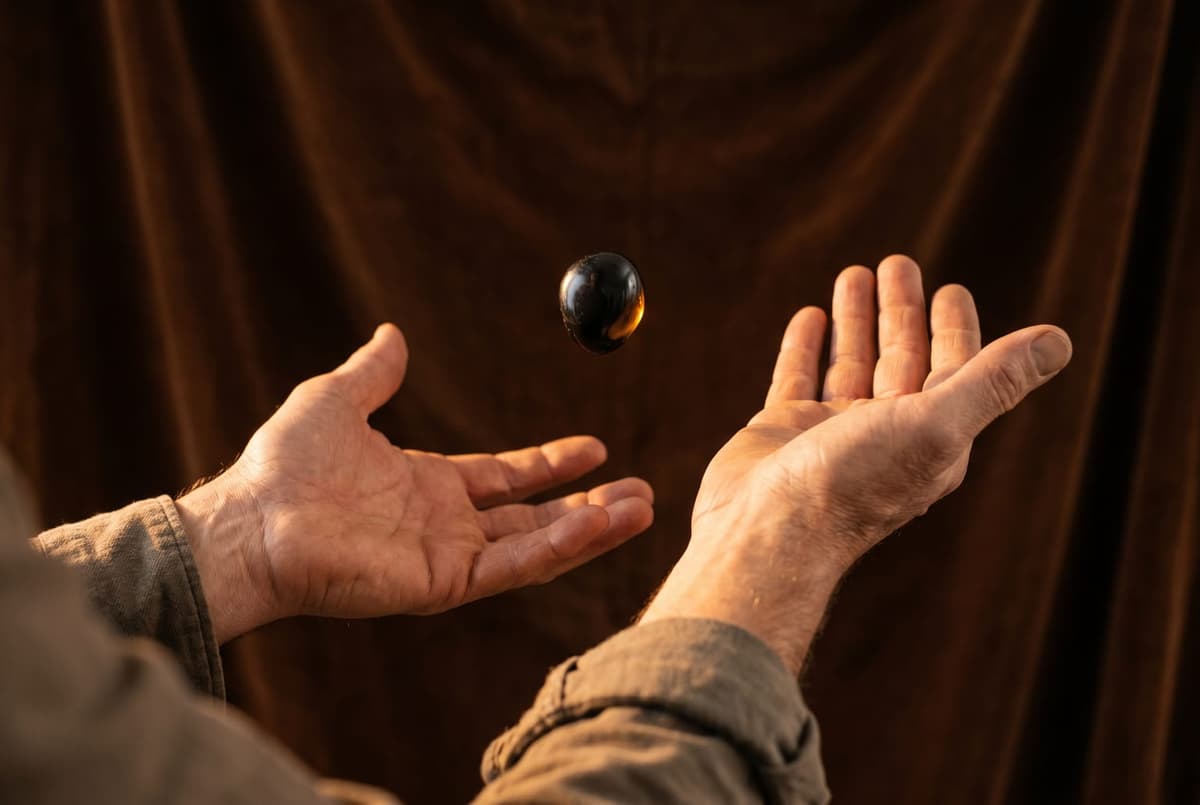
Sextile Uranus–Pluto — symbolic illustration

Sextile · 60°

Uranus sextile Pluto

A harmonious aspect: the two planets support each other and tend to pull in the same direction. Read it as a resource to notice, not a guarantee.

60°Orb up to 4°HarmoniousNatal · synastry · transit
60°Uranus sextile PlutoOrb up to 4° · major aspect
Oksana MiatovaWritten by Oksana Miatova·12 min read

For entertainment and self-reflection only. Not medical, legal, financial or psychological advice. Consult a qualified professional for important decisions.

The short answer

Uranus sextile Pluto is a generational aspect of soft possibility. It opens a calm channel between deep inner transformation and the way you renew your outer life. It never pushes and never breaks, and it won't switch itself on — it waits for a conscious step from you.

What a sextile is

The geometry behind the reading

A sextile is a separation of sixty degrees between two planets, the fourth-strongest of the major aspects. For this pair I usually work with an orb of three to four degrees. The sextile is harmonious in tone, but unlike a trine it doesn't hand you a ready-made talent that performs by itself. It is more like an open door into the next room — you can walk through, nothing stops you, but nothing calls you either. Its character is so mild that it's easily lost behind the louder squares and oppositions of a chart. Set against tense aspects it works as a quiet resource you plug into when you remember it exists. Between Uranus and Pluto, both of them slow outer planets, that gentle sextile becomes part of the generational backdrop rather than a personal headline — which is exactly why so many people who carry it never realise it's there.

Three ways to read it

The same aspect, three different stories

One aspect reads differently depending on where you find it: inside a single birth chart, between two people, or moving across the sky right now. Read each as a way to notice patterns, not as a forecast.

Uranus sextile Pluto in the natal chart

If Uranus sextile Pluto sits in your natal chart, you were born in years when the two planets stood in harmonious geometry to one another. That isn't a personal story so much as the weather of the generation you arrived with. So the first plain truth about this aspect is an odd one: you almost certainly have it if you were born in the early-to-mid 1940s or the late 1990s — and that still tells you nothing about whether you've ever used it.

In consultations I often meet people with this aspect who say, half-puzzled, "Nothing especially dramatic ever happens to me." That's exactly as it should be. The sextile doesn't press. It's nothing like the square, which breaks circumstances apart and forces you to react. It's not the trine either, which creates ease all on its own. The sextile is more like a soft strip of light along a corridor you can walk down if you decide to. The decision stays with you, and the corridor stays lit whether or not you ever set foot in it.

So what does the aspect actually light up in a person's character? First, a capacity to pass through inner restructuring calmly. When someone with this sextile hits a crisis — personal, professional, in a relationship — they tend to respond not with catastrophe but with quiet internal movement. They can leave an old role without tearing themselves apart over it. There's a low-key inner readiness for change that other people only reach through breakage, and they reach it through choice.

The second thing it offers is an appetite for the subjects that change the rules of the game: technology, psychology, research, the deeper practices. You don't have to become a professional in any of them. Often it's simpler than that — a feel for which trends are genuinely new and which are old ideas in fresh wrapping. A kind of generational instinct that runs in the background and rarely announces itself.

Third comes the ability to see what has outlived its use. Uranus and Pluto in sextile give a calm sort of knowledge about which structures in a life no longer work and need taking apart. Not burning down, not smashing — taking apart carefully and reassembling. The usual themes are relationships, work, habits, and now and then a whole system of values. It tends to read less as a dramatic rupture and more as a slow editorial process: a phrase you used to live by stops fitting, and one day you simply notice you no longer say it.

The sign each planet occupies tints all of this, though for a generational pair the sign moves slowly and is shared with everyone born in the same handful of years. What's more telling in an individual chart is whether Uranus or Pluto picks up a contact from a personal planet — the Sun, the Moon, Mercury, Venus or Mars. When that happens, the quiet generational channel suddenly has a private doorway, and the capacity for gentle renewal attaches itself to your will, your feelings, your way of thinking or your way of acting. Without such a bridge the sextile stays a feature of the cohort; with one, it becomes recognisably yours.

Now, honestly, the shadow side. The most common trouble with this aspect is that a person goes years without drawing on it — not because they can't, but because nothing is pushing them. Outwardly everything is stable; inwardly there's a faint sense that life could be lived another way, but no concrete impulse arrives. So they put it off: "Not now, I'll think about it later." And "later" never quite comes, until something external knocks them off balance. Only then do they discover the aspect was beside them the whole time, simply never called on.

There's a subtler version of this shadow worth naming, because it catches the more capable people. Some of those who carry the sextile do change — but only along the lines they already trust. They'll retrain within the same profession, redecorate the same kind of relationship, swap one familiar role for an adjacent one, and call it transformation. It is movement, but it isn't the deep reordering Pluto is offering and Uranus is willing to underwrite. The aspect's real gift is the permission to change the rules, not just the furniture, and that's the harder invitation to accept when nothing outside is forcing your hand.

In my own work with clients who carry it I always do two things. First I say it out loud: "You have this resource. It works, but not by itself — it needs your step." Many people hear, for the first time in that moment, that they have any kind of footing for change at all. Then I look at which houses the natal Uranus and Pluto fall in, because the themes of those houses are the easiest doorways into the channel. If Pluto sits in the seventh, you go in through reworking relationships. In the tenth, through changing the shape of your professional life. In the second, through your relationship with money and with your own body. In the fourth, through the family scripts you inherited.

There's one more detail worth knowing. People with this aspect often have a long history of "invisible" change. On the surface life runs level, but look back ten years and the person is someone else entirely — and they tend not to notice it themselves until someone close to them points it out. That's the sextile at work: a quiet, gradual rebuilding with no loud events attached. Its strength is that the renewal happens without a breakdown; its weakness is that, with no reminder, it's all too easy to live at half-power. To see exactly how it plays out for you, the houses, the sign and the contacts to other planets — Saturn and the personal planets especially — all have to be read together.

When it flows

  • An ability to move through personal crises calmly and come out the other side renewed rather than broken
  • A natural pull towards subjects that shift the rules of the game — technology, psychology, research, deep practice
  • An inner readiness for change without melodrama, with no urge to start a revolution over nothing
  • A knack for sensing which old structures have outlived their use and quietly need rebuilding

When it grates

  • The sextile is easy to miss — you can live for years without ever drawing on the resource
  • A habit of putting off inner change because nothing outside is pushing you to make it
  • Taking on only the familiar kind of risk and steering clear of anything genuinely new
  • Writing off the wish for deep change as 'not the right time', when in fact the window is open right now

The shadow side, and what to do with it

The shadow of Uranus sextile Pluto isn't pain — it's the possibility you never noticed. You walk past your own capacity for change because nobody is nudging you towards it; on the surface everything is stable, underneath there's a vague sense that life could be lived differently, but no concrete impulse arrives. Integration begins with an honest question: where am I living on autopilot in a place where I could actually choose something new? The aspect wakes up to a deliberate gesture — signing up to study, reworking a relationship, stepping out of a role that's been too tight for years. One real step is enough to get the channel running. Read it as a pattern worth noticing, not a verdict on who you are.

Sextile — symbolic still life

How close is close

The orb decides the volume

A sextile is rarely exact. The smaller the gap between the two planets — the orb — the louder the aspect plays. Here is roughly how the three bands read.

Tight

0–2°

Reads as a defining feature

At 0–2° the sextile is at full strength. People in this band usually feel a steady, low pull towards change, almost as a background inner voice. In a tight orb the aspect behaves much like a trine — a mild, calm current flowing between the need for renewal and a readiness to go deep. If there are tense aspects to Uranus or Pluto nearby, this tight sextile becomes their natural release valve and helps you pass through crises without the destructive aftermath they would otherwise carry.

Medium

2–5°

A steady background pattern

At 2–4° the aspect is a working resource. It makes itself felt in moments of conscious choice but barely registers in the background hum of ordinary life. This is the most common case for the generational Uranus–Pluto sextile: a person can spend decades unaware the resource exists and then, in a single difficult year, rebuild a whole life from it. The channel is there, but it needs a point of entry — therapy, study, a serious conversation with yourself.

Loose

5–8°

A faint colouring, felt in crises

At 4–6° it acts as background colour rather than as structure. At the level of a whole generation it works as a shared capacity for gentle reform, but in an individual chart it scarcely sounds. It's worth counting as a full aspect only if both planets are otherwise emphasised — placed in their own signs, in angular houses, or tied to personal planets through other aspects. Without that it stays a decorative feature of the generation rather than a personal one.

Sextile with a partner — what does it mean for the two of you?

A full synastry reading — every aspect between your two charts

Uranus sextile Pluto inside one chart is an inner mechanism. Between two charts it becomes the dynamic of a relationship. Enter both birth details and get a synastry reading — where the conjunctions sit, where the squares pull, where the oppositions draw you together — all calculated with the Swiss Ephemeris. Read it as a way to notice patterns, not a forecast.

Check your compatibilityfrom £1 · for entertainment

Compare with a neighbouring aspect

Same planets, a different distance

Uranus square Pluto tells a different story. If you're reading this to make sense of a specific chart, it's worth glancing at the neighbouring aspect too.

Uranus square Pluto
  • The square breaks the old structure from outside — circumstances force change and there is barely a choice
  • The sextile does the opposite, it waits: it opens the door, but you have to walk through it yourself
  • The square in the 1960s generation became a symbol of upheaval; the sextile in the neighbouring generations passed almost unseen
  • In the square the energies of Uranus and Pluto argue; in the sextile they cooperate quietly
  • The square's shadow is collapse without warning; the sextile's shadow is the missed chance

Lived examples

A few charts where you can see it

Public figures with a verified Rodden birth-data rating (AA/A/B). No invented data.

Frequently asked questions

What does Uranus sextile Pluto mean in the natal chart?
It is a generational aspect of soft possibility. It gives you a calm channel between a deep restructuring of life and a genuine interest in what's new. The aspect doesn't push or pressure, which is exactly why it works only when you choose to use it. If you never draw on it, you can live a whole life alongside it and never notice the resource was there. Read it as a pattern to work with, not a fixed fate.
Is Uranus sextile Pluto a good aspect?
In tone, yes — it's harmonious. But it has a catch: the sextile doesn't start itself. A trine runs in the background, a square breaks circumstances open, and a sextile just quietly offers a door. If you're used to living on autopilot, the aspect stays unused. Its value depends entirely on whether you ever decide to walk through.
What orb should I use for Uranus sextile Pluto?
The standard sextile orb is 3–4°. For generational aspects between the outer planets I take the upper end, 4°, when both angular houses or personal planets are involved. Otherwise it really only does its work in a tight 0–2° orb; beyond that it dissolves into decorative background and shouldn't be read as a personal feature.
Which generation has Uranus sextile Pluto?
The most marked periods are the years around 1942–1946 and the mid-1990s. The early-1940s cohort carries it as a background resource that later surfaced in science, social reform and culture. Those born in the late 1990s still have the aspect in play — it falls to them to decide whether to activate the resource or walk past it.
How do I use Uranus sextile Pluto?
Walk through the door on purpose. In practice that means reworking one life-script that has long been too tight, signing up to study in a field you used to avoid, or starting a therapy or practice that touches real depth. The aspect wakes from a single honest step, and after that it holds on its own. For entertainment and self-reflection, that small deliberate move is the whole of it.
What does Uranus sextile Pluto mean in synastry?
It's a generational link between two people's charts. On its own it rarely sounds loud, but in a couple's crisis moments it works like a safety line: the partners move onto a new turn of the relationship more easily, without destroying what came before. It matters most when the couple also has personal aspects to these planets. As ever, it's a lens for the relationship's patterns, not a prediction about it.
Uranus sextile Pluto in transit — when does it happen?
It's a very slow aspect between two outer planets. An exact sextile between transiting Uranus and Pluto happens only a few times a century and lasts several years. In everyday practice we more often look at a transit of one of these planets to the other's natal position — those windows stay open for several months and recur because of the retrograde loops. The exact dates are particular to each chart and have to be calculated against your own placements.
How is Uranus sextile Pluto different from a trine?
A trine hands you the resource by default — it runs in the background even if you do nothing. A sextile offers the possibility but won't launch it for you. The trine relaxes; the sextile asks for a gesture. The trine is the stronger of the two, but both are harmonious in character.
Can you miss Uranus sextile Pluto in a chart?
Yes, and that's exactly what usually happens. It's the quietest of the major aspects, especially between slow planets. In consultations I deliberately spell out to clients that they have this resource, otherwise they'll spend years walking past it without ever realising it's available.
Which famous people have Uranus sextile Pluto?
The 1942 generation is the clearest example — Stephen Hawking, Muhammad Ali and Barbra Streisand among them. In their different fields each of them drew on the same capacity for a deep reworking of their own role: in science, in sport, in culture. As with any specific aspect, it's worth checking each chart against AstroDatabank at a Rodden rating of AA or A before relying on it.

Related pages

The other aspects between Uranus and Pluto

The same two planets at a different angle — each reads differently.

Oksana Miatova
Oksana Miatova

Astrologer, co-founder of WowAstro

Oksana Miatova is a practising astrologer and co-founder of WowAstro. Natal charts, synastry and forecasts grounded in the Western classical tradition — explained through real-life examples and plain language.

More about the author →

For entertainment and self-reflection only. Not medical, legal, financial or psychological advice. Consult a qualified professional for important decisions.