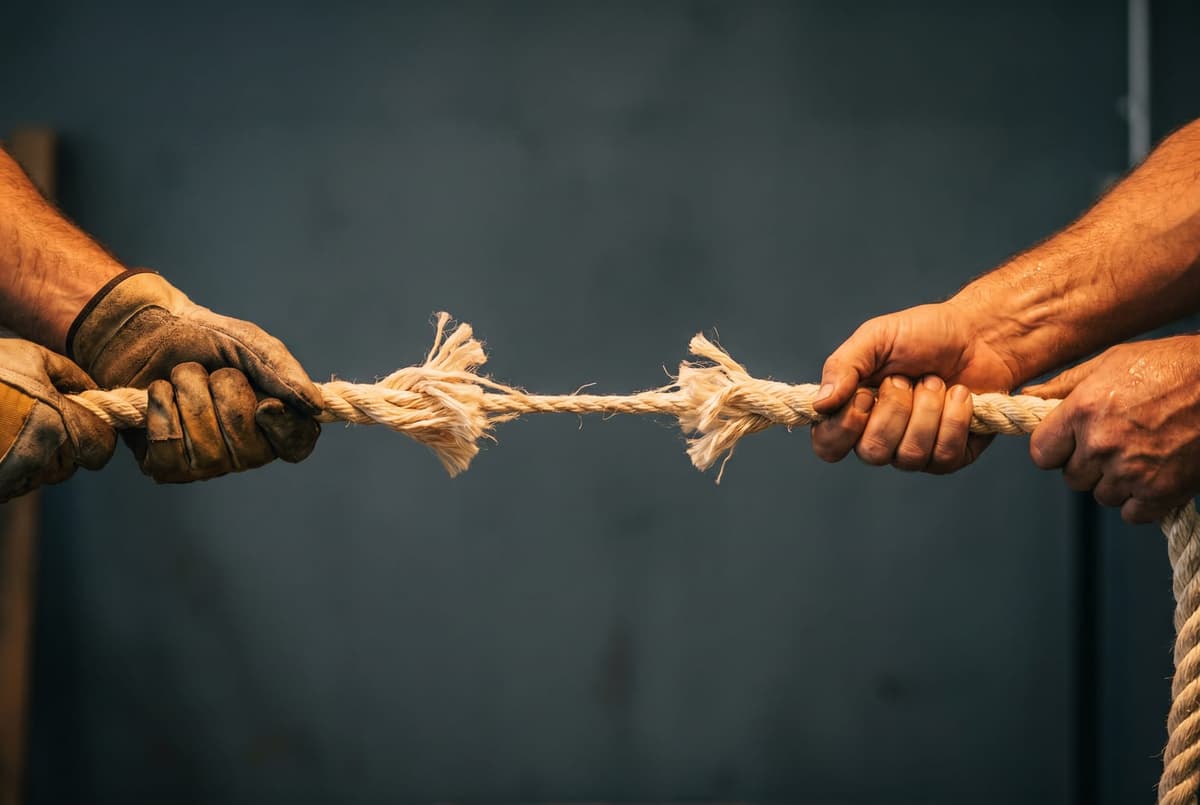
If Moon square Saturn sits in your natal chart, you almost certainly know the feeling already, even if you've never put an astrological word to it. There's a stern adult living inside you who won't allow tears. Hurt wells up, and the switch flips at once: don't make a scene. You want to ring someone and have a good moan, and immediately the other voice reminds you that grown-ups manage on their own. Between the tender part of the soul and the inner controller there's a constant quiet war, and more often than not the controller wins.
This aspect almost always traces back to early childhood. Most often there's a cold, anxious or preoccupied mother behind it — not necessarily unkind, sometimes simply exhausted, buried in her own concerns, physically absent or emotionally unable to give warmth. A small child can't explain to themselves why their mother doesn't pick them up. They draw the only conclusion available: it must be me, I must be doing something wrong, I mustn't ask for too much. And so an early habit of going without takes root, a habit that stays for life unless it's taken apart deliberately. None of this is fixed in stone; it's a starting point you can work from.
In adult life such a person comes across as reliable, serious, responsible. People trust them, lean on them, bring them their troubles. They can take a knock without coming apart, hold the line in a crisis, cover for the people they love at the hard moment. But look a little closer and you'll see that they very rarely let themselves be the one who's covered for. Asking for help is almost physically painful. Admitting to fear, sadness, sheer tiredness — close to impossible. That's why so many people with this square arrive at thirty carrying burnout, and more often than that a quiet, chronic low mood nobody around them ever suspected.
The body tends to keep the score of all that inner tension. The back, the shoulders, the jaw get used to being braced. Sleep frays at the edges. Vague, persistent complaints turn up that have no clear physical cause but plenty of psychosomatic logic — the body saying what the soul is forbidden to say. And it's often through the body that the way back begins, because the body is far harder to talk out of the truth than the mind is.
Creative work and emotional work with other people are the two main channels through which Moon square Saturn unfolds into a resource. In a poem, a song, a piece of writing, a painting, you can say what your tongue simply won't form in ordinary speech. In working with others, especially with those living through something similar, a quiet paradox kicks in: by helping someone else, a person lets their own feeling exist for the first time. That's why this aspect turns up so often among psychologists, psychiatrists, palliative doctors and social workers.
The relationship with the aspect shifts with age. Before thirty it usually feels like a weight — why can't I be like everyone else, why can't I just relax. After thirty comes the recognition that this seriousness isn't a defect but a shape of character, something to use rather than fight. By forty many discover they've learned to give themselves the warmth they didn't get as children. That, in the end, is the central task of the aspect: to become for yourself the caring figure you once went without.
If you recognise yourself in this description, it's worth looking at the chart as a whole — which signs your Moon and Saturn stand in, which houses are involved, which other planets join the configuration. The full picture gives a wholly different level of understanding than a general sketch of the aspect ever could, and it's there to inform your self-reflection, not to forecast your life.