Skip to content
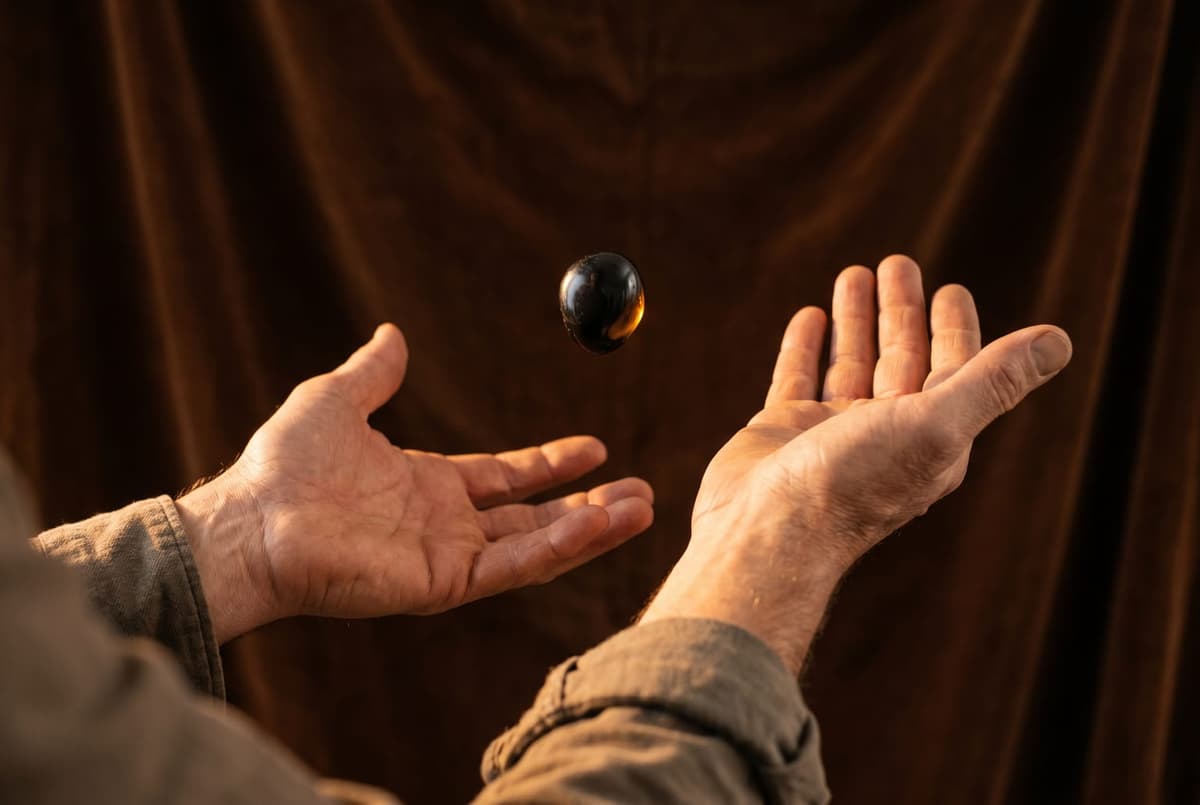
Sextile Moon–Saturn — symbolic illustration

Sextile · 60°

Moon sextile Saturn

A harmonious aspect: the two planets support each other and tend to pull in the same direction. Read it as a resource to notice, not a guarantee.

60°Orb up to 4°HarmoniousNatal · synastry · transit
60°Moon sextile SaturnOrb up to 4° · major aspect
Oksana MiatovaWritten by Oksana Miatova·12 min read

For entertainment and self-reflection only. Not medical, legal, financial or psychological advice. Consult a qualified professional for important decisions.

The short answer

Moon sextile Saturn is a gentle 60° link between your emotional nature and your inner discipline. In the natal chart it gives a calm, steady backbone and the patience for the long haul; in synastry it builds a dependable, grown-up bond; in transit it opens a quiet, serious window — but only if you choose to use it, because this aspect never knocks loudly.

What a sextile is

The geometry behind the reading

A sextile is an angle of sixty degrees, one sixth of the circle, and the quietest of the five major aspects. A trine of 120° hands you a talent that wants to come out on its own; a square of 90° presses on you with tension; an opposition of 180° pulls two forces to opposite poles. The sextile neither pushes nor pulls — it simply sets two planets side by side and makes cooperation possible between them. The orb for a sextile is modest, usually three to four degrees, and a touch wider for the fast-moving Moon; beyond that it fades into the background. In the order of aspects the sextile sits fourth for raw strength, but first for how often it gets ignored. That is especially true when one of the planets is personal and the other social, as it is here: a thin bridge between feeling and structure that is easy to miss precisely because it doesn't ache and doesn't demand your attention.

Three ways to read it

The same aspect, three different stories

One aspect reads differently depending on where you find it: inside a single birth chart, between two people, or moving across the sky right now. Read each as a way to notice patterns, not as a forecast.

Moon sextile Saturn in the natal chart

If you have Moon sextile Saturn in your chart, the odds are you've long been used to the thing other people call "having some kind of backbone in there". It isn't a loud quality, and there's nothing showy about it. It's just that where others come apart from tiredness, or start eating at midnight out of anxiety, you quietly switch off the light and go to bed. Where others fire off messages they regret in the morning, you put the phone down until tomorrow. And that knack doesn't come from a grown-up decision to "keep myself in hand" — it comes from something earlier, something almost in the body.

The sextile joins the Moon — our emotional nature, our habits, our need for warmth and care — to Saturn, which carries discipline, time, responsibility and the capacity to endure. When there's a soft agreement between those two, emotions stop being a wild element you have to fight. They become part of the work. You learned early to tell the difference between what you feel and what to do about it, even if you've never thought of that as a skill.

From the outside it often looks like character rather than age. Teenagers with this aspect frequently shoulder the practical responsibility for younger siblings — not under duress, but because life simply makes more sense to them that way. Adults with it carry years-long situations — a parent's illness, a long project, a heavy patch in a marriage — without the breaking strain that accompanies the same stories in people with the tense Saturn aspects. You just have enough patience. Not boundless, but enough.

The downside of that steadiness is that it's so habitual you don't notice it and don't count it as a resource. A lot of people live their whole lives with this sextile and assume they're "ordinary, calm sorts". They don't put themselves forward for promotion, because why fuss. They don't leave a relationship that died long ago, because "it's fine as it is". They don't pick the harder task, because the easy ones aren't bad either. The sextile gives no built-in drive to move. If the square shoves you backwards into the future, the sextile shoves nothing anywhere. It simply lays two well-functioning faculties side by side and waits for you to find something to point them at.

There's another feature worth naming: your emotions pass through a filter of maturity early. That's a plus, because you're hard to jerk around with manipulation — you quickly grasp what you feel and what someone's inviting you to do with that feeling. It's also a minus, because joy and sorrow lose their peak and come out muffled. You can go through something large — the birth of a child, the loss of someone close, a move to another country — and notice afterwards that you didn't fully live it, because you rationalised it too fast. In therapy that's usually the first piece of work: giving yourself permission to feel inefficiently, without a tidy takeaway at the end.

Your relationship with your mother, and with your own body, tends to be even. No fusion, no smothering dependence, but no estrangement either. You stepped out of the child's position early and don't return to it even in situations where it would be perfectly reasonable — during illness, say. That gives you self-sufficiency, but it can also rob you of the right to accept care. The people close to you sometimes struggle precisely because of this: they want to do something for you, and you don't know what to ask them for.

In work and money, Moon sextile Saturn gives a good tolerance for long commitments. A mortgage, a lengthy loan, saving towards something big — you can carry all of it for years. Businesses run by people with this aspect often grow slowly, without leaps, but rarely close. Careers, too, get built on the principle of endurance rather than the flash of inspiration. That doesn't mean quick wins are off the table; it's just that your baseline strategy is a long one. (And, of course, none of this forecasts a specific income or career outcome — it describes a temperament, not a destiny.)

To sum it up, Moon sextile Saturn is an aspect for people who came into this life to play the long game. It won't make you exceptional. It makes you capable of reaching your goal and not falling apart on the way. The only question is what that goal is, and whether you realise your inner resource is worth aiming at something larger than just "living quietly". A full reading of the natal chart helps to clear that picture up — Moon sextile Saturn never exists on its own; it's built into the wider structure, alongside the sign, the house and the contacts to the other planets.

When it flows

  • Emotional staying power in drawn-out situations — your nervous system holds up under things that burn other people out in a month
  • An ability to parent yourself: to settle down, get organised and put off an impulse until a better moment
  • An easy relationship with time — long commitments don't frighten you, and you can carry a project or a family situation for years
  • A clear inner rhythm: routine, habits and looking after your body come without any war against yourself

When it grates

  • So even on the inside that nothing moves on the outside — there's no built-in nudge to change anything
  • Feelings flatten out: joy and sadness lose some of their colour, and everything gets filtered through 'needed or not needed'
  • You can go a whole life never cashing in the maturity you've carried in your pocket since your teens
  • A tendency to swap feeling for duty — as if feeling were optional and the only thing that matters is doing the correct thing

The shadow side, and what to do with it

The shadow side of Moon sextile Saturn is a quiet emotional freeze. You don't suffer, but you also never open your sensitivity to its full depth — it sits in safe mode for years on end. Integration starts with giving yourself permission to feel inefficiently: to cry for no reason, to grow attached, to miss someone without a tidy conclusion. The aspect answers when there's a concrete call on it — a stable family, a long business, a course of therapy seen through to the end. Without that call it simply stays silent and guards your peace.

Sextile — symbolic still life

How close is close

The orb decides the volume

A sextile is rarely exact. The smaller the gap between the two planets — the orb — the louder the aspect plays. Here is roughly how the three bands read.

Tight

0–2°

Reads as a defining feature

At 0–2° the sextile works at full strength, which for a sextile means a clear, settled sense of inner support. Feeling and discipline are in step: you rarely snap from exhaustion and rarely make decisions on raw emotion. In transit this band gives a day or two of a legible, serious window, ideal for long conversations and for choices about family and money. In synastry it is the firmest possible foundation for a lasting relationship of any version of this aspect.

Medium

2–5°

A steady background pattern

At 2–4° the sextile is noticeable but doesn't dominate. Inside there's a calm maturity, a sensitivity to the rhythms of the body and to long commitments, with no strain. In synastry this band already supplies a steady background: the couple moves through long stretches without falling apart over domestic friction, even though neither partner usually realises this is a contact between a light and a social planet. In transit it's a soft, serious window of up to two or three days.

Loose

5–8°

A faint colouring, felt in crises

At 4–6° the influence is more of a background tint. The sextile is present but reads as natural reserve of character rather than a separate factor. In the natal chart it lends a light reserve of emotional steadiness without defining the personality. In synastry it's barely visible on the surface — both people feel the warmth and reliability but can't put their finger on why. In transit it passes almost unnoticed, registering only in the diaries of the observant.

Sextile with a partner — what does it mean for the two of you?

A full synastry reading — every aspect between your two charts

Moon sextile Saturn inside one chart is an inner mechanism. Between two charts it becomes the dynamic of a relationship. Enter both birth details and get a synastry reading — where the conjunctions sit, where the squares pull, where the oppositions draw you together — all calculated with the Swiss Ephemeris. Read it as a way to notice patterns, not a forecast.

Check your compatibilityfrom £1 · for entertainment

Compare with a neighbouring aspect

Same planets, a different distance

Moon square Saturn tells a different story. If you're reading this to make sense of a specific chart, it's worth glancing at the neighbouring aspect too.

Moon square Saturn
  • The square presses with cold and forces you to grow up through deprivation; the sextile takes nothing away — it simply lays maturity beside you and lets it sit there
  • The square casts you from childhood as the under-loved child raising itself; the sextile can go unnoticed for a whole life, with the person just assuming they're 'calm by nature'
  • The square builds the personality through constant tension between the need for warmth and the duty to hold form; the sextile builds nothing — it hands you a ready resource you're free not to use
  • In synastry the square between a light and Saturn creates a sense of heaviness and of one partner outranking the other; the sextile creates support without pressure, and the difference tells over the long run
  • The square's chief risk is burnout and emotional numbing; the sextile's is under-use — two ends of the same scale of growing up

Lived examples

A few charts where you can see it

Public figures with a verified Rodden birth-data rating (AA/A/B). No invented data.

Frequently asked questions

What does Moon sextile Saturn mean in the natal chart?
It's a harmonious 60° link between the Moon and Saturn. It gives an inner sense of support and an emotional maturity without hardness: you can settle yourself, hold long commitments and not burn out over the distance. The catch is that it works on request rather than on its own — if there are no serious tasks in your life, the resource simply sits in your pocket unused. Read it as a pattern to notice, not a verdict on who you are.
Is Moon sextile Saturn good in synastry?
It's one of the best aspects for a long couple. It lends a feeling of reliability and emotional safety, and the capacity to bear shared commitments without strain. The minus is a shortage of fire and play. If the couple deliberately invests in the tender side of things, the sextile becomes a solid foundation rather than a cosy cage. As ever, this is a way to understand a relationship's patterns, not a prediction about it.
What orb should I use for Moon sextile Saturn?
The classic orb for a sextile is 3–4°, and the Moon is allowed a touch wider because of its speed. A tight orb of 0–2° gives a steadily noticeable aspect; a medium 2–4° works as a background; a loose 4–6° is an almost imperceptible influence that tends to register only in the diaries of attentive people. Past about 6° the sextile is considered to have faded.
Moon sextile Saturn in transit — what should I do with it?
Use it as a window for serious but non-emergency matters: a difficult conversation with someone close, decisions about home or finances, starting a routine or a course of therapy. The transit lasts a day or two and passes quietly, with no emotional spikes. If you don't track the lunar calendar the window is easy to miss entirely, so it helps to keep a light diary and earmark these days in advance.
Moon sextile or trine Saturn — which is stronger?
The trine of 120° is stronger in how openly it shows and works on its own, like a ready-made talent. The sextile of 60° is weaker but more demanding: it won't switch on without conscious effort. Over the long run of serious work they reach a similar result — the sextile simply gets there through will, where the trine gets there through disposition. Neither is destiny; both are lenses for noticing.
Is Moon sextile Saturn different for men and women?
There's no gender difference in the aspect itself, but how it plays out depends on whose planet is whose. In women's charts the emotional maturity often expresses through family and long projects; in men's, through staying power in a career. In both cases it's about not squandering your emotional resource on nothing. None of this is fixed — it's a way of reading tendencies, not handing down rules.
Is Moon sextile Saturn about coldness?
No. Coldness belongs to the tense aspects of the Moon and Saturn, above all the conjunction and the square. The sextile gives reserve, not cold: the feelings are there, they're simply filtered through a mature attitude. Plenty of people with this aspect are very warm — not in fireworks, but evenly and over a long time. Think of it as steadiness rather than distance.
How can I make use of Moon sextile Saturn in life?
Set yourself long tasks and don't be afraid of commitment. The aspect is ideal for the long game: a marriage, a business partnership, writing a book, recovering after illness. The one rule is not to mistake inner calm for the finish line. The sextile hands you a resource, but you have to organise the movement yourself — it provides the steadiness, not the push. Treat it as something to work with, not a promise of any outcome.
Does Moon sextile Saturn affect the relationship with one's mother?
Most often yes, and for the better. The bond with the mother tends to rest on mutual respect, without smothering fusion. People with this aspect often become a support for ageing parents earlier than their peers, and manage to do so without losing themselves in the role. As with everything here, it's a tendency worth noticing rather than a guarantee about any particular family.
Which public figures have Moon sextile Saturn?
Among public figures often cited with this contact are Barack Obama, with the Moon in Gemini and Saturn in Capricorn, and Angelina Jolie, with the Moon in Aries and Saturn in Cancer. Both are known for carrying long commitments for years without visible strain — a very typical return on a sextile between a light and Saturn. For accuracy it's worth checking any chart against AstroDatabank at a Rodden rating of AA or A before relying on it.

Related pages

The other aspects between Moon and Saturn

The same two planets at a different angle — each reads differently.

Oksana Miatova
Oksana Miatova

Astrologer, co-founder of WowAstro

Oksana Miatova is a practising astrologer and co-founder of WowAstro. Natal charts, synastry and forecasts grounded in the Western classical tradition — explained through real-life examples and plain language.

More about the author →

For entertainment and self-reflection only. Not medical, legal, financial or psychological advice. Consult a qualified professional for important decisions.