Skip to content
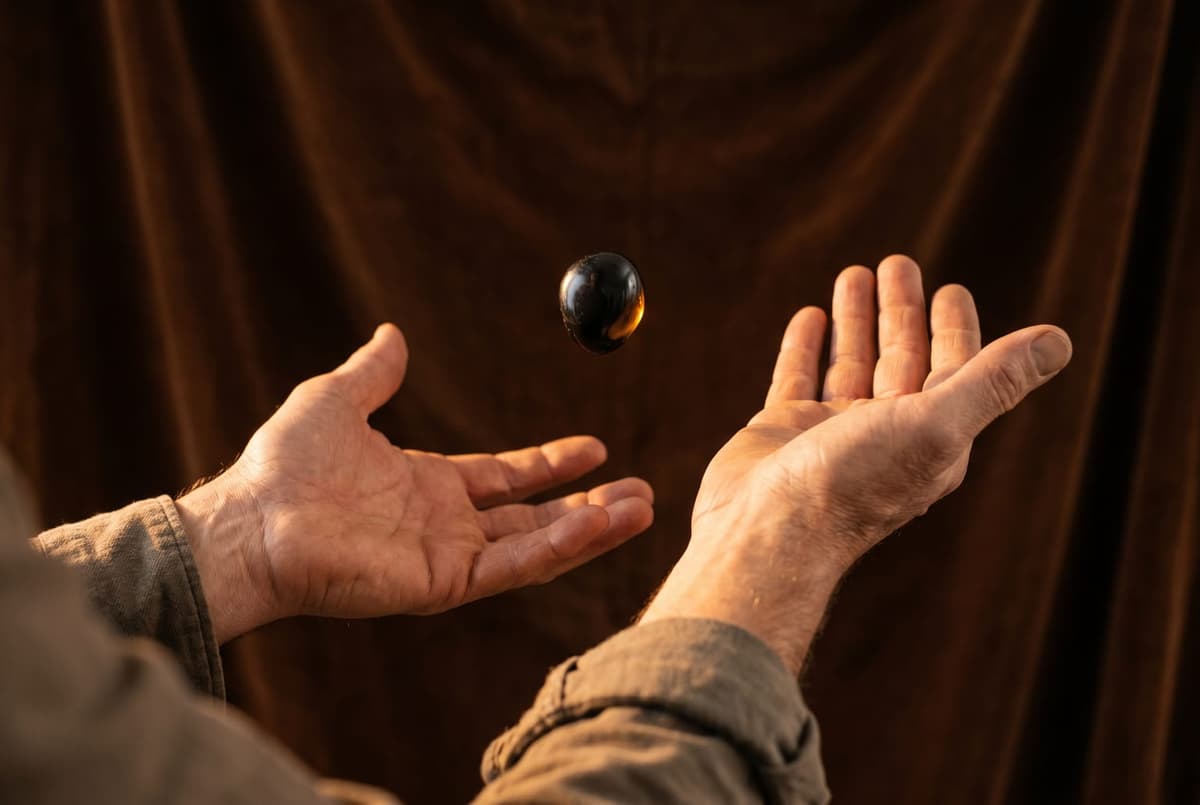
Sextile Moon–Pluto — symbolic illustration

Sextile · 60°

Moon sextile Pluto

A harmonious aspect: the two planets support each other and tend to pull in the same direction. Read it as a resource to notice, not a guarantee.

60°Orb up to 4°HarmoniousNatal · synastry · transit
60°Moon sextile PlutoOrb up to 4° · major aspect
Oksana MiatovaWritten by Oksana Miatova·10 min read

For entertainment and self-reflection only. Not medical, legal, financial or psychological advice. Consult a qualified professional for important decisions.

The short answer

Moon sextile Pluto is a gentle 60° link between your feeling nature and your deepest reserves of resilience. In the natal chart it gives access to your own shadow without falling apart; in synastry it lets a couple speak about frightening things and stay close; in transit it opens short, easily missed windows for honest inner work. Read it for entertainment and self-reflection, not as a forecast.

What a sextile is

The geometry behind the reading

A sextile is an angle of sixty degrees between two planets, a sixth of the circle and the softest of the major aspects. In the usual ranking it comes fourth for sheer force and first for how often it gets overlooked. A trine of 120° hands you a talent that wants to show itself; a square of 90° presses and makes you act through resistance; an opposition of 180° pulls two drives to opposite poles. The sextile does neither. It simply places two planets where cooperation is possible — but nobody is responsible for that cooperation except the owner of the chart. The orb for a sextile is modest, usually three to four degrees, occasionally stretched to five for a pairing that involves the Moon. Beyond that the influence thins to background and reads less as a distinct aspect than as a light, natural quirk of temperament. For the Moon and Pluto, the angle links the most ordinary part of you — your habits of feeling, the way you soothe yourself — with the most extreme: the buried power to go through a crisis and come out changed.

Three ways to read it

The same aspect, three different stories

One aspect reads differently depending on where you find it: inside a single birth chart, between two people, or moving across the sky right now. Read each as a way to notice patterns, not as a forecast.

Moon sextile Pluto in the natal chart

If this aspect sits in your natal chart, the odds are you don't think of yourself as a person of any particular depth. From the inside it looks perfectly ordinary. You can live through heavy emotions without falling to pieces; after a bad patch you recover faster than most; you sense without much effort what is really going on with the people close to you. It doesn't strike you as rare. It feels like the way everyone is built. But it isn't. Most people are frightened of their own depths and steer clear of any talk of death, fear or old wounds. You barely have that avoidance, and that absence is exactly what the Moon's sextile to Pluto gives.

The Moon is your feeling nature — the habit of emotion, the way you settle yourself, the means by which you recover. Pluto is deep power: access to buried reserves, the capacity to go through a crisis and come out a different person. When a soft 60° angle links the two, these sides don't fight. Feelings sink down into the depths and rise calmly back up again. You can look at your fears without turning away, and still not drown in them. For people with the tense aspects of these planets it works otherwise: there the depth arrives through dread and pain, and the resource only after long crises. For you it lies ready to hand, and it can simply be used.

And then comes the catch, which is the whole point of this aspect. It only works on request. With no task in front of it, it stays mute. If life never asks you for a meeting with yourself, the sextile can lie dormant for decades. On the surface everything is fine — a calm person, emotionally steady, nothing alarming anywhere. But the real scale of what you're capable of stays in shadow. I see this often in consultations: someone with this aspect arrives and says, "everything's all right, it's just that something seems to be missing." There's no conflict inside, but no movement either. A quiet under-use of one's own strength.

So what switches it on? Any concrete situation that calls for depth. Therapy is the most direct route. A conversation with someone in crisis. A book or a diary on hard subjects. Work where you have to hold other people's pain — a doctor, a counsellor, a hospice volunteer, a reporter in difficult places. It needn't be a whole profession. A regular practice is enough, one in which you step into material others won't go near. At that point the Moon and Pluto begin to work together, and it becomes obvious there is far more inside you than there seemed.

There's a separate strand here worth its own mention: your relationship with your mother and with the female line of the family. The Moon often carries that image, and Pluto in its aspects adds depth and a theme of power. A sextile usually means there is a reserve of strength somewhere in the maternal line that you have access to. It wasn't always an easy history — more often a hard one, with difficult mothers or grandmothers who came through something serious. But the energy held, and it reached you in the form of an inner margin of resilience. You can sometimes see it if you ask the older generation, dig into the family stories, find the things the family was quietly proud of and never quite spoke about.

One more side of the aspect is a capacity for deep intuition — not the magical kind, the psychological kind. You pick up quickly when a person is saying one thing and thinking another. You read the motive behind the words. That doesn't make you infallible; the sextile gives sensitivity to what's hidden, not a guarantee of being right. The wise thing is to check that sensitivity against reality rather than treat it as gospel. Handled that way it turns into a genuinely useful instrument — in conversation, in work, in building relationships.

In short, this aspect is a free resource of depth that nobody will spend on your behalf. The inner strength is real, and it shelters you in a crisis. But to turn it into a lived life you have to set yourself tasks where it can work. To see how precisely this sextile fits into the rest of your chart — and which areas of life would draw it out most strongly — you'd want a full natal reading. None of this is a verdict on who you are; it's a way of noticing what you have.

When it flows

  • An ability to sit with heavy emotions without coming apart — the psyche can go deep and then come back up
  • A good instinct for the hidden motives of other people, especially those closest to you
  • A larger-than-average reserve for recovering after a crisis
  • Access to your own shadow side without panic — you can look inwards and not break

When it grates

  • The reserve sits idle until life throws up a situation that actually needs it
  • A habit of not noticing your own emotional strength and quietly assuming you're 'ordinary'
  • In calm spells the deeper part gets bored and can surface as a low, reasonless ache
  • You can live a whole life with this aspect and never once reach your real subject

The shadow side, and what to do with it

The shadow of Moon sextile Pluto is the quiet under-use of inner strength. You can go down into your own pain and other people's, you could be a rare confidant, a therapist, a researcher of the psyche — and yet you run at a quarter of your capacity, because the aspect never gives you a shove. Integration starts with one honest admission: this depth is mine, and it isn't frightening. After that it needs concrete situations where it actually works — a conversation with someone in crisis, your own course of therapy, a demanding project. In a routine with nothing to test it, the aspect stays silent. None of this is destiny; it's a pattern to notice in yourself.

Sextile — symbolic still life

How close is close

The orb decides the volume

A sextile is rarely exact. The smaller the gap between the two planets — the orb — the louder the aspect plays. Here is roughly how the three bands read.

Tight

0–2°

Reads as a defining feature

At 0–2° this is an exact sextile, and it works cleanly: inner power and feeling nature stay in steady dialogue, and you rarely fear your own depth. In hard spells the reserve of quick recovery switches on by itself. In synastry this orb gives a couple who can talk about anything without dread of breaking the bond. In transit the window is clear, around a day long, and well suited to deep work.

Medium

2–5°

A steady background pattern

At 2–5° this is the working orb. The sextile is noticeable but doesn't dominate. There's a sensitivity to what's hidden in people and in yourself, a better-than-average capacity to recover, but without marked intensity. In synastry it builds a settled sense of 'I can be myself with you'. In transit it gives a soft window of up to two or three days in which speaking about heavy things comes more easily than usual.

Loose

5–8°

A faint colouring, felt in crises

At 5–8° the influence is background only. It reads as a natural depth of character rather than a distinct aspect. In the natal chart it gives a small margin of resilience but doesn't define the personality. In synastry it's barely legible on the surface — both people simply feel a warmth they can't quite account for. In transit it slips by unremarked, registering only if you happen to keep a journal.

Sextile with a partner — what does it mean for the two of you?

A full synastry reading — every aspect between your two charts

Moon sextile Pluto inside one chart is an inner mechanism. Between two charts it becomes the dynamic of a relationship. Enter both birth details and get a synastry reading — where the conjunctions sit, where the squares pull, where the oppositions draw you together — all calculated with the Swiss Ephemeris. Read it as a way to notice patterns, not a forecast.

Check your compatibilityfrom £1 · for entertainment

Compare with a neighbouring aspect

Same planets, a different distance

Moon square Pluto tells a different story. If you're reading this to make sense of a specific chart, it's worth glancing at the neighbouring aspect too.

Moon square Pluto
  • The square presses from inside: fear, jealousy and darkness tug constantly, whereas the sextile never presses and so it easily lies idle
  • The square forces you to look into your own depths through pain and crisis; the sextile gives access to the same place, but through a calm, deliberate request
  • The square builds a 'difficult character' with obvious emotional force from childhood; the sextile can stay invisible for a whole lifetime
  • In synastry the square between a luminary and Pluto creates magnetism and drama and keeps interest alive through tension; the sextile creates a safety that can quietly lull you to sleep
  • The square's main risk is exhausting yourself; the sextile's is under-using yourself — two ends of one scale

Lived examples

A few charts where you can see it

Public figures with a verified Rodden birth-data rating (AA/A/B). No invented data.

Frequently asked questions

What does Moon sextile Pluto mean in the natal chart?
It's a gentle 60° link between your feeling nature and your deepest reserves of strength. It gives access to your own shadow without breaking — you can look at your fears and old hurts and not fall apart. But a sextile never pushes you towards that work on its own, so plenty of people live with this aspect for years without realising how much resilience is sitting inside them. Treat it as a pattern to notice about yourself, not a fixed fact of fate.
Is Moon sextile Pluto good for a relationship in synastry?
It's a strong base for a long partnership, especially for couples who go through serious tests. With this aspect you can talk about frightening, heavy, long-buried things and not damage the connection. The catch is that the aspect's softness isn't enough for a romantic spark on its own — it works as a foundation of deep closeness rather than a source of passion. As with everything here, it's a way to understand how a couple operates, not a prediction about whether you'll last.
What orb should I use for Moon sextile Pluto?
The classic working orb for a sextile is three to four degrees, sometimes widened to five when the Moon is involved. The clearest expression is within two degrees, where the link between feeling and inner power is felt distinctly. From five to eight degrees the aspect becomes a background note and shows up only on close observation. Past about ten degrees it's considered to have dissolved.
Which famous people have Moon sextile Pluto?
Among figures with a verified birth time on AstroDatabank, Stephen King and Bruce Springsteen both carry it. In each case you can watch the aspect's reserve turn into a long engagement with heavy material — in King's case across novels about fear and trauma, in Springsteen's across songs about depression and social pain. Always check a chart against AstroDatabank at a Rodden rating of AA or A rather than trusting a name quoted in passing.
How is Moon sextile Pluto different from a trine of the same planets?
A trine of 120° is a ready-made resource that wants to show itself and can quietly turn into a comfort zone. A sextile of 60° is a possibility you have to switch on deliberately by asking something of it. A Moon–Pluto trine often appears as a natural psychological depth that others can see; the sextile works more quietly and needs a personal effort from the chart's owner before it does anything at all.
What if I have Moon sextile Pluto but don't feel any special depth inside?
That's the typical situation with soft aspects. The sextile doesn't hand you an automatic experience of depth — it hands you access to it. To get it working you need a concrete task: therapy, a journal, a hard conversation with someone close, professional work with people. In a calm routine with no such situations, the aspect simply stays quiet. It isn't broken; it's just waiting for a reason to switch on.
Is Moon sextile Pluto different for men and women?
The basic principle is the same — access to deep strength through your feeling nature. The difference is that the Moon in a woman's chart more often describes her own inner feminine part, while in a man's it tends to describe the kind of woman he's drawn to. So for a woman the sextile often reads as 'I'm not afraid of my own depth', and for a man as 'I attract strong, deep women and can hold them'. None of this is destiny; it's a lens for noticing patterns.
How often does a transiting Moon sextile natal Pluto happen, and what does it mean?
The transiting Moon crosses the whole zodiac in about 28 days, so it forms a sextile to your natal Pluto roughly twice a month, lasting around a day each time. It's a short window in which it's easier than usual to talk about heavy things, approach old fears and work with shadow themes. Most people pass straight through such a window without noticing it — which is fine, the aspect doesn't punish inaction.
Can Moon sextile Pluto tell you anything about a leaning towards psychology or therapy?
Partly. A harmonious aspect between the Moon and Pluto turns up often in psychologists, therapists and trauma researchers — it lends the ability to enter someone else's pain without burning out. But a single aspect doesn't decide a profession; you need the whole chart. And without a real demand on it, the aspect may show up simply as a natural steadiness in emotionally heavy situations, with no professional expression at all.
Does Moon sextile Pluto activate trauma or help with it?
More helps than activates. Unlike the square or the opposition, the sextile doesn't prise trauma open by force — it gives the resource to look at it without panic. If a trauma is already there, the aspect is a working support for processing it in therapy. If there's no trauma, the aspect simply gives a steadiness towards the heavy material life will eventually put in your path. This is for self-reflection, not a clinical statement.
Should I plan big things for the days of a transiting Moon sextile Pluto?
It's a good time for inner work and difficult conversations, but a poor one for bold pushes and public activity. The aspect gives depth, not peak energy. Starting therapy, sitting down to write about something heavy, talking to someone close about a long-standing matter — all fine. Going into loud negotiations or presentations is better saved for a more outward-facing transit.

Related pages

The other aspects between Moon and Pluto

The same two planets at a different angle — each reads differently.

Oksana Miatova
Oksana Miatova

Astrologer, co-founder of WowAstro

Oksana Miatova is a practising astrologer and co-founder of WowAstro. Natal charts, synastry and forecasts grounded in the Western classical tradition — explained through real-life examples and plain language.

More about the author →

For entertainment and self-reflection only. Not medical, legal, financial or psychological advice. Consult a qualified professional for important decisions.