Skip to content
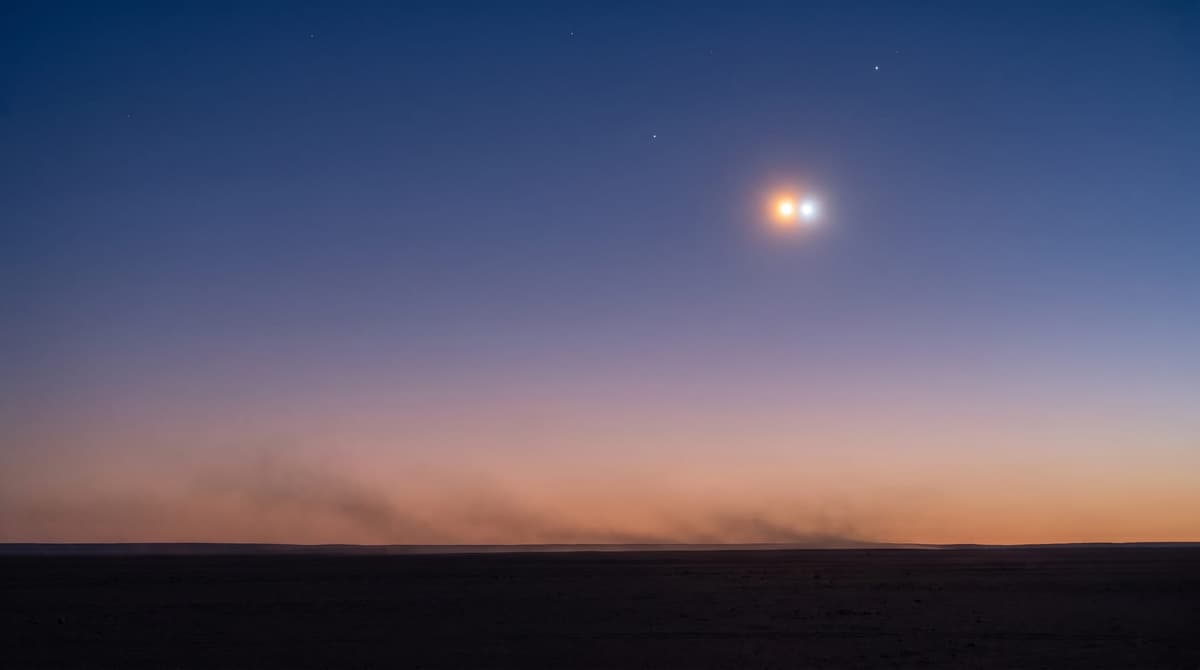
Conjunction Moon–Pluto — symbolic illustration

Conjunction · 0°

Moon conjunction Pluto

A neutral aspect: it amplifies both planets, and how it plays out depends on the signs they sit in and the rest of the chart.

Orb up to 8°NeutralNatal · synastry · transit
0°Moon conjunction PlutoOrb up to 8° · major aspect
Oksana MiatovaWritten by Oksana Miatova·13 min read

For entertainment and self-reflection only. Not medical, legal, financial or psychological advice. Consult a qualified professional for important decisions.

The short answer

Moon conjunct Pluto fuses your emotional world with the theme of deep crisis. Feelings turn denser, settle into the body and refuse to pass on the surface — and they often work themselves out as a slow rebirth through pain. In the natal chart it gives unusual emotional depth and a habit of control; in synastry it creates recognition at the level of the shadow; in transit it tends to coincide with a long reshaping of what 'safe' even means.

What a conjunction is

The geometry behind the reading

A conjunction is a separation of zero degrees between two planets, and it is classically treated as the strongest of the major aspects — first in the hierarchy and neutral in tone, because the outcome is set by the planets themselves rather than by the angle. A luminary beside a gentle planet reads as a resource; a luminary beside a hard or outer planet reads as a tense but powerful weld. Moon conjunct Pluto is exactly the second kind. The textbook orb for a conjunction involving the Moon runs up to eight degrees, though in practice I tighten that to about six in the natal chart and five for synastry and transits. The soft, domestic lunar function comes under the press of the planet of deep transformation, and the ordinary 'I feel' starts working in a different register — closer to 'I live this through to the bone'. That is the whole mechanism: nothing here is light, and nothing passes quickly.

Three ways to read it

The same aspect, three different stories

One aspect reads differently depending on where you find it: inside a single birth chart, between two people, or moving across the sky right now. Read each as a way to notice patterns, not as a forecast.

Moon conjunct Pluto in the natal chart

If Moon conjunct Pluto sits in your natal chart, your emotional life is wired differently from most people's. The Moon is the soft, domestic part of the chart — the bit that governs how you feel, how you attach, how you look for safety. Pluto right beside it changes the settings. Feelings stop being light and quick to move; they turn dense, bodily, sometimes heavy. What passes for another person in an evening can run on here for weeks and leave a mark in the body.

The strength of this shows early, and so does the difficulty. From childhood there's usually a strong tie to the mother, and almost always a complicated one. She's remembered as a large, unpredictable presence, even when in plain fact she was an ordinary woman with an ordinary life. The child picked up her hidden states, read what the family kept quiet about, and worked out fast that emotion is a force you don't simply put on display. From that grows the adult habit of holding feelings in. On the outside the person can look reserved, level, even cold — while inside a heavy machinery is running that they're in no hurry to show.

Attachments here run deep. Once someone with this aspect has let a person in, they've done it in earnest, and they part later with more trouble than most. The 'all or nothing' script isn't theatrics — it comes from how the aspect is built. There's no middle zone where you can be half-present: it's either full trust or a cold cutting-off. That applies to love, to friendship, to work — anywhere the theme of close contact switches on.

The real gift of the aspect is endurance. Where others break quickly, Moon–Pluto can go in and stay. A serious illness in the family, work in a hospice, crisis counselling, raising a child with special needs — wherever the job calls for holding someone else's pain close without falling apart, this person turns out to be in their element. Not because it comes easily, but because dense feeling is their native weather. They're not braver than other people; they're simply less frightened of the deep end.

That same instinct shows in how they read a room. Long before anyone has said a word, someone with this aspect tends to feel the undercurrent — the tension nobody's naming, the grief sitting just under a polite conversation, the moment a friend is about to crack. It can be uncanny to be around, and exhausting to carry, because there's no off switch on it. Many people with Moon conjunct Pluto describe spending childhood as a kind of emotional weather station for the family, picking up storms that the adults thought they'd hidden. The adult task is to learn that sensing a feeling in someone else does not oblige you to absorb it, fix it or carry it home.

The shadow is the inner controller. Feelings seem dangerous, so the impulse is to regulate them — suppress, wait them out, explain them away. While the lid holds, pressure builds, and then it blows: an outburst that comes from nowhere, a psychosomatic symptom, a relationship cut clean off. The outbursts often look out of proportion to whatever set them off, and the person themselves is startled by the force of their own reaction. What's actually breaking through is months of accumulation that never found a safe channel.

Jealousy and the fear of loss run, with this conjunction, at raised volume. They switch on before any real risk has appeared, and they can badly poison relationships in which, in fact, everything is fine. The work here is to learn to tell an alarm signal apart from an actual event — 'I feel terrible inside right now' does not always mean 'my partner is doing something wrong'. Once that line exists, the panic recedes and what's left is depth, which no longer frightens.

The theme of money and material safety carries a plutonian colour too. Many people with this aspect go through serious financial swings — there was enough, it went to zero, it built back up again. Money is felt not as a neutral resource but as part of emotional security, so any wobble lands harder than it would for the neighbouring signs. The encouraging part is that the regenerative capacity of Moon–Pluto runs above average as well: whoever knows how to recover, in the end, always recovers.

Psychosomatic patterns are this conjunction's familiar companion. Sleep, the menstrual cycle, eating, muscular tension — everything tied to the body's self-regulation reacts more sharply to emotional overload. That isn't a sentence so much as a signalling system: the body takes on what the psyche won't let out, and regular body work, therapy and somatic practice tend to ease a good deal of what no medicine has touched for years. Anything physical, of course, belongs with a qualified professional rather than a chart.

The sign the conjunction sits in colours the whole picture. In water signs the depth deepens further, often with a thread of healing, psychology or art. In fire it sounds more like force of will tested through crisis. In earth it grounds into endurance and a wary relationship with security and money. In air it tends towards naming the unspeakable — the person who can put words to what others won't admit. The mature version of all this is someone who has stopped fighting their own depth and found it a form: therapy, art, psychology, crisis work, supporting others through their hardest stretches. Wherever dense feeling becomes a tool rather than an enemy, Moon–Pluto comes into its own. To see how the aspect is actually built into your chart — the sign, the house, the further links to Saturn, the Sun and the angles — it all has to be read together.

When it flows

  • A very deep instinct — you read another person's state before they've found the words for it
  • The capacity to sit with heavy material that makes most people flinch: illness in the family, loss, real psychological work
  • Genuine powers of regeneration: what looks like an ending often turns out, in time, to be a point of new beginning
  • A natural gift for body- and depth-oriented practices, where the work is with fear and the shadow side

When it grates

  • Feelings flood you from inside and seem dangerous, so the reflex is to control them or to hide them away
  • Attachments run too dense, and the fear of loss switches on long before any real risk appears
  • An 'all or nothing' script in close relationships — either total fusion or a cold, clean break
  • A pull towards corrosive states — jealousy, resentment, the wish to settle a score — that can take years to let go of

The shadow side, and what to do with it

The shadow side of Moon conjunct Pluto is an inner controller who trusts neither itself nor anyone else and therefore keeps the lid clamped on the feelings. While the lid holds, pressure builds — and then it blows, as a sudden outburst, a psychosomatic symptom or an abrupt severing of ties. The way through is not to remove the depth but to give it a channel: therapy, body work, a journal, art. When Moon–Pluto has somewhere to unload, the same person who used to be flooded becomes a steady support for others in their own crises, and does it without coming apart. Read all of this as a pattern to notice, not a verdict on who you are.

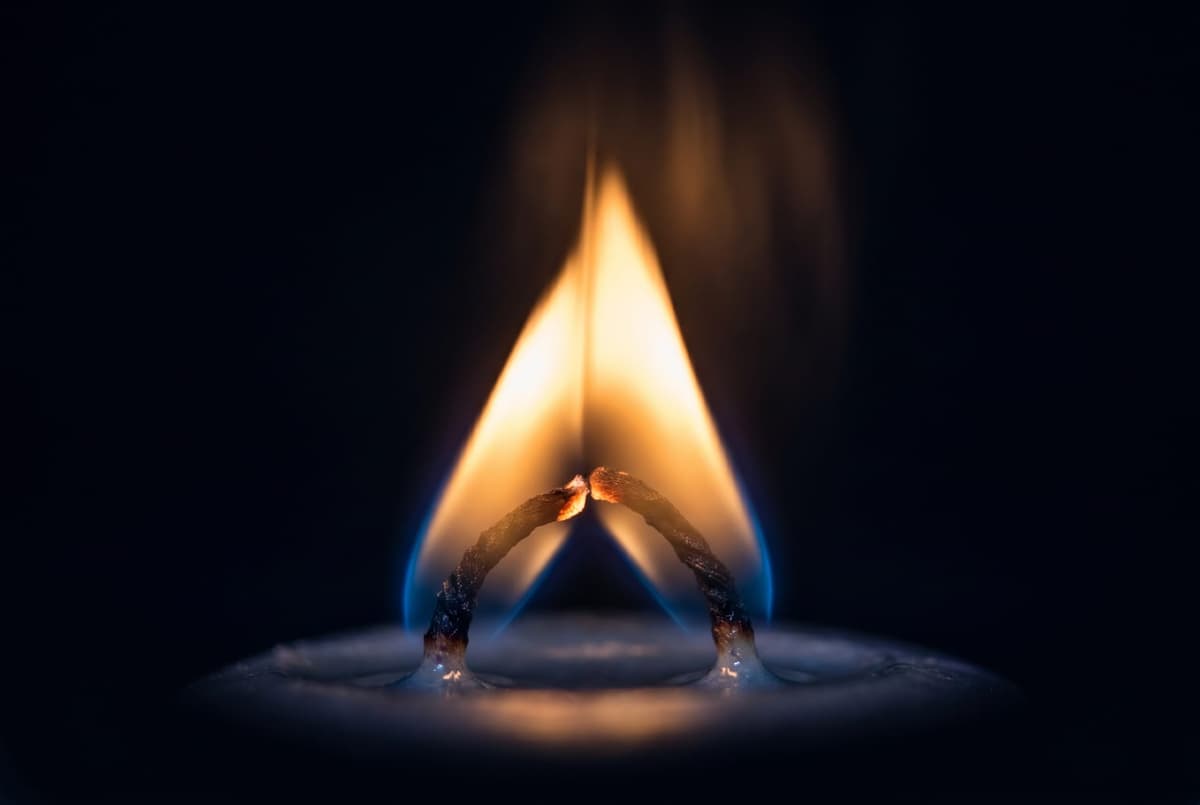
Conjunction — symbolic still life

How close is close

The orb decides the volume

A conjunction is rarely exact. The smaller the gap between the two planets — the orb — the louder the aspect plays. Here is roughly how the three bands read.

Tight

0–2°

Reads as a defining feature

At 0–2° this is an exact conjunction, with Moon and Pluto working as a single emotional complex from the moment of birth. Feelings are always dense, every experience carries a deep underlay, and a purely surface emotional register barely exists for this person. In this band the themes of controlling feeling and of the shadow side of attachment stand at full height — you can't sidestep them, only learn to hold them. People born with the lights this close tend to live lives where the personal and the buried are so woven together that one can't be teased out from the other.

Medium

2–5°

A steady background pattern

At 2–5° the weld is felt, but not around the clock. In ordinary life the person reads as a lunar type with their own reactions, and it's in moments of crisis, loss or strong intimacy that the plutonian register switches on: depth, the body, a pull towards final decisions. This band often produces someone who knows about this depth in themselves and engages it selectively rather than constantly. A strong, not-quite-released tie to the mother is typical here, with room to grow out of it.

Loose

5–8°

A faint colouring, felt in crises

At 5–8° the conjunction works as a background colouring of the Moon with a plutonian tint rather than as a full fusion. Emotional life runs its usual course, but in close relationships, in the themes of children and mother, and in crisis moments a plutonian note unexpectedly shows through: jealousy, the fear of losing someone, the pull towards 'forever'. At the edge of the orb it still counts as a working aspect, but the intensity is well below that of the exact conjunction, and the sign and house it falls in matter more here than the bare fact of the aspect.

Conjunction with a partner — what does it mean for the two of you?

A full synastry reading — every aspect between your two charts

Moon conjunction Pluto inside one chart is an inner mechanism. Between two charts it becomes the dynamic of a relationship. Enter both birth details and get a synastry reading — where the conjunctions sit, where the squares pull, where the oppositions draw you together — all calculated with the Swiss Ephemeris. Read it as a way to notice patterns, not a forecast.

Check your compatibilityfrom £1 · for entertainment

Compare with a neighbouring aspect

Same planets, a different distance

Moon opposite Pluto tells a different story. If you're reading this to make sense of a specific chart, it's worth glancing at the neighbouring aspect too.

Moon opposite Pluto
  • An opposition sets Moon and Pluto at opposite ends of an axis, so they see each other from across the chart; the conjunction fuses them at one point, where they can't be told apart from the inside
  • The opposition is more often projected outward — 'they control me', 'my partner drains me'; the conjunction is always internal, and there's nowhere to run from it
  • The opposition teaches balance, the conjunction teaches integration: in the first you reconcile two poles, in the second you learn to handle one shared weld
  • In synastry the Moon–Pluto opposition gives the classic 'victim and executioner' dynamic; the conjunction gives deep recognition without a clear split of roles
  • The opposition buys perspective at the cost of constant tug-of-war; the conjunction buys depth at the cost of having no distance from it

Lived examples

A few charts where you can see it

Public figures with a verified Rodden birth-data rating (AA/A/B). No invented data.

Frequently asked questions

What does Moon conjunct Pluto mean in the natal chart?
It is the emotional function welded to the theme of deep crisis. You feel more densely than most, let go more slowly, read other people's states faster, and tend to pass through a series of inner rebirths. The tone is neutral: worked with consciously, it gives real strength and a therapeutic gift; left unconscious, it shows up as control, jealousy and psychosomatic strain. Treat it as a pattern to notice in yourself, not a sentence.
Is Moon conjunct Pluto good or bad in synastry?
It is neither 'good' nor 'bad' — it is deep. A recognition arises between partners at the level of the shadow, and surface contact simply isn't there. If both are willing to talk about their fears and their scripts, the couple becomes a genuine support in crises. If they aren't, the synastry slides towards codependence and a quiet blackmail by feeling. As with everything here, it's a way to understand a relationship's patterns, not a forecast about it.
What orb should I use for Moon conjunct Pluto?
Classically up to 8° for a conjunction involving the Moon, with the exact aspect at 0–2°. From 2–5° the conjunction is significant and tends to show in crises; from 5–8° it stays a background colouring of the Moon with a plutonian note. All three bands count as working, but the intensity differs sharply. Beyond about 10° the conjunction is considered to have dissolved.
Is Moon conjunct Pluto different for men and women?
The emotional architecture is the same; what differs is the public delivery. In a woman's chart the aspect more often shows directly: deep attachments, bodily sensitivity, the themes of mother and daughter. In a man's chart the Moon is more often projected onto a partner — he draws plutonically charged women towards him and lives the theme through them until he learns to meet his own depth. None of this is destiny; it's a lens for noticing.
Which celebrities have Moon conjunct Pluto?
Among public figures with verified birth times (Rodden AA): Bill Clinton, Hillary Clinton and Steven Spielberg. All three belong to the late-1940s cohort, when Pluto moved through Leo and frequently formed a conjunction with the Moon for people born in those years. Each biography shows the classic themes — deep work with emotion, public crises, and the ability to return after defeat. Always check any chart against AstroDatabank before you rely on it.
Moon conjunct Pluto and the relationship with the mother?
This is one of the most common themes of the aspect. In childhood the mother is often experienced as a very powerful, controlling or emotionally unpredictable figure, even when in reality she was fairly ordinary. The tie to her tends to be dense and not fully released in adult life, and a large part of this person's psychological work usually runs precisely through separating from the maternal figure. It's a pattern to be aware of, not a description of any particular mother.
How does transiting Pluto to the natal Moon work?
It is a long transit — typically one to three years with the retrograde loops — during which the emotional baseline itself is rebuilt. Old supports (family, the usual attachments, the habitual way of feeling things) stop working. Buried experience often surfaces, and many people begin therapy or a serious inner review around then. After the transit a person tends to come out with a different emotional structure, and usually no longer quite who they were. This is a description of a season, not a prediction of specific events.
Can Moon conjunct Pluto be 'fixed'?
It can't be 'fixed' — it's a basic feature of the chart. It can be mastered: learning your triggers, giving feelings a safe channel (therapy, the body, art), and learning to tell 'my jealousy' apart from 'a real risk'. Worked with consciously, the conjunction becomes one of the strongest psychological resources in the chart; left unconscious, it becomes the main source of inner sabotage. For entertainment and self-reflection, that distinction is the useful one to hold.
Moon conjunct Pluto and psychosomatic patterns?
The link is direct. With this conjunction, suppressed emotion almost always travels into the body: sleep trouble, the menstrual cycle, eating patterns, muscular tension, lingering inflammation. The body takes on what the psyche won't let out. Therapy and regular body work tend to ease a good deal of what surfaces — but this is general reflection, not medical advice, and anything physical belongs with a qualified professional.
Should I start something important under transiting Pluto over the Moon?
Beginning long-term commitments under such a transit is risky: the emotional baseline hasn't settled, and decisions made in an acute moment can look like a stranger's a year on. The better approach is to close out the old — relationships, contracts, worn scripts — free up resource, and hold off on new commitments until the transit eases. Again, this is a frame for reflection rather than a rule about your life.

Related pages

The other aspects between Moon and Pluto

The same two planets at a different angle — each reads differently.

Oksana Miatova
Oksana Miatova

Astrologer, co-founder of WowAstro

Oksana Miatova is a practising astrologer and co-founder of WowAstro. Natal charts, synastry and forecasts grounded in the Western classical tradition — explained through real-life examples and plain language.

More about the author →

For entertainment and self-reflection only. Not medical, legal, financial or psychological advice. Consult a qualified professional for important decisions.