Skip to content
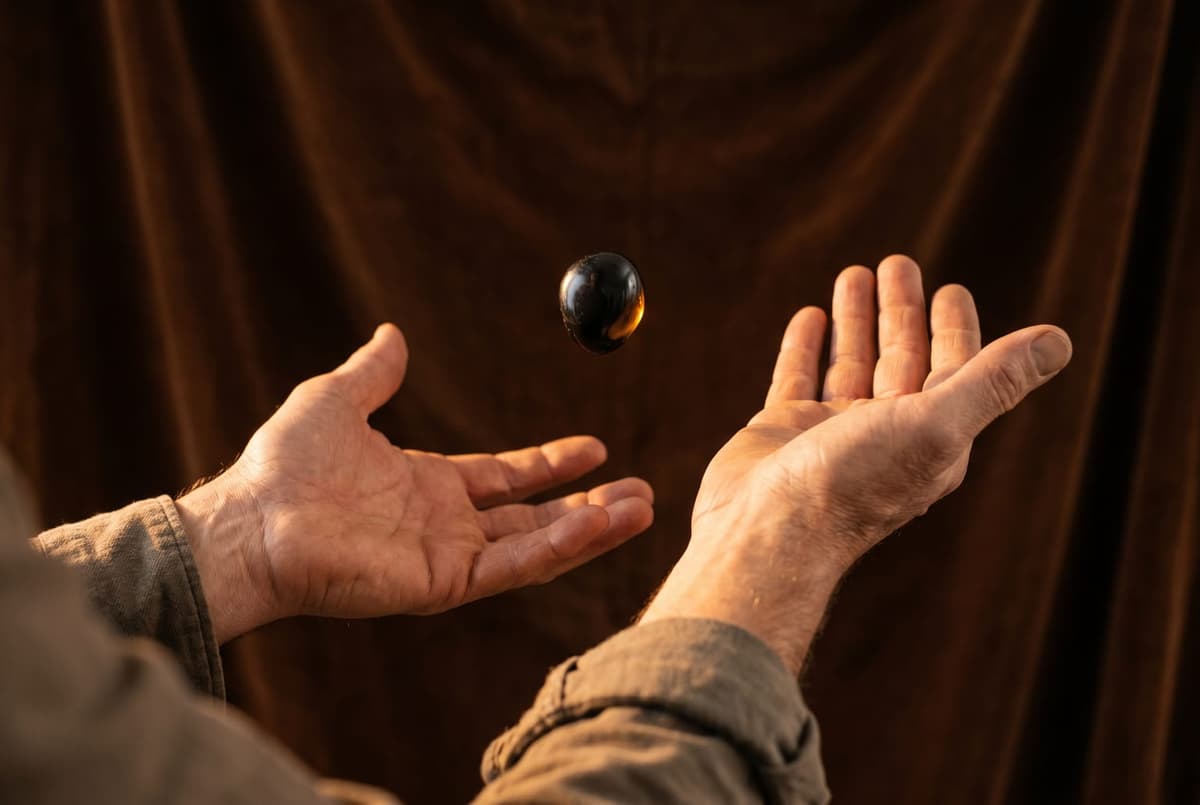
Sextile Mars–Neptune — symbolic illustration

Sextile · 60°

Mars sextile Neptune

A harmonious aspect: the two planets support each other and tend to pull in the same direction. Read it as a resource to notice, not a guarantee.

60°Orb up to 4°HarmoniousNatal · synastry · transit
60°Mars sextile NeptuneOrb up to 4° · major aspect
Oksana MiatovaWritten by Oksana Miatova·11 min read

For entertainment and self-reflection only. Not medical, legal, financial or psychological advice. Consult a qualified professional for important decisions.

The short answer

Mars sextile Neptune is a gentle 60° aspect where will and imagination point the same way without strain. Action gets a dream to aim at, the dream gets an engine. It is so quiet you can miss it entirely — it works as an option you have to notice and pick up, not a gift that switches itself on.

What a sextile is

The geometry behind the reading

A sextile is a separation of sixty degrees, the soft harmonic aspect that forms between planets in compatible-but-not-identical elements — water with earth, fire with air. It behaves differently from a trine. A trine hands you a talent that runs by itself; a sextile hands you an opening you have to spot and walk through. In the running order of the major aspects by sheer force, the sextile comes fifth, after the conjunction, the opposition, the square and the trine. It is the quietest of them all, and it usually sits in the background unless you light it up on purpose — leave it alone and it simply lies there as a resource nobody ever collected. For that reason the sextile tends to show up not as a fixed trait of character but as a capacity, a setting that only opens once you take the first step in the right direction. For the Mars–Neptune pair this means that joining action to imagination comes easily — but only when there is action to begin with. Without it, the sextile stays a promise.

Three ways to read it

The same aspect, three different stories

One aspect reads differently depending on where you find it: inside a single birth chart, between two people, or moving across the sky right now. Read each as a way to notice patterns, not as a forecast.

Mars sextile Neptune in the natal chart

If you have Mars sextile Neptune in your birth chart, the odds are you don't know it. That, more than anything, is the signature of this aspect. It doesn't shout, it doesn't press, it doesn't twist your arm — it lies there as a resource you have to come to under your own steam. Plenty of people live a whole life with this sextile, running Mars one way and Neptune another, never suspecting there's a small bridge between the two.

Mars in the chart governs will, action, initiative, the willingness to throw yourself in physically and to stand your ground. Neptune is the dream, the image, the fine-tuned perception, the ability to pick up on what other people can't see. When a sextile joins them, those two qualities link up softly: will gets an image to steer by, and the image gets an engine. But the connection only works in motion. Stand still and the sextile says nothing.

What does that mean in practice? Most likely you do your best work wherever the hands serve an image. Dance, where the body carries an idea. Sport, where form matters as much as the score. Design, editing, film, photography, craft. Any physical task done for a beautiful end goes down more easily than the same task done for a bare function. Asked to build a plain spreadsheet, the motor turns over reluctantly. Asked to build the same spreadsheet so that it's elegant and a pleasure to use, something clicks on inside and the work flows.

The second feature: your intuition fires while you act, not while you sit. A lot of people try to work out what to do by thinking it through in a chair. Your wiring is different — the body knows before the head does. Once you start moving in some direction, even hesitantly, even without knowing why, a sense arrives of whether it's the right direction or not. So the worst advice anyone can give you is "think it all through first, then begin." The advice that actually works is "begin, and the hint will come."

A third side of the aspect is the capacity to move through fog. When the full picture isn't available, when it's unclear what the next step will even be, when other people are frozen by the uncertainty — you can keep going. Not because you're braver. Because the Neptunian part of you is at home in murk, and the Martian part knows how to move. That's a rare combination, and one the modern world has a constant appetite for, from launching projects to the creative trades.

Now the shadow. The aspect is gentle, and that very gentleness is what attracts subtle forms of self-deception. The main one is mistaking action for the daydream about action. You can spend an hour picturing yourself doing a workout and stand up off the sofa with the feeling that something happened. That's a Neptunian substitution, and the Martian part is fairly helpless against it, because the sextile asks for no effort. A simple end-of-day question helps you sidestep the trap: what did I actually do with my hands today, rather than in my head?

A second shadow is flatness on dull tasks. Your motor is wired to an image. A task with no image attached won't start it. That isn't a flaw of character, it's how the aspect is built. The fix isn't to force yourself through sheer willpower — your will is a different sort. The fix is to find an aesthetic or a meaning to wrap around the boring job. Not "wash the dishes" but "clear the decks for an easier morning." It sounds like a sleight of hand, yet that is precisely how this aspect prefers to work.

A third shadow is a soft spot for any idea that promises "energy through intention" without the doing. Practices of the "visualise it and it's yours," "picture it and it happens" kind land squarely on the Neptunian half of the aspect. They feel true, because you genuinely can live inside an image. But without Martian movement nothing comes of them. You can run the test yourself: if a practice promises a result with no action attached, it doesn't work for you, however persuasive it sounds. To see which area of life your dream-in-action resource is most open, look at the house your Mars and Neptune fall in — for entertainment and self-reflection, that's where this thread shows up most strongly.

When it flows

  • A knack for moving in foggy conditions, when the full picture simply isn't available yet
  • Energy that fires readily for a beautiful idea, far more reluctantly for a bare target
  • A real flair for anything where the body serves an image — dance, design, editing, film, expressive sport
  • Intuition that switches on while you act, not while you sit and ponder — the body points the way

When it grates

  • The aspect is so quiet you can live for years not knowing it's there, running Mars and Neptune as separate engines
  • Flatness on ordinary tasks without something inspiring to aim at — the motor won't turn over for the dull stuff
  • A blurred line between 'I put the work in' and 'I had a lovely daydream about it' — it can feel like motion when nothing moved
  • A soft spot for anything that promises 'energy through intention' — the Neptunian half slides easily into wishful thinking

The shadow side, and what to do with it

The shadow of this sextile is a gentle sort of self-justification — not aggressive, but coaxing: 'I'm not in the mood today, I'll just picture myself doing it.' Neptune without Mars curdles into fantasy; Mars without Neptune hardens into mechanical effort with no soul in it. The way through is to treat the aspect as a tool rather than a present. Every time a dream turns up, ask what the next physical step actually is. Every time you act, ask which image you are doing it for. Then the dream grows hands and the hands grow a reason.

Sextile — symbolic still life

How close is close

The orb decides the volume

A sextile is rarely exact. The smaller the gap between the two planets — the orb — the louder the aspect plays. Here is roughly how the three bands read.

Tight

0–2°

Reads as a defining feature

At 0–2° the sextile is exact and genuinely felt. In the natal chart it means you regularly catch the moments when action and intuition line up, and you slowly learn to lean on that pairing. In a transit this orb gives a handful of days when creative physical work serves you best — editing, form-focused sport, any hands-on task with a beautiful aim.

Medium

2–5°

A steady background pattern

At 2–3° the orb is significant: the aspect is discernible but doesn't dominate. In character it shows as an ability to work with fog and partial information without panicking. In synastry this distance gives a soft pull without heavy dependence — a couple feels each other's rhythm well but can part without drama. In transit the window blurs, the effect stretching across seven to ten days with a peak somewhere in the middle.

Loose

5–8°

A faint colouring, felt in crises

At 3–4° the sextile is a background note, sitting at the edge of the classical orb. The aspect is more an option than an asset. In the natal chart a person can go years not suspecting they have it, and surface it only in a crisis when the usual tools stop working. In transit this orb gives a mild tailwind of mood that any stronger configuration of the day will easily drown out.

Sextile with a partner — what does it mean for the two of you?

A full synastry reading — every aspect between your two charts

Mars sextile Neptune inside one chart is an inner mechanism. Between two charts it becomes the dynamic of a relationship. Enter both birth details and get a synastry reading — where the conjunctions sit, where the squares pull, where the oppositions draw you together — all calculated with the Swiss Ephemeris. Read it as a way to notice patterns, not a forecast.

Check your compatibilityfrom £1 · for entertainment

Compare with a neighbouring aspect

Same planets, a different distance

Mars square Neptune tells a different story. If you're reading this to make sense of a specific chart, it's worth glancing at the neighbouring aspect too.

Mars square Neptune
  • The sextile offers an option — you can use it or not, and reality demands nothing of you either way
  • The square presses: will and imagination clash, so action keeps slipping into fog or being swapped out for fantasy
  • The sextile only works on conscious activation — without action it stays silent
  • The square announces itself; it's hard to miss, usually through collapsed plans, deceptions or sheer physical exhaustion
  • The sextile teaches you to fuse the dream to the body as a skill; the square teaches it as a painful lesson, after which you never confuse the two again

Frequently asked questions

What does Mars sextile Neptune mean in the natal chart?
It gives a gentle link between will and imagination. Action and dream pull the same way with no resistance — but only when you take the first step yourself. This is the weakest of the major aspects, so it's easy to miss and to spend a whole life running Mars and Neptune separately. It activates through creative work with a physical side, sport where form matters, and any hands-on task done for a beautiful aim. Read it as a pattern to notice and use, not a verdict on who you are.
Is Mars sextile Neptune a good aspect?
In itself it's soft and supportive, with no sharp edges. But it doesn't run in the background like a trine, and it doesn't press like a square. It's an option you have to spot and pick up. If you never try making things, acting on instinct, or doing something physically expressive, the sextile simply stays a silent resource. Good, yes — but a tool rather than a gift, and only as useful as the action you bring to it. As with everything here, it's a lens for self-reflection, not a forecast.
What orb should I use for Mars sextile Neptune?
The classical orb for a sextile is about 4°. Treat 0–2° as exact, up to 3° as significant, and 3–4° as background. If Mars or Neptune is retrograde the same orb applies. In transit you work to roughly the same range, but the window stretches because the planets move at such different speeds: Mars is fast, Neptune very slow, so a transiting aspect can hold from a few days to a couple of weeks. Beyond about 4° the sextile is considered to have dissolved.
How is Mars sextile Neptune different from a trine?
A trine hands you an inborn talent that shows up by itself. A sextile hands you an opening that only appears when you step towards it. With a Mars–Neptune trine a person is already doing something in this vein from childhood, without giving it a thought. With the sextile they may live half a life unaware they have the pairing at all, and stumble on it by chance after trying a new kind of activity.
How does Mars sextile Neptune show up in synastry?
It works as quiet support: one partner can inspire the other without pressure, through atmosphere and image. The physical side gains an aesthetic depth. Shared creative projects run easily. The downside is that the aspect is weak — it won't rescue a couple whose underlying chart is conflicted. It's a lining, not a load-bearing wall. To see how it fits the wider picture, the two whole charts have to be compared side by side.
How do I use a transiting Mars sextile Neptune?
Choose one thing in advance that needs both drive and imagination: a form-focused workout, a rehearsal, a shoot, a pitch, a sale made through vision. Don't waste the window on routine — it's too short and too good for that. The body tends to be softer, more pliable and more sensitive in these days, so massage, swimming and dance land more deeply than usual. Dreams can offer direct hints. None of this predicts events; it simply describes a mood worth working with.
Are there celebrities with Mars sextile Neptune?
Because the aspect is so quiet, it rarely becomes anyone's calling card, and it's genuinely hard to find public figures with a verified AA-rated birth time where this particular sextile is the headline configuration. I'd rather not pass along unverified names than serve up random examples and risk spreading an error. If you have an accurate birth time, the honest move is to check your own chart against this description rather than borrow someone else's.
Is Mars sextile Neptune different for men and women?
The principle is the same, but it surfaces through different areas. In a man's chart Mars is a core planet of self-expression, so the sextile with Neptune deepens the creative and intuitive side of his actions and makes physical activity more expressive. In a woman's chart Mars also colours desire and the type of partner she's drawn to, so the sextile can show as an attraction to creative, gentle, sensitive partners and as an aesthetic relationship with her own sensuality. Archetypes, not destinies — treat them as a way of noticing.
When is the next transiting Mars sextile Neptune?
The exact dates depend on where Neptune currently sits — it moves only about two and a half degrees a year. Mars makes a sextile to natal Neptune on average once every couple of years; transiting Neptune to natal Mars comes round only once or twice in a lifetime, depending on the chart. To find the nearest date for your own chart you'd need to calculate against your natal positions, since the timing is particular to each person.
Can Mars sextile Neptune point to an interest in the esoteric?
The aspect alone doesn't make anyone esoteric, but it does give an easy blend of physical action and subtle perception. You often see it in people who work with the body through image — dancers, actors, healers, martial artists with a philosophical bent. An esoteric interest is possible, but it usually comes from other configurations where Neptune is more strongly activated. Read this, as ever, for self-reflection and curiosity rather than as a prediction.

Related pages

The other aspects between Mars and Neptune

The same two planets at a different angle — each reads differently.

Oksana Miatova
Oksana Miatova

Astrologer, co-founder of WowAstro

Oksana Miatova is a practising astrologer and co-founder of WowAstro. Natal charts, synastry and forecasts grounded in the Western classical tradition — explained through real-life examples and plain language.

More about the author →

For entertainment and self-reflection only. Not medical, legal, financial or psychological advice. Consult a qualified professional for important decisions.