Skip to content
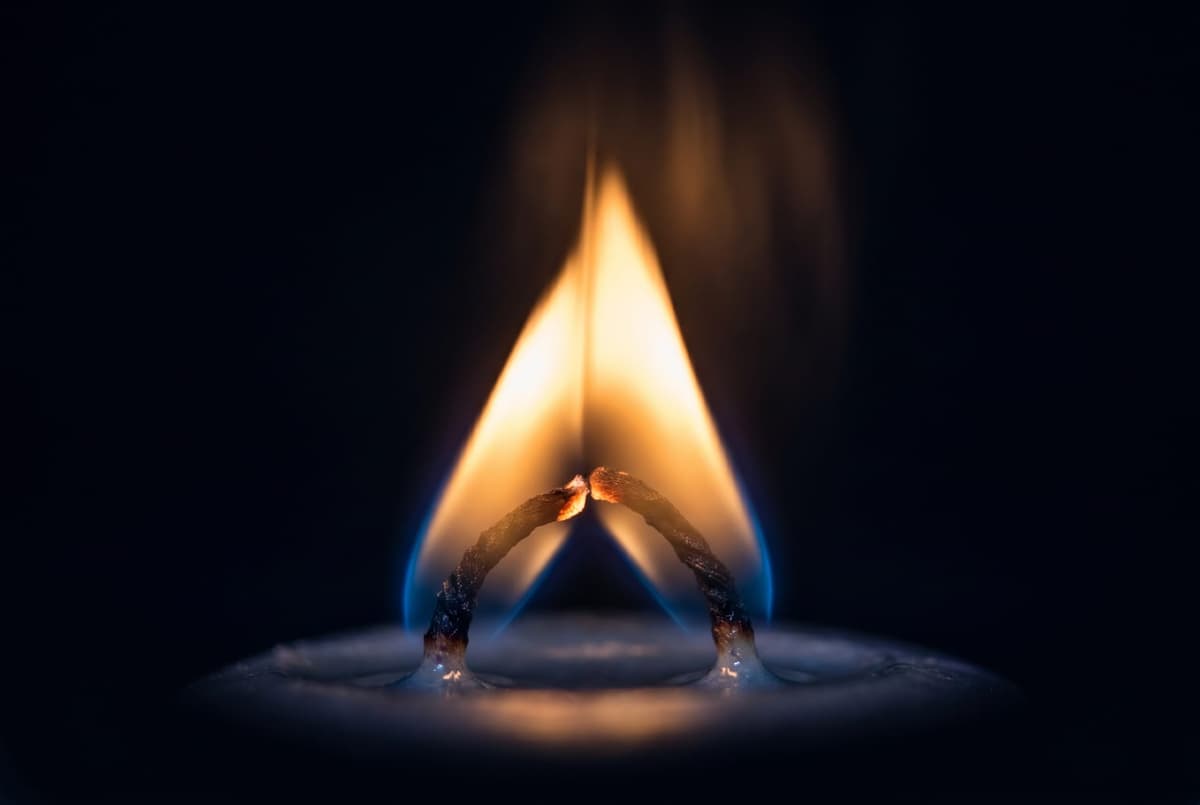
Conjunction Mars–Neptune — symbolic illustration

Conjunction · 0°

Mars conjunction Neptune

A neutral aspect: it amplifies both planets, and how it plays out depends on the signs they sit in and the rest of the chart.

Orb up to 8°NeutralNatal · synastry · transit
0°Mars conjunction NeptuneOrb up to 8° · major aspect
Oksana MiatovaWritten by Oksana Miatova·13 min read

For entertainment and self-reflection only. Not medical, legal, financial or psychological advice. Consult a qualified professional for important decisions.

The short answer

Mars conjunct Neptune fuses action and dream into a single impulse. Will loses its sharp edges, desire gets tinted by an image, and energy flows towards whatever holds inspiration or a beautiful illusion. The result is either a person whose effort feeds on a larger meaning, or one who spends a lifetime chasing mirages.

What a conjunction is

The geometry behind the reading

A conjunction is a separation of zero degrees between two planets — the point where their functions share one zone of the chart and work as a single principle. In the hierarchy of aspects the conjunction comes first for sheer strength: it neither helps nor hinders, it merges. Its orb is generous, up to eight degrees, because the blending effect reads clearly even at a fair distance. Unlike a square or a trine, the conjunction carries no built-in tone of its own. The outcome is decided by the planets themselves, by the sign they occupy and by the links to other points of the chart. That is why you can meet Mars conjunct Neptune in someone who has given their life to service, and equally in someone who has poured their strength into addictions for decades. The geometry is identical; the content differs, and what separates the two is the rest of the natal configuration.

Three ways to read it

The same aspect, three different stories

One aspect reads differently depending on where you find it: inside a single birth chart, between two people, or moving across the sky right now. Read each as a way to notice patterns, not as a forecast.

Mars conjunct Neptune in the natal chart

If Mars conjunct Neptune sits in your natal chart, the odds are you grew up hearing the same handful of phrases about yourself. "You've no willpower." "You can't make yourself do a thing." "Head in the clouds instead of getting on with it." And running alongside them, something unexpected: "the way you move is lovely", "how did you know that was exactly the right thing to do just then", "there's something in your hands the rest of us haven't got". Two verdicts, flatly opposed, sit comfortably side by side about one and the same person — and both are true. This is a specific astrological configuration in which will and flow, desire and image share one zone of the chart and work as a single function, never quite splitting into "I'm doing this because I have to" and "I'm doing this because I'm inspired".

Inside the body it shows up as an inability to run on steady, daily energy. Most people switch on through discipline: get up, force it, do it, repeat. With you that process is wired differently. Strength arrives in waves, and the waves have little to do with how you slept or how strong the morning coffee was — they're tied to whether the task holds an inner meaning, whether there is an image worth moving towards. When the meaning is there, the resource feels bottomless: you can work through the night, train to the point of collapse, give to others down to the last drop. When the meaning is gone, or has quietly dissolved, what follows isn't tiredness but something deeper — a "can't move and don't know why" sort of flatness. It isn't laziness and it isn't depression in the usual sense. It's simply how Mars takes on fuel in people with this configuration.

There's a second layer, harder to see from outside. Mars conjunct Neptune turns the business of knowing your own desires into a genre of its own, one that demands a particular honesty. For most people "I want" comes through fairly clean: I want this job, this person, this thing. With you "I want" is almost always blended with an image: I want to be the sort of person who wants this job, I want to look like someone who loves this partner, I want to feel like the owner of this thing. It isn't cynicism and it isn't a pose — it's the way Neptune tints the Martian impulse. After a few years it becomes genuinely hard to tell apart what you actually want from what you want to want, and a fair few important decisions turn out to be dictated by a picture of yourself rather than by any real desire.

The tone of the aspect leans heavily on the sign the conjunction stands in. In the water signs — Cancer, Scorpio, Pisces — you tend to get the mystic, the healer, the therapist: someone who can feel another's pain at almost a bodily level and work with it. In fire — Aries, Leo, Sagittarius — the artist, the high-level athlete, the charismatic leader whose energy is catching but who needs unusually careful recovery. In earth — Taurus, Virgo, Capricorn — someone able to carry inspiration through to a concrete, tangible result: a craft, fine handwork, cooking pitched at the level of art, a dream made material. In air — Gemini, Libra, Aquarius — the idealist behind a large project, the volunteer, the person for whom serving an idea releases strength that private tasks never seem to find.

And then there's the dark side, the part rarely spoken about plainly: a gift for prettily deceiving yourself about where the strength is going. With this configuration dependence rarely begins with a sharp break. More often it's a slow process — a glass of wine in the evening that becomes two, then three; painkillers after an injury that don't get stopped once you've healed; a relationship into which you give more and more without noticing that nothing comes back; a project you keep pouring time and health into because you believe in its meaning, long after the meaning has drained out of it. I've worked with dozens of people who carry this configuration, and experience points the same way every time: integration begins with one plain, dull, but effective habit — regularly checking where the energy goes. Once a week, ask yourself what you spent your strength on across those seven days and what real result you have to show for it. If the answer comes out vague, that's a signal to re-check the meaning, not a cue for another act of will.

To see how Mars conjunct Neptune fits with the rest of your chart, and exactly where its strongest and most troublesome activations fall, the sign, the house and the aspects to other planets — Saturn and Pluto above all — need reading together. For entertainment and self-reflection, the picture above is the pattern; the detail is particular to your own chart.
When it flows

  • An ability to act out of inspiration, on days when ordinary motivation has long since burnt out
  • Strong intuition in the moment of doing — a sense of the right move without any logical reason for it
  • A gift for disciplines where the body and an image work together: dance, yoga, swimming, acting, music
  • A willingness to pour energy into an idea or a cause when there is no direct personal gain in it

When it grates

  • An unsteady will that flares up and dies down again with no visible cause
  • A blurred read on your own desires — it's hard to separate 'I want this' from 'I want to look like someone who wants this'
  • A heightened susceptibility to substances and states that soften the body: alcohol, strong painkillers, punishing diets, sheer exhaustion
  • A tendency to spend strength on projects that look beautiful but rest on nothing solid

The shadow side, and what to do with it

The shadow side of Mars conjunct Neptune is a talent for fooling yourself about where your strength actually goes. With this configuration, dependence rarely begins with a dramatic break. More often it's a slow drift: a glass of wine in the evening that becomes two, then three; painkillers after an injury that never quite get stopped once the injury has healed; a relationship into which you keep giving more, not noticing that nothing flows back. The way through is unglamorous but it works — a regular reckoning of where the energy went. Once a week, ask yourself plainly what you spent your strength on across those seven days and what you actually have in hand to show for it. If the answer is vague, that is a signal to re-check the meaning, not a cue for a fresh act of willpower.

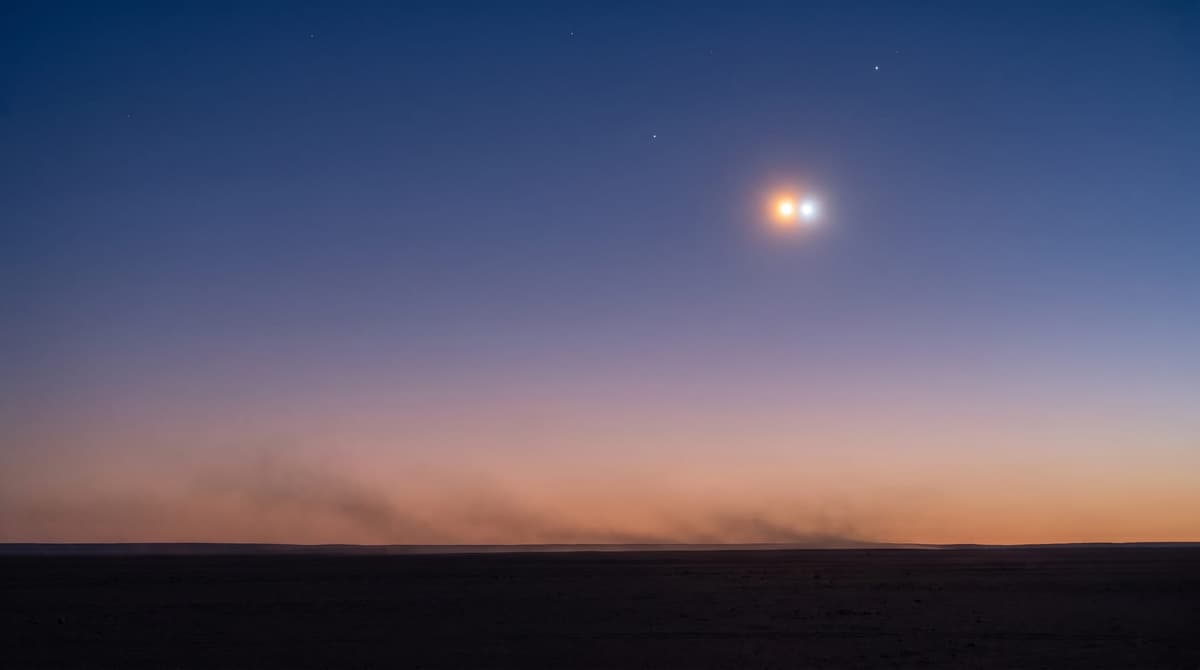
Conjunction — symbolic still life

How close is close

The orb decides the volume

A conjunction is rarely exact. The smaller the gap between the two planets — the orb — the louder the aspect plays. Here is roughly how the three bands read.

Tight

0–2°

Reads as a defining feature

At 0–2° the conjunction is exact and at its densest. Mars and Neptune are practically inseparable: every desire arrives already wrapped in an image, and almost no plain 'I want' is left. This band holds the brightest potential for spiritual or creative service and the highest vulnerability to dependence and to a chronic sag in strength. If the conjunction is backed by Saturn, or by Mars in an earth or fixed sign, you get someone able to hold fine inner work going for years. Without that structuring support, you get a dreaming will against a backdrop of constant tiredness and an inability to finish what was started.

Medium

2–5°

A steady background pattern

At 2–5° the conjunction is significant and felt across most situations in life. Here a person can gather themselves and act clearly when it really matters, but the background setting is a scattered, dreaming energy that wants inspiration before it switches on. The professions where this band gives an edge are anything that lives at the seam of body and image: dance, acting, top-level sport, photography, directing, mind–body practice, work with people in recovery.

Loose

5–8°

A faint colouring, felt in crises

At 5–8° the conjunction works as a background note — present, but not the thing that governs your day-to-day will. You're capable of clear action and firm discipline, yet under tiredness, under transits and in emotionally charged situations the aspect's characteristic blur and pull to drift come through. This band is, oddly, the easiest to manage, because you have a built-in switch between 'working like everyone else' and 'acting out of inspiration', and over time you learn which mode to flip on for which kind of task.

Conjunction with a partner — what does it mean for the two of you?

A full synastry reading — every aspect between your two charts

Mars conjunction Neptune inside one chart is an inner mechanism. Between two charts it becomes the dynamic of a relationship. Enter both birth details and get a synastry reading — where the conjunctions sit, where the squares pull, where the oppositions draw you together — all calculated with the Swiss Ephemeris. Read it as a way to notice patterns, not a forecast.

Check your compatibilityfrom £1 · for entertainment

Compare with a neighbouring aspect

Same planets, a different distance

Mars opposite Neptune tells a different story. If you're reading this to make sense of a specific chart, it's worth glancing at the neighbouring aspect too.

Mars opposite Neptune
  • A conjunction has Mars and Neptune sharing one point and working as a single function; an opposition stands them at opposite poles and asks you to choose between action and flow
  • The conjunction folds inspiration into ordinary will; the opposition turns it into a separate voice that now props action up, now eats away at it
  • Under the conjunction dependence grows from inside — you lose strength without noticing where it went; under the opposition it more often arrives from outside, through a partner or an environment
  • The conjunction gives a sense of 'my actions have meaning even when I'm tired'; the opposition gives a sense of 'I know what needs doing but I can't gather the strength to do it'
  • Integrating the conjunction means the habit of regularly checking where the energy goes; integrating the opposition means the habit of pulling action back out of the dream and into a concrete plan for the week

Lived examples

A few charts where you can see it

Public figures with a verified Rodden birth-data rating (AA/A/B). No invented data.

Frequently asked questions

What does Mars conjunct Neptune mean in the natal chart?
It merges will with flow, action with image. That gives the ability to work out of inspiration, a fine bodily intuition, and a gift for disciplines that sit at the seam of movement and awareness. At the same time it brings vulnerability in the zone of steady energy, of clear desires, and of protection from the things that soften your boundaries. The tone depends on the sign and on the links to other planets: in water it more often makes a mystic or a healer, in fire an artist or an athlete on the edge, in earth someone who can carry inspiration through to a concrete piece of work, in air an idealist or a volunteer for a large cause. Read it as a pattern to notice, not a verdict on who you are.
Is Mars conjunct Neptune good or bad in synastry?
On its own the conjunction is neutral. In a couple it offers a particular physical closeness, the knack of inspiring each other, and shared service or creative work. Alongside that grows the risk of idealisation, of a quiet imbalance in how strength is shared, and of the sexual side drifting into fantasy. Whether it lands as good or bad depends on whether both people are willing to check regularly who is putting energy where, and whether one of them has turned into a source the other simply draws on. As with everything here, it's a way to understand a relationship's patterns, not a prediction about it.
What orb should I use for Mars conjunct Neptune?
Classically up to 8°. At 0–2° the aspect works at its densest, with will and flow almost inseparable. At 2–5° the effect is clearly felt, but a gap remains for returning to a sharp will when it's critical. At 5–8° the conjunction runs in the background and shows itself most under transits and during stretches of tiredness. For timing actual events, practitioners usually take a tighter orb, around 3–4°.
Which celebrities have Mars conjunct Neptune?
Among public figures with a Rodden AA birth time, examples include Michael Jackson (Mars and Neptune in Scorpio), Antonio Banderas (a tight conjunction in Leo) and Whitney Houston (in Leo). All three share one trait: the ability to work in the zone where movement and image are inseparable — and in two of them, sadly, the shadow side of the aspect also showed itself in the form of long-running dependence. Anyone you wish to check can be verified in a minute on astro.com's AstroDatabank: look for Mars and Neptune in the same sign within 8° of each other.
When is the next Mars conjunct Neptune?
A Mars–Neptune conjunction in the sky comes round roughly once every two years, because Mars takes about 687 days to circle the Sun and periodically catches up with slow-moving Neptune. The exact dates of the nearest conjunctions depend on Neptune's current degree. If you mean a transit to your own natal points, the dates are particular to each chart and need calculating against your natal positions — general guidance isn't enough on its own.
Is Mars conjunct Neptune different for men and women?
There is no biological sex written into a chart, but a social role can amplify one side of the aspect. In men it more often meets resistance in arenas where blunt, straightforward will is expected: sport, physically demanding work, competitive settings. In women the same aspect can read as 'soft, sensitive, spiritual', which often matches what the environment expects — sometimes so well that a person goes years without noticing their own exhaustion. The difference sits not in the chart but in the feedback from the surroundings a person grows used to. None of this is destiny; it's a lens for noticing.
Is Mars conjunct Neptune linked to a tendency towards addiction?
There is no straight astrological formula that says 'conjunction therefore addiction'. But the configuration does raise sensitivity to substances and states that soften the body's boundaries: alcohol, strong painkillers, overeating, draining relationships, punishing training. If the chart also carries tense aspects to Mars or Neptune from Saturn or Pluto, the risk of a dependence forming is higher. The protection is a conscious practice of keeping the body clear in the widest sense, not only the chemical one. This is a pattern to be aware of, not a prediction about any one life.
Does Mars conjunct Neptune affect the sexual side of life?
Noticeably. With this configuration sexual energy is tied to an image more than it is for the average person, and fantasy often plays the leading role in intimacy. That brings subtlety, tenderness, the knack of catching a partner's mood without words. But the same sensitivity leaves the area open to idealisation: over time the real partner gets replaced by your own image of them, and closeness turns into a meeting of two fantasies rather than two bodies. The work, here, is to keep bringing attention back to physical presence in the here and now.
Mars conjunct Neptune in a career — where is it best directed?
It fits well wherever the work lives at the seam of body and image: dance, acting, top-level sport, photography, directing, mind–body practice, work with people in recovery, healing, musical performance. It works well in service and volunteering, where personal will is held inside a larger meaning. It fits badly into roles that demand a hard, unbroken will and steady daily competition with no room to dip — sales against a quota, security and enforcement work, dealing with aggressive clients. If those zones can't be avoided, the configuration needs firm external structure and regular recovery built in.
What changes when transiting Mars makes a conjunction with natal Neptune?
It's a stretch — usually a few days, sometimes longer on a retrograde loop — when ordinary will noticeably weakens while a window opens for creative and spiritual work. Good for practices that ask you to join intention with flow: dance, meditation in movement, therapy, body work. Bad for decisions in any zone of risk: the road, water, surgery, heavy physical load, large purchases made on mood. A simple rule for those days is not to play the hero physically and not to trust sharp impulses, especially when they arrive dressed in a beautiful pretext.
Can Mars conjunct Neptune give athletic talent?
Yes — particularly in sports where movement and image work together: swimming, rhythmic gymnastics, figure skating, surfing, diving, martial arts with an improvised element, and dance-based disciplines. The aspect gives a feel for water, music and rhythm, and the ability to enter a flow state in which the body knows what to do without the mind's involvement. It also calls for special care with recovery and load: this configuration's resource is spent faster than in people with a purely Martian will, and athletes with the aspect more often drop out through injury or exhaustion. Treat that as something to manage, not a fixed fate.

Related pages

The other aspects between Mars and Neptune

The same two planets at a different angle — each reads differently.

Oksana Miatova
Oksana Miatova

Astrologer, co-founder of WowAstro

Oksana Miatova is a practising astrologer and co-founder of WowAstro. Natal charts, synastry and forecasts grounded in the Western classical tradition — explained through real-life examples and plain language.

More about the author →

For entertainment and self-reflection only. Not medical, legal, financial or psychological advice. Consult a qualified professional for important decisions.