Skip to content
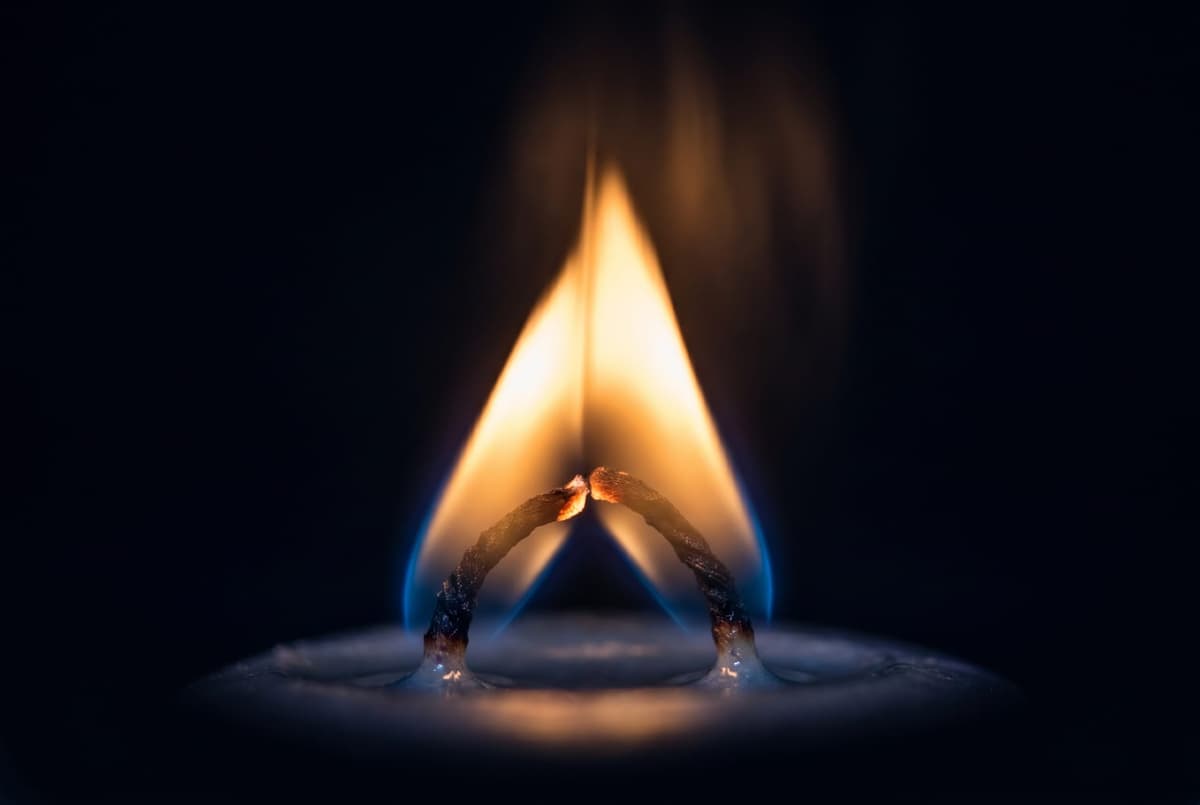
Conjunction Venus–Uranus — symbolic illustration

Conjunction · 0°

Venus conjunction Uranus

A neutral aspect: it amplifies both planets, and how it plays out depends on the signs they sit in and the rest of the chart.

Orb up to 8°NeutralNatal · synastry · transit
0°Venus conjunction UranusOrb up to 8° · major aspect
Oksana MiatovaWritten by Oksana Miatova·11 min read

For entertainment and self-reflection only. Not medical, legal, financial or psychological advice. Consult a qualified professional for important decisions.

The short answer

Venus conjunct Uranus fuses love and freedom into a single point of the chart. Attractions arrive like lightning, the relationships you need are unconventional, and the standard template feels suffocating. In the natal chart it tunes your whole love nature towards independence; in synastry it produces an electric, hard-to-domesticate bond; in transit it opens a charged window where it's easy to mistake a jolt for fate.

What a conjunction is

The geometry behind the reading

A conjunction is a separation of about zero degrees between two planets, and it is classically treated as the strongest of the major aspects. The textbook orb for a Venus conjunction runs up to eight degrees, though in practice I tighten that to about six in the natal chart and five for synastry and transits. A conjunction is neither a dialogue across distance nor a stand-off between two functions — it is a merging at one point of the chart, where the planets sound with a single voice and you cannot really tell where one ends and the other begins. The tone is set by the planets themselves: when a personal planet sits on an outer one, the personal function takes on the outer planet's accent for life. With Uranus, Venus loses its cosy predictability and starts working in jolts — sudden likings, abrupt coolings, a pull towards the unusual, a distaste for the rituals of courtship. This is not a sentence to loneliness, nor a gift of perpetual romance — it is a particular setting of the love nature, one to understand and work with rather than to break.

Three ways to read it

The same aspect, three different stories

One aspect reads differently depending on where you find it: inside a single birth chart, between two people, or moving across the sky right now. Read each as a way to notice patterns, not as a forecast.

Venus conjunct Uranus in the natal chart

If Venus conjunct Uranus sits in your natal chart, your love life is wired differently from most of the people around you. Venus governs how you love, who you choose, what you find beautiful, how you handle money and pleasure. Uranus governs the sudden shift, the need to break out, the dislike of other people's rules and templates. When these two stand at one point, the two processes stop being separable. Falling in love and longing for freedom arrive at the same instant. You catch fire over someone and almost at once take fright that they'll try to keep you. You reach for closeness and can't stand its density.

From the outside this often looks like fickleness. From the inside it's a very high sensitivity to pressure. The slightest attempt to tame you — to explain what a proper family should look like, what time supper is, when you'll be introduced to the parents — raises a wave you can't resist. You can be tender, attentive, genuinely in love, as long as you're left a way out. The moment the door closes, something inside trips, and the person who yesterday was ready to build a shared home starts quietly working out how to leave. This isn't a failure of empathy; it's the build of the nervous system.

The partners you choose tend to be unconventional. Not necessarily scandalous, but always unlike the 'suitable' person. It might be a big gap in age, in culture, in social background; an unusual profession, an open arrangement, a distance between cities. Sometimes a conventional partner does come along and you live inside their script for a while, but sooner or later this Venus shows itself anyway: you find someone on the side, or you blow up the settled routine, or you disappear so deep into work that the relationship melts of its own accord. Not because you're a bad person, but because forcing your own love nature for too long simply can't be sustained.

Money and aesthetics respond to this conjunction in the same way. You sense fashion, trends and new forms early; what still looks strange to others already looks beautiful to you. Often this hands you a professional niche in design, art, music, marketing or technology — anywhere a sharp eye for the new is prized. The downside is that money moves in waves. Impulsive spending on the beautiful and the unneeded, sudden decisions to pour resources into something unusual, walking away from a steady income for a project that lit you up. Over the long run this asks a separate discipline of you — not romantic, not creative, but financial — or Uranus's freedom keeps getting eaten away by debt.

There's a particular story here for the body and the nervous system too. Excitability runs above average, reactions to new people and places are very vivid, and sleep can fray on the eve of something important. This isn't an illness; it's the background you live against. Ignored, and lived around 'as one is supposed to', it tends to surface through symptoms — restlessness, broken sleep, a nagging urge to change everything precisely when, on the surface, all is well. Respected, it becomes a resource: you're the first to see what's shifting around you and the first to adjust in time. (None of this is a medical claim — it's the texture astrologers describe, offered for reflection.)

In relationships you have two tasks. The first is not to wage war on yourself — not to pretend you need a warm, standard family every single day if that format actually stifles you. The longer you lie to yourself, the louder the eventual break, and more often than not it isn't only a partner who pays for it but a settled home as well. The second is to learn not to mistake a flash for love. Your switch-ons are bright, and each one feels like 'this is it'. More often it's an overwound nervous system answering to someone close yet unlike you, and three months on it goes out, because there was nothing under the spark.

I often say to people with this Venus: you're not broken, you're built differently. The point is to design yourself a kind of love that holds both the warm and the spacious — your own territory, your own rhythm, the right to an unusual script, a refusal of borrowed ideas about 'how it should be'. When your Venus has that space, Uranus stops working like an accident and starts working like a tuning: towards honesty, towards lightness, towards living your own love life rather than someone else's. From there it's good to look at exactly how your Venus is set into the rest of the chart — which sign, which house, which other aspects it joins.
When it flows

  • An ability to fall for unconventional people without needing anyone else's approval
  • An easy attitude to differences of age, culture, status or relationship format
  • An aesthetic nose for the new — fashion, design and music caught half a year before everyone else
  • Freedom without drama: you can live alone and never feel short-changed by it

When it grates

  • Flash attractions that fade the moment things become calm and predictable
  • Real difficulty enduring settled domestic life, where any routine starts to feel like a cage
  • Money that arrives and leaves in waves, with impulsive spending on the beautiful and the unneeded
  • A struggle to explain to those close to you why a 'normal' relationship suffocates you

The shadow side, and what to do with it

The shadow side of this conjunction is the habit of mistaking electricity for love. While the spark is live, it feels like the real thing; the moment the charge passes, everything goes flat, and you leave — even when, on paper, the relationship was good. Integration starts with an admission: your Venus is not broken, it is simply wired differently. From there the work is to build a closeness that holds both warmth and space — your own room, the right to an unusual format, a refusal of the borrowed script of 'how it's supposed to be'. Done that way, the flashes stop being accidents and become honest choices.

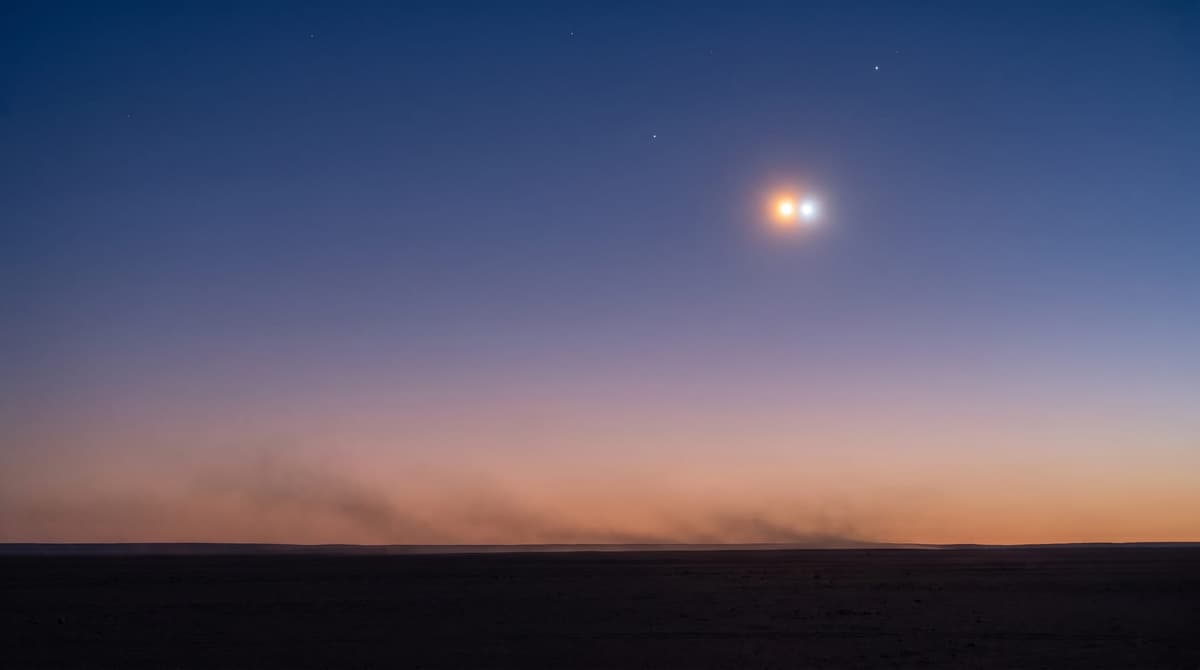
Conjunction — symbolic still life

How close is close

The orb decides the volume

A conjunction is rarely exact. The smaller the gap between the two planets — the orb — the louder the aspect plays. Here is roughly how the three bands read.

Tight

0–2°

Reads as a defining feature

At 0–2° the conjunction is exact and the intensity is at its maximum. Venus and Uranus sound as a single note, and love and freedom are inseparable. Attractions arrive like lightning, and so does the cooling. Any hint of control triggers an instant recoil. In this band it matters most not to mistake a spark for love: what lit up in a second can go out just as fast, and that is not a flaw of character but the way the chart is wired. Life with a conjunction this tight is simpler once you give up the classic templates in advance.

Medium

2–5°

A steady background pattern

At 2–5° the conjunction is significant and felt as a background note across the whole of life. The love sphere turns unpredictable at times, especially when a partner tries to limit or formalise the relationship. There are stretches of stability, but any overload switches the leaving reflex back on. Here there's more room between feeling and impulse, and it's easier to learn to use it without burning your connections. Money behaves the same way — bursts of spending give way to calmer stretches.

Loose

5–8°

A faint colouring, felt in crises

At 5–8° the conjunction is present as a backdrop. It colours Venus rather than dictating to her. You feel a periodic pull towards the new and can surprise those close to you with unexpected likings, but on the whole you keep a recognisable love line. This version often helps: it gives a feel for dressing well, for catching trends, for choosing unusual partners without wrecking your own life. Crises are possible here too, but they pass without a collapse.

Conjunction with a partner — what does it mean for the two of you?

A full synastry reading — every aspect between your two charts

Venus conjunction Uranus inside one chart is an inner mechanism. Between two charts it becomes the dynamic of a relationship. Enter both birth details and get a synastry reading — where the conjunctions sit, where the squares pull, where the oppositions draw you together — all calculated with the Swiss Ephemeris. Read it as a way to notice patterns, not a forecast.

Check your compatibilityfrom £1 · for entertainment

Compare with a neighbouring aspect

Same planets, a different distance

Venus opposite Uranus tells a different story. If you're reading this to make sense of a specific chart, it's worth glancing at the neighbouring aspect too.

Venus opposite Uranus
  • A conjunction fuses Venus and Uranus at one point — you tend to feel your love nature simply is this way, with no alternative on offer
  • An opposition sets them at opposite poles of an axis — you feel a pendulum, now a warm wish for warm partnership, now a lunge for the exit
  • The conjunction is easier to overlook: everything gets filed under 'that's just my character'; the opposition forces you to keep choosing a side
  • The opposition gives a chance to reconcile the two functions on purpose; with the conjunction you first have to tell them apart at all
  • In synastry the conjunction delivers an instant electric click; the opposition draws partners through difference, in which each recognises their own disowned parts

Lived examples

A few charts where you can see it

Public figures with a verified Rodden birth-data rating (AA/A/B). No invented data.

Frequently asked questions

What does Venus conjunct Uranus mean in the natal chart?
It is the merging of your love nature and your need for freedom at a single point of the chart. You fall fast, you can't bear pressure inside a relationship, you readily choose unconventional partners, and you often live an unusual love life. It doesn't make you cold, but you won't find Venus's familiar softness in its pure form here — it always comes with a readiness to bolt. Read it as a pattern to notice in yourself, not a sentence on who you are.
Is Venus conjunct Uranus a good or bad aspect?
A conjunction is neutral by nature; the tone is set by the planets and the rest of the chart. With Uranus, Venus becomes more restless and more mobile, but the same configuration gives the ability to live unconventionally, to sense the new keenly and to stay free of other people's expectations. Whether it reads as good or bad depends on whether you manage not to mistake a spark for love and not to force yourself to live by a borrowed script.
What orb should I use for Venus conjunct Uranus?
For a Venus conjunction it's sensible to allow an orb up to eight degrees, with anything tighter than two degrees reading as an exact conjunction working at full strength. An orb of three to five degrees gives a strong but more bearable influence. From five to eight degrees the conjunction is still there but works as a background note, colouring Venus rather than dictating to her. Past about ten degrees it has dissolved.
What is Venus conjunct Uranus about in synastry?
It's about instant recognition and a difficult shared domestic life. Partners switch on freedom and spontaneity in each other, but they build routine badly: a common home, a joint budget and quiet evenings all come with effort. This kind of couple lives best where each person keeps their own space and the right to air without having to explain it. Trying to play at a classic family almost always ends in a break. As with everything here, it describes patterns rather than predicting outcomes.
What does a transiting Venus conjunct Uranus bring?
Sudden meetings, unexpected attractions, a wish to refresh your look and your home, sometimes impulsive spending. It's a good time for creative breakthroughs and a poor time for irreversible decisions in relationships. The rule is simple: wait for the transit's next contact and check whether the feeling still matters.
Which celebrities have Venus conjunct Uranus?
The best-known example from public biographies is Angelina Jolie (born 4 June 1975, Rodden rating AA): her love history, with several marriages and divorces, illustrates the configuration well. More broadly, people carrying this conjunction are often visible in fashion, music, avant-garde art, design and any field that prizes fresh taste and independence. For an aspect this specific, it's worth checking any chart against AstroDatabank rather than trusting a name quoted in passing.
Does this conjunction work the same for men and women?
The basic mechanics are the same: love lives in flashes, and the classic format weighs heavily. The difference is in how it reads. In a woman's chart it tends to show in her own behaviour in relationships and in the unconventional partners she chooses; in a man's chart it shows in the type of woman who catches him — unusual, independent, bold. The chart as a whole matters more than sex: the conjunction can be lived out in fashion, art or business as much as in romance.
Can you build long relationships with this conjunction at all?
You can, but not by the standard template. Long relationships for someone with this aspect look different: more air, less total fusion, a partner willing to accept an uneven rhythm. Formats like separate cities, separate bedrooms, or shared projects without a shared household tend to work well. Trying to play at a classic family setup almost always ends in a break; an honest, unconventional format can last for years.
How do I tell Venus conjunct Uranus from an opposition of the same planets?
With a conjunction you rarely feel an inner conflict — it seems to you that your love nature simply is this way. With an opposition there's a sense of a pendulum between the wish for warmth and the wish to fly off, and people often tire of the swing. The conjunction is harder to spot without a chart; the opposition is harder to live with but easier to recognise and integrate on purpose.
What do I do if this conjunction makes my relationships unstable?
First, recognise it as a feature of your love nature rather than a defect of character. Then build relationships with air designed in: your own space, the right not to answer at once, an agreement about freedom without hurt feelings. Therapy can help you tell a genuine impulse to leave from an automatic reaction to pressure. This isn't curing a defect; it's tuning the rhythm in which your Venus can sound honestly. None of it is destiny — it's a way to understand your own patterns.

Related pages

The other aspects between Venus and Uranus

The same two planets at a different angle — each reads differently.

Oksana Miatova
Oksana Miatova

Astrologer, co-founder of WowAstro

Oksana Miatova is a practising astrologer and co-founder of WowAstro. Natal charts, synastry and forecasts grounded in the Western classical tradition — explained through real-life examples and plain language.

More about the author →

For entertainment and self-reflection only. Not medical, legal, financial or psychological advice. Consult a qualified professional for important decisions.