Skip to content
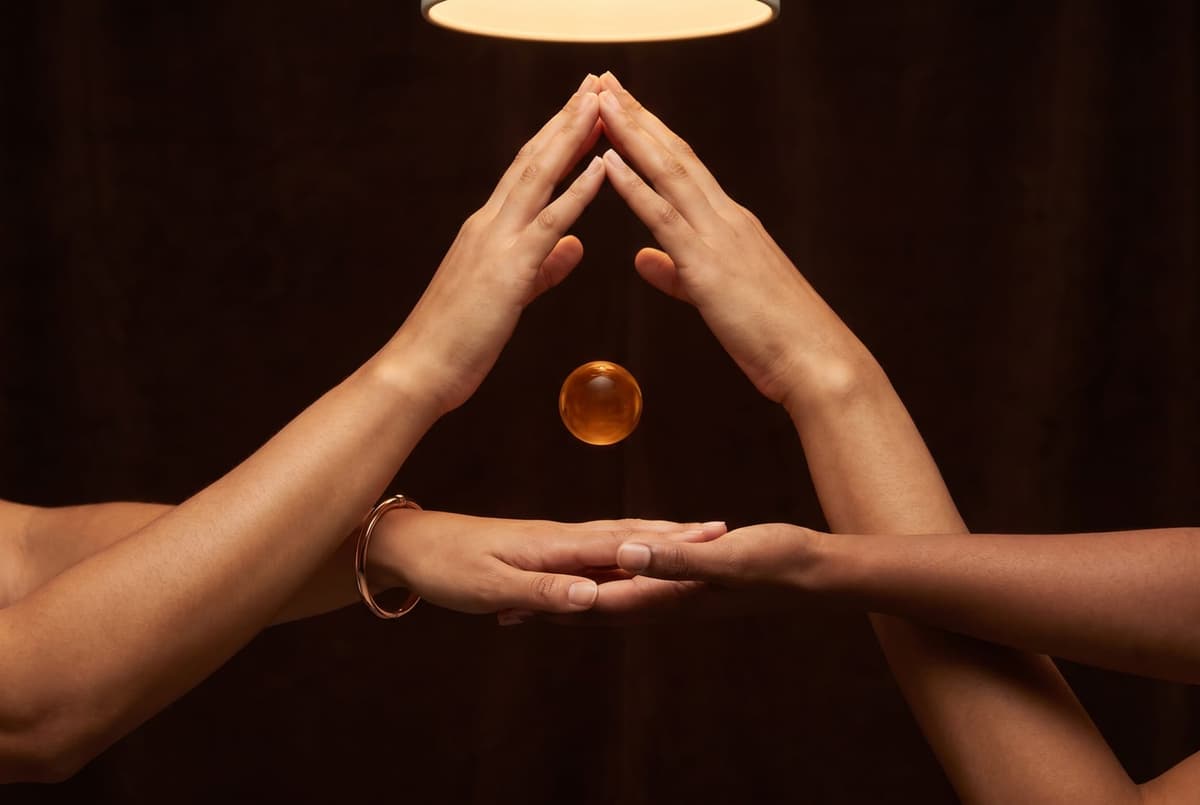
Trine Venus–Pluto — symbolic illustration

Trine · 120°

Venus trine Pluto

A harmonious aspect: the two planets support each other and tend to pull in the same direction. Read it as a resource to notice, not a guarantee.

120°Orb up to 6°HarmoniousNatal · synastry · transit
120°Venus trine PlutoOrb up to 6° · major aspect
Oksana MiatovaWritten by Oksana Miatova·11 min read

For entertainment and self-reflection only. Not medical, legal, financial or psychological advice. Consult a qualified professional for important decisions.

The short answer

Venus trine Pluto is a smooth, 120° flow between the part of you that loves, values and chooses and the deeper layer where passion, power and real closeness live. In the natal chart it reads as calm magnetism and an instinct for what is genuinely worth your while; in synastry it makes a bond that runs deep without the drama; in transit it opens a brief, easily missed window for honest conversations about love and money.

What a trine is

The geometry behind the reading

A trine is a separation of one hundred and twenty degrees, a third of the circle, between planets that almost always sit in signs of the same element — fire with fire, water with water — so the two energies speak the same language and trade without a translator. In the classical ranking the trine sits behind the conjunction and the hard aspects for raw force, but it feels the gentlest of them all, and that gentleness is its trap: anything that comes without effort is easy to mistake for background noise and never use as a resource. The textbook orb for a trine is six degrees, though between a personal planet like Venus and an outer one like Pluto I tend to tighten that to five or six rather than stretching it the way I might for two personal planets. What this particular trine joins is the everyday capacity to love, to choose and to handle beautiful things with the underground floor of the psyche where passion, control and the hunger for real intimacy are kept. For most people that floor only opens through a crisis in love, through loss, through obsession. With the trine the door is ajar from the start and the intensity is turned down, which makes the aspect less of a spectacle but far more durable.

Three ways to read it

The same aspect, three different stories

One aspect reads differently depending on where you find it: inside a single birth chart, between two people, or moving across the sky right now. Read each as a way to notice patterns, not as a forecast.

Venus trine Pluto in the natal chart

If this aspect sits in your natal chart, the odds are you don't quite recognise yourself in the books about Venus and Pluto. They are full of fatal passions, of wrecking affairs, of jealousy that tips into scenes, of relationships through which a person mislays themselves entirely. You have little or none of that, and at some point the suspicion creeps in that Pluto in your chart is simply weak and doesn't work. That is the first illusion the trine hands you.

In fact it works perfectly well — it just works through a door rather than a wall. For most people, contact with the deeper floor of love is only possible through a crisis: an affair, a divorce, a wrenching break-up, jealousy that reaches the point where it's hard to breathe. The crisis shatters the usual defences and lets in what is normally pushed down — passion, the need for real intimacy, the sense that without this person life loses its colour. For someone with the trine that defence isn't so rigid; the access is open without the catastrophe. You can fall deeply in love and not lose yourself. You can part from someone who mattered and not fall apart for three years. You can talk about who holds the power in a relationship without fearing the conversation will sever it.

People around you pick this up, even if they can't put a name to it. They are drawn to you, sometimes out of all proportion to any effort you've made to be liked. On dates, in friendships, at work, in chance conversations, that particular feeling arises — "this person is interesting to be around" — and the reason isn't that you're witty or good-looking. The reason is that you're capable of depth of contact, and the other person senses it within minutes, even when neither of you would ever say so out loud. The magnetism of Venus trine Pluto is calm, with no pressure to it; it's nothing like aggressive seductiveness. It's closer to a warm presence you want to linger in.

Your taste behaves in much the same way. You have it, and it's accurate, but it isn't loud. You can see where a thing genuinely earns its price and where the price has been pumped up. You can see which relationships are real and which run on habit. You can see which projects are alive and which are an imitation of activity. This isn't snobbery; it's a quiet capacity to discriminate, and it grows finer over the years without losing its base. The style may change, the values may be revisited, but the underlying nose for what's authentic stays put.

Money runs along similar lines. It neither frightens you nor runs you. Resources often reach people with this aspect through partners, through inheritances, through intuitively well-judged investments, through work with what others find a heavy theme. But it's precisely the ease of access that can stop you ever learning to earn for yourself, to build the muscle of holding on to money and growing it, so that a real crisis finds you unprepared. The trine gives you the resource; it does not teach you to manage it.

The main trap of the aspect is that it runs in the background, and the carrier doesn't realise they're holding a tool that most people simply don't have. Life goes along quietly, there are no sharp plots in love or in finances, and the familiar strength is never called on. By thirty or forty you may notice that deep themes have started to bore you, that you want the shallow and the light, that conversations about anything real are tiring. That isn't a betrayal of the aspect; it's a side effect. When the strength isn't needed it withers, and in place of a capacity for deep contact you're left with a tired indifference to the big questions.

What you do about that depends on what you want from your life. If a background warmth suits you, you can live that way perfectly well. If you want more, you'll have to seek out situations where the trine is genuinely called upon — relationships with real depth rather than convenient surface, projects you put yourself into and not just your competence, themes that demand an honest contact with your own shadow. None of this makes life easier; often the reverse. But without it Venus trine Pluto stays an unturned card, lying face down in your own chart. Read it, as always here, as a lens for self-reflection rather than a forecast of how things must go.

When it flows

  • A calm magnetism that other people feel but that never presses on them and never costs you any effort to maintain
  • The ability to love deeply without losing yourself — no fusion, no jealousy used as a leash, no scenes
  • A fine instinct for genuine worth in people, in objects, in money and in projects — the knack of telling the real from the inflated
  • A taste that grows and reshapes itself over the years without painful upheavals and without losing its core

When it grates

  • The pull works in the background, and you may have no idea that there is something in your ordinary tone of voice or your gaze that matters to others
  • Deep bonds come so easily they start to feel ordinary, and a partner stops being read as a thing worth guarding
  • Access to money and resources arrives, but the ease of it can stop you ever learning to grow them, so a real crisis catches you unprepared
  • A craving for intensity, with no live crisis to feed it, can curdle into boredom and into choosing relationships beneath your own depth

The shadow side, and what to do with it

The shadow side of Venus trine Pluto is a quiet betrayal of your own power. You sense you are capable of more — in love, in creative work, in handling what is truly valuable — and you keep settling for the legible and the convenient. The aspect hands you access to a transforming force, and if that force goes unused it does not simply evaporate: it turns into indifference, into boredom, into a feeling that life is running past you. Integration begins with an honest question — where am I letting myself be smaller than I could be? — and then becomes a practice: choosing partners, projects and themes by the strength of the resonance rather than the comfort, and not flinching when the resonant choice turns out to be the harder one.

Trine — symbolic still life

How close is close

The orb decides the volume

A trine is rarely exact. The smaller the gap between the two planets — the orb — the louder the aspect plays. Here is roughly how the three bands read.

Tight

0–2°

Reads as a defining feature

At 0–2° the trine is exact and the effect is at its strongest and steadiest. In the natal chart it gives that natural depth others read as magnetism, the ability to love without anguish, and an instinct for genuine worth. In synastry a tight Venus–Pluto trine is one of the markers of unions that pass through serious tests and only come out stronger. In transit it runs for two or three days, and in that window it can shift how you feel about something that matters in love, money or creative work.

Medium

2–5°

A steady background pattern

At 2–4° the trine is significant — felt, but not on full automatic. In the natal chart you sense your own depth in love and a fineness of taste, but it shows up unevenly, more as a background trait that other people notice before you do. In synastry a medium trine gives a couple the capacity to hold deep contact for years without burning out, something that becomes obvious only after several years together. In transit the effect is spread across four or five days, peaking in the middle, with no sharp spikes.

Loose

5–8°

A faint colouring, felt in crises

At 4–6° the trine is wide and works as a soft background note. In the natal chart it is barely legible through behaviour, and the person carrying it may have no idea of their own pull until they compare their love life with that of people who have Venus and Pluto in a hard aspect. In synastry a wide trine gives a general capacity for deep contact without vivid intensity, clearer in the mature years of a union. In transit the effect is almost imperceptible and easy to miss unless you track it deliberately against an ephemeris.

Trine with a partner — what does it mean for the two of you?

A full synastry reading — every aspect between your two charts

Venus trine Pluto inside one chart is an inner mechanism. Between two charts it becomes the dynamic of a relationship. Enter both birth details and get a synastry reading — where the conjunctions sit, where the squares pull, where the oppositions draw you together — all calculated with the Swiss Ephemeris. Read it as a way to notice patterns, not a forecast.

Check your compatibilityfrom £1 · for entertainment

Compare with a neighbouring aspect

Same planets, a different distance

Venus square Pluto tells a different story. If you're reading this to make sense of a specific chart, it's worth glancing at the neighbouring aspect too.

Venus square Pluto
  • The trine grants an effortless agreement between love and the deeper self; the square forces growth through crises in closeness that break you down and rebuild you
  • With the trine, depth in relationships is available without pain; with the square the road to it runs through jealousy, ruptures and obsessive ties — the trine relaxes, the square cracks things open
  • A natal trine risks a shallowness of choice and a quiet boredom; a natal square risks obsession, fear and scenes in love — both demand conscious work
  • In synastry the trine holds a couple in deep but static contact; the square drags them through drama and partings — the trine is about endurance, the square about being remade
  • A transiting trine offers a window for quiet work on love and money; a transiting square offers a window for the crisis that shifts you — the trine deepens, the square transforms

Frequently asked questions

What does Venus trine Pluto mean in the natal chart?
It is a harmonious link between the planet of love, taste and values and the planet of depth and transformation. You can love without skating along the surface, you carry a calm magnetism, and you have an instinct for true worth — in people, in objects, in money. It tends to read as a natural trait, one the carrier often fails to notice until they compare their experience in love and finances with that of someone who has Venus and Pluto locked in a hard aspect. Read it as a pattern to notice for fun and self-reflection, not a verdict on your life.
Is Venus trine Pluto good in synastry?
It is one of the warmer signs of deep compatibility. Partners feel something different between them — a calm and a trust that need no built-in drama — and that connection does not hinge on circumstances. The catch is that the aspect is gentle, so it is easy to take for granted and easy to lose by ceasing to invest in the relationship. When both people consciously build closeness and talk about what actually matters, the trine can keep working for years. As with everything here, it is a way to understand a relationship's patterns, not a prediction about it.
What orb should I use for Venus trine Pluto?
The classical orb for a trine is six degrees. Between Venus, a personal planet, and Pluto, an outer one, it is usual to keep the orb to five or six and not widen it the way you might for two personal planets. A tight trine at 0–2° sounds bright and stable; a medium one at 2–4° gives a steady background; a wide one at 4–6° feels like a soft hint that the carrier usually cannot read in themselves. Past about eight degrees the aspect is considered to have dissolved.
How is Venus trine Pluto different from the conjunction?
The conjunction merges love and the deeper force into a single point, and that is often lived intensely, at times heavily — something is always simmering inside, feelings take on a Plutonian colour, jealousy and passion travel together. The trine leaves a distance between the planets, so the exchange happens through a door rather than through fusion. Someone with the trine has access to the depth but lives on the surface by choice; someone with the conjunction never gets to step away from it. Both are lenses for understanding yourself, not fixed fates.
Is Venus trine Pluto different for men and women?
The underlying nature of the aspect is the same; the difference is in how it shows up through relationships. In a woman's chart it is more often activated through love ties in which she turns out to be the one who sees a partner more deeply than he sees himself, and through money themes that arrive via others or via her own talent for what is valuable. In a man's chart it tends to surface through a pull towards deep, psychologically rich partners and through an intuitive feel for beauty and resources. None of this is destiny — it is a way of noticing patterns.
How does Venus trine Pluto show up in transit?
It is a short window, two or three days, when themes of love, money, values and psychological depth move more easily than usual. It suits conversations you have been putting off, a review of your finances, creative projects with a strong emotional charge. The effect is gentle and easy to sleep through unless you prepare for it: know the date in advance, free up the day, give space to whatever wants to be lived out. A few weeks on you often find that what you did then is still working — which is the whole point of treating it as a gentle nudge rather than a forecast.
Can you sleep through Venus trine Pluto in the natal chart?
You can, and most people with this aspect do exactly that. Easy access to depth does not mean you will use it. If your outer life never demands serious decisions in love, money or values, the trine stays dormant. Sometimes it only switches on after thirty or forty, when life starts throwing up situations where the usual surface reaction is no longer enough — and then it turns out the resource was there all along. This is a frame for self-reflection, not a claim about what your years will hold.
What does Venus trine Pluto have in common with the sextile?
Both aspects are harmonious and both speak to the strength of the Venus–Pluto pairing, but the trine hands the resource over automatically, while the sextile offers it as a chance you have to spot and take. The trine works on its own and often goes unnoticed by the person who carries it; the sextile needs an active step and even then often stays unactivated. In sheer presence the trine is the louder of the two; in the demand it makes on your awareness, the sextile asks more.
Which celebrities have Venus trine Pluto?
In the open AstroDatabank records at a Rodden rating of AA or A there are few confirmed natal charts with a tight Venus–Pluto trine, and most belong to people whose fame is not directly tied to the astrologically obvious theme of the aspect. So there is no list of big names in this section — it is better to avoid an error than to pass along an unverified example. You can check any chart yourself in a minute on astro.com's AstroDatabank: look for Venus and Pluto a third of the circle apart, within about six degrees.
Can I check Venus trine Pluto myself?
Yes, and it's quick. Open your natal chart and find the positions of Venus and Pluto. If they are roughly one hundred and twenty degrees apart — a third of the circle — within an orb of about six degrees, you have a trine. In practice the two will usually fall in signs of the same element, so a fast shortcut is to check whether your Venus and Pluto sit in two fire, two earth, two air or two water signs and then confirm the degrees. Past about eight degrees the aspect has formally dissolved. For entertainment and self-reflection, that quick check is all you need.

Related pages

The other aspects between Venus and Pluto

The same two planets at a different angle — each reads differently.

Oksana Miatova
Oksana Miatova

Astrologer, co-founder of WowAstro

Oksana Miatova is a practising astrologer and co-founder of WowAstro. Natal charts, synastry and forecasts grounded in the Western classical tradition — explained through real-life examples and plain language.

More about the author →

For entertainment and self-reflection only. Not medical, legal, financial or psychological advice. Consult a qualified professional for important decisions.