Skip to content
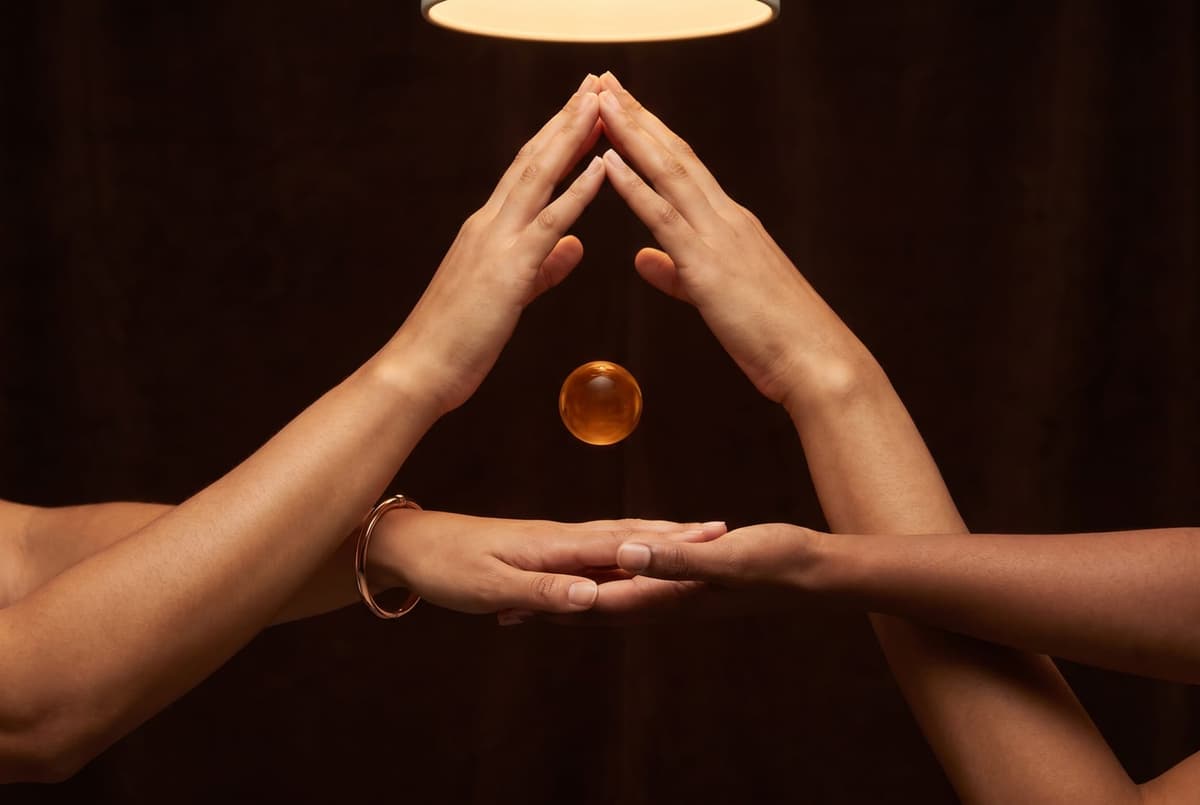
Trine Saturn–Uranus — symbolic illustration

Trine · 120°

Saturn trine Uranus

A harmonious aspect: the two planets support each other and tend to pull in the same direction. Read it as a resource to notice, not a guarantee.

120°Orb up to 6°HarmoniousNatal · synastry · transit
120°Saturn trine UranusOrb up to 6° · major aspect
Oksana MiatovaWritten by Oksana Miatova·11 min read

For entertainment and self-reflection only. Not medical, legal, financial or psychological advice. Consult a qualified professional for important decisions.

The short answer

Saturn trine Uranus is a harmonious 120° aspect between the planet of form and the planet of freedom. In the natal chart it gives an inborn ability to renew old structures without breaking them; in synastry it lets a couple weather change as a team; in transit it opens a rare, easily missed window for a low-friction fresh start. The main risk is not noticing the gift and never using it.

What a trine is

The geometry behind the reading

A trine is an angle of 120° between two planets — a third of the circle, one corner of an equilateral triangle. In Ptolemy's scheme it counts as one of the great harmonious aspects, soft and supportive by nature. Energy flows here without resistance: what one planet wants, the other permits. Unlike a sextile, which offers an opportunity but asks for effort, a trine hands you a ready-made knack that works in the background, almost on autopilot. And that is precisely where the trine's trap lies, because what comes easily is rarely valued. Someone with a strong trine often fails to notice the talent at all, treats it as ordinary and lets the chance to develop it slip by. The working orb for a trine is around six degrees, widening to about eight in the charts of public figures and when an angle of the chart is involved. For Saturn and Uranus the merge means the planet of structure and the planet of breakthrough have agreed to cooperate, so reform happens without revolution — and the great task is to realise you are even holding the tool.

Three ways to read it

The same aspect, three different stories

One aspect reads differently depending on where you find it: inside a single birth chart, between two people, or moving across the sky right now. Read each as a way to notice patterns, not as a forecast.

Saturn trine Uranus in the natal chart

If your chart holds a trine between Saturn and Uranus, your character carries a rare pairing: the ability to build for the long haul and, at the same time, not to cling to what you've built. For most people one of those comes more easily than the other. Either you build confidently and then defend your castle to the last stone, or you drop everything readily and chase the next idea, losing your foundations along the way. You can do both at once. And this isn't heroism or a spiritual achievement — it's a setting you were born with.

On the surface, someone with this aspect often looks conventional. They may work for a large company, keep an orderly household, stand as the dependable one in the room. But inside there is always an open door through which the new walks in. They can spend ten years in one role and then move calmly into an adjacent field — no drama, no slamming of doors on the way out. Simply because, at some point, it became clear it was time. Saturn in their chart gives a grown-up sense of responsibility for themselves; Uranus gives the inner permission to change course. The trine arranges things so that these two forces don't fight but fall into step.

There's a subtlety worth knowing here. The trine works quietly. It doesn't twist your arm, doesn't present you with a fait accompli, doesn't manufacture the crises people usually learn from. Because of that it's easy to miss, and many people who carry a Saturn–Uranus trine live their whole lives without noticing their own gift. They take their knack for riding out change calmly to be an ordinary human trait. They're surprised when they see others break under what looks to them like a routine task. And they often underrate their potential as reformers, because there's no inner pressure demanding change — only a quiet permission to make it.

This is exactly where the owner of such an aspect meets their real task. A talent that cost you no effort still has to be turned, on purpose, into an instrument. In practice that means deliberately walking towards the places that ask you to bring the old and the new together. At work, taking on projects that need you to reform long-running processes rather than build from scratch or merely maintain what exists. In relationships, not dodging the renewal of family life simply because things are peaceful. In learning, not picking the safely familiar format but trying the joins between disciplines, where your patience with process can meet your openness to the new.

In the larger sense Saturn and Uranus work like the past and the future of a single person. Saturn gathers experience, the system, accumulated knowledge. Uranus catches what is only just being born. When a trine connects them, you become a living bridge between those two timeframes. It's a rare role, and it tends to be valued more than pure traditionalism or pure innovation. Whoever can speak to both camps is always needed — in politics, in business, in education, in a family.

So where's the trap? The trine lulls your guard. You feel you have a margin of safety, and you're in no hurry to decide. You think: it'll keep, it'll work itself out, time will tell. Sometimes that genuinely is wisdom. More often it's a missed chance. The trine gives you raw material, not a result, and without conscious action it shrinks into a faint background stroke of character that nobody — including you — ever learns was there.

If you recognise yourself in this, try looking at your life from one particular angle. Where in your story were the moments when you had to change something settled, and you came through it without much pain? There are probably more of them than you think. And the people around you, more likely than not, were quietly puzzled by how calm you stayed. That was your trine at work. Understanding the mechanism is what lets you switch it on deliberately, instead of waiting for it to fire by itself. Take all of this as a frame for self-reflection rather than a fixed reading of who you must be — the sign and house Saturn and Uranus sit in, and the aspects they make to the rest of the chart, all colour how it actually plays out for you.

When it flows

  • An ability to change what's old without wrecking it — reform rather than revolution
  • A calm relationship with the new: curious without fear and without euphoria
  • A knack for folding unexpected ideas into long-term plans
  • Patience with process — you grasp that a breakthrough still needs foundations

When it grates

  • The trine is easy to miss — the talent feels ordinary, so it goes undeveloped
  • A temptation to coast on natural ease rather than push
  • An inner compromise can stall you exactly where a leap is needed
  • A habit of waiting for the right change to arrive on its own, without choosing it

The shadow side, and what to do with it

The shadow of any trine is laziness dressed up as wisdom. You sense you have a margin of safety and feel no hurry to change your life, even when it's asking you to. Saturn trine Uranus is especially sly because it whispers 'I'm flexible anyway, there's time'. Integration starts with one admission: a harmonious aspect is raw material, not a result. You have to deliberately set up situations where the knack can show itself — take on projects at the seam of old and new, walk towards the places that ask you to rethink the settled way of doing things. That is how ease turns into craft.

Trine — symbolic still life

How close is close

The orb decides the volume

A trine is rarely exact. The smaller the gap between the two planets — the orb — the louder the aspect plays. Here is roughly how the three bands read.

Tight

0–2°

Reads as a defining feature

At 0–2° the trine is exact and at full strength. Saturn's reforming will and Uranus's awakening impulse work as a single mechanism, and you can make big decisions about changing direction with almost no inner conflict — it's clear to you what to change and how to keep what you've already built. In synastry a tight orb gives a couple a rare resource for long partnership, the kind where each person keeps changing and supports the other's change too. In transit a tight orb is a decision window: roughly two to four weeks either side of the exact aspect.

Medium

2–5°

A steady background pattern

At 2–5° the trine is a significant, working influence. Its energy feels like a background permission slip — you may. You take change in your stride, but the change itself doesn't arrive automatically; you have to initiate it. In the natal chart these are often people who look traditional on the surface while holding a great deal of the unconventional inside. In synastry a medium orb gives a couple resilience to outside crises without much sharpness in any single moment. In transit the aspect works for four to six months and suits launching long projects well.

Loose

5–8°

A faint colouring, felt in crises

At 5–8° the trine is present only as a background note — a fine thread in the overall character rather than a theme of its own life. The person simply handles change a touch more easily than most and is a touch more patient with the new. In synastry a wide orb reveals itself over years: the couple looks back and sees how much they came through together without breaking. In transit a loose orb is a yearly climate in which single events don't read as 'a sign', but the general tone of life turns more permissive.

Trine with a partner — what does it mean for the two of you?

A full synastry reading — every aspect between your two charts

Saturn trine Uranus inside one chart is an inner mechanism. Between two charts it becomes the dynamic of a relationship. Enter both birth details and get a synastry reading — where the conjunctions sit, where the squares pull, where the oppositions draw you together — all calculated with the Swiss Ephemeris. Read it as a way to notice patterns, not a forecast.

Check your compatibilityfrom £1 · for entertainment

Compare with a neighbouring aspect

Same planets, a different distance

Saturn square Uranus tells a different story. If you're reading this to make sense of a specific chart, it's worth glancing at the neighbouring aspect too.

Saturn square Uranus
  • A square sets Saturn and Uranus at 90° and at odds — structure crushes freedom, freedom blows up structure
  • The trine fuses the two energies into one working system; the square forces you to choose between them
  • The square hurts more but is often more productive: it won't let you sleep through the change
  • Square people tend to become reformers through crisis; trine people through evolution
  • The trine hands you a talent that's easy to overlook; the square sets a task that's impossible to dodge

Lived examples

A few charts where you can see it

Public figures with a verified Rodden birth-data rating (AA/A/B). No invented data.

Frequently asked questions

What does Saturn trine Uranus mean in the natal chart?
It's an inborn ability to combine stability with renewal. You tend to reform rather than break things — keeping what works and replacing what's gone stale. In daily life it shows as a calm relationship with change, patience with process, and a knack for building long-term plans that still leave room for flexible options. The main task is not to take this skill for granted but to use it on purpose. Read it as a pattern to notice in yourself, for self-reflection and entertainment, not as a verdict on your future.
Is Saturn trine Uranus good in synastry?
It's a rare and genuinely useful aspect for long relationships. One partner brings stability, the other a fresh outlook, and the two don't get in each other's way. The couple tends to pass through midlife crises, moves and career changes more smoothly than most. The downside is too comfortable a coexistence, the kind with no prompt to grow. For the aspect to switch on, the pair needs shared tasks that reach beyond the everyday. As always, treat this as a lens for understanding the relationship, not a prediction about it.
What orb should I use for Saturn trine Uranus?
The classic orb for a trine between a social planet and an outer one is about 6°. When working with public figures or analysing the angles of a chart it's reasonable to widen that to 8°. A tight orb of 0–2° gives the most vivid expression, a medium 2–5° a steady background influence, and a wide 5–8° just a fine note in the overall character. Beyond roughly 8–10° the trine is treated as having dissolved.
Which public figures have Saturn trine Uranus?
Among well-known examples are Barack Obama (Saturn in Capricorn, Uranus in Leo) and Nelson Mandela (Saturn in Leo, Uranus in Aquarius). Both entered history as reformers who changed a system from within, without a revolutionary break — the classic Saturn-trine-Uranus storyline of change through evolution rather than catastrophe. For anything more specific it's worth checking a chart against AstroDatabank at a Rodden rating of AA or A, so as not to pass an error along.
When is the next Saturn trine Uranus?
An exact transiting trine between Saturn and Uranus forms roughly once every 7–10 years. The last notable run of harmonious aspects between them fell around 2017, with the next expected in the region of 2025–2027. The precise dates depend on retrograde loops and need calculating for the specific year. Treat any such timing as a backdrop for reflection, not a guaranteed event.
Is Saturn trine Uranus a strong aspect?
By raw intensity the trine sits below the square and the opposition — it creates no pressure and often goes unnoticed. But by usefulness it's one of the most valuable harmonious aspects for anyone who works with change: switching profession, reforming a business, building long projects with an innovative part. Its strength isn't measured by sharpness but by what it quietly makes possible. That's exactly why it's so easy to undervalue — and why noticing it matters.
How is Saturn trine Uranus different from the square?
A square sets structure and freedom head to head: you feel torn between wanting stability and needing change. It's painful but it forces action. A trine fuses those energies into one working system — no inner conflict, change comes easily. The trine's weakness is that it's simple to overlook and never use; the square's weakness is that it can't be sidestepped and often drives you through a crisis to get there. Different routes to the same destination of meaningful reform.
How can I use Saturn trine Uranus consciously?
The golden rule is not to wait for the talent to show up by itself. Take on projects at the seam of the traditional and the new: reform inside an old company, an innovation within a classic profession, the renewal of a family business. Learn from people older than you without copying their path word for word. In relationships, don't avoid change just because everything feels settled. Conscious use is what turns a background gift into a tangible skill — and a more interesting life to reflect on.
Is Saturn trine Uranus different for men and women?
There's no fundamental difference — the aspect works the same way. What varies is the cultural setting and the placement of Saturn and Uranus by sign and house. In men's charts it more often plays out in the professional sphere, through career reforms or engineering-style projects. In women's charts it can surface at work, in reshaping the household, or in personal development after 40, when Uranian potential frequently opens up. None of this is destiny; it's a way of noticing patterns.
What should I do if a transiting Saturn trine Uranus crosses my chart?
Don't waste the window. The 3–5° orb holds for about six to eight months, and it's a rare chance to take a step that other transits would only allow through crisis. It suits changing jobs, launching a long-term project with a new approach, or training in a neighbouring field. Bear in mind that decisions made on the trine still need ordinary follow-up work afterwards, or they roll back quickly — the aspect lifts resistance, it doesn't guarantee the result.

Related pages

The other aspects between Saturn and Uranus

The same two planets at a different angle — each reads differently.

Oksana Miatova
Oksana Miatova

Astrologer, co-founder of WowAstro

Oksana Miatova is a practising astrologer and co-founder of WowAstro. Natal charts, synastry and forecasts grounded in the Western classical tradition — explained through real-life examples and plain language.

More about the author →

For entertainment and self-reflection only. Not medical, legal, financial or psychological advice. Consult a qualified professional for important decisions.