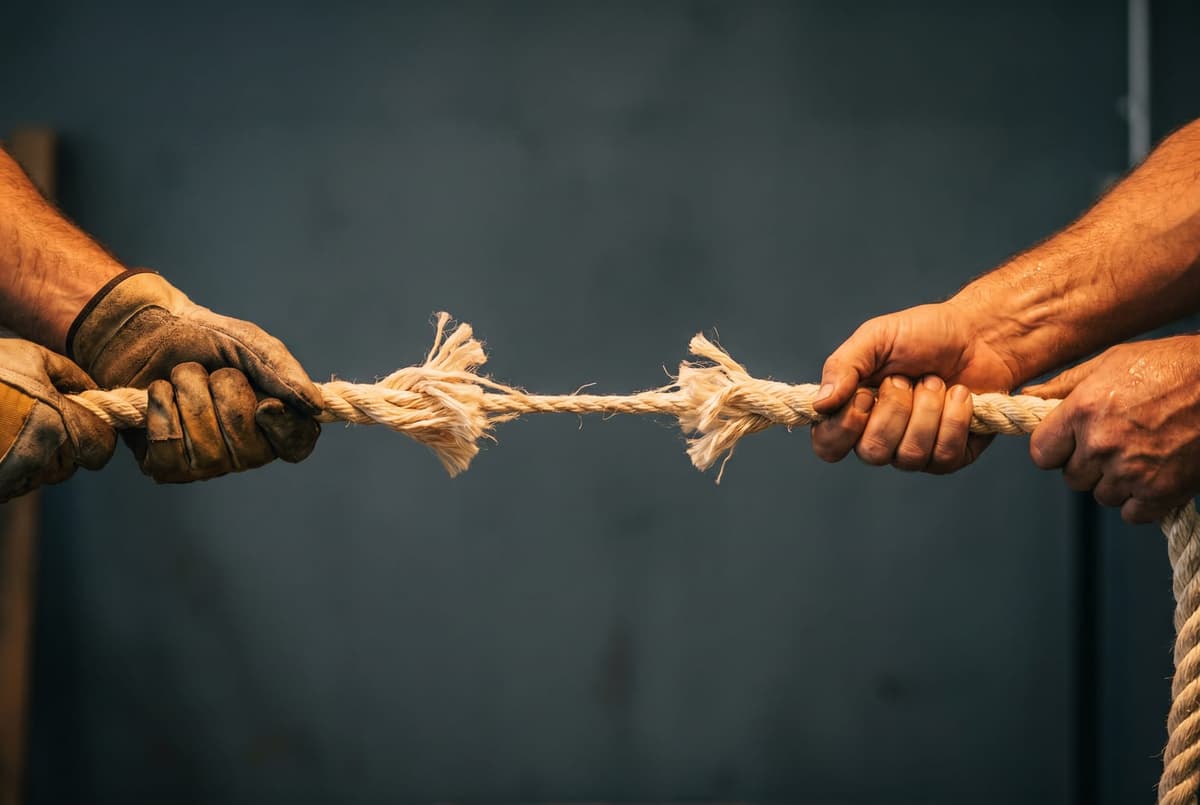
If this square sits in your natal chart, two characters live inside you who rarely sit at the same table. Mars carries your ability to want and to act — where you point your will, how you chase a desire, what you treat as a personal boundary. Uranus carries your freedom — the appetite for the new, the irritation at any frame, the capacity to stand up and walk out while everyone else stays seated. In a trine those two work on the same wavelength and you do the unconventional thing with ease. In a square they argue. At an everyday level it often sounds like this: "I want to be free, and I go off at anyone who looks like a restraint, even if all they did was ask what time dinner is."
There are countless scenarios, but the recognisable shape is one. The reaction fires before the thinking does. As teenagers, children with this aspect come into conflict with parents and school early — not out of ideology, but out of an inability to bear the tone. As adults they often cut ties, projects and relationships, not because they've decided with themselves to leave, but because at some point staying became unbearable. Only a week later does the honest answer arrive about what, exactly, they were reacting to.
In people raised to comply, the pattern often reads as a late escape from an imposed role. For a long stretch they bend to a family's expectations, to the template of the "dutiful partner", to the image of the convenient colleague. Then in a single moment they tear up the whole blueprint: a new profession, a divorce, a move, a business of their own. From the outside it looks like a midlife crisis. From the inside it's an accumulated Uranus that Mars has finally translated into action. In those given more room to push back, the picture is similar but framed differently: early clashes with authority, a pull towards extreme sport, a string of abrupt career switches, a poor fit with any rigid hierarchy.
The good news is that the aspect doesn't drain energy — it provokes it. People with Mars square Uranus are rarely passive. This pair breeds reaction speed, originality and a readiness to go first where others are still thinking. Among engineers, emergency surgeons, war reporters, film directors and athletes in extreme disciplines, you meet this aspect more often than the statistical norm would predict. Trouble arrives where a person lives under a constant background of external control they didn't choose: a micromanaged office, a relationship with a controlling partner, a rhythm of life they were slotted into without their consent. A suppressed pair returns through blow-ups, injuries and emotional explosions.
A theme of its own here is the body. The aspect is statistically linked with accident-proneness — careless fractures, crashes at speed, sports injuries from the body not catching up with a decision the mind already made. That is not a sentence, but it is an area where it pays to be honest with yourself. Don't get behind a wheel or onto machinery while angry, don't ignore tiredness, and don't make "I'll prove it" decisions in the grip of a strong feeling. Read this as a flag for care, not as a prediction of harm.
I won't soften this part. With this square it's common to arrive in a consulting room carrying the story "I've smashed it all up again at the peak." Inside lives a child who can't stand being controlled and an adult who hasn't yet learned to separate real pressure from imagined pressure. Until those two are introduced, a person keeps demolishing the very things they built. That isn't a verdict; it's a pointer to the work. Integration begins with one move: admitting that freedom does not equal a reaction made out of spite. Genuine autonomy appears when you take a step yourself, by your own choice, rather than in answer to someone else's word.
The full portrait of your particular square depends on the signs Mars and Uranus occupy, the houses they fall in, and their own aspects to the Sun, the Moon, Saturn and Pluto. Without that, the general shape stays a framework on which your personal story can look very different. To see how this pattern actually plays out in your chart, the natural place to begin is a full natal reading — and, as always here, treat it as something to reflect on for fun and self-understanding, not as a forecast of your fate.