Skip to content
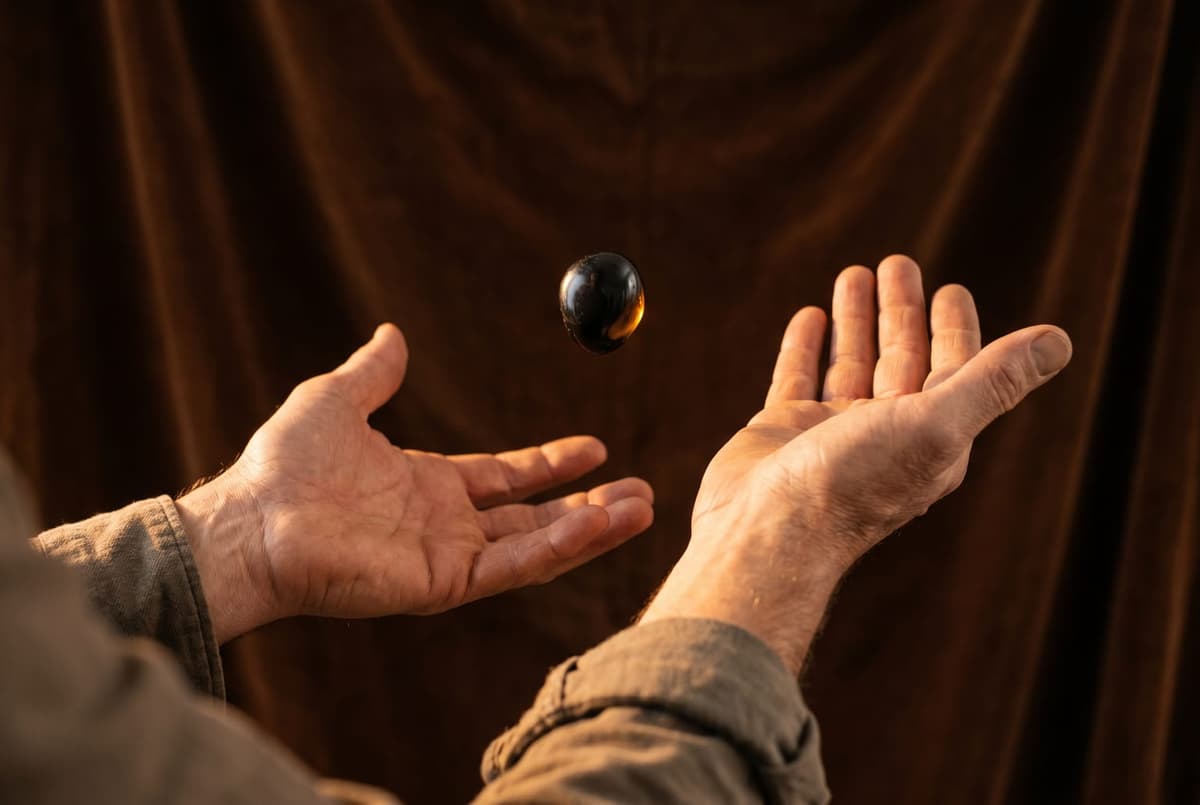
Sextile Venus–Jupiter — symbolic illustration

Sextile · 60°

Venus sextile Jupiter

A harmonious aspect: the two planets support each other and tend to pull in the same direction. Read it as a resource to notice, not a guarantee.

60°Orb up to 4°HarmoniousNatal · synastry · transit
60°Venus sextile JupiterOrb up to 4° · major aspect
Oksana MiatovaWritten by Oksana Miatova·11 min read

For entertainment and self-reflection only. Not medical, legal, financial or psychological advice. Consult a qualified professional for important decisions.

The short answer

Venus sextile Jupiter is a gentle 60° link between the planet of pleasure and the planet of growth. In the natal chart it gives charm, easy social luck and money that arrives through things you enjoy; in synastry it makes two people feel instantly at home together; in transit it opens a short window where the world tilts a little in your favour. The catch is that none of it triggers on its own — the sextile is a door left unlocked, not a hand on your back.

What a sextile is

The geometry behind the reading

A sextile is a separation of sixty degrees between two planets, and it sits in the harmonious family of aspects, but without the autopilot the trine is famous for. The textbook orb is about four degrees, the nature is soft, and the link runs through the sixth harmonic. Among the five major aspects the sextile ranks fourth for sheer strength, which means it is easy to miss in a natal chart — a loud square or a tight conjunction nearby will always pull the eye first. I think of the sextile as a door that has been left unlocked: it doesn't push you through, it simply isn't bolted. Step towards it and the resource is right there waiting; ignore it and the door can stand quietly shut for years. That is why sextiles get called the aspects of missed chances — people with strong ones often complain of 'unrealised potential', precisely because nobody told them an effort was required. For Venus and Jupiter the merge is especially kind: the planet of what you enjoy meets the planet of what you believe is worth having, and the two quietly agree that your pleasures are also your values.

Three ways to read it

The same aspect, three different stories

One aspect reads differently depending on where you find it: inside a single birth chart, between two people, or moving across the sky right now. Read each as a way to notice patterns, not as a forecast.

Venus sextile Jupiter in the natal chart

If Venus sextile Jupiter sits in your natal chart, the odds are you've no idea how much more gently life handles you than it does the people without it. This isn't loud luck or a showy talent. It's a background ease, woven so naturally into your ordinary days that you take it for the normal state of things. The teacher who looked the other way when you slipped up. The friend who happened to mention a vacancy. The money that turned up when it was needed. The partner who started the conversation while you were still working up the nerve. All of it is the sextile doing its quiet work, and most of the time you never see the join.

Venus in your chart governs what you love, what gives you pleasure, how you build closeness and how you draw people in. Jupiter governs what you believe in, what you count as big and worth having, how you widen your world. When the two stand sixty degrees apart and fall into friendly elements — earth with water, or fire with air — a soft channel opens between them. Your pleasures line up with your values. Your magnetism rests on an inner sense that, on the whole, you're alright. And other people read that as a confidence with no pressure behind it, which is one of the more attractive things a person can carry into a room.

In the character it tends to show up softly rather than dramatically. You rarely fall into despair over money; even in lean patches some way of covering the basics presents itself. You don't panic in social situations — you're comfortable among people, and people are comfortable around you. You take pleasure in small things, a good meal, a view from a window, a conversation with someone you like, and that capacity doesn't depend on how the wider circumstances are going. This is the real resource the sextile hands you: an inner point of pleasantness you can return to whatever is happening outside.

But there's a shadow to all that softness, and it's one I name plainly in consultations. The sextile relaxes you. When life meets you from childhood with a soft cushion, you never develop the habit of fighting for things. You learn to wait rather than do. You put decisions off because 'it'll sort itself out', and sometimes it genuinely does — and sometimes an important window slips by that won't open again. By forty this often sounds like 'I had chances, I just never used them', and it's the single most common thing I hear from people with a strong Venus–Jupiter sextile.

The second shadow is money. The sextile promises that money will come, and it does come — but it goes just as easily. Impulse spending, paying over the odds for something pleasant, the habit of buying a treat to lift a flat mood: it all mounts up. If you've no disciplining Saturn contacts running alongside, you can reach a settled age with a good life, lovely company around you and very little in the account.

The third is relationships. Venus–Jupiter makes you charming, and so you slide quickly into romances that are pleasant but short on depth. Partners pick you, and you pick partners, on the basis of comfort rather than any real match of substance. That works perfectly well at twenty-five. By thirty-five it starts to wear thin, because comfort without content runs out of road.

The way to use this aspect properly is conscious activation. Don't wait for life to bring you what you need. It will bring you what's pleasant — that part is reliable. But the things you actually need are the ones you name as goals yourself and then start walking towards. Do that, and the sextile becomes a force that opens doors ahead of you: introducing the right people, dropping the financial hint, smoothing the conflict on the road. Without that deliberate step it stays background music, agreeable but going nowhere. And to see exactly which doors stand open for you, and where you keep walking past them, it's worth looking at the whole chart together — a sextile behaves quite differently in Aries-with-Gemini than it does in Taurus-with-Scorpio, and the signs and houses change everything about how it lands. Read all of this, of course, as a way to notice your own patterns rather than a forecast of what's coming.

When it flows

  • A natural charm that warms people to you inside the first few minutes of a conversation
  • An easy relationship with money — it tends to come through things you genuinely enjoy, not through grinding yourself down
  • A steady sense of your own worth that doesn't hang on other people's approval
  • A knack for spotting the good in people and circumstances without tipping into naivety

When it grates

  • A pull towards comfort and coasting — if luck keeps turning up, why push?
  • A leaning towards overeating, over-spending on small pleasures, and the slow creep of extra weight
  • Quietly high expectations of partners, who are supposed to be generous, kind and endlessly understanding
  • Putting decisions off in a 'it'll sort itself out' spirit — and sometimes it does, and sometimes it doesn't

The shadow side, and what to do with it

The chief shadow of this sextile is the quiet belief that life will hand over whatever you need on its own. From childhood the soft luck kept arriving — a teacher who let a mistake slide, money that surfaced just in time, a relationship that fell into place with no real effort — and so the habit forms of waiting rather than doing. Integration begins the moment you realise the sextile is a resource, not a guarantee. Once you start deliberately backing your own talents, putting yourself forward, asking for more, the gentle luck firms up into something with real weight behind it. Without that, it stays a pleasant background hum — the kind of thing you look back on later and describe as 'I had chances, I just never used them.'

Sextile — symbolic still life

How close is close

The orb decides the volume

A sextile is rarely exact. The smaller the gap between the two planets — the orb — the louder the aspect plays. Here is roughly how the three bands read.

Tight

0–2°

Reads as a defining feature

At 0–2° the sextile is exact and at full strength. On an orb this tight it leaves a visible mark on character: the person is noticeably more charming than their peers, money comes a little more readily, and long stretches of loneliness are rarer. In transit a tight sextile lights up a day that really is worth ringing on, selling on, meeting people on, proposing on. In synastry it shows as a couple who genuinely do get on beautifully at the everyday level — and who tend to forgive each other rather more than they ought to.

Medium

2–5°

A steady background pattern

At 2–5° the sextile is at its working width for most natal charts. It reads as background luck in the affairs of Venus and Jupiter: money, relationships and social contacts run a touch more smoothly than for someone without the aspect. The effect isn't obvious without a comparison, though, and it's easily mistaken for simply how things are. In synastry this middle band turns up in couples who are 'nice together' for no particular reason. In transit, 3–4° off exact gives a day of soft background, good for conversation and pleasant errands.

Loose

5–8°

A faint colouring, felt in crises

At 5–8° the sextile is weak and on the edge of working at all — the standard orb is four degrees, but the modern school allows it to stretch. On an orb this wide it acts more as a faint overtone than a force of its own. In a natal chart you may not register it; stronger aspects drown it out. In synastry it is a barely-there liking. In transit it is almost untrackable, surfacing only in the day or two right at exactness.

Sextile with a partner — what does it mean for the two of you?

A full synastry reading — every aspect between your two charts

Venus sextile Jupiter inside one chart is an inner mechanism. Between two charts it becomes the dynamic of a relationship. Enter both birth details and get a synastry reading — where the conjunctions sit, where the squares pull, where the oppositions draw you together — all calculated with the Swiss Ephemeris. Read it as a way to notice patterns, not a forecast.

Check your compatibilityfrom £1 · for entertainment

Compare with a neighbouring aspect

Same planets, a different distance

Venus square Jupiter tells a different story. If you're reading this to make sense of a specific chart, it's worth glancing at the neighbouring aspect too.

Venus square Jupiter
  • The sextile hands you soft openings; the square makes insistent demands that you act
  • A Venus–Jupiter sextile leans towards laziness; the square leans towards overspending and excess
  • The sextile is easy to overlook; the square is impossible to miss — it lands on the sore spots
  • The sextile promises a pleasant life on minimal effort; the square promises a full one on maximum effort
  • In synastry the sextile is a steady 'we're good together'; the square is a seesaw of 'too much, then nothing'

Lived examples

A few charts where you can see it

Public figures with a verified Rodden birth-data rating (AA/A/B). No invented data.

Frequently asked questions

What does Venus sextile Jupiter mean in the natal chart?
It's a gentle harmonious aspect at sixty degrees that gives charm, an easy relationship with money, and a kind of social luck. The important thing is that it's a potential rather than a guarantee — it has to be switched on with deliberate effort. Left alone, it stays a pleasant background hum: nice to have, but leading nowhere in particular. Read it as a pattern to notice in yourself, not a verdict on your life.
Is Venus sextile Jupiter good or bad in synastry?
It makes for light, warm relationships with mutual generosity and very few rows about money. The downside is that a couple can live so comfortably that they stop growing, and the hard subjects get pushed back for years. It's lovely for friendship and steady company; for a long partnership you'd want sturdier contacts alongside it. As ever, this is a lens for understanding the patterns between two people, not a forecast of how things will turn out.
What orb should I use for Venus sextile Jupiter?
The classical orb for a sextile is four degrees; the modern school allows a stretch to five or six. A tight orb of 0–2° leaves a real mark on character — the charm and the easy luck become noticeable. From 5–8° it works more as a faint overtone you can easily miss altogether. Past that it has effectively dissolved. For everyday self-reflection, that range is all you need to know.
Which celebrities have Venus sextile Jupiter?
Two well-documented examples are Audrey Hepburn (born 4 May 1929 — Venus in Aries, Jupiter in Gemini) and the Prince of Wales (born 21 June 1982 — Venus in Taurus, Jupiter in Scorpio). Both show a marked social grace and easy access to large resources. As with any specific aspect, it's worth checking a chart against a Rodden-rated source before quoting it — names get passed around loosely and don't always hold up.
When is the next transiting Venus sextile Jupiter?
Venus and Jupiter form a sextile several times a year; the exact dates depend on where both planets currently sit. On average the transit comes round every one to three months and lasts only a few hours at exactness. For a precise calendar you'd want to check the dates against the current sky — general guidance isn't enough to pin a particular day.
Is Venus sextile Jupiter different for men and women?
The core is the same either way: charm, a soft financial luck and ease in social life. As a loose tendency it shows more through personal magnetism and relationships in a woman's chart, and more through career and social standing in a man's — but that's a statistical lean, not a rule. The everyday flavour really depends on the signs and houses the two planets fall in, which matters far more than gender. Treat any of this as a way of noticing, not a script.
What should I do if Venus sextile Jupiter doesn't seem to be working?
Most likely you simply aren't activating it. A sextile doesn't fire on its own — it opens doors you have to choose to walk through. Ask for more, put yourself forward, stop turning down pleasant offers out of false modesty, and the aspect starts to show its strength. The 'nothing's happening' feeling is usually the door standing unlocked while you wait, quite reasonably but quite mistakenly, for it to swing open by itself.
How is Venus sextile Jupiter different from the trine?
A Venus–Jupiter trine, at a hundred and twenty degrees, gives an automatic kind of luck that simply happens to you. The sextile, at sixty, is the same flavour of luck but it needs switching on. The trine can relax a person all the way to passivity, because the good things keep arriving regardless; the sextile rewards activity instead. Neither is 'better' — they ask different things of you, and that's the part worth understanding about your own chart.
Is Venus sextile Jupiter dangerous?
Not in itself. The risks are all on the soft side: overspending, overeating, coasting, and idealising a partner. These shadows are gentle, but they accumulate over the years and can quietly add up to financial slippage or an unhealthy relationship if nobody keeps an eye on them. None of it is fated — it's a tendency to watch for, not an outcome to brace against.
Can I use a transiting Venus–Jupiter sextile for a wedding?
For the day itself, certainly — it tends to make for a warm, pleasant occasion. For the longevity of the marriage, though, a single transiting sextile isn't much to build on; for a wedding date, astrologers traditionally look for sturdier configurations. The sextile suits an engagement, a first date or a launch rather nicely. Whatever you make of it, treat it as a bit of fun and self-reflection, not a promise about the future.

Related pages

The other aspects between Venus and Jupiter

The same two planets at a different angle — each reads differently.

Oksana Miatova
Oksana Miatova

Astrologer, co-founder of WowAstro

Oksana Miatova is a practising astrologer and co-founder of WowAstro. Natal charts, synastry and forecasts grounded in the Western classical tradition — explained through real-life examples and plain language.

More about the author →

For entertainment and self-reflection only. Not medical, legal, financial or psychological advice. Consult a qualified professional for important decisions.