Skip to content
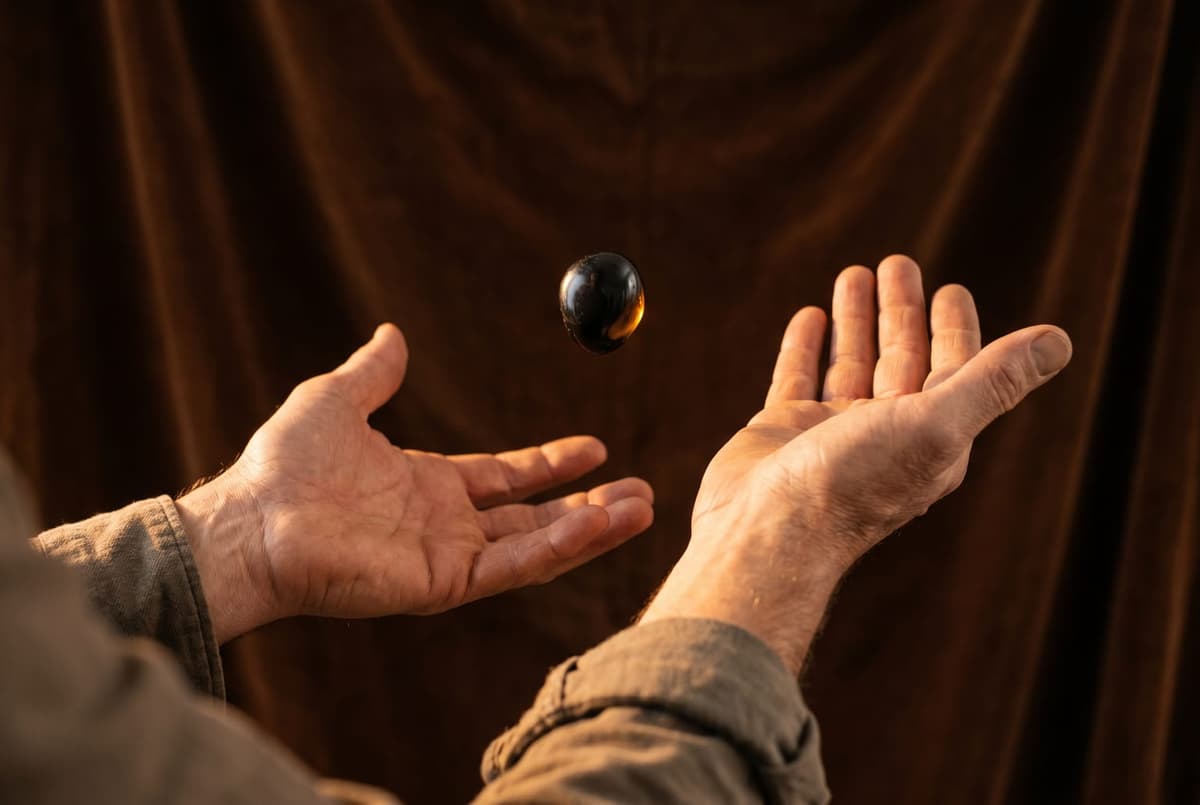
Sextile Sun–Venus — symbolic illustration

Sextile · 60°

Sun sextile Venus

A harmonious aspect: the two planets support each other and tend to pull in the same direction. Read it as a resource to notice, not a guarantee.

60°Orb up to 4°HarmoniousNatal · synastry · transit
60°Sun sextile VenusOrb up to 4° · major aspect
Oksana MiatovaWritten by Oksana Miatova·12 min read

For entertainment and self-reflection only. Not medical, legal, financial or psychological advice. Consult a qualified professional for important decisions.

The short answer

Sun sextile Venus is the harmonious 60° angle people associate with easy charm, taste and being likeable without trying. The catch: in a single birth chart it cannot occur, because Venus never wanders more than 48° from the Sun. What you almost certainly have is the conjunction — and in transit and synastry the soft Venusian note is very real.

What a sextile is

The geometry behind the reading

A sextile is a 60° separation between two planets and sits fourth in the classical hierarchy of strength, gentler than the conjunction, the trine, the square and the opposition. In a natal chart I keep its orb to about four degrees and tighten it to two for transits. Geometrically the angle links signs of the same polarity and compatible elements — fire with air, earth with water. Between the Sun and Venus, though, a sextile is astronomically impossible: Venus is an inner planet whose orbit lies between us and the Sun, so from Earth it is never seen more than 48° from the light. Sixty degrees is simply out of reach, and the same goes for the square, the trine and the opposition. This page exists because so many people search for the phrase — and it explains, honestly, why your own search will lead you to the conjunction rather than to a sextile. Stay with me: the whole qualitative nature of a harmonious Sun–Venus contact is set out below, along with how to read it given the real geometry.

Three ways to read it

The same aspect, three different stories

One aspect reads differently depending on where you find it: inside a single birth chart, between two people, or moving across the sky right now. Read each as a way to notice patterns, not as a forecast.

Sun sextile Venus in the natal chart

If you've landed here from a search for 'Sun sextile Venus in the natal chart', let me start with the plain answer: there is no such aspect in a birth chart. Venus is an inner planet — its orbit lies between Earth and the Sun — and from our vantage point it never moves more than 48° from the light. To form a sextile, two planets need to sit exactly 60° apart. Between the Sun and Venus those 60° are unreachable, astronomically. The same holds for the square (90°), the trine (120°) and the opposition (180°): not one of those configurations can arise between the two. Only the conjunction (0–8°) and the rare semi-sextile (around 30°) are possible.

I open with that fact so as not to lead you up the garden path. Plenty of popular round-ups and automated services write about a 'Sun sextile Venus' as though it were a real thing, and I'd rather you had an accurate picture. If a search brought you here, the odds are that what you actually want is to understand how the Sun–Venus pairing works in a harmonious key. That theme genuinely exists — it just expresses itself through the conjunction. From here on I'll describe it as it really sounds, so that what you read can actually be applied to your own chart.

In a conjunction the Sun and Venus interlace by function. The Sun is the 'I', the spine of the personality, the direction of the will, the way you shine out into the world. Venus is what you love, your aesthetic filter, your relationship with pleasure, with money, with beauty, with the body. When the two stand close together, your sense of self takes on a Venusian colour. That gives a softness in how you present yourself, a natural pull towards the beautiful, the ability to be liked without any special effort, a calm note running through your self-worth.

From the outside, such a person reads as easy to be around. Not sharp, not hard, not abrasive. The first few minutes of an introduction go smoothly, because they have the knack of presenting themselves without strain. This often turns out to be professional capital: people with this combination do well wherever the first impression and an eye for taste really matter — styling, design, hospitality, negotiation, client-facing work, the public-facing professions, the arts.

There is a quiet flip side to all that ease. When charm has been doing the work since childhood, you never have to develop the other tools with the same intensity. Discipline, persistence, the stomach for rejection, the willingness to grind away at the dull part of a job — these grow in people the world initially pushes back against. For someone carrying the harmonious Sun–Venus pairing, the world more often says yes. The result, by middle age, can be the discovery that there were many gifts but rather few finished projects — not because the gifts were weak, but because the habit of seeing things through never took hold.

A second subtlety is the dependence on outside approval. When part of your self-worth is built on being accepted, any non-acceptance lands hard. Criticism, a refusal, a cool reception — all of it can be read as a threat to your identity rather than as ordinary feedback. That storyline runs especially strong in the first half of life. By thirty-five or forty, if a person has been through a few large 'no's and learnt to weather them, charm becomes one tool among many rather than a shell. If they haven't, they keep coasting on other people's goodwill and suffering at every adverse current.

A third note is the relationship with money and pleasure. The carrier of this combination usually has a healthy right to enjoyment — good food, good clothes, travel, a home that's pleasant to be in. Money is treated as neither enemy nor sacred object but as the material from which comfort is made. That's a sound stance, though it has an edge: when pleasure outweighs discipline, projects stall. The pull to buy something, to rest, to treat yourself, can overpower the pull to work one more hour and get the thing finished.

On the bodily and sexual side, this combination tends to be unproblematic: an easy relationship with the body, free of both inhibition and strain. That doesn't guarantee a vivid sexual life — vividness is the business of Mars and Pluto — but a basic at-homeness in oneself as a physical being is usually there. These people draw partners easily; whether the relationship lasts depends on other layers of the chart.

The complete picture is assembled from where Venus sits by sign and by house, and from the aspects reaching it from the Moon, Mars, Jupiter, Saturn and Neptune. To see your own Sun–Venus pairing in action, the specific chart has to be read as a whole — and, to be precise about the geometry, what you're reading is a conjunction, never the sextile the search term promised.

When it flows

  • A soft, natural charm — people warm to you without any visible effort on your part
  • Good taste, so clothes, surroundings and the rooms you live in tend to come together beautifully
  • An easy relationship with money and an ability to enjoy it without guilt
  • Steady self-worth and the rare knack of taking a compliment gracefully

When it grates

  • A reluctance to develop the gift you were handed — 'why bother, they like me anyway'
  • A pull towards comfort over growth whenever the two sit side by side
  • Shallow pleasures winning out over the deeper, slower projects
  • A dependence on other people's approval when there's less backbone underneath than there is charm on top

The shadow side, and what to do with it

The shadow of a harmonious Sun–Venus contact is the talent that never quite ripens. The aspect hands you a head start: a teacher, a boss or a partner takes to you early, and a great deal flows more easily after that than it does for others. Inner discipline never has to grow, because nothing in the environment demands it. By your forties you can look round and find there were plenty of gifts but very few finished pieces of work. Integration begins the day you stop spending charm as currency and start building something where charm is a pleasant bonus rather than the engine. Do that and the contact turns from a gift you're handed into a tool you wield. A point of honesty, though: in a single birth chart this plays out through the conjunction, not a sextile — the 60° version of the story does not exist.

Sextile — symbolic still life

How close is close

The orb decides the volume

A sextile is rarely exact. The smaller the gap between the two planets — the orb — the louder the aspect plays. Here is roughly how the three bands read.

Tight

0–2°

Reads as a defining feature

At 0–2° you are, for this pair, in a borderline zone — and a telling one. Within about 8° of the Sun, Venus is classically called 'combust', and its harmonious side reads more faintly: the charm is there, but the person doesn't feel it, because the light eclipses the planet of love. Inside this band what actually operates is a conjunction, not a sextile. If you arrived here with the Sun and Venus only a couple of degrees apart in your own chart, read the page on the Sun–Venus conjunction instead — there the geometry matches reality, and the interpretation will actually fit.

Medium

2–5°

A steady background pattern

At 2–4° this is, for most planetary pairs, the band in which a sextile rings out clearly. For the Sun and Venus, though, you are still inside the conjunction at these degrees: Venus sits in the same sign or the neighbouring one, no more than four degrees off. The harmonious note is present — charm, taste, a softness in how you carry yourself — but that is the conjunction at work, not a sextile. If your chart places the Sun and Venus exactly this far apart, read the conjunction; it will describe your reality more accurately than any page about a sextile can.

Loose

5–8°

A faint colouring, felt in crises

At 4–6° you reach the far orb where a sextile is usually said to have dissolved. For the Sun with Venus this is where Venus begins to step out of 'combustion' and sound more freely. Even so, it remains closer to a weak conjunction than to anything resembling a sextile. Real clarity comes only from casting the actual chart: where Venus sits relative to the Sun, its phase — eastern, morning, evening, western — its sign and its house. In my practice, most of the time someone asks about 'Sun sextile Venus', their chart in fact holds either a conjunction or no aspect at all between the two.

Sextile with a partner — what does it mean for the two of you?

A full synastry reading — every aspect between your two charts

Sun sextile Venus inside one chart is an inner mechanism. Between two charts it becomes the dynamic of a relationship. Enter both birth details and get a synastry reading — where the conjunctions sit, where the squares pull, where the oppositions draw you together — all calculated with the Swiss Ephemeris. Read it as a way to notice patterns, not a forecast.

Check your compatibilityfrom £1 · for entertainment

Compare with a neighbouring aspect

Same planets, a different distance

Sun conjunct Venus tells a different story. If you're reading this to make sense of a specific chart, it's worth glancing at the neighbouring aspect too.

Sun conjunct Venus
  • Between the Sun and Venus both the sextile (60°) and the square (90°) are geometrically impossible: Venus never strays more than 48° from the Sun
  • The only real aspects this pair can form are the conjunction (0–8°) and the rare semi-sextile (around 30°)
  • If your interest is genuinely 'how the Sun and Venus work together in a chart', the conjunction page is the one that describes the real geometry
  • A square would be 90°, a sextile 60°, an opposition 180° — and all three are simply absent for this particular pair
  • So the contrast with the conjunction's sibling aspects is purely theoretical here: for the Sun and Venus, neither a sextile nor a square ever forms

Lived examples

A few charts where you can see it

Public figures with a verified Rodden birth-data rating (AA/A/B). No invented data.

Frequently asked questions

What does Sun sextile Venus mean in the natal chart?
Strictly speaking, nothing — because the aspect cannot occur in a birth chart. Venus never strays more than 48° from the Sun, while a sextile needs a clean 60°. If a search engine brought you to this phrase, what you most likely have is a Sun–Venus conjunction (0–8°): it produces a very similar qualitative picture — charm, taste, the gift of being liked — and the interpretation worth reading is the one for the conjunction. As ever here, this is a lens for understanding yourself, not a verdict on who you are.
Can my chart actually have a Sun sextile Venus?
No. This is an astronomical fact rather than an astrological opinion. Venus is an inner planet; its orbit runs between Earth and the Sun, so from here we always see it close to the light — a maximum of 48° on either side. The 60° sextile, the 90° square and the 180° opposition between the Sun and Venus are all geometrically ruled out. The only configurations possible are the conjunction and the semi-sextile.
Which Sun–Venus aspects are possible at all?
Two in practice. The conjunction (0–8°) is common and is the pair's baseline configuration. The semi-sextile (around 30°) is a rare, minor aspect that most schools don't fold into the main reading. There are no squares, trines, sextiles or oppositions between the Sun and Venus in any chart.
Why do websites still write about a Sun sextile Venus, then?
Usually it's an artefact of automated text or aggregators that list 'every aspect of every planet' without checking the astronomical limits. Sometimes the phrase is borrowed for a synastry contact — one person's Sun in sextile to another person's Venus — which between two different charts is perfectly possible. If that's what you were after, read the synastry section below.
What is a combust Venus, and how does it relate to the sextile?
'Combust' is the traditional term for a planet that has come within about 8° of the Sun. Venus in that position sounds quieter — its qualities of softness, charm and taste are present, but the person rarely registers them, because the light overshadows the planet. The link to the sextile is this: the degrees of Venus closest to the Sun are the only zone where the two interact at all, and that interaction works as a conjunction, never a sextile.
If my Sun and Venus are in neighbouring signs about 30° apart, what's that?
That's a semi-sextile — the minor 30° aspect. It does occur for the Sun–Venus pair and is read as a gentle inner tension between the 'I' (Sun) and 'what I love' (Venus). Most schools leave it out of the core natal reading and only consult it in a detailed analysis. It has almost no bearing on the level of charm or aesthetic sense.
One person's Sun in sextile to another's Venus — what does that mean?
That's a synastry contact, and it's entirely possible. Between two people's charts any aspect is allowed, because you're comparing two separate sky positions. Such a sextile gives a pleasant backdrop to the connection: one person is comfortably 'likeable' to the other, and time together feels easy and unforced. There's more on this in the Synastry section of this page — read it as a way to understand the relationship's patterns, not a prediction about it.
So what does real harmony between the Sun and Venus look like in a chart?
In the natal chart it comes through the conjunction. When the Sun and Venus sit side by side (within 8° of each other), their functions interlace: the will is tinted with aesthetics, self-expression travels through the beautiful, and pleasure is bound up with identity. That yields charm, taste and softness — sometimes with a narcissistic note. The full reading lives on the Sun–Venus conjunction page.
What should I do if an astrology service shows me 'Sun sextile Venus'?
Double-check the service, especially if it's automated. Most often it's a technical glitch: either a conjunction has been mislabelled as a sextile, or a synastry contact has been displayed without being flagged as one. You can verify it with simple arithmetic — look up the longitudes of the Sun and Venus in the chart and find the difference. Under 8° is a conjunction; around 30° is a semi-sextile; any other figure is impossible for this pair.
Where should I look to understand how my own Sun–Venus pairing shows up?
Start with the distance between them in degrees. Under 8°, read the conjunction. Close to 30°, read the semi-sextile and treat it as a minor note. After that, look at the sign Venus occupies, the house it falls in, and its aspects to the other planets — Moon, Mars, Jupiter, Saturn, Neptune. The whole picture is assembled from those layers, not from a single 'harmonious aspect with the light' that, for this pair, the geometry simply does not allow.

Related pages

The other aspects between Sun and Venus

The same two planets at a different angle — each reads differently.

Oksana Miatova
Oksana Miatova

Astrologer, co-founder of WowAstro

Oksana Miatova is a practising astrologer and co-founder of WowAstro. Natal charts, synastry and forecasts grounded in the Western classical tradition — explained through real-life examples and plain language.

More about the author →

For entertainment and self-reflection only. Not medical, legal, financial or psychological advice. Consult a qualified professional for important decisions.