Skip to content
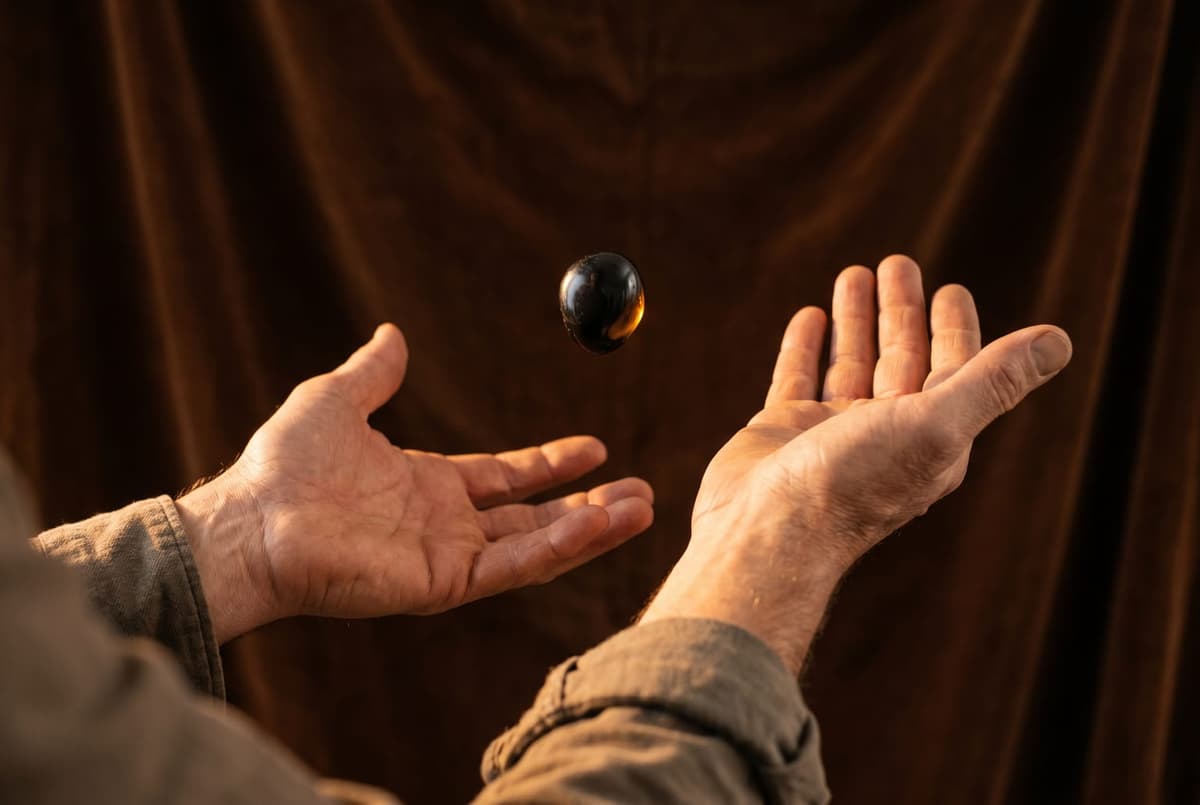
Sextile Saturn–Neptune — symbolic illustration

Sextile · 60°

Saturn sextile Neptune

A harmonious aspect: the two planets support each other and tend to pull in the same direction. Read it as a resource to notice, not a guarantee.

60°Orb up to 4°HarmoniousNatal · synastry · transit
60°Saturn sextile NeptuneOrb up to 4° · major aspect
Oksana MiatovaWritten by Oksana Miatova·11 min read

For entertainment and self-reflection only. Not medical, legal, financial or psychological advice. Consult a qualified professional for important decisions.

The short answer

Saturn sextile Neptune is a harmonious 60° aspect in which a dream finally takes shape and structure finally stops feeling dry. In the natal chart it gives the patience to keep working on something foggy and slow to prove; in synastry it binds two people through a shared ideal they are willing to build; in transit it opens a generational window for quietly turning an intention into a long project. Read it for self-reflection, not as a forecast.

What a sextile is

The geometry behind the reading

A sextile is a separation of sixty degrees between two planets, and it sits fourth in the classical order of strength — behind the conjunction, the trine, the square and the opposition. When I read a natal chart I allow this aspect an orb of up to four degrees, and for transits I tighten that to two. The sixty-degree angle links signs of the same polarity — earth with water, fire with air — so the two energies meet without friction. The defining trait of a sextile is that it never insists. Give it no task and it simply dissolves into the background of the character and into the mood of a whole generation. Unlike a square, which yanks at your attention of its own accord, a sextile waits to be noticed and used. That is why I think of it as the aspect of possibility: it is there, but whether you draw on it or leave it idle is the chart-owner's choice. Left alone, all its strength drains away into the tone of the age.

Three ways to read it

The same aspect, three different stories

One aspect reads differently depending on where you find it: inside a single birth chart, between two people, or moving across the sky right now. Read each as a way to notice patterns, not as a forecast.

Saturn sextile Neptune in the natal chart

If this sextile sits in your natal chart, the odds are you rarely notice it as a separate quality. It doesn't flare up and demand attention the way a square does. It doesn't hand you ready answers the way a trine does. It simply, quietly, keeps two functions in step that for most people live in different rooms — sometimes in different houses altogether: the capacity for long, methodical form, and the capacity to perceive what can't be held in the hand. You can keep discipline going in subjects where the result is foggy. You don't lose heart in a project halfway through just because it hasn't yet proved its practical worth. And you can build a plan in which the dream is still recognisable.

In childhood it shows in how a child treats the imagined. They don't disappear into fantasy entirely, and they don't mock other people's fantasies either. They can spend hours on something with no immediate point — assembling models, copying out the illustrations from a book, inventing long storylines whose rules only they understand. A teacher might call them dreamy, yet at home the same child does the routine without fuss. Inside, an unhurried assembly is already under way of something that has no words yet, and no grown-up profession to hang itself on.

By the teenage years there's usually a first long theme in which both functions are visible at once. Music, drawing, a foreign language, helping with a charitable effort, an early interest in psychology or in spiritual writing, a research club. The point isn't the field itself but the pattern: the teenager holds it for years, with no loud wins, and without losing the inner warmth for it. While their peers dart between quick enthusiasms, this one stays inside their own theme and slowly grows used to the idea that their life can contain long storylines.

By twenty-five such a person already has a characteristic feeling: they know how to invest in things that promise no quick reply. This becomes the first trap. People around them often mistake the patience for a lack of ambition. They start to suspect they have no particular gift, because they don't leap onto the stage with a finished result — they just do a little each month. The aspect works without noise and makes no claim on recognition, and that quiet is easily read, even from the inside, as "nothing special is happening with me."

Somewhere between thirty and forty an important turn arrives. If a person has managed all that time to hold one long theme, it surfaces: a manuscript becomes a book, years of training become a professional reputation, a long-running helping practice becomes a private school or a clinic, a spiritual apprenticeship becomes a voice of one's own. If they have spent those years filing the intention under "one day", this is exactly when the first grown-up ache turns up — it becomes clear that the resource was there, and clear that it never set into a form simply because nobody set the aspect a direct task.

The shadow of the aspect lives precisely in that quiet. Saturn doesn't press the way it would in a square. Neptune doesn't shatter illusions the way it would in an opposition. They sit beside one another, in the same polarity, and politely wait for your request. Without a request they retreat into the background of the life: you stay a person who "has everything they need in order to", while that "in order to" never quite happens. By forty you can find that all the resources for a long project were there, and that a decade would have been more than enough for it. The decade duly passed — only without the project.

So the aspect needs concrete, dated tasks. Not "one day I'll write", but "this year I'll finish the first part". Not "one day I'll train as a psychologist", but "in September I send off the application". The aspect is obedient and hardy, but not enterprising. It won't push. It will only hold the line if you point the direction — and then it gives a result that, ten years on, turns out to be one of the main threads of your story. This is usually the point where it makes sense to look carefully, even just once, at your own natal chart and see where the dream and the discipline actually meet.

When it flows

  • The knack of taking a dream all the way to a plan without killing it on the way
  • Patience with subjects where the result is foggy and only proves itself over years
  • A quiet sense of the line between fantasy and a real task, held without rigidity
  • Trust in slow inner processes — therapy, art and spiritual practice run steadily rather than in fits and starts

When it grates

  • A gentle tendency to file the dream under 'one day', because the aspect never pushes
  • A habit of building the plan so carefully that the original spark goes out of it
  • A mild disappointment in any project that fails to live up to its ideal image
  • Quietly settling for a dull form just so that something, at least, gets made

The shadow side, and what to do with it

The shadow of this sextile rarely looks like a breakdown. More often it shows up as a long grey stretch between two states: either the dream lives apart from the life and the person says 'I'm not ready yet' for years on end, or the plan hollows the dream out so thoroughly that the hands end up building something the heart never asked for. By forty you can look back and find that a decade went into tidy little steps towards something blurry, and now you can't quite tell whether you were ever walking towards the thing you wanted. The way through is plain: once a year, set the aspect a direct task — what exactly out of the dream are you carrying into structure right now — and check whether the dream still recognises its own result. Without those check-ins the sextile stays a resource only the chart-owner knows about, one that never makes it into a book, a home or a practice.

Sextile — symbolic still life

How close is close

The orb decides the volume

A sextile is rarely exact. The smaller the gap between the two planets — the orb — the louder the aspect plays. Here is roughly how the three bands read.

Tight

0–2°

Reads as a defining feature

At 0–2° the aspect is noticeable from an early age. The child holds long inner storylines early — writes, draws, invents whole worlds — yet doesn't lose touch with reality so far that the grown-ups start to worry. As a teenager they often pick a pursuit that carries both an ideal and a long discipline: music, art, research, the helping professions. In adult life such a person rarely chases quick fame and rarely runs themselves down because the result comes slowly. In this band the aspect is a steady axle that a long spiritual or creative life leans on.

Medium

2–5°

A steady background pattern

At 2–4° the aspect is alive but conscious. On its own it won't prompt you that it's time to turn the dream into a plan, and it won't stop you when the plan starts to dry the spark out. But the moment you remember it's there, it switches on. This band is typical of people who in their youth swung between a romantic and a pragmatic outlook and then, through a long project, therapy or spiritual practice, found a way to join the two. Here the aspect works to order and needs regular activation: check whether the current plan still holds the dream you began with.

Loose

5–8°

A faint colouring, felt in crises

At 4–6° the sextile has formally dissolved, but a soft influence lingers as a leaning. It isn't a gift you can lean on directly, more a colouring of the character: you're more at ease in environments where ideal and form don't war but sit side by side, and you ache where you're made to choose one or the other. At these wide orbs a person more often simply finds themselves drawn to long subjects with foggy outcomes — humanitarian projects, therapy, art — and discovers they have the patience to keep such things going even when nobody hands out loud recognition for it.

Sextile with a partner — what does it mean for the two of you?

A full synastry reading — every aspect between your two charts

Saturn sextile Neptune inside one chart is an inner mechanism. Between two charts it becomes the dynamic of a relationship. Enter both birth details and get a synastry reading — where the conjunctions sit, where the squares pull, where the oppositions draw you together — all calculated with the Swiss Ephemeris. Read it as a way to notice patterns, not a forecast.

Check your compatibilityfrom £1 · for entertainment

Compare with a neighbouring aspect

Same planets, a different distance

Saturn square Neptune tells a different story. If you're reading this to make sense of a specific chart, it's worth glancing at the neighbouring aspect too.

Saturn square Neptune
  • The sextile gives a quiet agreement between dream and structure; the square gives a constant argument between them
  • In the sextile the plan doesn't kill the intention; in the square form and image keep belittling one another
  • A sextile is easy to sleep through for a whole life and then blame the age; a square can't be slept through — it presses and forces a choice
  • The sextile's shadow is atrophy from disuse and the pretty excuse of 'one day'; the square's shadow is cycles of disillusion, lost faith in projects and nerves frayed to the bone
  • In synastry the sextile binds through a shared ideal; the square binds through a chronic disagreement over which of the two of you sees the truth

Lived examples

A few charts where you can see it

Public figures with a verified Rodden birth-data rating (AA/A/B). No invented data.

Frequently asked questions

What does Saturn sextile Neptune mean in the natal chart?
It's a harmonious interaction between two very different functions: the capacity for long-haul structure and the capacity to sense what can't be touched. In the natal chart such a person can patiently invest in subjects where the result is foggy and only proves itself over years — creative work, the helping professions, spiritual practice, humanitarian projects. The aspect is soft and undemanding: it shows up more strongly the more tasks you give it that call for both faith and stamina at once. Treat it as a pattern to notice in yourself, not a verdict on your future.
Is Saturn sextile Neptune a good aspect?
By tone, yes — it's a harmonious aspect. It doesn't set up an inner conflict between the dream and your obligations, and it rarely forces you to sacrifice one for the other. But precisely because it's gentle, it's easy to sleep through. It's a good aspect for those who take on long, meaningful tasks; a silent one for those who live by short goals and quick results, in which case all its strength drains away into the general mood of the generation. None of this is destiny — it's a lens for self-reflection.
What orb should I use for Saturn sextile Neptune?
In the natal chart I keep it to 4°. For transits I tighten it to 2°. At an orb of 0–2° the aspect works from childhood and shows in the character; at 2–4° it switches on consciously, once you remember to use it; at 4–6° it lingers only as a leaning towards environments where ideal and structure sit side by side rather than at war.
Is Saturn sextile Neptune a generational aspect?
Largely, yes. Saturn moves through a sign in about two and a half years, Neptune in around fourteen, so in sextile they meet in stretches that take in whole cohorts of peers. For most people of that generation the aspect works as background. It becomes personal when it sits at a tight orb and is woven into the individual picture — tied to a house, a luminary or the ruler of the Ascendant. Then the generational trend takes on a concrete face in that particular chart.
Is Saturn sextile Neptune good for a relationship in synastry?
For a long shared undertaking and a common horizon of meaning, it's very good. The partners can wait for each other, hold one another's dream gently and not rush the process. But if the couple's charts carry no living Venus and Moon contacts, Saturn sextile Neptune can turn the relationship into a beautiful shared picture of the future in which nobody takes concrete steps and nobody asks the uncomfortable questions. As always here, it describes patterns rather than predicting outcomes.
How is Saturn sextile Neptune different from Saturn trine Neptune?
A trine of 120° is stronger. It gives not just a possibility but a ready resource: dream and structure work by default, the person takes it as a given and rarely notices it as a strength. A sextile of 60° is weaker and needs activating. So the trine carries more risk of taking the resource for granted, while the sextile carries more risk of never noticing it at all behind the mood of the age.
When does a transiting Saturn sextile Neptune work?
It's a rare generational window, forming roughly once every thirty-odd years and lasting about two to three years across three Saturn contacts. In that window it's worth turning a long-held intention into a formalised project: shaping a practice, beginning a long book, launching a humanitarian initiative, setting therapy into a stable format. Without a concrete task the window passes as a pleasant but fruitless background. For exact dates you'd need to read the transit against your own natal points.
Which celebrities have Saturn sextile Neptune?
Among public charts with a verified birth time at Rodden AA: Meryl Streep, Steven Spielberg and Oprah Winfrey. All three are examples of long work inside a humanitarian or artistic theme, where image and form support one another across decades, with no collapse into pure fantasy or dry discipline. As ever, it's worth checking any chart yourself against AstroDatabank rather than taking a name on trust.
How do I use Saturn sextile Neptune if I have it in my chart?
Take on subjects longer than your usual ones, and give them more faith than feels reasonable. Sign up for long meaningful projects — training in a helping profession, years-long art, a systematic spiritual or therapeutic practice. Once a year, check whether the dream still recognises the result the plan has led to. The aspect switches on when it has something to carry and dims when you live by short goals and quick returns. This is a way to understand your own patterns, not a promise about where they lead.
Does Saturn sextile Neptune affect health?
This sextile has no direct medical effect, and nothing here should be read as a health claim. Indirectly, it can make it easier to work with themes where the body responds to meaning: the slow recovery of a settled routine, long therapeutic processes, the patient rebuilding of habits. The knack of holding a process for a long time without rigidity helps such themes run evenly. But it's easy, trusting that gentle background, to miss quiet signals — tiredness, a faint low mood — so sensible rest and ordinary professional check-ups stay essential. For anything to do with health, see a qualified practitioner, not a birth chart.

Related pages

The other aspects between Saturn and Neptune

The same two planets at a different angle — each reads differently.

Oksana Miatova
Oksana Miatova

Astrologer, co-founder of WowAstro

Oksana Miatova is a practising astrologer and co-founder of WowAstro. Natal charts, synastry and forecasts grounded in the Western classical tradition — explained through real-life examples and plain language.

More about the author →

For entertainment and self-reflection only. Not medical, legal, financial or psychological advice. Consult a qualified professional for important decisions.