Skip to content
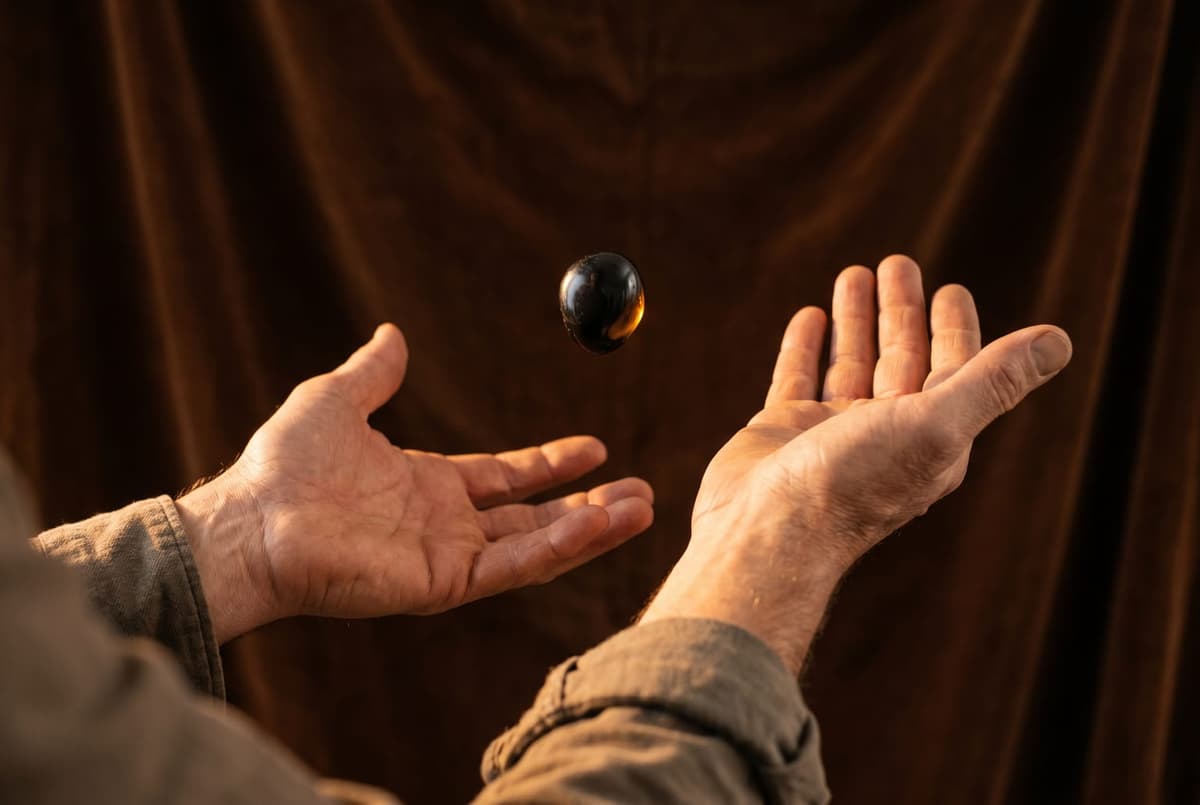
Sextile Mercury–Jupiter — symbolic illustration

Sextile · 60°

Mercury sextile Jupiter

A harmonious aspect: the two planets support each other and tend to pull in the same direction. Read it as a resource to notice, not a guarantee.

60°Orb up to 4°HarmoniousNatal · synastry · transit
60°Mercury sextile JupiterOrb up to 4° · major aspect
Oksana MiatovaWritten by Oksana Miatova·10 min read

For entertainment and self-reflection only. Not medical, legal, financial or psychological advice. Consult a qualified professional for important decisions.

The short answer

Mercury sextile Jupiter is a harmonious 60° aspect where a quick mind reaches easily past the obvious and takes in the wider picture. In the natal chart it gives easy learning and a knack for explaining big ideas simply; in synastry it makes conversation that expands both people; in transit it opens a short, quiet window for study and clear words.

What a sextile is

The geometry behind the reading

A sextile is a separation of sixty degrees between two planets, and in the hierarchy of aspects it counts as soft and supportive — though, unlike a trine, it never works on autopilot. The sextile sets two planets in elements that complement each other by polarity: fire with air, or earth with water, so the energy runs freely but only once you take a step towards it. If a trine is a talent that shows itself, a sextile is a door left open for you that you still have to walk through on your own feet. The orb for a sextile is modest, around four degrees, and the closer the planets sit to the exact angle the more visible their cooperation becomes. For Mercury and Jupiter the merge of functions is particular: Mercury gathers the detail, reads, listens and translates other people's words into your own; Jupiter takes that raw material and lifts it into the larger view — the meaning, the principle, the connection between far-apart ideas. At a sextile the two work in tune without friction, which is exactly why the aspect is so easy to overlook. It runs in the background, like a comfortable chair you stop noticing in the room.

Three ways to read it

The same aspect, three different stories

One aspect reads differently depending on where you find it: inside a single birth chart, between two people, or moving across the sky right now. Read each as a way to notice patterns, not as a forecast.

Mercury sextile Jupiter in the natal chart

If Mercury sextile Jupiter sits in your chart, you've probably noticed something slightly odd about yourself. New subjects go in more easily than the textbooks promise. A book your coursemates labour over for a month settles for you in a week. An unfamiliar topic at a meeting you catch from a handful of remarks, and ten minutes later you're already asking questions that go to the heart of it. This is neither magic nor some superiority of intellect — it's a specific astrological mechanism. Mercury governs how you collect information: how you read, how you listen, how you render other people's words into your own inner language. Jupiter governs how you fold that information into a larger picture: what conclusions you draw, what meaning you assign, how you join distant ideas into a single hypothesis. When a sextile runs between them, the two functions work in tune. A thought neither sticks in the detail nor dissolves into vague generalities; it moves easily from the particular to the general and back again.

In daily life this looks calm. You rarely complain that you can't follow a conversation. You rarely freeze in front of a difficult text. You can explain to a five-year-old what you do for a living without dumbing it down so far that a colleague would think you unserious. As a rule you have a light pen: writing a letter, taking notes, putting a talk together is not three days of suffering but an hour and a half of focused work. People often ask you to sum up the general thought of a group, because you do it more clearly than the rest.

And here is the delicate part. Ease is not the same as depth. The sextile hands you a pass, but it does not deposit expertise in you automatically. You can spend a whole life skating across the surface of interesting things and never settle on the one or two subjects in which you become a serious voice. You can read a great deal and never carry a thought through to your own article, your own course, your own book. You can learn something new forever and never bring anything to the level of mastery. That is the central risk of Mercury sextile Jupiter in the natal chart — the illusion of breadth with not a single deep hollow beneath it.

I keep a simple test for charts like these. Ask yourself: in which field could you be called on as an expert and accept without awkwardness? Not "I'm interested in it," not "I've read about it," but specifically "I know this." If the answer comes in a couple of seconds, your sextile is working. If you have to run through candidates and reject each one with a "well, not that much," that's the signal. The opportunity is there, but you haven't unfolded it.

The good news is that unfolding it is straightforward. The sextile asks not for heroics but for regularity. You pick one subject that has been calling to you for a few years and you go into it, deeply, for a year. You read systematically, you check the facts, you write down your reflections, you argue with yourself. A year on you notice you talk about that subject differently from everyone around you. Three years on, people start coming to you with questions. That is the fully unfolded Mercury–Jupiter sextile — a broad mind resting on one or two points of genuine depth.

There's one more subtlety worth naming. Mercury loves precision; Jupiter loves scope. When they sit at a sextile there's no tension between them, but there's also no built-in mechanism forcing you to test your generalisations against figures. So it pays for people with this aspect to cultivate the habit of fact-checking on purpose. You hear an elegant idea — check the source. You land on an interesting conclusion — go and find the data that supports it or knocks it down. Done that way the lightness of your thinking stops being a risk and turns into a genuinely valuable instrument. If you'd like to see how this aspect plays out specifically in your chart, taking the signs, houses and links to the other planets into account, look up your own natal chart on WowAstro — and read what you find there as a starting point for reflection, not a fixed account of who you are.

When it flows

  • Learning comes easily — a new subject settles in your head after a few passes, with little need for grinding repetition
  • A gift for spotting links between different fields and assembling them into one coherent picture
  • Clear speech and clean written argument — the thought unfolds logically without turning dry
  • A natural optimism of mind: you tend to see options and openings rather than dead ends

When it grates

  • A glancing acquaintance with many subjects instead of a real dive into one
  • A tendency to promise a lot in conversation and to overestimate your own grasp of a topic
  • A pull towards the elegant generalisation where hard figures and checking are actually needed
  • A reluctance to see things through — when it all comes so easily, why push

The shadow side, and what to do with it

The shadow side of Mercury sextile Jupiter is the illusion that ease equals mastery. You grasp the gist quickly and assume you've understood it, but without deliberate depth you stay at the level of well-turned general phrases. Integration means choosing one or two areas where you consciously move from understanding to genuine expertise: systematic reading, regular practice, the habit of testing your conclusions against facts. Done that way the ease stops being a trap and becomes a foundation.

Sextile — symbolic still life

How close is close

The orb decides the volume

A sextile is rarely exact. The smaller the gap between the two planets — the orb — the louder the aspect plays. Here is roughly how the three bands read.

Tight

0–2°

Reads as a defining feature

At 0–2° the sextile is at full strength. In the natal chart mind and worldview work as a single instrument: you think broadly by default and put complex ideas into plain words without effort. In synastry, partners' conversations genuinely widen the picture for both — not as a figure of speech but in fact. In transit this band gives a direct, usable window for real decisions in study or communication, and it is worth planning a specific step into it.

Medium

2–5°

A steady background pattern

At 2–3° the aspect is significant and workable. It registers as a steady plus: study runs easier than average, negotiations go well, but with less of the automatic quality. In the natal chart it needs a conscious gesture — pick a subject and go deep. In synastry partners notice the rapport but sometimes forget to put it to use in shared projects. In transit the window is there, but it asks for preparation and focus rather than rewarding drift.

Loose

5–8°

A faint colouring, felt in crises

At 3–4° the sextile is weak and runs in the background. It works as a quiet resource you lean on without noticing. In the natal chart you probably wouldn't call your thinking a standout trait, yet in a crisis the mind finds the way through. In synastry it lights up only in the rare conversation about big themes. In transit the effect is nearly imperceptible, but an intuitively right decision is a little easier to make on those days. Past about four degrees I treat the aspect as more or less not working.

Sextile with a partner — what does it mean for the two of you?

A full synastry reading — every aspect between your two charts

Mercury sextile Jupiter inside one chart is an inner mechanism. Between two charts it becomes the dynamic of a relationship. Enter both birth details and get a synastry reading — where the conjunctions sit, where the squares pull, where the oppositions draw you together — all calculated with the Swiss Ephemeris. Read it as a way to notice patterns, not a forecast.

Check your compatibilityfrom £1 · for entertainment

Compare with a neighbouring aspect

Same planets, a different distance

Mercury square Jupiter tells a different story. If you're reading this to make sense of a specific chart, it's worth glancing at the neighbouring aspect too.

Mercury square Jupiter
  • The sextile is an open door you can fail to notice; the square is a wall you can't go around
  • At a sextile Mercury and Jupiter come to terms peaceably; at a square they argue about scale versus accuracy
  • The sextile gives ease without pressure; the square forces growth through the clash of detail and generalisation
  • The square makes you work; the sextile invites you to work but never insists
  • The sextile is easier to waste; the square is harder to ignore

Lived examples

A few charts where you can see it

Public figures with a verified Rodden birth-data rating (AA/A/B). No invented data.

Frequently asked questions

What does Mercury sextile Jupiter mean in the natal chart?
It is a harmonious aspect where your thinking and your worldview pull in the same direction. You learn easily, you see the whole picture, and you put thoughts into words others can follow. But it is an opportunity rather than a given: without the conscious choice to go deeper, the aspect stays at the level of well-turned generalisations and a broad but shallow interest in lots of things. Read it as a pattern to work with, not a fixed measure of how clever you are.
Is Mercury sextile Jupiter good in synastry?
It is one of the most pleasant intellectual aspects in synastry. Partners talk easily about almost anything, and the conversation tends to leave both of you a little wider than before. It suits friendship, mentorship, business partnership and shared study. The one drawback is that the aspect is soft, so if both of you grow lazy it quietly falls asleep. On its own it doesn't create romantic passion — it builds the respect that keeps a bond going over the long run.
What orb should I use for Mercury sextile Jupiter?
The standard orb for a sextile is about four degrees. For confident interpretation I work within three, and out to four for a background influence. The closer the planets sit to an exact sixty degrees, the more noticeable the aspect is in everyday life. Beyond four degrees I treat it as more or less not working. As always, this is a guide for self-reflection, not a precise mechanical rule.
How is Mercury sextile Jupiter different from a trine?
A trine gives an inborn talent that shows itself on its own; a sextile gives an open opportunity you have to take up. With a Mercury–Jupiter trine you are clever and broad-minded by nature, and it's visible straight away. With a sextile you become that way when you consciously walk the path. The sextile lives more in what you do than in what you simply are — which is why people with it can look very different depending on whether they've used it.
Which famous people have Mercury sextile Jupiter?
Steve Jobs, Oprah Winfrey and Albert Einstein are three vivid examples. All three are known for explaining the complex simply and for tying different fields of knowledge together. Their birth times are recorded in AstroDatabank at a Rodden rating of AA, and the aspect holds within a few degrees in each chart. You can check anyone in a minute on astro.com: look for Mercury and Jupiter sixty degrees apart, within about four degrees of exact.
When is Mercury sextile Jupiter in transit?
Mercury circles the zodiac in roughly a year and Jupiter in about twelve, so transiting sextiles between them happen several times a year and last only two or three days. For the exact dates, check an ephemeris or your personal yearly forecast. These days are well suited to study, negotiations and publishing. The precise timing always depends on your own chart, so general guidance only goes so far.
What should I do to make Mercury sextile Jupiter work?
Invest consciously in learning and communication. Read books on the subjects that interest you but don't lie on the surface. Write, speak, teach. Choose one or two deep themes rather than twenty shallow ones. Without that effort the sextile stays a pleasant background hum with no visible result — it is an offer the chart makes, not a thing it does for you. For entertainment and self-reflection, treat it as a nudge to follow your curiosity properly.
Is Mercury sextile Jupiter different for men and women?
Astrologically, no. The capacity to think clearly and see meaning doesn't depend on sex. Social expectations may differ: men with this aspect can find it easier to step into the role of teacher or expert, while women sometimes have to defend the right to their own voice, especially in technical fields. The chart is the same — it's the surroundings that vary. None of this is destiny; it's a lens for noticing.
Can Mercury sextile Jupiter cause problems?
It doesn't bring direct trouble, but it does set traps. The main one is over-confidence in your own well-read-ness: you grasp an idea quickly and assume you've mastered it, when in fact you've stayed on the surface. The second is the habit of promising more than you're ready to deliver. Knowing these risks makes them easy to step around. Think of it as a tendency to watch for rather than a flaw to fear.
How does Mercury sextile Jupiter affect a career?
It helps in any work where you need to make the complex plain: teaching, journalism, translation, law, marketing, consultancy, science. It also suits anything involving other cultures and languages. It gives no automatic success, but it lays a foundation on which a profession is easier to build. Whether it shows strongly in your working life depends on the signs, houses and other aspects in the full chart — so read this as one thread, not the whole story.

Related pages

The other aspects between Mercury and Jupiter

The same two planets at a different angle — each reads differently.

Oksana Miatova
Oksana Miatova

Astrologer, co-founder of WowAstro

Oksana Miatova is a practising astrologer and co-founder of WowAstro. Natal charts, synastry and forecasts grounded in the Western classical tradition — explained through real-life examples and plain language.

More about the author →

For entertainment and self-reflection only. Not medical, legal, financial or psychological advice. Consult a qualified professional for important decisions.