Skip to content
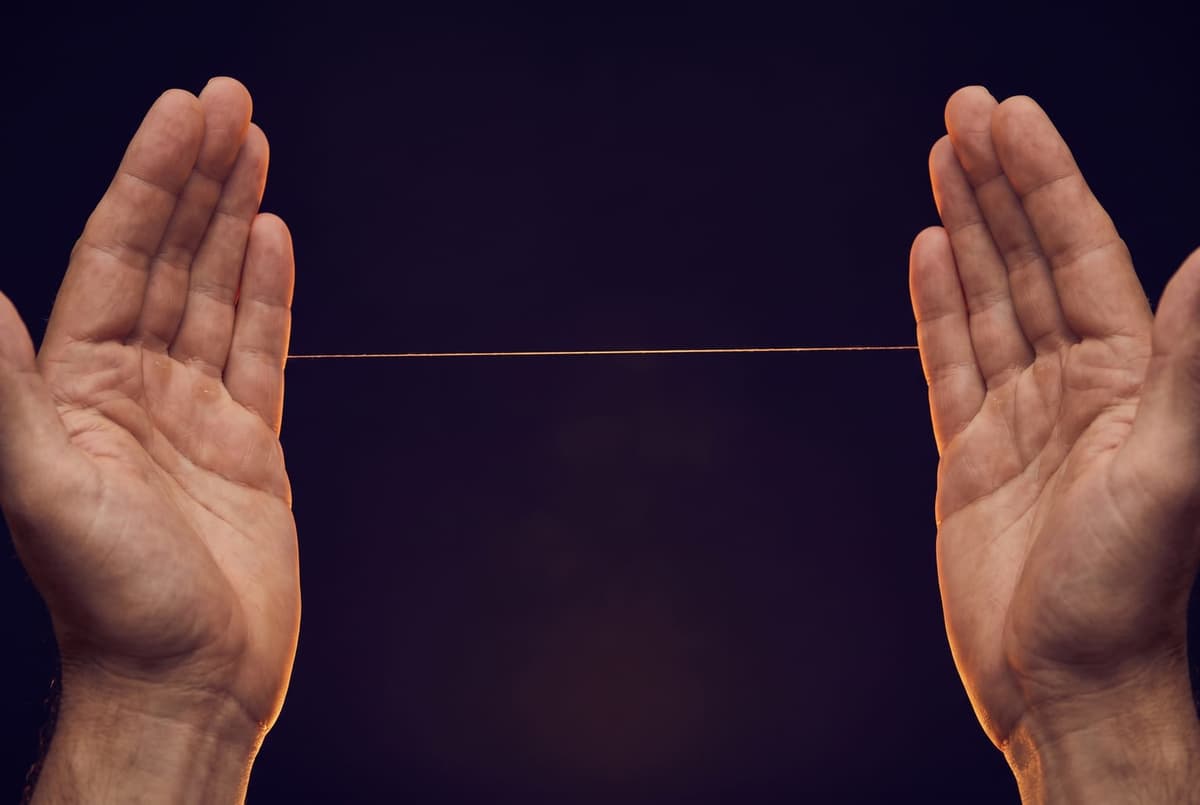
Opposition Venus–Saturn — symbolic illustration

Opposition · 180°

Venus opposition Saturn

A challenging aspect: the two planets rub against each other and ask for conscious handling. Tension here is a source of movement, not a verdict.

180°Orb up to 8°ChallengingNatal · synastry · transit
180°Venus opposition SaturnOrb up to 8° · major aspect
Oksana MiatovaWritten by Oksana Miatova·12 min read

For entertainment and self-reflection only. Not medical, legal, financial or psychological advice. Consult a qualified professional for important decisions.

The short answer

Venus opposite Saturn is an axis of tension between the wish for closeness, softness and pleasure and an inner voice that says you must earn it, test it, or wait. In the natal chart it gives a love that ripens slowly; in synastry it casts one partner as the grown-up and one as the soft one; in transit it briefly makes affection and money feel heavier than they are.

What a opposition is

The geometry behind the reading

An opposition is a separation of 180 degrees, with two planets sitting at opposite ends of a single axis. Classically it counts as a tense aspect, though tense is not the same as bad: the friction is what keeps two opposing functions in view at once, so neither swallows the other. For Venus and Saturn the textbook orb runs to about six or eight degrees, and when I read a chart I tend to keep it tighter still — five to seven in the natal chart, and nearer five for transits, where the contact is brief and only an exact hit matters. Venus never strays more than about 48 degrees from the Sun, while Saturn crawls through the zodiac at roughly two and a half years per sign, so across a full cycle Saturn meets Venus in conjunction, in square and in opposition. The opposition falls to people born in the narrow windows — a few weeks once a year — when Saturn stood across the zodiac from wherever Venus happened to be.

Three ways to read it

The same aspect, three different stories

One aspect reads differently depending on where you find it: inside a single birth chart, between two people, or moving across the sky right now. Read each as a way to notice patterns, not as a forecast.

Venus opposite Saturn in the natal chart

If Venus and Saturn sit roughly a hundred and eighty degrees apart in your chart, your biography almost always repeats one recognisable shape. Love doesn't arrive on cue. The first big infatuation can land later than it does for your peers, or land on time and then turn into a long disappointment that shuts you down for years afterwards. Money tells a similar story: either it comes and goes straight out again on bills and obligations, or you spend years learning not to count every penny and to let yourself buy something lovely without an excuse. Looks and style make a third face of the same knot — you're rarely entirely happy with yourself, there's always one item you want to fix, and that item migrates from one part of you to another as the years pass.

I know this axis well, because I meet it often in clients who come in with the complaint, "why is everything such hard work for me?" They're clever, fine-grained, frequently lovely to look at, and all the same convinced that love is something they have to win, that the attention they get isn't quite sincere, that a compliment needs vetting for a catch. Inside that feeling sits Saturn at one end of the axis, demanding proof, and Venus at the other, who can prove nothing in principle, because love isn't demonstrated, it's lived. Out of that mismatch grows a chronic tension that in youth sounds like "I'm not good enough" and over the years opens into a sharper question: who exactly am I trying to prove this to, and why did I ever believe it?

There's usually a concrete family story behind the axis. A parent — more often the father, sometimes the mother — was emotionally reserved, exacting, or simply so busy that approval had to be earned. A small child picks up a simple lesson: my plain self isn't enough, I have to add to it, become better, earn the look. Thirty years on, that belief migrates into relationships. You pick partners who replay the parental pattern, because it's only in their approval that the feeling registers as genuine. An easy, open person who falls for you straight off with no conditions draws suspicion: something's not right here, too fast, can't be real.

There's an opposite version too. Venus opposite Saturn sometimes runs the other way, and you become the one who tests everyone else. You hold your distance, set an inner filter, screen out the quick and the hot, wait for the serious and the solid. From outside that looks like maturity, and often it genuinely is. But a loneliness can settle in underneath: the filter lets very little through, and time keeps moving. By thirty-five a question surfaces — perhaps the mesh is too fine, and perfectly alive people have got stuck in it.

The financial side of this axis stands a little apart. Venus wants to live beautifully now, Saturn wants to save for later, and inside one head they argue around the clock. At worst, you deny yourself anything surplus for years and save towards an abstract "someday" that never comes. At best a grown-up financial sense forms in you: you can put money by and you can also spend it, you don't confuse the two functions, and you don't scold yourself over every purchase. That maturity usually arrives closer to the first Saturn return, around twenty-nine, when both poles of the axis settle into place and stop waging war.

Here's the thing worth grasping about this natal axis: Saturn isn't Venus's enemy. Saturn is trying to protect her from a careless choice — from a partner who'll be gone in half a year, from an outfit that delights today and chafes by next week, from spending you'll later regret. Once Saturn is confident Venus is choosing with her eyes open, it settles and stops holding you in suspense. That doesn't come from a single conversation with yourself but over years, through the experience of right and wrong choices, through a slow accumulation of small permissions: I'm allowed to want, allowed to choose, allowed to get it wrong, and I won't be destroyed by any of it. By around forty, people with this axis often become the ones others learn from. They have long marriages, a considered style, a calm relationship with money, the ability to love without melodrama. But you have to reach that point, and the road usually takes up the first half of adult life. To unpick your own Venus–Saturn configuration by sign, house and secondary aspects, you'd want a full reading of the whole chart rather than this one axis in isolation — and like everything here, it's a way to reflect, not a forecast of how things must go.

When it flows

  • A grown-up sense of responsibility in love: you tell infatuation from real attachment early, and you don't muddle the two
  • Real staying power in long partnerships — where others burn out within months, you have the patience to keep working at a couple
  • A level head about money and lovely things: fewer impulse buys, more considered spending on what will actually last
  • A strong, time-tested aesthetic — you rarely chase a single season's trend, and your own style is recognisably yours

When it grates

  • An inner voice insisting that love has to be earned, as if closeness without effort and a little pain can't count as the real thing
  • Trouble making the first move: the fear of being turned down can leave you waiting to be chosen rather than choosing
  • A nagging scepticism about your own appeal, where even compliments get vetted for sincerity
  • A tendency to pick partners who are older, stricter or less emotionally available than you'd really like

The shadow side, and what to do with it

The heaviest version of this axis is the moment someone quietly decides they're simply not worthy of love, and through that belief lets year after year of warm, willing people walk past. Saturn starts to sound like a parental ban on joy: too soon, not yet, you haven't earned it, get the career and the flat and the perfect figure sorted first. Venus, at the far end of the axis, contracts and stops voicing what she wants out loud. Integration begins with seeing that Saturn here isn't trying to take love away — it's trying to guard against a careless choice. Learn to hear it as a mentor rather than a jailer and the axis becomes the bedrock of mature, durable, very deliberate relationships.

Opposition — symbolic still life

How close is close

The orb decides the volume

A opposition is rarely exact. The smaller the gap between the two planets — the orb — the louder the aspect plays. Here is roughly how the three bands read.

Tight

0–2°

Reads as a defining feature

At 0–2° you have an exact opposition and the maximum intensity. In the natal chart this is a rare figure, falling to perhaps one person in a hundred: they live with a very sharp sense of a split between the heart and a duty, and usually play it out in partners ten years or more older or younger. In synastry the exact opposition gives a couple in which one partner reads plainly as 'the grown-up' and one as 'the tender one', and those roles barely budge across years. In transit the exact degree is a single day of acute review of love and money, a day to sign nothing and to leave no one in a fit of feeling.

Medium

2–5°

A steady background pattern

At 2–5° this is the working orb, where the aspect registers clearly in both the natal chart and across two charts. Natally the opposition reads as a leading theme of the biography: you keep running into a test of whether your love can hold, and through those tests you slowly learn to believe you deserve closeness. In synastry it switches on around the big shared decisions — marriage, children, moving, a joint venture. In transit it gives two or three days that suit serious financial rethinks and don't suit impulsive tenderness at all.

Loose

5–8°

A faint colouring, felt in crises

At 5–8° this is the background orb, where the aspect works gently as one of the chart's motifs rather than its leading axis. Natally it leaves a faint flavour of caution in love: you fall quickly enough, but a brake comes on just before a real deepening. In synastry it reads as an extra shade to the relationship — present on a close look but not what defines the couple. In transit it spreads across four or five days of heightened seriousness around money, beauty and obligation, without sharp events.

Opposition with a partner — what does it mean for the two of you?

A full synastry reading — every aspect between your two charts

Venus opposition Saturn inside one chart is an inner mechanism. Between two charts it becomes the dynamic of a relationship. Enter both birth details and get a synastry reading — where the conjunctions sit, where the squares pull, where the oppositions draw you together — all calculated with the Swiss Ephemeris. Read it as a way to notice patterns, not a forecast.

Check your compatibilityfrom £1 · for entertainment

Compare with a neighbouring aspect

Same planets, a different distance

Venus square Saturn tells a different story. If you're reading this to make sense of a specific chart, it's worth glancing at the neighbouring aspect too.

Venus square Saturn
  • The square sets the two planets 90° apart, so the desire and the ban on it land almost in the same instant — one foot on the accelerator, one on the brake. The opposition pushes the same functions to opposite ends of an axis, where they look each other in the eye instead of jostling at a single point
  • In the square the friction is sharp and constant, running as a background through ordinary days. In the opposition the tension is less even: it can all but vanish for months, then flare up around the big decisions about love, money and a shared future
  • The square tends to give the 'I want it but I can't allow it' script — a conflict held inside one head. The opposition tends to give the 'I'm in one role, my partner's in the other' script — a conflict shared out between two people
  • The square eases through deliberately giving yourself permission to want. The opposition eases through accepting that Venus and Saturn on this axis aren't enemies but partners, and that mature love holds both tenderness and commitment at once
  • In predictive work the square is felt on any day a third planet snags it. The opposition needs the rarer but more exact configurations — full moons, slow planets, retrograde cycles running along the same axis

Lived examples

A few charts where you can see it

Public figures with a verified Rodden birth-data rating (AA/A/B). No invented data.

Frequently asked questions

What does Venus opposite Saturn mean in the natal chart?
It's an axis between the need for love, pleasure and beauty and an inner voice that insists you earn it, test it or put it off. People with this set-up usually enter closeness slowly, pick partners who are older or stricter than themselves, and spend years learning to allow themselves joy without an apology. By around forty the axis often turns into a resource: these people are warm and reliable to be near, and they know how to love for the long haul. Read it as a pattern to notice about yourself, not a verdict on your love life.
Is Venus opposite Saturn a bad aspect?
No. It's a tense one, and in youth it can feel as though love comes harder to you than to other people. But there are no bad aspects in astrology, only aspects that ask for work, and this is one of the more constructive of the tense ones: it screens out careless partners, teaches you to value closeness, and gives real staying power in a long union. The first thirty years can be heavy; after the first Saturn return, around twenty-nine, it usually eases a great deal.
How does Venus opposite Saturn show up in love?
Most often as a habit of testing feelings against time. You rarely fall at first sight — you want a stretch of watching and mutual proving first. Partners may be older than you, more emotionally reserved, or busier than you'd like. Early on that grates; later you find it's precisely with people like that that you manage what falls apart for others within a year. The main risk is mistaking Saturnian reserve for coldness or a lack of love. Treat it as self-reflection rather than a forecast of how any one relationship will end.
What does this opposition say about money?
Venus is about the pleasure of spending; Saturn is about thrift and the long game. With the two on one axis you're forever balancing 'buy the lovely thing now' against 'put it aside and save'. At worst that's a chronic low-grade stress about money and a feeling that the beautiful life belongs to other people. At best it's grown-up financial behaviour: fewer impulse buys, considered investment in things that last, the patience to save towards a big goal over years. This is a way to understand your own patterns, not financial advice or a prediction about your finances.
What orb should I use for Venus opposite Saturn?
The standard opposition orb is about six to eight degrees. For the Venus–Saturn pair it's sensible to keep it to five or seven, the band in which the aspect feels like a living axis of the biography. Wider than eight degrees it works as background and rarely becomes the central theme of a reading. In synastry you can stretch the orb a touch, up to eight, while in transit you'd narrow it to about five, because a transit is brief and needs an exact hit.
Is Venus opposite Saturn in synastry a promising relationship?
It can be, provided both partners see the geometry clearly. The aspect shows up often in couples who stay together for decades — and just as often in couples where one partner quietly devalues the other's pleasures over years until the softer one learns not to want. The key is to name it from the start: the Saturn partner supports the Venus partner's joys, and the Venus partner doesn't apologise for their choices. Done that way it works for the couple rather than against it. As ever, this is a lens for noticing patterns, not a prediction about the relationship.
Which public figures have Venus opposite Saturn?
Margaret Thatcher (Venus in Leo, Saturn in Aquarius), Kurt Cobain (Venus in Pisces, Saturn in Virgo) and Diana, Princess of Wales (Venus in Taurus, Saturn in Capricorn) all carry it on AA-rated charts. In each life the biography shows the axis at work: an outward duty or social role enters a tense dialogue with a private need for closeness. Each found their own resolution — not always a happy one, but always telling. Worth checking any chart against AstroDatabank rather than taking a casual mention on trust.
When will a transiting Venus opposite Saturn touch my chart?
Saturn moves through a sign in about two and a half years; Venus through a sign in roughly a month. Their transiting opposition in the sky forms about once a year, and at that point it snags the sensitive degrees of anyone whose natal Venus or Saturn sits in the right place. The window usually lasts three to five days. The exact dates for your own chart depend on your natal positions and are best read off an ephemeris for your degrees, or in a personal year-ahead reading — for self-reflection rather than as a fixed forecast.
What should I do on a day when transiting Venus opposes my natal Saturn?
Don't draw conclusions about love or money in the heat of the moment. On that day a settled relationship can look cold, your own appearance can seem flawed, and a favourite pastime can feel pointless. Within a couple of days it lifts. It's a good window for an audit of subscriptions, a wardrobe clear-out, or a level conversation with a partner about who does what at home. It's a poor window for breaking up, selling something valuable, or cancelling a planned treat. Use it to notice what's bothering you, not to make irreversible choices.
Can Venus opposite Saturn destroy a relationship?
Not on its own. But if both partners live on it without awareness, then in five to seven years one may find they no longer remember what they like, and the other that they're sure of nothing. The aspect doesn't wreck the couple so much as one partner's ability to feel their own wants. Catch it in time and re-set the agreements, and the pair moves up a level. Ignore it and the attachment slowly dissolves with no obvious cause. Either way this is a way to understand the dynamic, not a prophecy about it.
How does Venus opposite Saturn work for men and for women?
There's no real difference in principle, though the social script shifts a little. In men the axis more often gives a habit of putting off marriage 'until I've achieved something', a wariness of responsibility, and a choice of partner who is stricter and older. In women it tends towards picking husbands who are older and more established, a distrust of one's own appeal, and a sense of needing to 'finish working on myself' before allowing love. By around forty both scripts usually soften in both. Read it as archetype, not destiny.
How is Venus opposite Saturn different from the square?
In the square the conflict is compressed into one point: you want something and forbid yourself at the same instant. That's a sharp inner experience that gets in the way right there and then. In the opposition the wish and the ban are pushed to opposite poles and are often shared between two people in a couple — one plays Venus, one plays Saturn. Living with the opposition is in a sense easier, because the tension is visible from outside. Living with the square is harder, because the whole conflict sits inside one head.

Related pages

The other aspects between Venus and Saturn

The same two planets at a different angle — each reads differently.

Oksana Miatova
Oksana Miatova

Astrologer, co-founder of WowAstro

Oksana Miatova is a practising astrologer and co-founder of WowAstro. Natal charts, synastry and forecasts grounded in the Western classical tradition — explained through real-life examples and plain language.

More about the author →

For entertainment and self-reflection only. Not medical, legal, financial or psychological advice. Consult a qualified professional for important decisions.