Skip to content
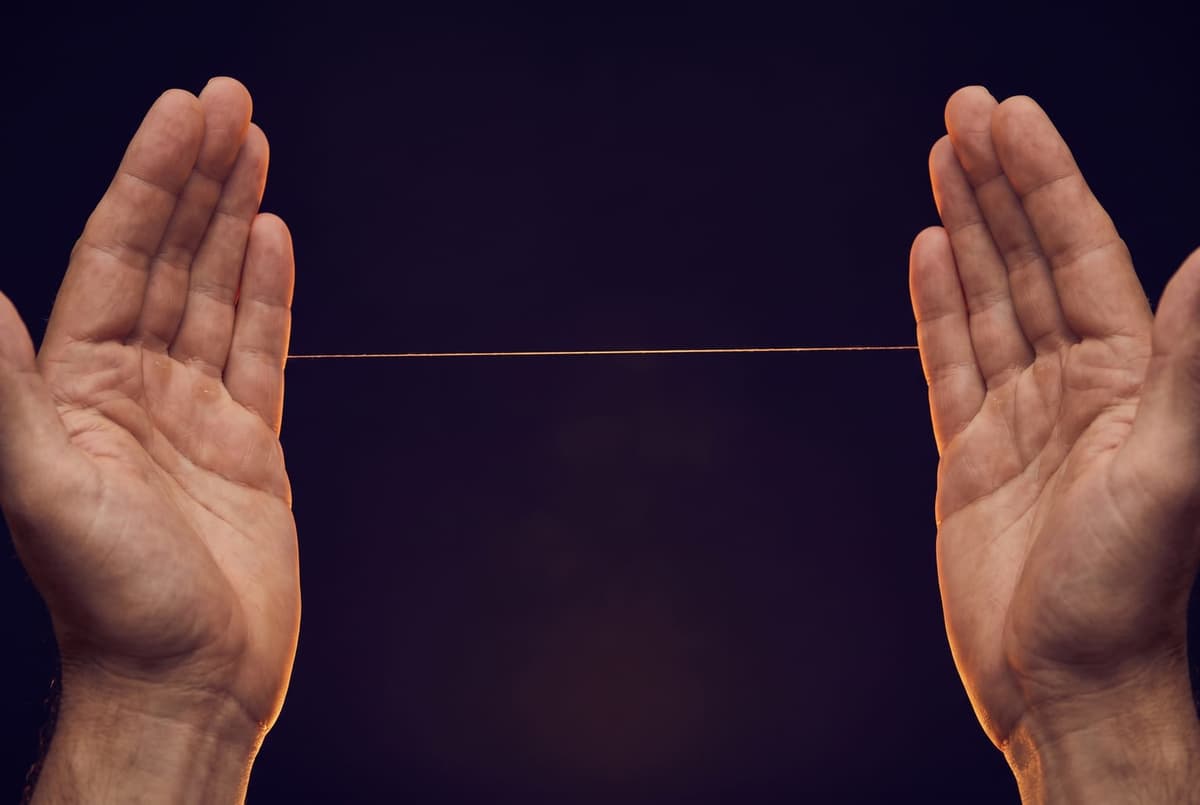
Opposition Mars–Pluto — symbolic illustration

Opposition · 180°

Mars opposition Pluto

A challenging aspect: the two planets rub against each other and ask for conscious handling. Tension here is a source of movement, not a verdict.

180°Orb up to 8°ChallengingNatal · synastry · transit
180°Mars opposition PlutoOrb up to 8° · major aspect
Oksana MiatovaWritten by Oksana Miatova·13 min read

For entertainment and self-reflection only. Not medical, legal, financial or psychological advice. Consult a qualified professional for important decisions.

The short answer

Mars opposite Pluto is the axis of open will against buried power. On one end sits plain action and the willingness to argue out loud; on the other, a deep, almost underground drive towards control and transformation. In life it tends to surface as a pull towards situations where you either overpower someone or get overpowered, and a slow, hard-won lesson in acting fully without wrecking yourself or anyone else.

What a opposition is

The geometry behind the reading

An opposition is a separation of 180 degrees — an axis on which two functions of the psyche stand at opposite ends of one straight line and look each other in the eye. Unlike a square, where the two planets wrestle for the same resource at a right angle, an opposition holds them apart and asks you either to swing from pole to pole or to learn to hold both sides at once. In raw strength it sits second only to the conjunction, and it is the most honest aspect by geometry: nothing merges, everything is visible. The textbook orb runs to about eight degrees, though for natal work I usually tighten that to five or six. With Mars and Pluto on the line the geometry bites especially hard, because what stands on the axis is not a passing mood but the real structure of power inside a person and between people.

Three ways to read it

The same aspect, three different stories

One aspect reads differently depending on where you find it: inside a single birth chart, between two people, or moving across the sky right now. Read each as a way to notice patterns, not as a forecast.

Mars opposite Pluto in the natal chart

If Mars stands opposite Pluto in your natal chart, you know this inner configuration already, even if you've never once opened an astrology site. Two people live inside you. One acts out in the open — argues, demands, goes head-on at whatever is in the way. The other sits deeper, stays silent almost all the time, and then rises out of the dark at the necessary moment and settles everything. These two are not at war every day, but they are perpetually aware of one another. Every serious decision, every conflict, every situation where something has to be won or held passes through a quick check between them. Sometimes the check takes a second; sometimes it takes half a lifetime.

In youth this axis tends to run in pendulum mode. For a few years you find yourself in situations where someone holds power over you — strict parents, a heavy-handed boss, an early partner who controls. Pressure gathers inside, and at some point a Mars rises that is so strong it breaks either the situation or you within it: you walk out slamming the door, you end the relationship, you quit. The relief is brief, because on the next turn of the wheel you end up on top yourself and begin pressing exactly the way you were pressed. Sometimes that is visible straight away, sometimes only from the outside; with time comes the strange sense that both roles feel oddly, equally familiar.

The good news is folded inside that same axis. The day a person sits down and honestly says the sentence — "there is both a Mars and a Pluto in me, and both sides are mine" — a different game begins. You no longer need to hunt for situations where you can either win or lose, because a space opens up inside for a third option: acting at full power without destroying. That is a rare skill, and it usually doesn't arrive through books but through a handful of big failures and a handful of serious wins, in which the cost of each route becomes plain to see.

In the body this opposition is felt as accumulation. For days and weeks you can be composed, contained, almost calm, and then a wave rises that can't be talked down or argued away. If that wave finds no outlet through the body and through a large task, it goes one of two ways: into anger at the people nearest you, or into self-undoing — overeating, drinking, late-night blow-ups, risky situations. This is why one of the main rules of hygiene with such an opposition is to give yourself regular heavy load. Not light gym work for the look of it, but real effort at the edge: long distances, strength training, martial arts, big tasks where the body has somewhere to discharge what it has been storing.

In relationships this aspect gives a depth that people around you feel before you've said a word. Things become serious near you, and not every partner can hold that. The ones who stay either learn to bear your volume or, little by little, begin to open into their own full measure. The single most useful rule for close relationships with this opposition is to put anger into words. Don't disguise it as tiredness, don't offload it onto the other person, don't withdraw into cold silence. If rage has risen inside, say it calmly: "I'm at my limit right now, give me an hour." That is ten times harder than it sounds and a hundred times more important than any sign-by-sign compatibility.

The age curve of this opposition has its own shape. Before thirty the swings are usually strong, and a person more often lives the aspect out through dramas and crises. Between thirty and forty-five an inner truce tends to settle in, especially if life has handed over a few serious collisions in which you managed to glimpse your own scripts at work. After forty-five the opposition often becomes a powerful resource: the person can join strength and precision in a single movement, and other people read that as genuine maturity. In my own practice it is people with this axis who, by around fifty, most often arrive at a place where others, projects and responsibility naturally gather around them.

The sign each end of the axis falls in changes the texture of all of it. A Mars in a fire sign opposite a Pluto in earth reads as a hot, fast drive forever colliding with a slow, immovable depth — you push, the world refuses to budge, and you learn patience the hard way. The same Mars against a Pluto in air gives a more verbal version of the struggle, where the battles are fought in argument and the power moves are made with ideas. None of these combinations is better or worse than the others; they simply tune the same underlying note to a different pitch, and noticing your own tuning is half the work.

What's worth doing right now is looking at your whole natal chart and noticing which signs and houses your Mars and Pluto sit in, because it's the houses that show the area of life where this axis plays out loudest. A sixth-house Pluto turns the theme towards work and the body; a seventh-house one drives it straight into partnership; a tenth-house placement plays it out in public standing and career. The fuller the picture — the signs, the houses, the aspects to other planets, especially Saturn and the Sun — the clearer it becomes how the opposition expresses itself for you specifically rather than in the abstract. Treat it as a map of tendencies to work with, not a script you're condemned to act out.

When it flows

  • An enormous reserve of will — you carry loads that make other people fold
  • The capacity to walk through a crisis and rebuild yourself without losing your spine
  • A sharp instinct for where another person is soft and where to press or let go
  • Strategic thinking in a fight: you know how to strike, but also how to wait

When it grates

  • Conflicts accelerate to a ferocious intensity that is hard to soften once it lands
  • A 'victim and executioner' script: either you live under someone's control or you become the one applying pressure
  • A rage that lives inside and breaks the surface from time to time, frightening even you
  • Real difficulty letting a situation or a person go, even when you can see it is time

The shadow side, and what to do with it

The shadow of this opposition is a set of repeating stories in which both roles take their turn being yours. First you land in a situation where someone holds power over you, can't bear it, and raise such a Mars inside that you smash either the situation or yourself within it. Then, on the next loop, you find yourself on top and start applying the same pressure, because by now you don't know any other way. Integration begins with admitting that both ends of the axis belong to you — that strength without sensitivity becomes coercion, and sensitivity without strength becomes submission. After that comes the long work: learning to act at full power without crossing other people's lines, and refusing to fold under someone else's force without a fight.

Opposition — symbolic still life

How close is close

The orb decides the volume

A opposition is rarely exact. The smaller the gap between the two planets — the orb — the louder the aspect plays. Here is roughly how the three bands read.

Tight

0–2°

Reads as a defining feature

At 0–2° this is the sharpest version of the opposition. Action and coercion fuse into a single impulse, and in the moment it is hard to separate where you are moving by your own will and where under someone else's pressure. In the natal chart this orb gives a powerful reserve of will and almost inevitable stories about power that run the whole length of a biography. In synastry a tight orb means the couple is either in deep closeness or in cold war — there is almost no neutral middle tone.

Medium

2–5°

A steady background pattern

At 2–5°, the main working orb, the opposition is felt distinctly, but a gap remains between impulse and reaction in which a real choice is possible. In the natal chart a person can notice their own power scripts and gradually unwind them; a mature personal stance usually arrives by around thirty-five to forty. In synastry this is the workable dynamic for a long relationship: enough tension to keep it serious, enough distance to keep both people from burning up in the fight.

Loose

5–8°

A faint colouring, felt in crises

At 5–8° this works as a background aspect. It doesn't set the whole picture, but it gives a slight offset between visible activity and hidden motivation. In the natal chart you get periodic stories about power and control without their being central. In synastry it shows as seasonal flare-ups, especially when transiting planets light up one of the natal Mars or Pluto positions.

Opposition with a partner — what does it mean for the two of you?

A full synastry reading — every aspect between your two charts

Mars opposition Pluto inside one chart is an inner mechanism. Between two charts it becomes the dynamic of a relationship. Enter both birth details and get a synastry reading — where the conjunctions sit, where the squares pull, where the oppositions draw you together — all calculated with the Swiss Ephemeris. Read it as a way to notice patterns, not a forecast.

Check your compatibilityfrom £1 · for entertainment

Compare with a neighbouring aspect

Same planets, a different distance

Mars conjunct Pluto tells a different story. If you're reading this to make sense of a specific chart, it's worth glancing at the neighbouring aspect too.

Mars conjunct Pluto
  • In the conjunction, will and hidden power are fused into one impulse — the person acts with an underground force and doesn't separate themselves from it
  • The opposition holds those functions at opposite ends of an axis, so you are forever checking whether you're moving from yourself or from an inner pressure
  • The conjunction gives intensity from a single point and a risk of burnout; the opposition gives inner dialogue and a risk of swinging between suppression and explosion
  • In the conjunction there is no distance for reflection — 'I act, full stop'; in the opposition the distance is always there, and sometimes it gets in the way
  • The conjunction works by default; the opposition asks for a conscious decision about which end of the axis to switch on, and how far

Lived examples

A few charts where you can see it

Public figures with a verified Rodden birth-data rating (AA/A/B). No invented data.

Frequently asked questions

What does Mars opposite Pluto mean in the natal chart?
It is an inner axis on which visible will and hidden power stand facing one another. In life it shows up as a powerful reserve of will and the ability to withstand crises, and at the same time as repeating stories about control in which you take turns being underneath and on top. The aspect is neither good nor bad; it asks for maturity — learning to act at full strength without destroying others and without surrendering yourself. Read it as a pattern to notice, not a sentence on who you are.
Is Mars opposite Pluto good or bad in synastry?
It is one of the strongest partnership aspects and at the same time one of the riskiest. The couple feels a deep mutual recognition and can come through serious crises together, but almost inevitably runs into a struggle for power. Parting under this opposition is hard, even when the relationship is spent. The pairs that last are the ones where both people learn to talk about power and anger openly rather than crushing each other in silence. As always, this is a way to understand a relationship's patterns, not a prediction about it.
What orb should I use for Mars opposite Pluto?
The standard working orb runs to about eight degrees: tight is 0–2°, medium 2–5°. From 5–8° the aspect becomes a background feature and surfaces seasonally, most often on transits. Inside 2° the opposition works almost as strongly as a conjunction, only with the opposite sign — without conscious work the person gets 'carried' from suppression to explosion and back again. For practical reading I tighten the natal orb to five or six degrees.
How is Mars opposite Pluto different from the conjunction?
In the conjunction, will and hidden power are fused into a single impulse; the person acts with an underground force and doesn't separate themselves from it. In the opposition those functions sit at opposite ends of an axis, and at any moment one switches on while the other waits in shadow. The conjunction gives a whole, single-point intensity and a risk of burnout; the opposition gives inner dialogue and a risk of swinging between 'I overpowered them' and 'I let myself be overpowered'.
Which celebrities have Mars opposite Pluto?
Among documented charts at a Rodden rating of AA or A: Kurt Cobain (Mars in Sagittarius opposite Pluto in Virgo), Angelina Jolie (Mars in Aries opposite Pluto in Libra) and Kate Winslet (Mars in Sagittarius opposite Pluto in Libra). All three show different routes along the same axis — the destructive, the public-political and the more integrated. It is always worth checking any name against AstroDatabank rather than taking a casual citation on trust.
When is Mars opposite Pluto in the sky?
A transiting opposition between Mars and Pluto themselves happens roughly once every year or two; the exact phase lasts a few days, the active corridor about a fortnight. If that transit catches your natal Mars or Pluto axis within two or three degrees, you'll feel it as a sharp rise in will and, at the same time, a collision with the theme of power — your own or someone else's. The precise dates are particular to each chart and need calculating against your own natal positions.
Is Mars opposite Pluto different for men and women?
The geometry is one; the colouring differs. In a man's chart this opposition more often shows up as open conflict — with older figures, with rivals, sometimes with institutions — and as a search for his own place in a hierarchy of strength. In a woman's chart the axis tends to work more subtly and ties harder into close relationships: the experience of someone else's power within family or partnership, the slow finding of her own, and only then a move out into the public arena. None of this is destiny; it is a lens for noticing.
Can you build a lasting relationship with Mars opposite Pluto in synastry?
You can, and such couples often hold together for a very long time, sometimes for life. But the condition is that both people are mature about talking through power and anger. If one believes strength should be suppressed and the other waits for the partner to back down, the opposition will start breaking the couple through hidden manipulation and stored resentment. If both are willing to speak plainly — who is finding it hard right now, who is leaning on whom, where the load needs redistributing — the aspect becomes fuel for a large shared life.
What should I do during a transiting Mars opposition to Pluto?
Avoid sharp decisions on the day of the exact phase and for the three days after. Channel the energy into the body and into one large task that demands stamina: a hard workout, a big project, a deep clear-out, a renovation. If you feel the urge to give someone a piece of your mind, or the opposite — to leave for good — give yourself at least a fortnight after the exact aspect before acting. More often than not the impulse hides not a real truth but a build-up of pressure that was simply looking for a way out.
How do I combine strength and gentleness with Mars opposite Pluto?
Through recognising that one doesn't cancel the other. A strong person can be gentle out of choice rather than weakness, and that gentleness on a Mars–Pluto opposition sounds quite different from how it does in people without this load: it rests on an enormous inner reserve. In practice it means releasing the force through actions that ask for genuine effort, and in close relationships deliberately choosing your tone — not reaching for the whole arsenal of pressure you happen to have to hand. Read all of this as a lens for noticing patterns, never as a forecast of how anything will turn out.

Related pages

The other aspects between Mars and Pluto

The same two planets at a different angle — each reads differently.

Oksana Miatova
Oksana Miatova

Astrologer, co-founder of WowAstro

Oksana Miatova is a practising astrologer and co-founder of WowAstro. Natal charts, synastry and forecasts grounded in the Western classical tradition — explained through real-life examples and plain language.

More about the author →

For entertainment and self-reflection only. Not medical, legal, financial or psychological advice. Consult a qualified professional for important decisions.