Skip to content
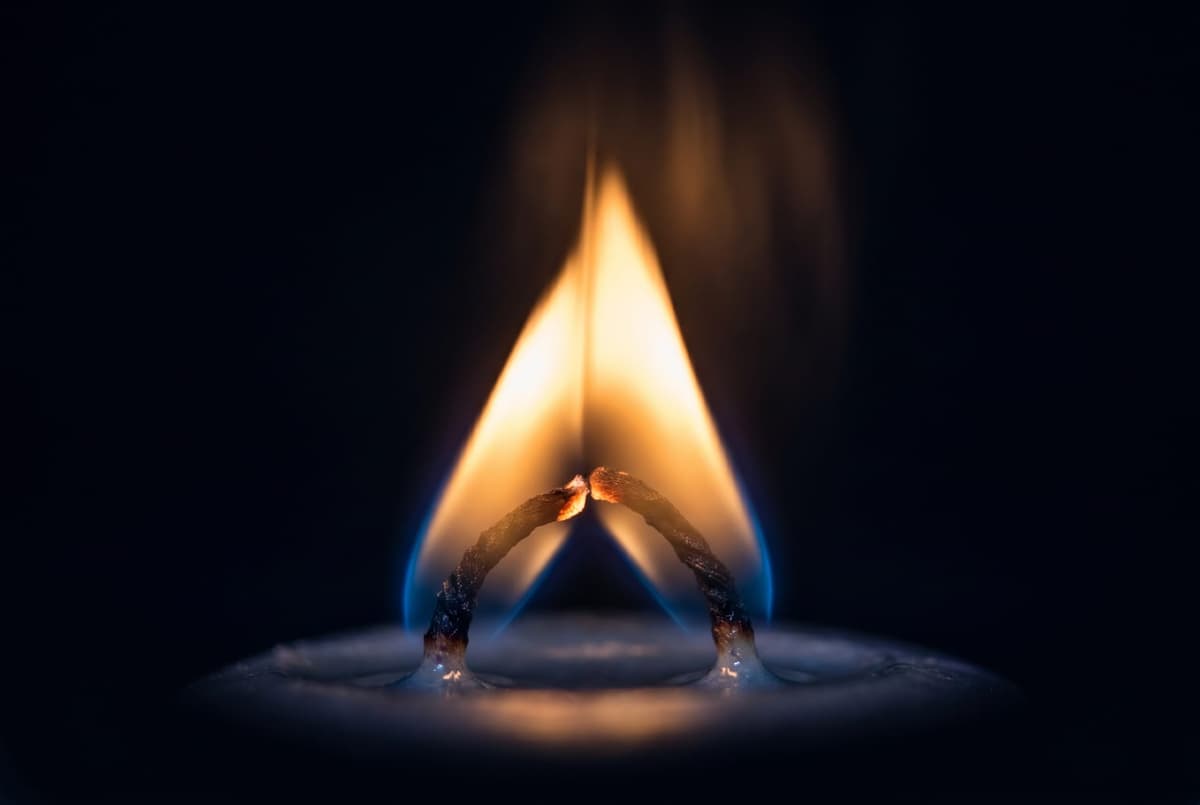
Conjunction Sun–Mercury — symbolic illustration

Conjunction · 0°

Sun conjunction Mercury

A neutral aspect: it amplifies both planets, and how it plays out depends on the signs they sit in and the rest of the chart.

Orb up to 8°NeutralNatal · synastry · transit
0°Sun conjunction MercuryOrb up to 8° · major aspect
Oksana MiatovaWritten by Oksana Miatova·13 min read

For entertainment and self-reflection only. Not medical, legal, financial or psychological advice. Consult a qualified professional for important decisions.

The short answer

Sun conjunct Mercury fuses will and mind at a single point of the chart. In the natal chart it gives a fast, unmistakable voice but a narrow field of view; in synastry it creates a rare meeting of language; in transit it lasts a few days and sharpens clarity of thought, or just as easily hardens it into stubbornness.

What a conjunction is

The geometry behind the reading

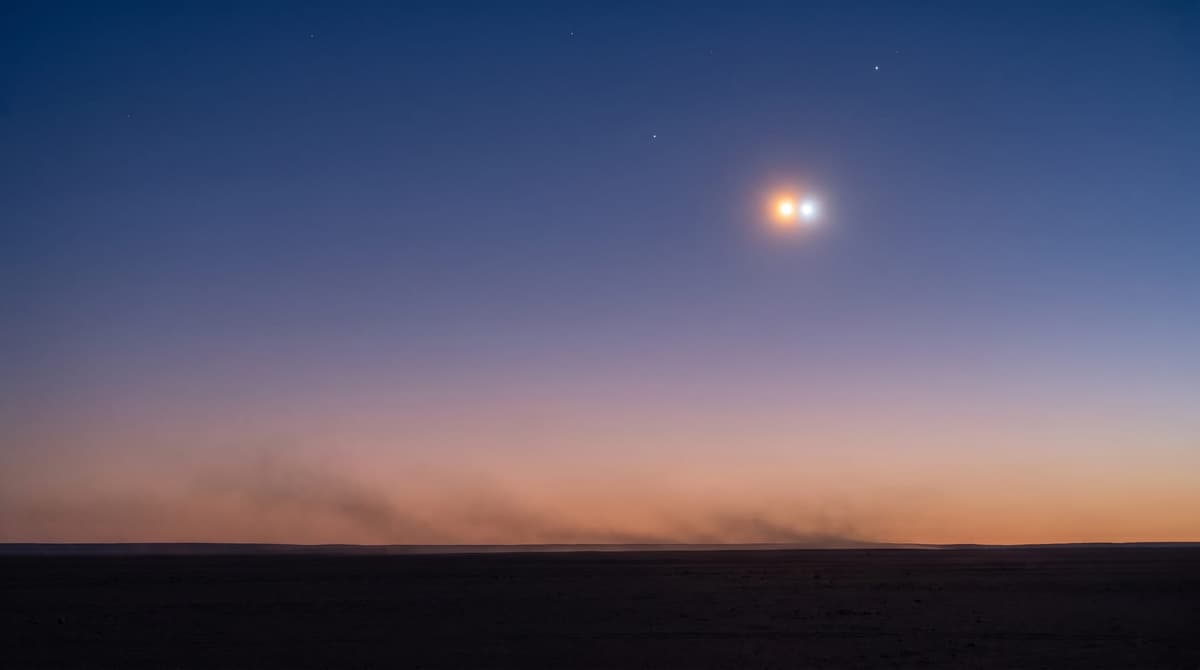
The conjunction is the only major aspect these two bodies can ever form. Mercury never strays more than about twenty-eight degrees from the Sun along the ecliptic, so a square, a trine or an opposition between them is a physical impossibility — there simply isn't enough sky between them. The textbook orb I allow for this pair runs to about eight degrees, but in practice I read it in three bands: inside seventeen minutes of arc it is cazimi, Mercury sitting 'in the heart of the Sun'; from seventeen minutes out to roughly eight and a half degrees it is the classical combustion; and wider than that it behaves as an ordinary conjunction. Geometrically zero degrees is neither harmonious nor challenging — it is neutral by nature. For the Sun and Mercury, the merge means that will and the instrument of thinking work as a single organ, and the character of that organ depends almost entirely on how tightly Mercury stands to the Sun and in which sign the pair falls.

Three ways to read it

The same aspect, three different stories

One aspect reads differently depending on where you find it: inside a single birth chart, between two people, or moving across the sky right now. Read each as a way to notice patterns, not as a forecast.

Sun conjunct Mercury in the natal chart

If Sun conjunct Mercury sits in your natal chart, your mind was never going to be built any other way. Astronomically, Mercury never wanders more than about twenty-eight degrees from the Sun along the ecliptic, which makes the Sun–Mercury conjunction the only major aspect between these two bodies that can physically occur. That doesn't mean everyone has it. The fusion only switches on when the distance between them falls inside an orb of roughly eight degrees; then will and the instrument of thinking begin to run as a single organ. Inside the chart it means you tend to think what you are, and to be what you think.

The early signs of this aspect are almost always the same. This is the child who talks early, argues early, and builds their own system for explaining the world earlier than the people around them are quite ready for. They don't parrot what the grown-ups said; they take it, reframe it, and hand it back as their own. At four they can come out with something about the workings of their own family that the parents are still quoting years later. The authorial stance is there before they've learnt how to defend it. School is met one of two ways: as the gifted child who reads fastest and writes best, or as the awkward one, because a thought of their own outweighs somebody else's rule.

In adulthood the strength of the aspect reads in a single word — author. A person with Sun conjunct Mercury almost always has a recognisable style of speech or writing. Friends know their messages from the first line; colleagues know their comments in a chat from a sentence of any length. That's a genuinely valuable professional asset, because in most public-facing work it's the authored delivery that separates the noticeable specialist from the forgettable one. Journalism, teaching, therapy, public speaking, an authored channel or column, advocacy where the case is argued aloud — anywhere the personality is broadcast through speech, these people tend to find their feet more easily than their peers.

The price of the fusion, though, is a narrow field of view. When will and thinking have grown together, the gap between 'I' and 'what I think' disappears. Criticism of an idea is lived as an attack on the person, because for someone with this aspect the two really are the same thing. A few characteristic difficulties grow out of that. The first is an inability to hear someone else's logic when it diverges from your own — not 'I don't want to hear it', but literally not registering it, like background noise. The second is the self-induction of thought: you talk yourself into your own conclusions, and every time you repeat a claim aloud it becomes a little truer to you. The third is the trouble of admitting a mistake — not from pride or dullness, but because dropping a thought feels, on the inside, like dropping a piece of yourself.

The tighter the orb, the stronger all of this runs, and here the three bands matter. Cazimi, inside seventeen minutes of arc of the exact degree, is the rare one that the old astrologers treated as a sign of exceptional intellectual gift and even prophetic insight; in plain modern terms it gives a person whose thought seems to glow from inside their identity, audible from a long way off. Combustion, from seventeen minutes out to about eight and a half degrees, is the genuine risk band: a quick mind, but one running in a narrow corridor — and the catch is that you can't perceive the corridor from the inside, because its walls are simply the edges of your own perception. The ordinary conjunction, from eight degrees out to twelve or so, works more gently, colouring the speech rather than structuring the whole personality.

The sign the conjunction sits in tints every one of its expressions. In fire signs the thinking turns fast, loud and certain — this is the person who can set a room alight with a sentence. In earth signs it becomes structured and practical, the gift of explaining the complicated through some homely image. In air signs, and above all in Gemini and Aquarius, the aspect is amplified by Mercury's natural affinity with the element: thought becomes virtuosically supple, sometimes so much so that listeners lose the thread. In water signs it grows image-led, intuitive, occasionally poetic, but not always strictly logical. The conjunction in Virgo is especially interesting, where Mercury sits in its own sign: here the combustion barely works against you, and the aspect hands over a rare blend of authorial voice and analytical precision.

Integrating this aspect is slow work, and it needs an outside interlocutor. Inner practices help little, because you're so used to trusting your own mind. What works is anything that grows the gap: a long correspondence with an intellectual equal, teaching that comes with unavoidable feedback from students, publishing in places where an editor genuinely changes the text rather than simply signing it off. In time an inner pause appears between 'I had the thought' and 'I talked myself into it', and then the aspect turns from a hall of mirrors into an instrument of bright, supple thinking. To see exactly how Sun conjunct Mercury plays out in your own chart, you have to weigh the sign, the house, the orb to the exact degree, and the aspects coming in from Jupiter, Saturn and Neptune — and read them together, never one at a time.
When it flows

  • A fast loop from 'thought' to 'word' to 'deed', with no pause in between
  • The ability to talk about complicated things in the first person without losing yourself in the material
  • High verbal activity from childhood — an early talker who started arguing almost as early
  • A natural fit for work where the person and the word are welded together: writing, teaching, public speaking, any authored point of view

When it grates

  • Real difficulty telling your thought apart from your identity — criticism of an idea lands as an attack on you
  • Combust Mercury within eight degrees gives the sense of a quick mind working inside a narrow corridor
  • A tendency to convince yourself with your own speech — once said, it must be true
  • A blind spot towards other people's reasoning: someone else's logic reads as interference, not as information

The shadow side, and what to do with it

The shadow side of Sun conjunct Mercury is the self-induction of thought. You tend to think whatever confirms your 'I', and you almost physically fail to hear whatever your 'I' would have to disown. The tighter the orb, the stronger the effect. At cazimi, inside seventeen minutes of the exact degree, that produces a rare intellectual coherence, a mind that seems to glow from within its own identity. At ordinary combustion of six to eight degrees you more often get stubbornness dressed up as conviction. The way through runs via an outside interlocutor: a long correspondence with an equal, having your writing edited by someone genuinely independent, teaching where feedback is unavoidable. In time you learn to separate 'I' from 'my thought', and the aspect turns from a hall of mirrors into a tool.

Conjunction — symbolic still life

How close is close

The orb decides the volume

A conjunction is rarely exact. The smaller the gap between the two planets — the orb — the louder the aspect plays. Here is roughly how the three bands read.

Tight

0–2°

Reads as a defining feature

At 0–2° (exact — effectively cazimi or deep combustion) the aspect sets the keynote of the chart. You think instantly, speak exactly as you think, and barely distinguish your identity from your speech. Cazimi inside seventeen minutes is a rare configuration that traditional astrology read as a mark of intellectual gift and even prophetic insight. Deep combustion to about two degrees gives a softened version of the same: a bright, recognisable authorial voice, but also a fierce defence of your own point of view. Professional realisation here is almost inevitably bound up with speech or text.

Medium

2–5°

A steady background pattern

At 2–5° (medium) the aspect works as a background feature of character. The link between 'I' and 'my thought' is steady but now allows a gap: you can usually tell criticism of an idea from criticism of the person, though under stress you still slide into defence. A knack for getting your bearings fast in an unfamiliar subject — grasping the gist and retelling it in your own words — is typical. People in this band often gravitate to teaching, consulting or journalism, anywhere the personality is broadcast through speech. The sign decides the style: fiery is faster and louder, earthy more structured, airy more analytical, watery more image-led.

Loose

5–8°

A faint colouring, felt in crises

At 5–8° (wide — the classical combustion) the merge acts as a context light rather than the structure of the personality. You feel the link between your convictions and your speech, but you don't suffer from their fusion. The sign Mercury sits in shapes your style of thinking more than the bare fact of the conjunction does. The aspect tends to surface in moments of public activity or intense intellectual work — defending a thesis, a high-stakes negotiation, time on a stage — and stays almost imperceptible in ordinary life.

Conjunction with a partner — what does it mean for the two of you?

A full synastry reading — every aspect between your two charts

Sun conjunction Mercury inside one chart is an inner mechanism. Between two charts it becomes the dynamic of a relationship. Enter both birth details and get a synastry reading — where the conjunctions sit, where the squares pull, where the oppositions draw you together — all calculated with the Swiss Ephemeris. Read it as a way to notice patterns, not a forecast.

Check your compatibilityfrom £1 · for entertainment

Compare with a neighbouring aspect

Same planets, a different distance

Sun opposite Mercury tells a different story. If you're reading this to make sense of a specific chart, it's worth glancing at the neighbouring aspect too.

Sun opposite Mercury
  • A Sun–Mercury opposition does not physically exist — Mercury never moves further than about 28° from the Sun
  • The conjunction is the only possible major aspect between these two, which is why it's present in every chart either as a fusion or as a Mercury running free
  • The notional equivalent of an opposition here is a wide angular gap (roughly 20°–28°), where Mercury is no longer combust and works at full strength
  • A free Mercury, far from the Sun, gives thinking that doesn't depend on identity — you can argue against yourself and take no offence
  • The conjunction gives fast, personal thought; a free Mercury gives slower, more objective thought

Lived examples

A few charts where you can see it

Public figures with a verified Rodden birth-data rating (AA/A/B). No invented data.

Frequently asked questions

What does Sun conjunct Mercury mean in the natal chart?
Will and mind are fused at a single point of the chart. You tend to think and speak almost in the same beat as deciding, with no inner pause between them. The strength is a fast intellectual reflex, a recognisable manner of speaking, and a gift for putting complicated things into plain words. The weakness is the difficulty of telling your thought apart from your identity, so criticism of your ideas lands as a personal attack. The tighter the orb, the stronger the effect. Read it as a pattern to notice about yourself, not a verdict.
What is a combust Mercury?
In traditional astrology, Mercury is called 'combust' when it sits within roughly eight and a half degrees of the Sun. The idea is that in this state Mercury loses some of its independent strength, because its light is, in effect, overwhelmed by the Sun's. In practice it shows up as finding it harder to hear other points of view and harder to see your own thoughts from the outside. Combustion comes at different depths — the tighter the orb, the stronger the effect. None of this is a flaw; it's simply a lens for understanding how a particular mind tends to work.
What is cazimi and how does it differ from combustion?
Cazimi is a very tight conjunction of Mercury with the Sun, within about seventeen minutes of arc of the exact degree (sources give sixteen or seventeen). Traditional astrology read cazimi the opposite way to combustion — as highly favourable: Mercury was said to be 'in the heart of the Sun', with direct access to will and consciousness. In modern terms it reads as a rare intellectual coherence that gives an exceptionally bright authorial voice. Combustion and cazimi are opposing interpretations of the same astronomical closeness — the difference is the orb, and the tradition's reading of it.
What orb should I use for Sun conjunct Mercury?
I work with three bands: cazimi to seventeen minutes, combustion from seventeen minutes to about eight and a half degrees, and an ordinary conjunction from there out to roughly twelve. In the natal chart I count a full conjunction to about six to eight degrees. In synastry and transits I tighten that to five. Beyond twenty-eight degrees a conjunction between the Sun and Mercury is astronomically impossible — that is the greatest elongation Mercury ever reaches from the Sun.
Is Sun conjunct Mercury good or bad?
It's a neutral aspect; the outcome depends on the sign, the orb and the aspects coming in from other planets. The strength is high intellectual activity and a vivid authorial delivery. The weakness is a narrow field of view and a tendency to identify yourself with your own thoughts. At cazimi the aspect reads more as a gift; at a five-to-eight-degree combustion it reads more often as stubbornness. Good aspects from Jupiter, a Mercury in an air sign and a strong air element in the chart all soften the combustion. Treat any of this as self-reflection, not prediction.
Is Sun conjunct Mercury in synastry a form of closeness?
Yes — a very specific kind. Partners speak the same language, laugh at the same jokes, and can discuss anything without setting out the background first. That gives a sense of rare intellectual closeness, especially precious to people who are used to feeling misunderstood. The downside is a gradual gluing-together of opinions and the loss of individual intellectual territory. It works well over the long run if both partners deliberately keep separate spheres of interest. As ever, this is a way to understand the patterns in a relationship, not a forecast about it.
Is Sun conjunct Mercury different for men and women?
At the level of the aspect itself there's no difference — it's an equally strong fusion of identity and speech. But socially it often plays out differently. A man with this aspect tends to find a place in public-facing work more easily, because the culture rewards a loud voice in him. A woman with the same aspect often meets the experience of her direct authorial speech being read as aggression, and may, into her thirties, mask her style under something more 'agreeable'. A gradual return to her own voice is a typical task for a woman with this conjunction. None of this is destiny; it's a frame for noticing.
Which celebrities have Sun conjunct Mercury?
Accurate examples need checking against AstroDatabank at a Rodden rating of AA or A. Many public figures with a vivid authorial voice do turn out, on inspection, to have a Sun–Mercury conjunction, but the exact orb changes the reading. I don't list names here without verifying them, so as not to pass an error along. You can check anyone in a minute on astro.com's AstroDatabank: look for the Sun and Mercury in the same sign within eight degrees of each other.
When is the next Sun conjunct Mercury?
A transiting conjunction in the sky happens several times a year — usually three or four inferior conjunctions (Mercury between the Earth and the Sun, always retrograde) and three or four superior ones (Mercury behind the Sun, direct). If you mean a transit to your natal points, the transiting Sun crosses your natal Mercury once a year over two to three days, and the transiting Mercury crosses your natal Sun several times a year for a few hours each, often because of the retrograde loop.
How do I work with Sun conjunct Mercury in a child's chart?
A child with this aspect usually starts talking early and starts arguing early. By four or five you can see a leaning towards an authorial stance: they don't simply repeat what they've heard, they reformulate it and make it their own. The strength is fast learning and bright speech. The risk zone is a painful reaction to criticism and a habit of convincing themselves with their own words. It helps from an early age to teach them to separate 'I was wrong' from 'I'm bad', and to praise them for being able to change their mind, not only for landing the right answer first time.
What should I do if I have a combust Mercury in my chart?
Don't treat it as a sentence. Combustion does narrow the field of view, but it's offset by an outside interlocutor — a long correspondence, regular editing of your writing, teaching where feedback is built in, the figure of a mentor or therapist. Any practice in which your thought meets someone else's regularly, and survives the encounter, gradually widens your thinking. By maturity, combustion often turns from a limitation into a tool for vivid, authored delivery. Read it as a working pattern, not a fixed fate.

Related pages

The other aspects between Sun and Mercury

The same two planets at a different angle — each reads differently.

Oksana Miatova
Oksana Miatova

Astrologer, co-founder of WowAstro

Oksana Miatova is a practising astrologer and co-founder of WowAstro. Natal charts, synastry and forecasts grounded in the Western classical tradition — explained through real-life examples and plain language.

More about the author →

For entertainment and self-reflection only. Not medical, legal, financial or psychological advice. Consult a qualified professional for important decisions.